
Warehouse Layout & Safety Audit: Definition, Key Components & How To Conduct
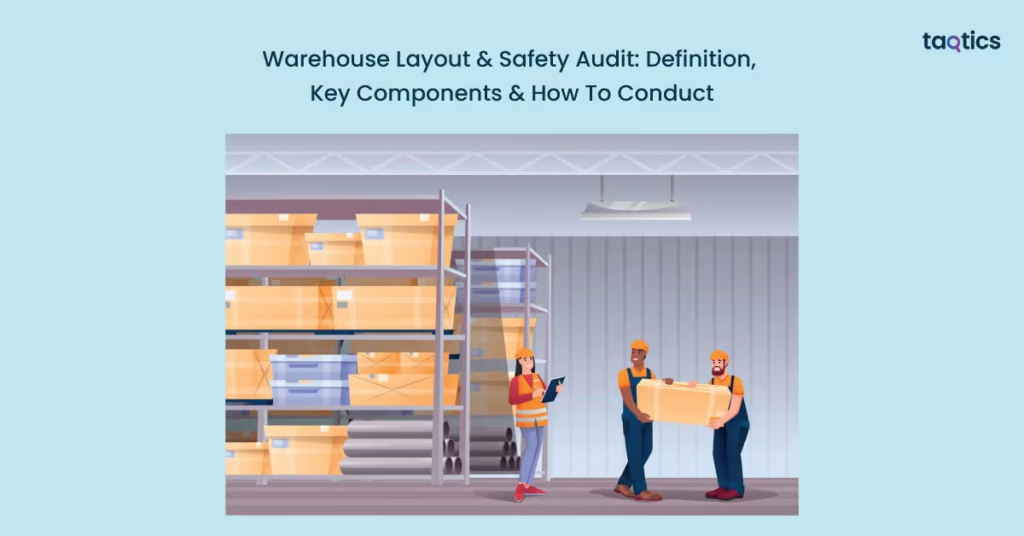
Warehouse layout & safety audit is a systematic process that evaluates how effectively a warehouse’s space, workflow, and safety measures are organized. Warehouse layout & safety audit ensures that aisles, racking systems, lighting, and material flow meet both productivity and safety standards. According to the Occupational Safety and Health Administration (OSHA, 2023), poor warehouse layouts contribute to nearly 25% of annual workplace accidents in logistics and manufacturing sectors. Similarly, a Journal of Industrial Engineering and Management (2022) study found that warehouses performing regular safety audits improved operational efficiency by 37% and reduced accident risks by 41%.
A warehouse layout & safety audit focuses on maximizing space utilization and maintaining safe working conditions through structured assessments. For example, imagine a busy grocery store stockroom where boxes of packaged goods are stacked haphazardly near the delivery door, creating tripping hazards and delays during unloading. A layout and safety audit in this scenario would reorganize storage zones, mark safety lanes, and adjust shelving height to streamline movement and prevent injuries. Just like that, in large-scale warehouses, such audits ensure smoother operations, lower risks, and consistent compliance with safety norms.
What Is a Warehouse Layout & Safety Audit?
A Warehouse Layout & Safety Audit is a structured evaluation that assesses how efficiently space, materials, and workflows are organized within a warehouse to ensure both operational performance and employee safety. It examines factors such as storage design, racking placement, pathway accessibility, and hazard prevention systems.
Effective layout planning directly influences productivity, safety, and cost efficiency.
- Common layout strategies include U-shaped, I-shaped, and L-shaped designs—each supporting different types of product movement and warehouse size.
- Logical flow and zoning ensure that goods move seamlessly from receiving to shipping without backtracking, minimizing human and equipment collisions.
By identifying inefficiencies and hazards, a Warehouse Layout & Safety Audit provides actionable insights to streamline operations while maintaining regulatory compliance and worker well-being.
According to Logistics Management Review (2022), warehouses with optimized layouts experience up to 30% faster order processing times and 20% lower handling costs. The audit also ensures that the layout supports clear segregation of zones, such as receiving, storage, and dispatch, reducing congestion and enhancing overall visibility.
What Are The Key Components Of A Warehouse Layout & Safety Audit?
The key components of a warehouse layout & safety audit include two primary aspects — warehouse layout and efficiency audit and a safety audit checklist. Together, they ensure optimal material flow, organized storage, proper use of space, and compliance with safety standards.
Warehouse Layout and Efficiency Audit
This component focuses on the physical structure and functionality of warehouse operations, ensuring a seamless flow of goods, proper equipment usage, and maximum space utilization.
- Material flow: Evaluate the flow of goods to identify bottlenecks and optimize layout for smooth, continuous movement.
- Storage: Check that products are stored for easy access and stability, and that racks or shelves are safe and organized.
- Equipment: Assess placement and condition of forklifts, pallet jacks, and conveyors for operational efficiency and safety.
- Inventory: Verify inventory accuracy and assess how layout impacts tracking systems and order fulfillment.
- Space utilization: Identify opportunities to improve vertical and horizontal space usage through multi-tier racks and better zoning.
Safety Audit Checklist
This part ensures compliance with occupational safety regulations, fire codes, and material handling standards. It focuses on identifying and mitigating risks that can lead to injuries or downtime.
- Housekeeping: Keep aisles, walkways, and floors clean and clutter-free to prevent tripping or collision hazards.
- Fire safety: Ensure emergency exits are clear, extinguishers inspected, and evacuation routes visibly marked.
- Hazardous materials: Confirm chemicals are properly labeled, stored, and supported by spill kits and eyewash stations.
- Electrical safety: Inspect for exposed wiring, overloaded circuits, or unapproved modifications.
- Equipment safety: Check machinery for maintenance records, operational guards, and compliance with OSHA standards.
- Fall protection: Verify guardrails, ladders, and mezzanine edges are secure and maintained.
- Emergency preparedness: Review and test fire drills, spill responses, and alarm systems regularly.
- Training and PPE: Ensure employees are trained and equipped with appropriate protective gear.
- Security: Restrict warehouse entry to authorized personnel and monitor access points for safety.
According to the International Journal of Logistics Research and Applications (2021), structured layout and safety audits can reduce workplace incidents by up to 25% and enhance operational efficiency by 30% through improved visibility and workflow optimization.
How to conduct a Warehouse Layout & Safety Audit?
You can conduct a warehouse layout & safety audit by following a structured, step-by-step process that ensures both operational efficiency and compliance with safety regulations.
- Schedule the audit: Select an appropriate time that causes minimal disruption to regular warehouse operations. Schedule audits quarterly or semi-annually to maintain consistent monitoring.
- Review past reports: Evaluate previous audit data to track improvements, recurring issues, or incomplete corrective actions.
- Inspect the facility: Conduct a physical walkthrough to examine layout design, material flow, and equipment positioning for safety and efficiency.
- Identify hazards: Observe areas for potential risks such as spills, damaged racks, tripping points, or blocked fire exits.
- Verify compliance: Check adherence to OSHA, ISO 45001, and NFPA standards, ensuring safety signage, electrical setups, and fire systems are up to code.
- Review documentation: Audit the presence of Standard Operating Procedures (SOPs), employee safety training logs, and maintenance records.
- Document findings: Record all observations—both strengths and deficiencies—using digital audit tools or inspection software for accuracy and traceability.
- Follow up: Implement corrective actions, assign accountability, and schedule follow-up audits to verify that improvements have been sustained.
According to The Occupational Safety and Health Administration (OSHA, 2022), consistent warehouse audits can reduce accident rates by over 25% and improve workflow efficiency by 15–20%, making them essential for long-term logistics performance and employee well-being.
Who conducts a Warehouse Layout & Safety Audit?
A warehouse layout & safety audit is typically conducted by trained professionals who specialize in warehouse operations, safety management, or compliance. The process often involves a combination of internal and external experts to ensure a balanced and objective assessment.
- Internal safety officers or warehouse managers: They conduct routine audits to monitor daily compliance with company safety protocols and identify operational inefficiencies.
- EHS (Environment, Health & Safety) teams: These in-house specialists evaluate risks related to ergonomics, fire safety, chemical handling, and emergency preparedness.
- Third-party safety auditors: External consultants certified under ISO 45001 or OSHA standards perform independent assessments to ensure unbiased results and adherence to industry regulations.
- Regulatory inspectors: Government agencies such as OSHA or local labor departments may conduct formal inspections to verify legal compliance and investigate incidents.
- Facilities engineers or layout specialists: They review spatial design, material flow, and racking systems to enhance warehouse efficiency and minimize hazards.
According to a study by The National Safety Council (NSC, 2023), warehouses that undergo both internal and external audits at least twice a year report 30% fewer safety incidents and 20% faster issue resolution rates.
What Are the Key Components of an Effective Warehouse Layout?
The key components of an effective warehouse layout are those that ensure seamless movement of goods, optimize space utilization, and enhance safety and productivity across all operations.
- Receiving Area: The entry point for all incoming goods where items are inspected, verified, and labeled. A well-organized receiving area minimizes congestion and reduces unloading time by up to 25%, according to Warehouse Management Review (2022).
- Storage Zones (Bulk & Rack Storage): Designated spaces for storing goods based on their size, turnover rate, or category. Proper zoning improves accessibility and inventory accuracy, helping maintain 99.8% picking accuracy, as found in Logistics Bureau (2023).
- Picking and Packing Areas: These zones are optimized for efficiency in order fulfillment. Grouping high-frequency items closer to packing stations helps reduce picker travel time by nearly 30%, as per Material Handling Institute Report (2022).
- Shipping and Staging Zones: Dedicated spaces for consolidating, labeling, and dispatching outbound shipments. Organized staging ensures faster truck loading and minimizes shipment delays.
- Aisles, Signage, and Labeling: Clearly marked pathways and labels support safe movement of personnel and vehicles while improving navigation and storage retrieval accuracy.
- Equipment and Vehicle Lanes: Separate, well-marked lanes for forklifts and pallet jacks reduce the risk of collisions and promote safer workflow.
- Workflow and Traffic Flow Design: The backbone of an efficient layout, ensuring materials move logically from receiving to shipping. A streamlined flow can enhance overall warehouse productivity by 15–20%, as reported by Supply Chain Quarterly (2023).
Each of these element plays a specific role in improving efficiency and reducing operational delays within the warehouse ecosystem.
How Do You Design a Warehouse Layout Step-by-Step?
You can design a warehouse layout step-by-step by assessing space and needs, analyzing inventory and skus, defining functional zones, mapping material flow, considering safety & compliance, using CAD/layout software, and consulting design professionals. Following these steps creates a layout that balances throughput, space utilization, and worker safety.
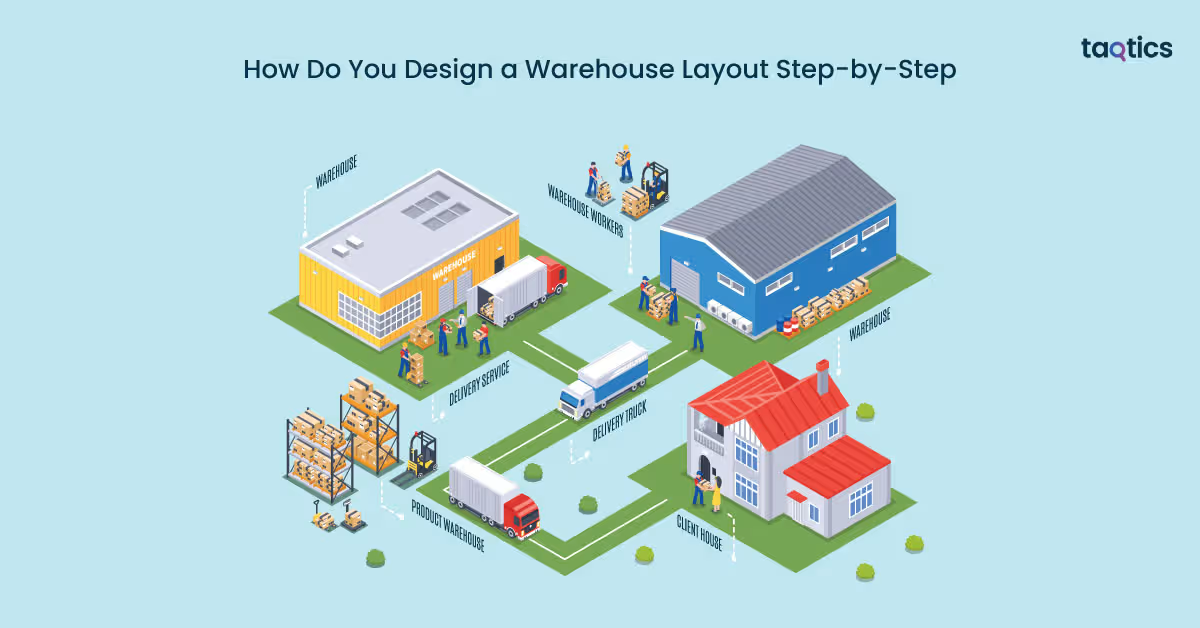
Step 1: Assess space and operational needs
o Measure usable floor area, clear heights, dock locations, and utility/column placements.
o Forecast throughput (daily lines/orders) and peak activity to size receiving, picking, and staging areas.
o Consider future growth so the layout remains scalable.
Step 2: Analyze inventory types and SKUs
- Classify SKUs by velocity (A/B/C), size, weight, and storage requirements (temperature, fragility).
- Determine slotting needs: bulk vs. racked storage, pallet vs. bin, and special handling for odd-sized items.
- Use SKU ABC analysis to allocate the best locations to high-turn items.
Step 3: Define functional zones
- Create clear zones for receiving, QA/inspection, bulk storage, racked storage, picking, packing, shipping, returns, and value-add (kitting/inspection).
- Size each zone based on activity data (e.g., receiving bays sized for peak inbound pallets).
- Plan buffer/staging areas to decouple upstream and downstream flows.
Step 4: Map out material flow
- Design a linear logical flow (receiving → storage → picking → packing → shipping) to minimize cross-traffic and backtracking.
- Place high-frequency SKUs close to packing and shipping to reduce travel time.
- Define one-way aisles and separate pedestrian and vehicle routes.
Step 5: Consider safety and compliance
- Ensure aisle widths, egress routes, and rack loading meet local codes and standards (e.g., fire and occupational safety).
- Allocate safe zones for hazardous materials and emergency equipment.
- Incorporate ergonomic pick heights and lift-assist areas to reduce injuries.
Step 6: Use CAD or layout design software
- Model options with CAD or specialized warehouse-layout tools to test scenarios, simulate picking paths, and calculate space utilization.
- Run simple simulations to compare travel distances, throughput, and dock utilization before committing to changes.
Step 7: Consult warehouse design professionals
- Engage material-handling engineers or logistics consultants for complex facilities, automation feasibility, and regulatory review.
- Validate designs against real-world constraints (equipment turning radii, forklift clearances, and maintenance access).
Studies (MIT Center for Transportation & Logistics, 2021) report improvements in order throughput of up to ~33% when layouts are optimized and slotting is data-driven. In short, a stepwise, data-led approach measures, classifies, zones, flows, validates, and consults to produce a warehouse layout that’s safe, efficient, and scalable.
What Are OSHA Warehouse Safety Guidelines?
The OSHA warehouse safety guidelines are designed to ensure safe working environments, reduce injury risks, and promote operational efficiency in warehouses. These regulations outline how materials, equipment, and employees should be managed to prevent workplace accidents and maintain compliance.
OSHA 1910 Subpart N (materials handling and storage)
This regulation addresses the safe storage and handling of materials, including stacking heights, rack stability, and proper use of slings, hooks, and hoists. It emphasizes maintaining clear aisles, proper labeling, and safe lifting techniques to prevent musculoskeletal injuries and falling-object incidents.
OSHA forklift standards (1910.178)
Forklifts are one of the leading causes of warehouse accidents. OSHA 1910.178 specifies requirements for powered industrial truck operations, including operator certification, daily vehicle inspections, and speed control within the warehouse. According to OSHA’s 2023 report, 25% of warehouse injuries involve forklifts, often due to improper training or poor maintenance.
Common OSHA violations in warehouses
Frequent violations include blocked emergency exits, inadequate hazard communication, improper stacking, lack of forklift training, and insufficient fall protection. OSHA data (2024) shows that material handling violations account for nearly 20% of warehouse citations annually, highlighting the ongoing need for safety vigilance.
How to maintain OSHA compliance
To remain compliant, warehouses must conduct regular safety audits, document employee training, implement signage and PPE programs, and maintain up-to-date records of inspections and corrective actions. Using digital audit tools and safety management systems helps automate compliance tracking and ensure ongoing adherence.
Adhering to OSHA’s warehouse safety guidelines minimizes workplace risks, improves employee well-being, and safeguards the organization from costly penalties. Consistent training and monitoring foster a safety-first culture, a key factor in achieving long-term operational excellence.
How Can Technology Help With Warehouse Layout and Safety Audits?
Technology can help with warehouse layout and safety audits by enhancing visibility, automating repetitive checks, and improving overall efficiency. From real-time monitoring to predictive analytics, technology enables warehouse managers to maintain safer, more organized, and compliant operations.
- Warehouse Management Systems (WMS): Warehouse Management Systems like Oracle NetSuite and Fishbowl play a crucial role in mapping storage areas, tracking inventory movement, and optimizing layout efficiency. According to Deloitte’s Global Supply Chain Report (2023), WMS-enabled facilities experience up to 25% higher space utilization and 30% fewer picking errors, demonstrating their impact on both productivity and safety.
- Layout Design Software: Advanced layout design tools such as AutoCAD and SmartDraw help visualize and simulate warehouse structures before implementation. They enable managers to plan traffic routes, ensure ergonomic spacing, and test emergency exit accessibility virtually. Gartner (2022) reports that using these design platforms can reduce redesign costs by 18%, making them vital for both planning and safety assurance.
- Digital Audit Tools and Mobile Checklists: Platforms like Taqtics, SafetyCulture iAuditor and EHS Insight simplify warehouse safety audits through mobile checklists, digital forms, and instant reporting. These tools allow teams to capture photos, log issues, and automate follow-ups in real time. According to EHS Today (2023), mobile audits improve compliance tracking and reduce safety violations by 40%, ensuring more reliable and traceable inspections.
- RFID and Barcode Tracking for Inventory & Movement: RFID and barcode systems streamline inventory tracking by offering real-time visibility into product movement and storage locations. This minimizes misplaced stock and supports layout optimization. As Supply Chain Digital (2024) highlights, RFID adoption increases inventory accuracy to over 98%, compared to 87% with manual methods, leading to smoother logistics and safer operations.
- Safety Sensors and IoT Applications: IoT-enabled sensors are transforming warehouse safety by monitoring environmental factors like air quality, temperature, and vibration levels in real time. They also track worker proximity to hazardous zones, helping prevent accidents. McKinsey (2023) found that IoT-based safety systems can reduce workplace incidents by up to 35%, making them essential for proactive risk management.
Integrating technology into warehouse layout and safety audits ensures continuous improvement, real-time monitoring, and greater operational resilience. These innovations not only enhance efficiency but also create safer, smarter, and more sustainable warehouse environments.
How Often Should You Review or Update Your Warehouse Layout and Safety Plan?
You should review or update your warehouse layout and safety plan regularly to ensure it stays aligned with operational changes, safety standards, and regulatory requirements. A dynamic warehouse environment demands periodic evaluations to maintain efficiency, compliance, and employee well-being.
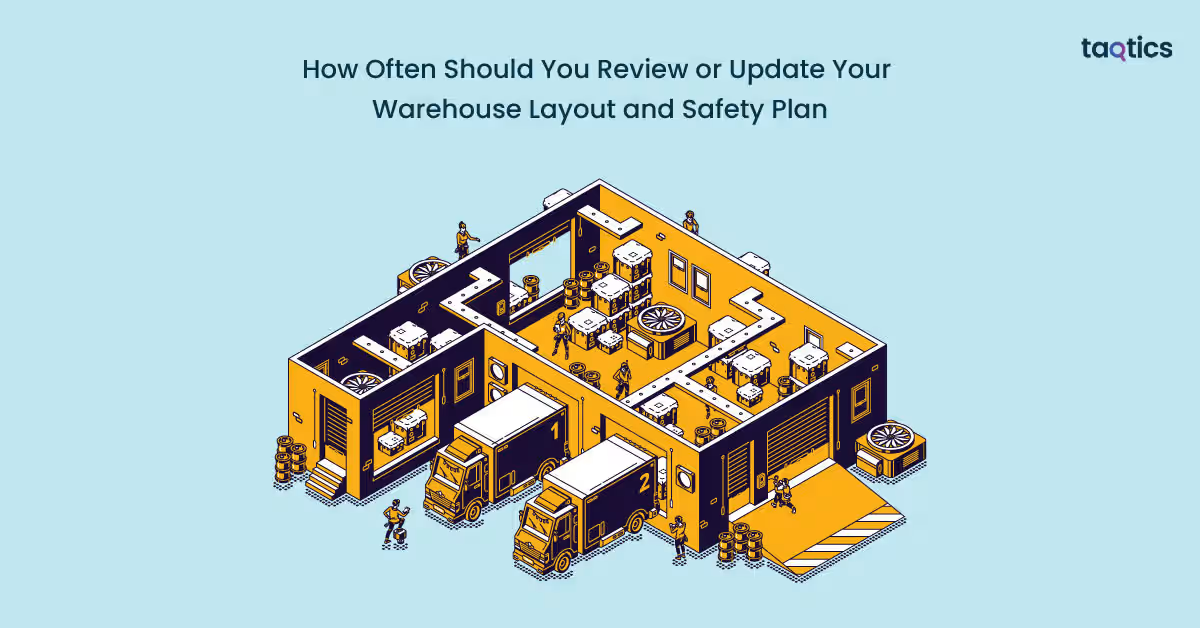
Signs It’s Time to Reevaluate Your Layout
It’s essential to review your warehouse layout when you notice workflow bottlenecks, frequent stock misplacements, or increased accident rates. A rise in order fulfillment times or damaged goods is also indicator that your layout may no longer support efficient operations. According to Logistics Management (2023), 47% of warehouses that reviewed layouts after performance drops improved operational speed by over 20%.
Audit Frequency Recommendations (Quarterly, Annually, After an Incident)
Experts recommend conducting a comprehensive audit annually, with quarterly safety checks and immediate reviews following any major incident. Regular audits help identify overlooked safety gaps and outdated processes. The National Safety Council (NSC, 2022) emphasizes that facilities performing quarterly audits saw 35% fewer workplace injuries than those auditing only once a year.
Changes in Inventory, Equipment, or Regulations
Whenever there’s a significant shift in product types, storage systems, or new compliance regulations, your warehouse layout and safety plan must be revisited. For instance, adding heavy equipment or introducing temperature-sensitive goods may require redesigning zones and updating safety signage. OSHA (2023) recommends reassessing safety protocols immediately after regulatory updates or infrastructure changes to avoid compliance risks.
Continuous Improvement Processes (Kaizen, Lean, 5S)
Applying improvement models such as Kaizen, Lean, and 5S encourages a culture of ongoing refinement. These systems focus on waste reduction, better organization, and constant feedback from staff. A Harvard Business Review (2023) study found that warehouses using continuous improvement frameworks improved layout efficiency by up to 30% while reducing safety incidents by 25%.
Reviewing and updating your warehouse layout and safety plan should be a proactive, data-driven process. Regular assessments not only enhance efficiency and compliance but also create a safer, more adaptable work environment ready for changing operational demands.
What Are the Benefits of Optimizing Your Warehouse Layout & Safety?
The benefits of optimizing your warehouse layout & safety include multiple operational, financial, and workforce advantages that directly impact efficiency and long-term profitability.
Increased Productivity
An optimized layout reduces travel time, improves picking accuracy, and enhances coordination between teams. According to McKinsey & Company (2023), warehouses that restructured layouts to minimize movement improved order-picking productivity by up to 25%. Clear zoning and logical material flow ensure that every square foot of space contributes to efficiency.
Reduced Accidents and Downtime
Proper layout design with clear aisles, signage, and safety barriers significantly lowers the risk of accidents. The U.S. Bureau of Labor Statistics (BLS, 2022) reported that nearly 23% of warehouse injuries were due to poor layout and congestion-related hazards. Safety-optimized designs help maintain consistent operations and minimize costly disruptions.
Regulatory Compliance
Adhering to OSHA, NFPA, and ISO 45001 safety standards becomes more achievable when your warehouse layout supports compliance. By ensuring adequate emergency exits, fire protection systems, and ergonomic workspace design, organizations can avoid fines and maintain operational legitimacy.
Improved Employee Morale
A safe, organized, and ergonomic environment fosters employee satisfaction and reduces fatigue. Studies from Harvard Business Review (2021) indicate that improved workplace safety can raise employee retention by 18–20%. Workers feel more confident and valued when risks are minimized, enhancing overall productivity and teamwork.
Lower Insurance Costs
Warehouses with a strong safety record often benefit from reduced insurance premiums. According to Marsh Risk Management Report (2022), companies with well-documented safety audits and optimized layouts cut insurance-related expenses by up to 15% annually.
Better Space Utilization and Faster Throughput
Optimized layouts enable effective use of vertical and horizontal space, improving throughput rates. Efficient racking systems and streamlined pathways reduce congestion and speed up movement between storage and dispatch areas. A Logistics Insight Asia (2023) study found that optimized layouts enhanced space utilization by 30%, allowing warehouses to process more orders without expanding facilities.
A well-structured warehouse not only streamlines material flow but also minimizes risks, ensuring compliance with industry regulations and enhancing overall performance.
How long does a Warehouse Layout & Safety Audit take?
The duration of a warehouse layout & safety audit depends on the size of the facility, complexity of operations, and scope of the audit. On average, a standard warehouse audit takes between 1 to 5 days, while large, multi-zone distribution centers may require up to two weeks for a comprehensive assessment.
- Small warehouses (under 50,000 sq. ft.): 1–2 days for physical inspection and documentation review.
- Medium warehouses (50,000–200,000 sq. ft.): 3–5 days to evaluate layout efficiency, safety systems, and compliance records.
- Large or multi-site facilities: 7–14 days, including interviews, equipment checks, and follow-up reporting.
- Follow-up audits: Typically 1 day, focusing on verifying corrective actions.
According to the National Safety Council (NSC, 2022), companies conducting quarterly safety audits lasting 3–4 days saw a 22% drop in workplace incidents compared to those auditing less frequently. Efficient planning, digital audit tools, and trained internal auditors can help reduce audit time without compromising thoroughness.
About the Author