Goods Receiving & GRN Verification: Definition, Importance & Core Components
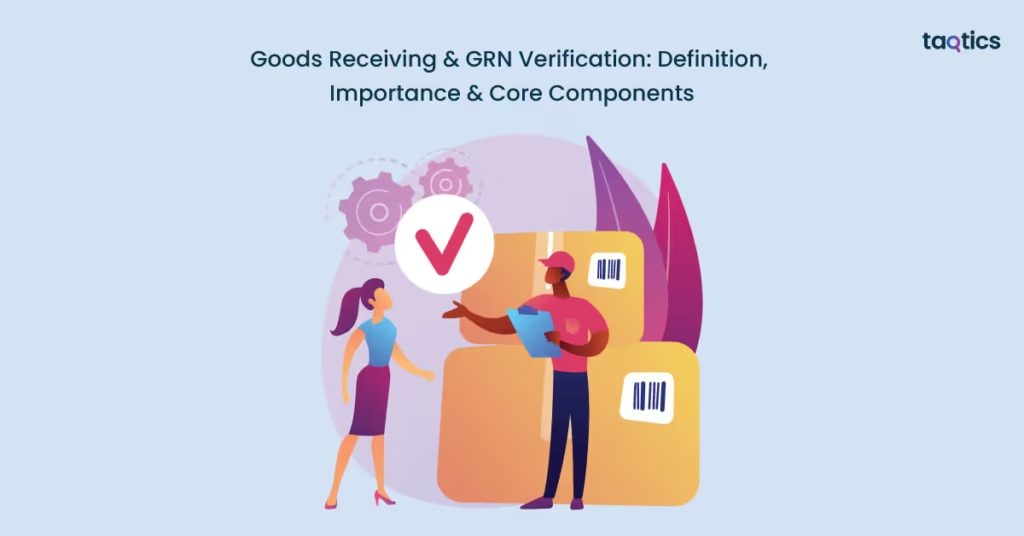
Goods receiving & GRN verification are essential components of efficient retail and supply chain management. They ensure that every delivery from suppliers aligns with the purchase order in terms of quantity, quality, and specifications. The process begins when goods arrive at the store or warehouse and are inspected against the purchase order. Once verified, a Goods Received Note (GRN) is generated, serving as official proof that the goods have been received correctly.
According to Deloitte’s Global Supply Chain Report (2024), nearly 38% of retail stock discrepancies originate from unverified or poorly documented receiving practices, making this procedure vital for maintaining data accuracy and inventory control. The importance of Goods Receiving & GRN Verification lies in establishing accountability and ensuring seamless coordination between procurement, warehouse, and finance teams. Businesses that digitize GRN systems reportedly experience 25% fewer reconciliation delays, according to the Harvard Business Review, 2023.
The core components of this process include verifying supplier details, matching received items with purchase orders, performing quality and quantity checks, and recording discrepancies or damages. With automation tools and barcode-based systems, companies can further reduce manual errors by over 40%, according to the McKinsey Operations Report, 2024. Collectively, these practices strengthen supply chain transparency, prevent revenue leakage, and build operational reliability across retail locations.
What Is Goods Receiving in Inventory Management?
Goods Receiving in inventory management is the process of accepting, inspecting, and recording goods delivered from suppliers before they are added to stock. It plays a pivotal role in maintaining inventory accuracy, supply chain efficiency, and financial integrity. According to Gartner’s Supply Chain Benchmark Report (2024), companies with structured goods receiving protocols experience 30% fewer stock discrepancies and 20% faster order-to-shelf times compared to those with informal procedures.
In most businesses, the goods receiving function is handled by store or warehouse personnel, often supervised by the inventory or operations manager. These individuals are responsible for verifying delivery documents (purchase order, delivery note, invoice), checking product quality and quantity, and flagging damaged or missing items. Efficient receiving ensures real-time visibility into stock movement, allowing the finance team to validate supplier invoices accurately.
- Warehouse staff or store associates handle physical verification and documentation.
- Supervisors or managers approve the GRN (Goods Received Note) for accounting and audit purposes.
- Procurement officers use this data to reconcile purchase orders and supplier invoices.
The connection between procurement and receiving departments is critical for closing the purchasing loop. Procurement initiates the purchase, while the receiving team confirms its fulfillment. As highlighted by Harvard Business Review (2023), a seamless link between these departments can reduce invoice disputes by up to 35%, improving vendor relationships and cash flow efficiency. Together, these units ensure that every item purchased is accurately received, verified, and recorded, forming the foundation for reliable inventory management.
What Is a Goods Received Note (GRN)?
A Goods Received Note (GRN) is an official document used to confirm that goods ordered from a supplier have been received in acceptable condition and quantity. It acts as proof of delivery and serves as a key record for inventory and accounting purposes. According to the CIPS Procurement Guide (2024), companies using GRNs as part of their inventory process reduce delivery disputes by up to 40% and improve supplier accountability significantly.
- Serves as evidence that the supplier has fulfilled the purchase order.
- Helps verify that the received items match the order in quantity and quality.
- Forms the basis for payment authorization and inventory updates.
What Does GRN Stand For in Warehousing?
In warehousing, GRN stands for “Goods Received Note.” It’s a control document used when goods arrive at a warehouse or store to confirm that the correct items have been delivered. It bridges the gap between logistics, procurement, and finance teams.
- Acts as a reference point for updating stock levels in warehouse management systems.
- Ensures traceability of received goods during audits or quality checks.
- Used across manufacturing, retail, and distribution facilities to maintain inventory transparency.
What Is the Purpose of a GRN?
The main purpose of a GRN is to maintain transparency and accountability in the goods receipt process. It verifies delivery details, prevents fraudulent billing, and ensures accurate stock reconciliation. As noted in McKinsey’s Supply Chain Insights (2023), effective GRN usage can improve overall supply chain accuracy by 25%.
- Confirms that goods received are correct in type, quantity, and quality.
- Acts as a legal proof for both buyer and supplier in case of disputes.
- Facilitates payment processing by linking with purchase orders and invoices.
When Is a GRN Issued and by Whom?
A GRN is issued immediately after goods are received and inspected by the receiving department or warehouse personnel. The document is typically authorized by the store manager or receiving clerk before being forwarded to procurement and accounts.
- Issued once the goods are physically verified and accepted.
- Signed by the person in charge of goods receiving (e.g., warehouse clerk or store supervisor).
- Shared with procurement and accounts for record-keeping and payment release.
How Does a GRN Differ from a Delivery Note or Invoice?
While a delivery note is issued by the supplier to confirm dispatch and an invoice requests payment, a GRN is created by the buyer to acknowledge safe receipt. Each document serves a distinct role in the procurement-to-payment process.
- Delivery Note: Prepared by the supplier to list items shipped.
- Invoice: Requests payment for goods supplied.
- GRN: Created by the buyer to confirm receipt and quality of goods.
According to the Chartered Institute of Logistics and Transport (CILT, 2024), using GRNs alongside delivery notes and invoices reduces transaction errors by up to 32%, ensuring seamless inventory and payment reconciliation.
Why Is GRN Verification Critical in the Receiving Process?
GRN verification is critical in the receiving process because it helps in preventing stock discrepancies and fraud, ensuring purchase order compliance, and maintaining accurate financial and audit records. By validating every delivery against official documents, businesses reduce operational risks and maintain supply chain transparency.
Preventing Stock Discrepancies and Fraud
Verifying the GRN ensures that goods received match both the delivery note and purchase order, minimizing errors and eliminating fraudulent deliveries. It also prevents unauthorized stock inflow, especially in high-value or serialized inventory.
- Helps detect short shipments, over-shipments, and duplicate receipts.
- Prevents internal manipulation of inventory entries or fake receipts.
- Ensures that suppliers cannot bill for unreceived or damaged goods.
According to Deloitte’s Global Procurement Report (2023), strong GRN control can reduce internal theft-related losses by up to 35%.
Ensuring Purchase Order Compliance
A verified GRN serves as proof that suppliers have fulfilled the purchase order correctly—both in terms of quality and quantity. It aligns procurement data with warehouse records, ensuring accountability at every stage.
- Validates that received goods match the specifications mentioned in the PO.
- Helps procurement teams flag discrepancies for quick resolution.
- Reduces the risk of accepting unauthorized or substitute items.
CIPS Supply Chain Integrity Study (2024) found that accurate GRN-PO matching improves supplier compliance by 42% on average.
Recording for Financial and Audit Purposes
Accurate GRN verification is essential for financial accuracy and compliance with audit standards. It creates a traceable record for all received goods, forming the backbone of inventory valuation and payment authorization.
- Links procurement, finance, and warehouse records for clear accountability.
- Supports compliance with statutory audit and tax documentation requirements.
- Reduces discrepancies between goods received and invoice payments.
KPMG Inventory Audit Report (2023) notes that companies maintaining GRN-backed audit trails reduce reconciliation errors by over 30%.
By rigorously verifying GRNs, businesses not only prevent costly stock and payment errors but also build a culture of transparency and reliability across procurement, warehousing, and finance operations, ultimately strengthening their overall supply chain integrity.
What Are the Core Components Of Goods Receiving & GRN Verification Checklist?
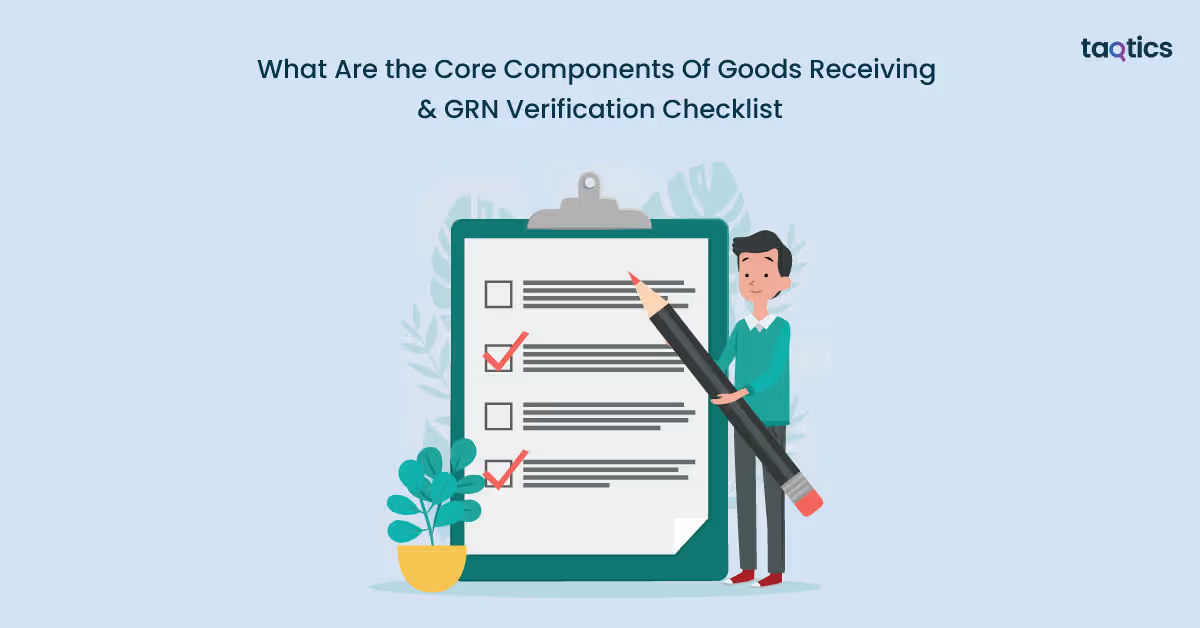
The core components of goods receiving & GRN verification checklist are pre-receiving and delivery verification, goods inspection and verification, documentation and approval, and post-receiving. Each stage plays a critical role in ensuring that all incoming goods are accurate, high-quality, and properly recorded before entering inventory.
Pre-Receiving and Delivery Verification
This stage focuses on validating delivery documentation and ensuring that goods are received safely and correctly. The aim is to catch potential issues, such as delivery errors or damaged packaging, before items enter your warehouse.
- Verify delivery documents: Check supplier name, PO number, and delivery date for accuracy.
- Inspect external packing: Look for visible signs of tampering, water damage, or dents before unloading.
- Supervise unloading: Ensure goods are unloaded at the designated receiving area under staff supervision.
Logistics Bureau Study (2023) found that early verification of delivery documentation reduces receiving delays by 25%.
Goods Inspection and Verification
Once goods are unloaded, they must be counted, inspected, and matched with their respective purchase orders to ensure accuracy and quality. This prevents defective or incorrect items from entering stock.
- Itemize and count: Compare received items with the PO and packing slip.
- Check for discrepancies: Log any quantity or model mismatches immediately.
- Inspect quality: Examine products for physical damage, defects, or expiry issues (especially for perishable or pharmaceutical goods).
- Verify specifications: Confirm that all models, SKUs, and variants match the order details.
McKinsey Supply Chain Insights (2024) found that businesses performing systematic goods inspection saw 37% fewer return incidents.
Documentation and Approval
This step ensures that every received shipment is formally recorded, verified, and approved for internal and financial processing. Proper documentation supports accountability and future audits.
- Complete the GRN: Record supplier name, PO number, GRN ID, and receipt details.
- Log quantities and issues: Include damaged or missing items for transparency.
- Obtain approvals: Have both receiving and managerial personnel sign off.
- Report discrepancies: Notify suppliers and internal teams immediately for resolution.
- File securely: Store all GRN and related documents for compliance and audits.
Chartered Institute of Procurement & Supply (CIPS, 2023) reports that documented GRN approvals improve traceability by over 40%.
Post-Receiving
The final step involves updating digital and financial systems to reflect the new inventory status. It bridges warehouse operations with accounting and procurement departments.
- Update inventory systems: Enter the verified quantities into ERP or warehouse management software.
- Inform accounts department: Forward GRN copies to reconcile invoices and authorize payments.
- Review data for analytics: Monitor receiving efficiency and supplier accuracy over time.
PwC’s Inventory Control Study (2024) revealed that timely GRN data updates can improve reconciliation speed by 33%.
By integrating these four components, businesses can ensure that every item received is accounted for, verified, and financially justified. According to the Global Supply Chain Logistics Report (2024), structured receiving and GRN verification processes can reduce material discrepancies by up to 45% and improve stock accuracy by 30%.
How to Create an Effective Goods Receiving & GRN Verification Checklist?
To create an effective goods receiving & GRN verification checklist, you can focus on four key areas, which include defining the receiving workflow, standardizing documentation, using digital tools, and training your receiving team.
Define the Receiving Workflow
Map out every step of your receiving process, from unloading goods and inspecting quality to verifying the GRN and updating inventory. This helps avoid confusion between departments and ensures accountability at each stage.
- Outline responsibilities of warehouse staff, quality control, and accounting.
- Include escalation steps for discrepancies or damaged items.
Deloitte Logistics Study (2023) found that clearly documented workflows reduce stock variances by 40%.
Standardize Documentation
Use consistent templates for purchase orders, delivery notes, and GRNs to maintain uniformity and simplify audits. A standardized approach helps ensure that every item received is properly recorded and approved.
- Include essential fields like supplier name, PO number, delivery date, and item specifications.
- Create digital and paper versions for flexibility.
CIPS Procurement Journal (2024) notes that standardizing receiving documentation improves traceability and supplier compliance by 32%.
Use Digital Tools for Verification
Implement barcode scanners, mobile warehouse apps, or ERP-integrated checklists for real-time data capture and error-free verification. Digital tools also allow faster communication between warehouse, procurement, and finance teams.
- Adopt cloud-based systems for instant GRN generation.
- Enable automatic alerts for mismatches between PO and delivery data.
PwC Digital Supply Chain Report (2024) highlights that automation in GRN verification improves process accuracy by 45%.
Train and Audit Your Receiving Team
Regularly train staff on SOPs for goods receiving and GRN verification. Continuous training ensures consistency and reduces the risk of manual errors or fraudulent entries.
- Conduct quarterly refresher sessions on documentation and inspection techniques.
- Audit random GRNs monthly to ensure compliance with SOPs.
KPMG Warehouse Operations Survey (2023) found that trained teams make 50% fewer data entry errors during the receiving process.
By following these steps, businesses can create a reliable, compliant, and efficient goods receiving system. An effective GRN verification checklist builds accountability, strengthens supplier relationships, and safeguards inventory accuracy across the supply chain.
Should GRN verification be manual or automated?
The choice between manual and automated GRN verification depends on business scale and transaction volume.
Manual GRN verification
It works best for small or low-volume businesses that handle limited deliveries. It relies on paper-based GRNs and handwritten records, offering control but also being prone to human error and delays. As noted by the CIPS Procurement Study (2023), manual processes can slow reconciliation by up to 20%.
Automated GRN verification
This uses ERP integration, barcode scanners, or RFID systems to match received items with purchase orders in real-time. It eliminates duplication, improves traceability, and reduces administrative workload by up to 60% (Deloitte, 2024).
Hybrid Approach
This is often the most effective when combining digital systems for data accuracy with human checks for quality assurance. As highlighted by the Harvard Business Review (2024), this method offers the right balance between efficiency and accountability, especially for high-value or sensitive inventory.
According to the PwC Digital Procurement Report (2024), companies that automated GRN workflows saw 43% fewer invoice mismatches and 28% higher inventory accuracy.
What Are Common Challenges in the Goods Receiving Process?
The common challenges in the goods receiving process are delayed GRN entry, mismatched purchase orders, damaged or missing goods, human errors, and untrained staff, which can slow operations, disrupt accuracy, and affect financial reconciliation.
Delayed GRN Entry
When GRNs (Goods Received Notes) are entered late, it creates a mismatch between actual stock levels and system data. This delay can also affect invoice matching and payment approvals.
- Leads to delays in accounting and supplier reconciliation.
- Causes inaccurate inventory reports and potential stockouts.
Procurement Leaders Study (2023) found that timely GRN entries improve reconciliation speed by 30%.
Mismatched Purchase Orders (POs)
Discrepancies between received goods and PO details often lead to confusion between procurement, warehouse, and finance teams.
- Can result from supplier substitutions or data entry errors.
- Creates challenges during invoice verification and payment authorization.
Deloitte Supply Chain Compliance Report (2024) notes that mismatched POs account for 25% of payment delays.
Damaged or Missing Goods
Physical damage or partial deliveries are common, especially in bulk or fragile shipments. If not properly documented, such issues can result in unclaimed losses.
- Affects product quality, customer satisfaction, and financial accuracy.
- Requires immediate reporting for supplier claims or replacements.
McKinsey Logistics Report (2023) highlights that poor packaging causes 18% of goods receiving losses.
Human Errors in Quantity or Item Codes
Manual data entry mistakes are frequent in paper-based or unautomated systems. Incorrect item codes or quantities can distort stock records and financial data.
- Leads to inaccurate reporting and forecasting.
- Slows down stock reconciliation and audit processes.
Deloitte Risk Insights (2023) reports that human input errors cause 22% of inventory mismatches.
Untrained Receiving Staff
Without adequate training, staff may overlook inspection procedures or verification protocols, increasing the risk of errors and fraud.
- Lack of knowledge about PO matching or quality checks.
- Inconsistent adherence to documentation standards.
KPMG Warehouse Operations Study (2024) found that trained teams make 50% fewer receiving mistakes.
Addressing these challenges through standardized checklists, digital GRN tools, and structured staff training can drastically enhance visibility, reduce errors, and make the receiving process more reliable and audit-ready.
What Are Best Practices for Goods Receiving and GRN Verification?
The best practices in goods receiving and GRN verification include the use of barcodes, digital GRNs and mobile devices, staff training and SOPs, and regular audits and performance metrics. These ensure efficiency, accuracy, and transparency throughout the supply chain.
Use of Barcode Scanners or RFID
Technology like barcode scanners and RFID tags speeds up verification and minimizes manual errors during goods receipt.
- Enables real-time tracking of received items.
- Reduces data entry mistakes and improves stock accuracy.
Harvard Business Review (2023) notes that RFID systems can enhance inventory visibility by up to 90%.
Digital GRNs and Mobile Devices
Replacing paper-based GRNs with digital forms helps streamline documentation and ensures instant sharing with relevant departments.
- Simplifies record-keeping and reduces delays in approval workflows.
- Mobile devices allow on-spot verification and data upload to ERP systems.
Gartner Supply Chain Insight (2024) found digital GRN systems cut processing time by 40%.
Staff Training and SOPs
Properly trained receiving staff following clear Standard Operating Procedures (SOPs) ensure accuracy and consistency.
- Training builds accountability and reduces the risk of fraud or oversight.
- SOPs standardize receiving, inspection, and documentation tasks.
KPMG Operational Excellence Report (2024) shows trained teams have 60% fewer verification errors.
Regular Audits and Performance Metrics
Conducting periodic audits and tracking performance metrics helps identify bottlenecks and maintain compliance.
- Audits detect recurring issues like quantity mismatches or late GRN entries.
- Metrics like GRN accuracy rate and turnaround time ensure process efficiency.
PwC Inventory Compliance Study (2023) found that regular audits improve accuracy by up to 28%.
According to the Chartered Institute of Procurement & Supply (CIPS, 2024), businesses following structured receiving protocols report up to 35% fewer inventory discrepancies and 25% faster invoice reconciliation times.
What Are the Legal and Compliance Aspects of GRN?
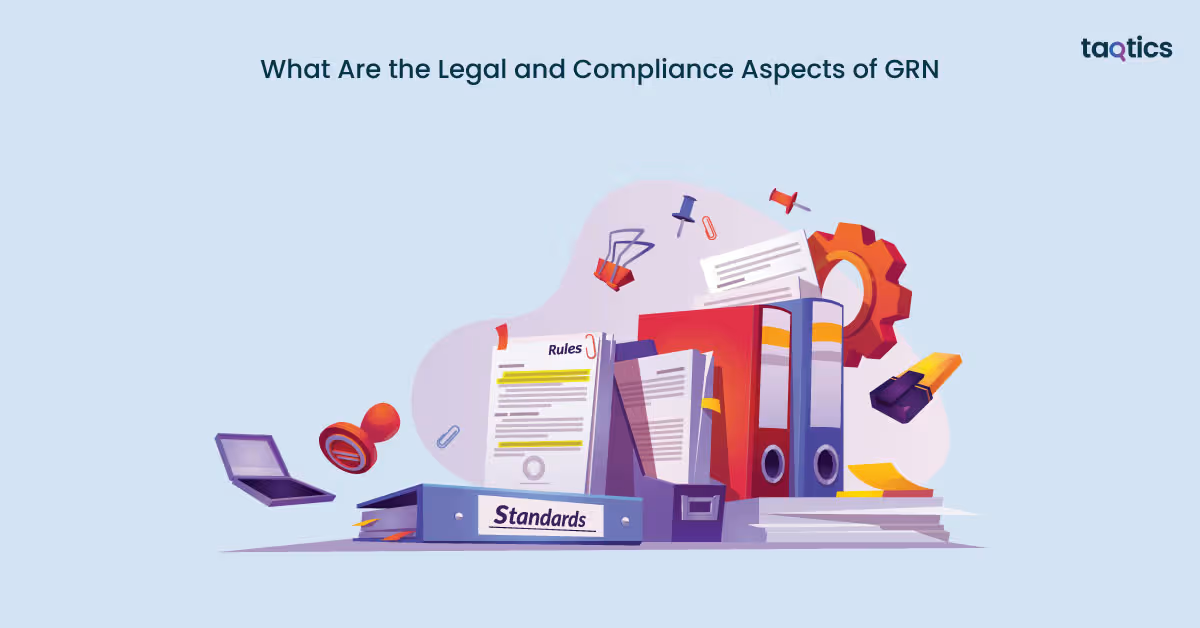
The legal and compliance aspects of GRN are centered around its role as a legal proof of delivery, a tool for internal audits and traceability, and its relevance in GST/VAT compliance in certain regions. A properly maintained GRN ensures accountability, reduces disputes, and supports regulatory adherence.
GRN as a Legal Proof of Delivery
A GRN serves as official evidence that goods were received according to the purchase order, protecting both buyers and suppliers in case of disputes.
- Acts as a contractual acknowledgment of receipt.
- Resolves disagreements over quantity, quality, or delivery timelines.
Harvard Business Review on Procurement Law (2023) reports that GRNs reduce supplier disputes by 25%.
Internal Audits and Traceability
GRNs provide a clear audit trail linking purchase orders, received goods, and payments, ensuring accountability and transparency.
- Supports internal controls and inventory audits.
- Tracks responsibilities of warehouse and receiving staff.
KPMG Inventory Audit Study (2024) found traceable GRN systems improve audit compliance by over 35%.
GST/VAT Implications in Certain Regions
In countries like India and the EU, GRNs are critical for tax compliance, validating receipt of goods for GST or VAT purposes.
- Enables accurate reporting of input tax credits.
- Documents stock movements for regulatory inspections.
PwC India GST Compliance Report (2023) notes proper GRN documentation reduces tax-related disputes by 20–25%.
GRNs are an essential legal and compliance tool that safeguards businesses, supports audits, and ensures adherence to tax regulations, making them indispensable in modern supply chain management. According to CIPS Legal & Compliance Report (2023), organizations with structured GRN processes experience up to 30% fewer audit disputes and stronger protection against supplier claims.
How To Download a Sample GRN Checklist Template?
To download a sample GRN checklist template, you can choose from downloadable formats such as Excel, PDF, or visual tables that make it easy to track goods received and verify details against purchase orders. These templates help standardize the receiving process, reduce errors, and improve traceability across inventory and accounting systems.
- Downloadable or Visual Table:
- Provides a ready-made layout for listing items, quantities, supplier details, and discrepancies.
- Easy to print or use digitally for daily receiving operations.
- Enhances clarity and reduces manual errors during GRN verification.
- Editable Format (Excel, PDF):
- Allows customization to fit specific business needs or SOP requirements.
- Enables staff to add columns for additional checks like expiry dates, batch numbers, or quality notes.
- Supports real-time updates if used in shared drives or cloud platforms.
- Optional Integration with Warehouse Management Systems:
- Some templates can sync with ERP or WMS software for automatic inventory updates.
- Reduces manual data entry and ensures accurate record-keeping.
- PwC Digital Supply Chain Report (2023) notes that system-integrated GRN templates improve inventory reconciliation by 35%.
Using a sample GRN checklist template simplifies the receiving process, ensures compliance, and enhances operational efficiency, making it easier for teams to maintain accurate inventory records. According to the CIPS Procurement Tools Report (2024), using standardized templates can reduce receiving errors by up to 30% and improve processing efficiency.
Can GRN be created without a Purchase Order?
Yes, a GRN can be created without a purchase order, but it is generally recommended only in specific situations such as emergency purchases, internal stock transfers, or supplier exceptions. In these cases, additional verification and documentation are essential to maintain accuracy and audit compliance.
- Emergency Purchases: Record urgently received items without a PO, ensuring proper approvals.
- Internal Transfers: Track stock moved between warehouses or departments without a PO.
- Supplier Exceptions: Document goods received based on verbal or informal agreements.
- Extra Verification: Include detailed item descriptions, quantities, and approvals to maintain control.
While GRNs without POs are possible, strict internal controls are necessary to ensure inventory accuracy and accountability. According to CIPS Supply Chain Guidelines (2023), GRNs without POs should be carefully recorded to prevent errors or unauthorized receipts.
Who is responsible for approving the GRN?
The responsibility for approving a GRN lies with authorized personnel to ensure that received goods are verified, accurate, and compliant with the purchase order and company policies. Proper approval helps maintain accountability and supports audit and financial reconciliation processes.
- Receiving Staff: Initially checks and verifies the goods received against the purchase order.
- Warehouse/Inventory Manager: Confirms quantities, quality, and compliance with specifications.
- Authorized Manager or Finance Personnel: Provides final approval for accounting and payment processing.
- Optional Auditor Check: Some organizations include an audit step for high-value or sensitive items.
Proper GRN approval ensures accountability, reduces errors, and strengthens overall inventory control. According to CIPS Supply Chain Guidelines (2023), having a designated approver reduces discrepancies and errors in inventory records.
How long should GRNs be retained for audit purposes?
GRNs should be retained for a specified period to comply with internal audit requirements, financial regulations, and tax laws. Maintaining proper records ensures traceability of goods, supports dispute resolution, and helps during external audits.
- Standard Retention Period: Typically 3–7 years, depending on local laws and company policies.
- High-Value or Sensitive Items: Retain longer, up to 10 years, for legal or compliance reasons.
- Digital Records: Can be stored electronically, ensuring secure and easy retrieval.
- Periodic Review: Regularly audit GRN archives to confirm completeness and accuracy.
Proper GRN retention safeguards the organization against compliance issues and supports efficient auditing and financial verification. According to CIPS Compliance Guidelines (2023), retaining GRNs improves audit readiness and reduces regulatory risks.
What happens if there’s a mismatch between the PO and received goods?
If there is a mismatch between the purchase order (PO) and the received goods, it can lead to inventory discrepancies, payment delays, and potential supplier disputes. Prompt identification and resolution of such mismatches are essential to maintain accurate records and prevent financial or operational issues.
- Identify the Discrepancy: Compare quantities, item codes, and specifications against the PO.
- Document the Issue: Record any shortages, damages, or incorrect items in the GRN.
- Notify Relevant Teams: Inform procurement, warehouse, and finance departments immediately.
- Resolve with Supplier: Contact the supplier for replacements, credits, or adjustments.
- Update Records: Ensure inventory and accounting systems reflect the corrected quantities.
Timely handling of PO mismatches ensures accurate inventory, smooth financial reconciliation, and stronger supplier accountability. According to CIPS Supply Chain Report (2023), addressing mismatches quickly reduces processing delays by up to 30%.
About the Author