HACCP Audit Checklist Template: Definition, Importance & Components
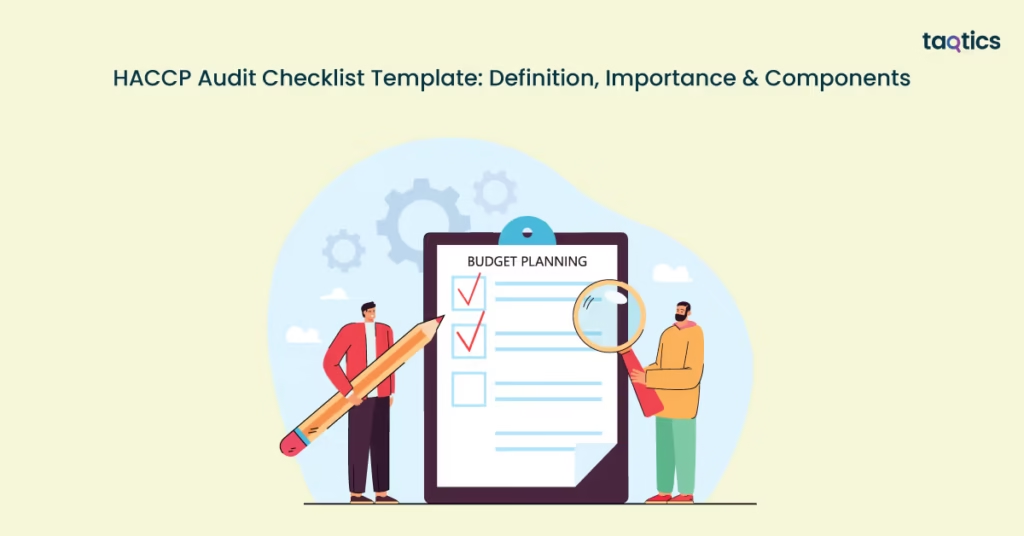
HACCP audit checklist template offers a structured and systematic framework to evaluate whether a food business is effectively applying the principles of Hazard Analysis and Critical Control Points (HACCP), from hazard identification through critical control points, monitoring, corrective actions, and record-keeping. The HACCP audit checklist template helps ensure that every step of food production or preparation is assessed for potential hazards. For example, a kitchen safety check includes inspecting whether perishable food in your refrigerator is stored at a safe temperature and raw and cooked items are kept separately for hygiene.
In practice, using such a checklist can dramatically reduce the risk of foodborne illness. A study conducted by Arxiv shows that bacterial pathogens like Campylobacter are responsible for tens of millions of cases globally each year, with over 95 million illnesses annually, underscoring the importance of robust food-safety systems. A well-designed HACCP Audit Checklist Template, therefore, becomes vital not only to comply with regulations but to proactively prevent contamination. By systematically examining every control point, documenting critical limits, and ensuring corrective actions are implemented, the checklist becomes the backbone of any effective food-safety management, safeguarding both consumer health and business reputation.
Download the checklist. Run it like a system.
Get the ready-to-use template, and see how Taqtics captures photo proof, timestamps, and compliance automatically.
What Is a HACCP Audit Checklist?
A HACCP audit checklist is a structured tool used to evaluate whether a food business is correctly implementing the seven principles of Hazard Analysis and Critical Control Points (HACCP). It outlines key checkpoints, such as hazard identification, critical control points (CCPs), monitoring, corrective actions, and documentation, that auditors use to verify the effectiveness of a food-safety system.
Its purpose in a food-safety audit is to ensure that every stage of food handling, processing, storage, and distribution meets safety standards and minimizes risks of biological, chemical, or physical hazards. During an audit, the checklist helps assess whether proper controls are in place, consistently followed, and accurately recorded.
- Ensures each stage of food handling, processing, storage, and distribution meets safety standards
- Helps auditors verify that controls are in place, effective, and consistently followed
- Identifies gaps, non-conformities, or risks that could lead to contamination
A HACCP checklist also plays a crucial role in HACCP plan verification, ensuring that the food business not only has a plan but is actively implementing, monitoring, and updating it as required. Finally, it supports compliance and regulatory alignment with national and international food-safety regulations (such as FSSAI, FDA, or Codex Alimentarius), helping businesses maintain certification and avoid legal or operational risks.
Why Is a HACCP Audit Checklist Important?
An HACCP audit checklist is important because it provides a systematic way to ensure that food-safety practices are consistently implemented, monitored, and verified across all operations.
- It ensures compliance with local and international regulations, such as those established by the FDA, EU authorities, FSSAI, and Codex Alimentarius, by confirming that every required control and documentation standard is being followed.
- It supports internal audit readiness, as it gives teams a clear reference for reviewing processes, identifying non-conformities early, and preparing effectively for official inspections.
- It reduces the risk of foodborne illness by helping the organization continuously monitor hazards and critical control points, thereby minimizing opportunities for contamination.
- It assists in third-party certifications, including SQF, BRC, and FSSC 22000, because it demonstrates that the facility’s food-safety management systems align with globally recognized standards.
An HACCP audit checklist strengthens food-safety systems, boosts compliance confidence, and helps businesses maintain the highest standards of quality and consumer protection.
What Should Be Included in a HACCP Audit Checklist Template?
An HACCP audit checklist template should include all essential components needed to verify whether a food business is implementing the HACCP system correctly and consistently.
HACCP Plan & Principles
A strong HACCP audit checklist must begin with the core principles of the HACCP plan. This section ensures that hazards are identified, control points are defined, and all monitoring and documentation procedures are validated.
- Hazard Analysis: This involves identifying and assessing potential biological, chemical, and physical hazards at every step of the process to ensure risks are clearly understood.
- Critical Control Points (CCPs): This requires verifying that all essential points in the process where hazards must be controlled are accurately identified.
- Critical Limits: This focuses on confirming that measurable, science-based limits, such as temperatures, pH levels, or time thresholds, are set for each CCP.
- Monitoring Procedures: This checks whether documented procedures exist to consistently monitor every CCP and whether these procedures are being followed.
- Corrective Actions: This ensures that predefined actions are in place and documented for situations where critical limits are not met.
- Verification Procedures: This confirms the system is validated regularly to ensure controls are effective and up to date.
- Record-keeping: This verifies that complete and accurate records of the HACCP plan, implementation activities, monitoring results, and corrective actions are maintained.
Prerequisite Programs (PRPs) & Operational Controls
An HACCP audit checklist must also evaluate the supporting programs that create a hygienic and well-controlled environment. These baseline programs ensure that the facility is structurally and operationally prepared to manage food-safety risks.
- Personnel & Hygiene: This checks whether employees follow proper hygiene practices such as wearing correct uniforms, washing hands correctly, avoiding jewelry, and receiving appropriate food-safety training.
- Sanitation: This validates that cleaning procedures for equipment and surfaces are established, documented, and regularly monitored, including water temperatures and chemical concentrations.
- Facilities & Equipment: This ensures that buildings, surroundings, and equipment are clean, well-maintained, and properly calibrated to prevent contamination.
- Pest Control: This confirms that pest-control measures are implemented, monitored, and scheduled regularly to minimize pest-related risks.
- Supplier Approval: This checks whether suppliers are approved, monitored, and evaluated to ensure incoming ingredients and materials meet safety standards.
Operational Processes
This section reviews day-to-day food-handling operations to ensure they follow safe, standardized practices. It covers the flow of food from receiving to storage, preparation, cooking, and traceability management.
- Receiving & Storage: This verifies that incoming food is checked for correct temperature, quality, and expiry, and that storage areas follow FEFO (First Expired, First Out) and maintain proper temperatures.
- Preparation & Cooking: This ensures that food is protected from contamination and kept out of the temperature danger zone, with cooking, cooling, and reheating temperatures recorded using calibrated thermometers.
- Traceability & Recall: This checks whether traceability procedures are documented and whether a functional, tested recall plan is in place to quickly remove unsafe products from the market.
A well-designed HACCP audit checklist template ensures that every aspect of a food-safety management system is assessed with clarity, consistency, and detail.
How To Use a HACCP Audit Checklist Template?
To use a HACCP audit checklist template, you must follow a structured, step-by-step approach that ensures every part of your food-safety system is evaluated accurately and consistently.
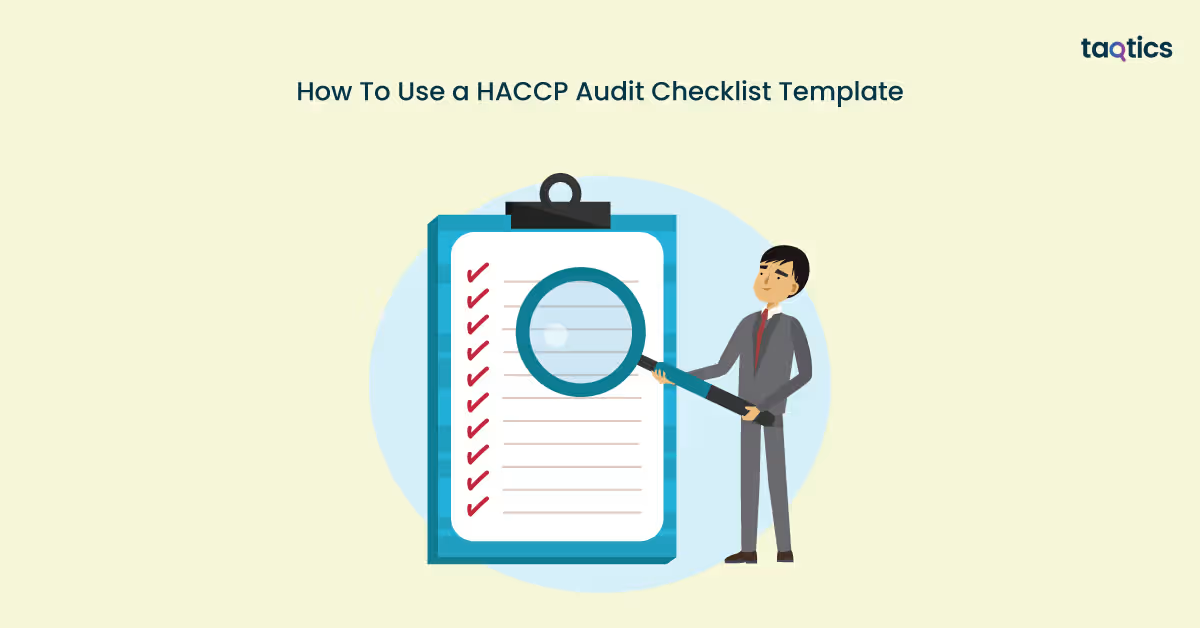
- Reviewing the HACCP plan to understand hazards, CCPs, and critical limits.
- Inspecting prerequisite programs (PRPs) such as sanitation, hygiene, pest control, and supplier approvals.
- Assessing each Critical Control Point (CCP) to verify monitoring and corrective actions.
- Documenting non-conformities to identify areas that need corrective measures.
In most facilities, trained food-safety personnel, quality managers, or certified HACCP auditors carry out the assessment. The auditor must be knowledgeable about HACCP principles, regulatory requirements, and industry best practices to ensure an objective evaluation.
You must also define the frequency of audits, which can vary based on the size of the operation, risk level, regulatory requirements, and customer expectations.
- Some businesses perform weekly or monthly internal audits, depending on risk and operations.
- Formal verification audits may be done quarterly or annually, based on regulations or customer requirements.
Finally, you must understand the difference between internal vs. external audits. Internal audits are performed by in-house staff to maintain readiness and identify issues early, while external audits are conducted by third-party certification bodies, customers, or regulatory authorities to validate compliance and award certifications. Both types are essential for maintaining a robust, trustworthy food-safety management system.
What Is The Standard Format for a HACCP Audit Checklist?
The standard format for a HACCP audit checklist can be a table format or checklist style, where each requirement is listed alongside fields such as Yes/No, Compliant/Non-Compliant, Comments, and Corrective Actions Needed.
The format is also influenced by regulatory bodies, such as:
- Food and Drug Administration (FDA): It provides guidance for preventive controls and HACCP-based systems, especially for seafood and juice.
- United States Department of Agriculture (USDA): This enforces HACCP requirements in meat and poultry facilities.
- Codex Alimentarius: It offers internationally recognized HACCP principles and serves as a global reference for checklist structure and content.
Many businesses rely on downloadable formats for convenience and standardization. HACCP audit checklists are commonly available in:
- Excel, for easy data entry and automated scoring
- Word, for narrative-style auditing and documentation
- PDF, for official records, printing, and sharing
Regardless of the format chosen, the goal remains the same: to ensure a complete, accurate, and verifiable evaluation of all HACCP requirements in a clear, auditor-friendly structure.
What Are Common Mistakes Found During a HACCP Audit?
The common mistakes found during a HACCP audit are incomplete hazard analysis, poor record-keeping, lack of staff training, improper corrective actions, and not verifying CCPs properly.
- Incomplete hazard analysis occurs when businesses overlook biological, chemical, or physical hazards at specific process steps, leading to gaps in risk control.
- Poor record-keeping becomes a major issue when monitoring logs, corrective action reports, or validation documents are missing, inaccurate, or incomplete.
- Lack of staff training affects the overall effectiveness of the system because employees may not follow procedures correctly or recognize when a food-safety risk is present.
- Improper corrective actions happen when deviations from critical limits are not addressed promptly or the corrective steps are not documented, weakening the integrity of the HACCP plan.
- Not verifying CCPs properly results in unvalidated controls, meaning the system cannot guarantee the safety of products consistently.
These mistakes can compromise food safety, reduce audit scores, and potentially lead to regulatory non-compliance. Hence, you must be careful in controlling or preventing them.
How Can You Prepare for a HACCP Audit?
You can prepare for a HACCP audit by following a structured approach that ensures your food-safety system is accurate, updated, and fully audit-ready.
- Use a pre-audit checklist to cross-verify that all HACCP elements—hazard analysis, CCP monitoring, corrective actions, and verification tasks—are complete and up to date.
- Conduct mock audits to simulate the real audit experience, identify gaps proactively, and familiarize staff with audit expectations.
- Strengthen staff training, ensuring employees understand their roles in monitoring CCPs, documenting activities, and following food-safety practices.
- Update documentation and procedures by reviewing logs, SOPs, calibration records, and training files to ensure they reflect current practices and regulatory requirements.
Preparing well builds confidence, reduces the risk of non-conformance, and helps maintain a strong, reliable food-safety management system.
Who Needs a HACCP Audit Checklist?
Food manufacturers, distributors and warehouses, retail food services, catering and foodservice operations, and any business handling food need an HACCP Audit Checklist to ensure food safety, regulatory compliance, and operational consistency.
- Food manufacturers need an HACCP Audit Checklist to systematically identify, monitor, and control hazards throughout the production and processing stages, ensuring that raw materials and finished products meet safety standards.
- Distributors and warehouses rely on it to verify that storage conditions, handling practices, and transportation procedures maintain food safety, preventing spoilage or contamination during the supply chain.
- Retail food services use the checklist to monitor hygiene practices, proper food preparation, and storage at the point of sale, reducing the risk of foodborne illness for customers.
- Catering and foodservice operations apply it to ensure that meals served are safe by tracking cooking, cooling, and storage procedures, as well as maintaining proper sanitation throughout the service process.
- Any business handling food benefits from a HACCP Audit Checklist to maintain compliance with local and international regulations, safeguard consumers, and demonstrate a proactive approach to food safety to auditors and clients.
Regular use of the checklist not only strengthens internal processes but also prepares organizations for successful third-party audits and certifications, making it a cornerstone of an effective food-safety management system.
What Are the Benefits of Using a Digital HACCP Checklist?
The benefits of using a digital HACCP checklist are real-time monitoring, audit trail automation, integration with ERP or food safety management systems, and cloud-based access, all of which enhance efficiency, accuracy, and compliance in food-safety management.
- Real-time monitoring: Digital checklists allow food-safety teams to track Critical Control Points (CCPs) and other parameters instantly, enabling immediate corrective actions if deviations occur.
- Audit trail automation: Every entry, update, and action is automatically recorded, creating a reliable and tamper-proof history for internal audits and regulatory inspections.
- Integration with ERP or food safety management systems: Digital HACCP checklists can seamlessly connect with existing enterprise systems, streamlining data flow, reporting, and overall operational management.
- Cloud-based access: Teams can access the checklist from any location and on multiple devices, facilitating collaboration, remote audits, and timely decision-making, while ensuring all records are securely stored and easily retrievable.
Businesses adopting digital checklists can respond faster to potential hazards, maintain thorough documentation, and ensure consistent food safety practices, ultimately protecting consumers, improving credibility, and reducing risks across the entire food supply chain.
How Often Should You Update Your HACCP Audit Checklist?
You should update your HACCP audit checklist at regular intervals and whenever significant changes occur to ensure it remains effective and compliant with food-safety standards.
- Based on product changes: Whenever there are changes in ingredients, recipes, packaging, or processing methods, the checklist should be revised to reflect new hazards or control points.
- Regulatory updates: Updates in local or international food-safety regulations (e.g., FDA, EU, Codex Alimentarius) should trigger revisions to ensure ongoing compliance.
- After non-conformances: If audits identify deviations, breaches, or critical incidents, the checklist should be updated to address gaps and prevent recurrence.
- Annual review recommendations: Even in the absence of major changes, a comprehensive yearly review helps verify that all processes, documentation, and CCPs are still current and effective.
Consistent updates not only help prevent contamination and protect consumers but also demonstrate a commitment to quality and regulatory compliance during audits and inspections.
Are There Industry-Specific HACCP Audit Checklists?
Yes, industry-specific HACCP audit checklists exist to address the unique hazards, processes, and regulatory requirements of different food sectors. While the core principles of HACCP remain the same, each industry faces distinct risks that require tailored audit criteria.
- Meat and poultry processing: Checklists focus on pathogen control (e.g., Salmonella, Listeria), temperature monitoring during storage and processing, and sanitation of equipment.
- Dairy products: Emphasis is placed on pasteurization processes, bacterial contamination prevention, and cold-chain management.
- Seafood: Includes checks for histamine formation, parasite control, freezing protocols, and traceability from source to sale.
- Bakery and confectionery: Focuses on allergen control, ingredient storage, and cross-contamination prevention.
- Beverage industry: Highlights water quality, fermentation monitoring, and cleaning of tanks and pipelines.
Using an industry-specific HACCP checklist ensures that audits are relevant, effective, and aligned with both regulatory standards and sector-specific risks, helping businesses maintain safety, quality, and compliance.
Download the checklist. Run it like a system.
Get the ready-to-use template, and see how Taqtics captures photo proof, timestamps, and compliance automatically.
What Are the Legal and Certification Requirements Related to HACCP Audits?
The legal and certification requirements related to HACCP audits ensure food businesses maintain safe operations and meet industry expectations.
- Legal requirements: Many countries mandate HACCP-based food-safety systems under national regulations. For example, the FDA (U.S.) requires HACCP for seafood and juice processors, the EU enforces HACCP under EC 852/2004, and India mandates compliance with FSSAI guidelines. Failure to adhere can result in fines, product recalls, or business closure.
- Certification requirements: Several third-party certifications require successful HACCP audits to demonstrate compliance. Popular certifications include SQF (Safe Quality Food), BRC (British Retail Consortium), FSSC 22000, and ISO 22000. These audits evaluate the effectiveness of HACCP plans, monitoring procedures, corrective actions, and documentation practices.
- Documentation and record-keeping: Both legal and certification audits require businesses to maintain detailed records of hazard analysis, CCP monitoring, corrective actions, and verification activities. These records serve as evidence of compliance and operational control.
- Periodic review and verification: Regulations and certification standards typically require regular internal and external audits, ensuring HACCP plans remain effective and updated according to process changes, non-conformances, or regulatory updates.
Compliance with legal and certification requirements not only ensures consumer safety but also strengthens business credibility, facilitates market access, and reduces the risk of regulatory penalties.
About the Author