
GMP Audit Checklist for Manufacturing: Definition, Importance & Components
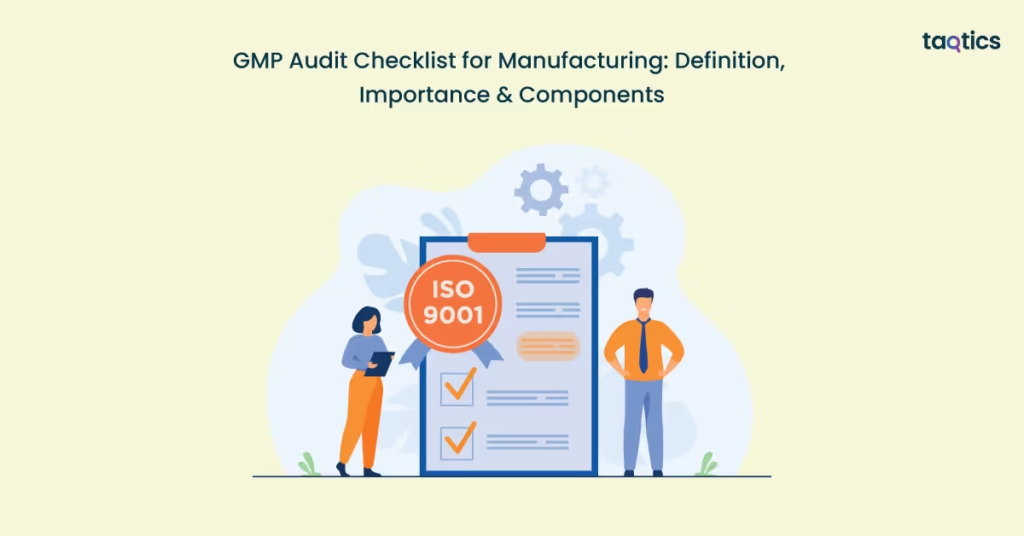
GMP audit checklist for manufacturing is a structured tool used to assess whether a production facility meets Good Manufacturing Practices, ensuring consistency, safety, and quality. GMP audit checklist for manufacturing works much like a daily routine you follow before cooking at home – you wash your hands, clean the counter, check expiry dates, and ensure utensils are sanitized before you start. Similarly, manufacturers use these checklists to verify hygiene, equipment condition, material handling, and documentation.
A 2022 paper in the Journal of Pharmaceutical Innovation highlighted that nearly 72% of product-quality failures in regulated facilities were preventable through better GMP oversight, emphasizing how critical structured audits are to reducing risk. A GMP audit checklist covers core components such as personnel training, facility design, equipment calibration, raw-material traceability, process validation, batch-record accuracy, and internal quality control.
These components keep the system reliable and compliant, much like a step-by-step safety checklist ensures a car remains road-ready. A 2020 study published in the International Journal of Quality & Reliability Management found that plants using structured GMP checklists improved compliance scores by over 30%, demonstrating measurable performance benefits. These elements together make the checklist an essential quality-assurance tool for any manufacturing operation.
Download the checklist. Run it like a system.
Get the ready-to-use template, and see how Taqtics captures photo proof, timestamps, and compliance automatically.
What is a GMP Audit in Manufacturing?
A GMP audit in manufacturing is a systematic, documented evaluation of whether a facility follows Good Manufacturing Practices, which are the standards that ensure products are consistently produced, controlled, and safe for use. The primary objectives of a GMP audit are to verify compliance, identify risks or gaps, strengthen quality systems, and ensure that products meet regulatory and customer requirements. These audits function as a preventive mechanism, helping companies catch problems before they turn into costly deviations, recalls, or safety incidents.
A GMP audit may be performed internally or externally, and understanding the distinction is essential for building a robust quality system. Internal audits are conducted by the company’s own trained auditors to assess ongoing compliance and readiness. In contrast, external audits include regulatory inspections (such as FDA or EMA), supplier audits by client companies, or audits by independent third-party bodies that verify compliance for certifications or partnerships. These differences naturally lead to the question of who conducts GMP audits, which can include:
- In-house quality assurance auditors
- Regulatory inspectors (e.g., FDA, EMA, MHRA)
- Customer or client-side supply-chain auditors
- Independent accredited auditors from certification bodies
GMP audits themselves fall into several clear categories, each serving a different purpose:
- Internal audits – routine self-checks to maintain compliance and preparedness
- Regulatory audits/inspections – formal evaluations by authorities such as FDA or EMA
- Supplier audits – assessments of vendors’ GMP controls before qualification or ongoing approval
- Third-party audits – independent audits for certification, risk assessment, or customer assurance
All these elements together make GMP audits a cornerstone of manufacturing quality and regulatory compliance.
What Is GMP Audit Checklist for Manufacturing?
A GMP Audit Checklist for Manufacturing is a structured evaluation tool used to verify whether a production facility is complying with Good Manufacturing Practices (GMP). At its core, it provides a clear, step-by-step list of criteria that auditors examine, ensuring every aspect of manufacturing, from raw-material handling to finished-product storage, meets safety and quality requirements. This naturally leads to its primary purpose: helping manufacturers identify gaps, standardize audits, and maintain continuous compliance with regulatory expectations.
A well-designed checklist covers all essential GMP components, guiding auditors through each area without missing critical details. These typically include:
- Personnel & hygiene requirements
- Premises and equipment design, maintenance, and cleanliness
- Material sourcing, receipt, and storage
- Production controls, validation, and in-process checks
- Documentation and batch-record accuracy
- Quality control and laboratory practices
- Change control, deviation handling, and CAPA
- Warehousing, distribution, and traceability
By transitioning smoothly from people to processes to final product handling, the checklist ensures a complete and consistent audit. In simple terms, it acts as the auditor’s roadmap, making sure every compliance requirement is reviewed, recorded, and verified during a GMP audit in manufacturing.
Why Are GMP Audits Checklist Important for Manufacturing Companies?
GMP audits checklist are important for manufacturing companies because they provide a structured way to ensure every process, product, and system meets the highest standards of safety and quality.
- Ensuring product safety, quality, and consistency prevents contamination, errors, and variability in production.
- Regulatory compliance with agencies like the FDA, WHO, EMA, and other national authorities.
- Preventing product recalls by identifying issues early before they reach consumers.
- Building customer trust through transparent, repeatable, and verified manufacturing practices.
By guiding auditors through each critical requirement, they reduce risks, strengthen compliance, and improve overall operational control.
What Are the Main Components of a GMP Audit Checklist?
The main components of a GMP audit checklist are the core areas that auditors evaluate to ensure a manufacturing facility complies with Good Manufacturing Practices and consistently produces safe, high-quality products.
Facility and Equipment
A GMP audit begins with evaluating the physical environment and equipment because these directly influence product safety and contamination control. Auditors check whether the facility’s layout and operational setup support hygienic production and proper material flow.
Key points include:
- Facility: Proper location, construction, and adequate space for operations and cleaning; clearly defined areas for raw materials, processing, and finished goods.
- Cleanliness: The environment must be clean, organized, and free from pests.
- Equipment: All production equipment must be well-maintained, calibrated, and supported by current maintenance records.
- Design: Structural design should prevent pest entry and plumbing issues like back-siphonage.
- Flow: The layout should support unidirectional flow of materials, personnel, and waste to prevent cross-contamination.
Personnel and Training
Since people operate the processes, their hygiene and competency significantly influence product quality. This section ensures staff follow proper practices and have the necessary training to perform tasks correctly.
Auditors look for:
- Hygiene: Effective handwashing practices and proper use of protective clothing.
- Training: Up-to-date training records showing employees are qualified for their roles.
- Staffing: Sufficient personnel to maintain smooth and compliant operations.
Documentation and Records
Documentation is the backbone of GMP compliance. Auditors verify that all processes are clearly documented and records are complete, accurate, and well-maintained.
This includes reviewing:
- SOPs: Written Standard Operating Procedures for all GMP activities.
- Batch records: Complete and accurate batch production and control records.
- Quality records: Test results, deviations, and corrective actions.
- Labeling: Controlled issuance, use, and destruction of excess labels.
- Retention: Defined procedures for record retention and secure access.
Quality Control
Quality control ensures that every product meets defined specifications. Auditors examine the systems used to monitor, test, validate, and release products.
Checklist points include:
- Testing: Sample testing procedures and calibrated laboratory equipment.
- Product specifications: Documented quality specifications for all products.
- In-process controls: Monitoring at critical manufacturing stages.
- Validation: Verified and validated manufacturing and control procedures.
- Product release: A formal, documented approval process before products are dispatched.
Raw Material and Product Handling
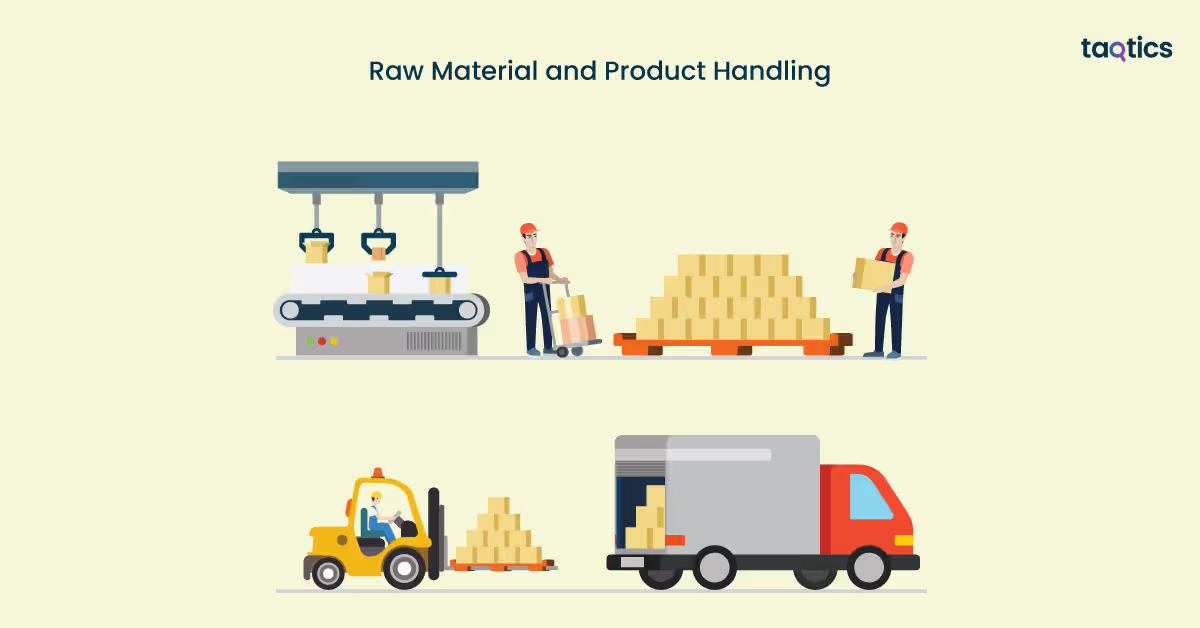
Proper handling of materials is essential to maintain traceability, prevent contamination, and ensure product integrity from receipt to distribution.
Auditors review:
- Storage: Adequate, clean areas with proper temperature and humidity controls.
- Dispensing: Controlled material dispensing with proper measurements and documentation.
- Traceability: Batch numbers and systems that ensure materials and products are traceable end-to-end.
- Packaging: Controls over packaging and labeling to maintain accuracy and product quality.
These components cover facilities, people, processes, materials, and controls, forming the foundation of a complete GMP assessment.
How to Prepare for a GMP Audit Step-by-Step?
To prepare for a gmp audit step-by-step, you can follow a structured approach that ensures both your processes and your team are ready for a thorough evaluation.
- Pre-Audit Self-Inspection
Start with an internal evaluation of your facility, processes, and documentation.
- Review all GMP requirements using an internal checklist.
- Inspect production areas, storage, equipment, and laboratories.
- Identify gaps and assign corrective actions before the official audit.
- Reviewing and Updating SOPs
Standard Operating Procedures must accurately reflect current practices.
- Ensure SOPs are complete, current, and version-controlled.
- Verify that actual shop-floor activities match what is written.
- Update outdated procedures and remove obsolete ones.
- Staff Training Refreshers
Well-trained staff are crucial during audits.
- Conduct refresher sessions on GMP basics and specific job-related procedures.
- Train teams on how to answer auditor questions clearly and confidently.
- Ensure all training records are up to date and signed.
- Organizing Documentation
Auditors rely heavily on documents to verify compliance.
- Ensure batch records, calibration logs, cleaning logs, and investigation reports are complete and accessible.
- Organize documents by category for quick retrieval.
- Check for missing signatures, dates, or inconsistencies.
- Mock Audits
A trial run helps build readiness.
- Conduct an internal or third-party mock audit simulating a real inspection.
- Practice document retrieval, staff interviews, and facility walkthroughs.
- Use findings to strengthen weak areas before the official audit.
Following these steps ensures your facility is polished, compliant, and audit-ready with minimal stress and maximum confidence.
What Are the Most Common GMP Audit Findings?
The most common GMP audit findings are issues that arise repeatedly across manufacturing facilities because they relate to core GMP principles, including documentation, training, cleanliness, and corrective action.
- Documentation errors: These include missing signatures, incomplete batch records, inconsistent entries, back-dating, or lack of real-time recording.
- Incomplete training records: This is caused due to missing proof of competency, outdated training logs, or staff performing tasks without documented qualification.
- Improper cleaning procedures: These include unvalidated cleaning methods, incomplete cleaning logs, or failure to follow established sanitation practices.
- Lack of CAPA follow-up: This mistake occurs when corrective and preventive actions are initiated but not tracked, closed, or verified for effectiveness.
- Deviations not addressed properly: These include deviations not documented, investigated, or assessed for impact on product quality.
Addressing these areas proactively helps companies strengthen compliance and avoid repeat observations during regulatory or third-party audits.
What Documents Should You Have Ready for a GMP Audit?
The documents you should have ready for a GMP audit include all key records that demonstrate your facility operates in full compliance with the specified manufacturing practices.
- Quality Manual: It outlines your quality system, policies, and organizational responsibilities.
- Standard Operating Procedures (SOPs): These are current, approved procedures for all GMP-related activities.
- Batch records: This reflects the complete production and control records for recent batches.
- Equipment logs: It displays calibration, maintenance, cleaning, and usage logs for all critical equipment.
- Supplier qualifications: These include approved supplier lists, audits, and qualification reports.
- Training certificates: These are proof of competency and completed training for all relevant personnel.
- Deviation and CAPA logs: These display documented deviations, investigations, corrective and preventive actions.
- Change control documentation: It records how process, equipment, or material changes were reviewed and approved.
Auditors rely heavily on documentation to verify that procedures are followed, equipment is maintained, staff are trained, and quality systems are functioning effectively.
What Questions Do GMP Auditors Commonly Ask?
The questions GMP auditors commonly ask include everything that helps them check how well your facility understands, implements, and documents GMP requirements in daily operations.
- Auditors often ask how you handle deviations, seeking to understand whether issues are documented, investigated, and resolved appropriately.
- They may request that you show the cleaning log for a specific piece of equipment, allowing them to verify real-time recordkeeping and sanitation practices.
- They typically ask how employee training is tracked, ensuring that training records are complete, up to date, and linked to job responsibilities.
- Auditors frequently inquire what your CAPA process is, wanting to evaluate how root causes are identified and how corrective and preventive actions are implemented and verified.
- They usually ask how you manage supplier qualifications, checking that supplier audits, approvals, and performance monitoring are properly documented.
- Finally, they may ask you to explain a specific entry in a batch record, assessing both the accuracy of documentation and the operator’s understanding of the process.
These questions help auditors determine whether your facility maintains consistent, controlled, and fully documented GMP compliance.
How Often Should GMP Audits Be Conducted?
GMP audits should be conducted at intervals that ensure ongoing compliance, reflect regulatory expectations, and align with the company’s risk profile.
- Internal audits are usually performed at least once a year, although high-risk areas may be audited more frequently, such as quarterly or semi-annually, based on product type, past findings, or process changes.
- External (regulatory) audits follow official agency schedules, with bodies like the FDA or EMA inspecting facilities every 2–3 years, or more often if there have been significant deviations, product recalls, or compliance concerns.
- Risk-based audit planning allows companies to adjust frequency depending on the severity and likelihood of potential risks, meaning critical processes or new suppliers may require more frequent audits, while stable, low-risk operations may require fewer.
Using a combination of scheduled, regulatory, and risk-based audits ensures continuous GMP readiness and strong quality oversight.
How Can You Maintain Ongoing GMP Compliance After the Audit?
You can maintain ongoing GMP compliance after the audit by putting systems in place that ensure quality, safety, and regulatory alignment are upheld every day, not just during inspection periods.
- Implementing continuous improvement systems, such as routine reviews of processes, data trending, and operational performance evaluations.
- Conducting periodic training, ensuring that all staff remain knowledgeable about GMP principles, updated SOPs, and any process changes.
- Tracking and following up on CAPAs, verifying that corrective and preventive actions are completed, effective, and not recurring.
- Scheduling internal audits regularly, using them as a preventive tool to catch gaps before regulatory or third-party audits.
- Updating SOPs and the Quality Management System (QMS) regularly, keeping documentation aligned with current practices, regulations, and new technologies.
By consistently applying these measures, manufacturing facilities maintain a strong GMP culture and stay audit-ready year-round.
What Are the Differences Between FDA, WHO, and EU GMP Guidelines?
The differences between FDA, WHO, and EU GMP guidelines lie in their regional scope, level of detail, regulatory enforcement strength, and how organizations determine which standards apply to their operations.
| Aspect | FDA GMP (US) | WHO GMP (Global) | EU GMP (EMA) |
| Primary Region | United States | Global (especially LMICs) | European Union |
| Regulatory Authority | FDA (Food & Drug Administration) | WHO (World Health Organization) | EMA & individual EU member-state authorities |
| Scope & Applicability | Mandatory for products sold in the U.S. (drugs, biologics, devices, some foods) | Used as a global reference; often adopted in developing countries | Mandatory for EU markets (medicinal products, APIs, biologics) |
| Documentation Requirements | Very detailed, strict on data integrity and electronic records (21 CFR Part 11) | Provides general guidance; less prescriptive | Highly detailed, includes specific Annexes (e.g., sterile products, ATMPs) |
| Inspection Frequency | Regular, risk-based, strong enforcement and warning letters | WHO prequalification inspections; not regulatory enforcement | Routine scheduled inspections by EU authorities |
| Enforcement Strength | High and noncompliance can lead to warning letters, import bans, and license revocation | Advisory and member countries adopt at their discretion | High and noncompliance may lead to product suspension or withdrawal |
| Unique Focus Areas | Data integrity, quality systems approach, validation | Global harmonization, minimum standards, and public health needs | Annex-driven requirements, including sterile processing and advanced therapies |
| Which Applies to You? | If you manufacture or export to the U.S. | If supplying the WHO procurement programs or using the global baseline standards | If manufacturing in or exporting to the EU |
While all three frameworks share the same goal, ensuring safe, consistent, high-quality products, they differ in expectations, terminology, and inspection approaches.
What Tools or Templates Can Help with GMP Audit Readiness?
The tools or templates that can help with GMP audit readiness are practical resources that streamline audit preparation, ensure consistency, and help track compliance across all GMP requirements.
- Downloadable GMP audit checklist (PDF/Excel): Provides a structured list of all key areas to review, making self-inspections and audits more efficient.
- Audit preparation calendar: Helps schedule internal audits, training refreshers, document reviews, and corrective action follow-ups on time.
- SOP checklist template: Ensures all Standard Operating Procedures are current, complete, and accessible, and highlights gaps or updates needed.
- CAPA tracker spreadsheet: Tracks corrective and preventive actions, assigns responsibilities, sets deadlines, and monitors effectiveness to ensure closure and compliance.
Using these tools consistently helps manufacturing facilities maintain ongoing readiness and simplifies the GMP audit process.
What Happens After the Audit?
After a GMP audit, the facility typically enters a follow-up and corrective phase to address any observations and ensure ongoing compliance.
- Reviewing the audit report to understand findings and areas of non-compliance.
- Implementing corrective and preventive actions (CAPA) for each observation.
- Documenting responses and improvements to demonstrate compliance.
- Monitoring the effectiveness of corrective actions through follow-up checks or internal audits.
- Updating SOPs and processes as needed based on audit learnings.
This post-audit process helps strengthen quality systems, prevent recurrence of issues, and maintain regulatory readiness.
Download the checklist. Run it like a system.
Get the ready-to-use template, and see how Taqtics captures photo proof, timestamps, and compliance automatically.
Where Can You Learn More About GMP Audit Requirements?
You can learn more about GMP audit requirements from a variety of reliable sources that provide guidance, regulations, and best practices.
- Regulatory authority websites such as FDA, EMA, and WHO for official GMP guidelines and inspection expectations.
- Industry associations like ISPE (International Society for Pharmaceutical Engineering) for training, webinars, and publications.
- GMP-focused training programs and workshops offered by certified providers.
- Books, journals, and online courses on pharmaceutical quality systems and GMP compliance.
- Professional consulting firms that specialize in GMP audit preparation and quality management.
These resources help manufacturers stay updated on evolving standards and maintain audit readiness.
Are GMP audits mandatory?
No, GMP audits themselves are not always explicitly mandatory, but they are a critical part of regulatory compliance for manufacturers in regulated industries.
- Internal GMP audits are expected by regulators as part of a robust quality management system, even if not legally mandated.
- External audits/inspections by regulatory authorities are mandatory for market approval and ongoing product licensing.
- Conducting GMP audits helps prevent non-compliance, product recalls, and regulatory penalties.
While an internal audit is not legally required in every jurisdiction, skipping it could increase the risk of failing a regulatory inspection, making audits effectively essential.
About the Author