
Inventory & Wastage Audit: Definition, Importance, Preparation & How To Conduct
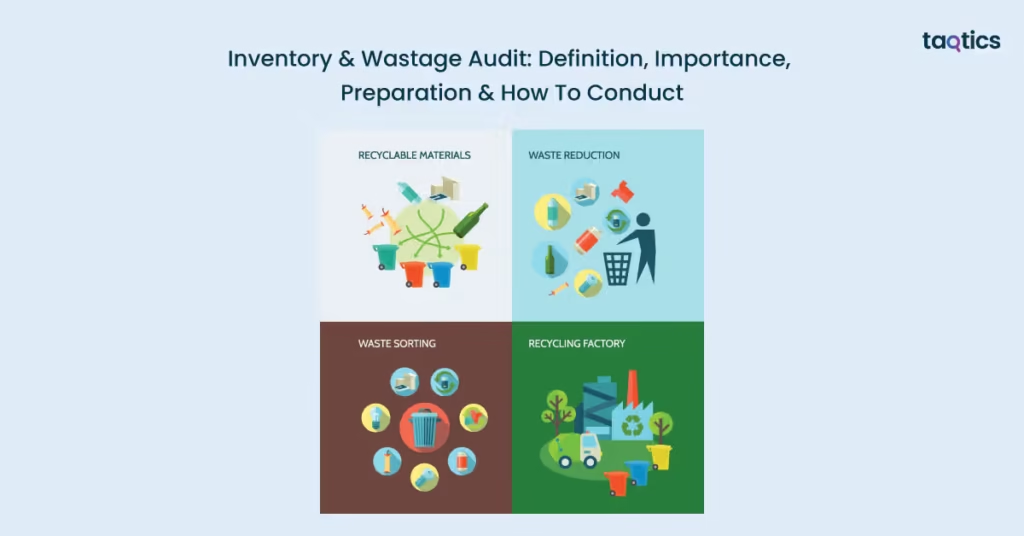
Inventory and wastage audit is a structured review of how goods are stored, tracked, and utilized, with a focus on minimizing unnecessary loss. Inventory and wastage audit acts like a household check where you regularly open your pantry, note what is expiring soon, and ensure nothing goes to waste, saving both money and effort. In the same way, businesses use such audits to maintain transparency in stock levels, identify wastage patterns, and plug financial leakages. According to the Food and Agriculture Organization (FAO), nearly 13% of food is lost in the supply chain before reaching retailers (FAO, 2021), highlighting the global scale of the issue.
The importance of this audit extends beyond just cost savings. It helps businesses streamline operations, comply with standards, and reduce environmental impact. Preparation involves categorizing inventory, setting benchmarks, and training staff on handling procedures before the audit begins. A well-conducted process ensures real-time accuracy of stock records, prevents fraud, and builds consumer trust by proving that the company manages resources responsibly. A World Bank report notes that inefficient supply chain practices can increase wastage costs by up to 15% of total revenue (World Bank, 2020), making inventory and wastage audits a vital tool for sustainable business growth.
What Is An Inventory And Wastage Audit?
An inventory audit is the process of verifying stock levels, accuracy of records, and alignment of physical goods with documented accounts. It ensures that businesses maintain proper control over raw materials, finished products, and work-in-progress items. An inventory audit typically checks for mismatches, fraud, or mismanagement in stock reporting and is a cornerstone of efficient supply chain and financial management.
A wastage audit, on the other hand, goes a step further by not only reconciling stock but also capturing spoilage, obsolescence, damage, pilferage, and write-offs. In other words, while a traditional inventory audit confirms what is on hand versus what is recorded, a wastage audit investigates what is being lost and why. This extension provides deeper insights into operational inefficiencies and areas for cost reduction.
For example, the United Nations Environment Programme (UNEP) reported that 931 million tonnes of food were wasted globally in 2019, accounting for 17% of total food available to consumers (UNEP, 2021). Similarly, Gartner research indicates that inventory inaccuracies can range from 25% to 30% in many businesses, leading to higher wastage and poor forecasting (Gartner, 2022).
Thus, an inventory and wastage audit is not just about counting items, but understanding losses, identifying root causes, and implementing corrective measures to improve efficiency, reduce costs, and support sustainability goals.
Why Are Inventory And Wastage Audits Important?
Inventory and wastage audits are important because they ensure accuracy in financial reporting, prevent costly overstock or stockouts, and help detect hidden inefficiencies such as shrinkage and ghost assets.
Accuracy in Financial Reporting
When records do not match physical stock, it leads to errors in balance sheets, misrepresented profits, and poor decision-making. Inventory and wastage audits ensure that financial statements reflect true stock values, which is critical for compliance and investor confidence. According to PwC, over 40% of companies experience financial discrepancies due to inaccurate inventory valuation, impacting audits and external reporting (PwC, 2022).
Prevention of Overstock or Stockouts and Better Cost Control
Overstocking ties up capital and increases storage costs, while stockouts result in lost sales and reduced customer trust. Audits allow businesses to balance supply with demand, controlling costs and optimizing inventory cycles. McKinsey found that companies with optimized inventory management can reduce working capital requirements by up to 20% (McKinsey, 2021), directly improving profitability.
Detection of Shrinkage, Ghost Assets, and Minimizing Losses
Shrinkage (loss from theft, damage, or errors) and ghost assets (items recorded but not physically present) are silent drains on revenue. Regular wastage audits uncover these issues, minimizing avoidable losses. The National Retail Federation reported that inventory shrinkage cost U.S. retailers $94.5 billion in 2021, with theft being the largest contributor (NRF, 2022). Identifying and addressing these risks early protects businesses from financial leakage.
Inventory and wastage audits are vital not just for compliance but also for profitability, risk management, and long-term sustainability. By shining light on hidden inefficiencies, they empower organizations to make smarter, data-driven decisions.
How To Conduct An Inventory & Wastage Audit?
You conduct an inventory and wastage audit by carrying out a physical inventory count, applying ABC analysis, reviewing cutoff reports, analyzing overhead and freight costs, and completing reconciliation activities.
Physical Inventory Count
This involves manually verifying stock against recorded quantities to detect discrepancies. It is the most direct way to spot spoilage, damage, or theft. A Deloitte survey found that 72% of businesses discover hidden discrepancies only during physical counts, underscoring the necessity of this practice (Deloitte, 2022).
ABC Analysis
ABC analysis categorizes inventory into three groups, which helps businesses prioritize monitoring efforts, ensuring that costly items receive stricter controls while still managing bulk consumables effectively.
- A (high-value, low-volume),
- B (moderate-value), and
- C (low-value, high-volume).
Research shows that ABC analysis can improve inventory accuracy and reduce carrying costs by up to 30% (KPMG, 2021).
Cutoff Reports
Cutoff analysis ensures that sales and purchases are recorded in the correct accounting period, preventing errors in valuation and wastage tracking. Without it, businesses risk overstating or understating stock. EY notes that misapplied cutoffs account for nearly 20% of inventory-related audit adjustments (EY, 2022).
Overhead and Freight Cost Analyses
These analyses identify whether transportation, storage, and handling costs are proportionate to inventory value. Excessive freight or warehousing expenses can signal inefficiencies or wastage in supply chains. Accenture reports that improving freight cost tracking can cut logistics waste by 8–12% annually (Accenture, 2021).
Reconciliation Activities
Reconciliation aligns book records with physical stock, wastage write-offs, and financial statements, creating a complete picture. It prevents ghost assets and improves transparency. According to BDO, companies that reconcile monthly reduce year-end inventory discrepancies by over 50% (BDO, 2020).
Conducting an inventory and wastage audit requires both quantitative verification and qualitative analysis. By combining these methods, organizations can reduce waste, ensure compliance, and protect profitability.
How To Prepare For An Inventory And Wastage Audit?
To prepare for an inventory and wastage audit, organizations need to plan the process carefully, set clear objectives, and train staff with well-defined responsibilities. Proper preparation ensures efficiency, accuracy, and transparency, reducing the chances of errors or delays during the audit.
Planning
Planning begins with cleaning the workspace to make physical verification smoother and reduce errors caused by misplaced items. It also involves gathering documents such as balance sheets, invoices, and inventory management system reports so auditors can cross-check records. According to the Institute of Internal Auditors, well-documented preparation can cut audit completion time by up to 30% (IIA, 2021), improving efficiency and accuracy.
Setting Objectives
Every audit should start with a clear purpose, whether the focus is on accurate valuation, regulatory compliance, or efficiency improvement. Setting objectives helps auditors prioritize efforts and ensures actionable outcomes. A Harvard Business Review study highlights that companies with well-defined audit objectives are 2.3 times more likely to implement corrective actions effectively (HBR, 2020).
Staff Training and Defining Responsibilities
Audits require team coordination, making staff training and role clarity essential. Employees should understand procedures for labeling, counting, and reporting, while managers must oversee verification and approvals. Research by Deloitte shows that companies investing in pre-audit staff training reduce discrepancies in stock reporting by 25% (Deloitte, 2021).
Preparing for an inventory and wastage audit is about more than paperwork. It is about ensuring readiness across systems, objectives, and people. This preparation not only smooths the audit process but also maximizes its impact on efficiency and cost savings.
Who Should Conduct The Inventory & Wastage Audit?
The inventory and wastage audit should be conducted either by an internal team or an external auditor. Each option has distinct roles and benefits, and many organizations combine both approaches for maximum effectiveness.
Internal Team
Internal staff verify stock levels, compare physical counts with records, and identify wastage sources such as damage or spoilage.
The benefits when external auditor does it include:
- Cost-effective since no external fees are involved.
- Faster execution due to familiarity with company processes.
- Useful for routine checks and ongoing monitoring.
According to the Institute of Management Accountants, 70% of mid-sized firms rely on internal staff for periodic inventory checks because of convenience and lower costs (IMA, 2020).
External Auditor
External auditors provide independent oversight, ensuring compliance with accounting standards and regulatory frameworks. They also validate internal findings and highlight risks that internal teams might overlook.
The benefits when external auditor does it include:
- Greater credibility for stakeholders, investors, and regulators.
- Objective and unbiased reporting.
- Helps meet statutory compliance requirements.
A KPMG survey revealed that 84% of companies engaging external auditors improved transparency and reduced compliance risks (KPMG, 2021).
Organizations should align their choice with goals, using internal teams for regular efficiency checks and external auditors for independent validation. A hybrid approach often delivers the best balance of cost control, accuracy, and compliance assurance.
How Frequently Should Inventory & Wastage Audit Be Conducted?
The inventory and wastage audit should be conducted at intervals that balance accuracy with efficiency, typically through annual full physical counts or more frequent cycle counts. The choice depends on the size of operations, industry requirements, and regulatory obligations.
Annual Full Physical Counts
A full physical count involves verifying every item in inventory against recorded data, usually once a year. This method provides a complete picture of stock levels and wastage, making it suitable for statutory audits and compliance reporting. Its advantage is comprehensive accuracy, but it is also labor-intensive, time-consuming, and may require halting operations. For example, many manufacturing firms plan these counts during off-peak periods to minimize disruption.
Periodic Cycle Counts
Cycle counting breaks inventory verification into smaller, manageable segments carried out regularly (monthly, weekly, or even daily) instead of once a year. This approach is especially effective in high-volume or fast-moving operations, such as retail and e-commerce, where waiting for an annual audit could lead to significant undetected losses. The advantage of cycle counting is continuous accuracy with minimal disruption. According to the American Productivity & Quality Center (APQC), companies using cycle counting achieve 95% higher inventory accuracy compared to those relying solely on annual counts (APQC, 2021).
Inventory and wastage audits should be tailored to operational needs—annual full counts for compliance and periodic cycle counts for real-time accuracy. Many organizations use a hybrid approach, combining both methods to achieve reliable oversight without compromising efficiency.
How Do You Detect And Prevent Inventory Shrinkage And Wastage?
You can detect and prevent inventory shrinkage and wastage by calculating shrinkage rates, identifying root causes such as theft or errors, and deploying robust tracking and monitoring systems supported by frequent cycle counts and strong security measures.

Calculating Shrinkage Rate and Identifying Causes
The first step is to calculate the shrinkage rate, which is the difference between recorded inventory and actual stock divided by sales. This metric helps quantify losses and highlight patterns. Common causes include theft, damage during handling, supplier fraud, and administrative errors. Identifying the cause enables businesses to apply corrective actions rather than relying on guesswork. For example, the National Retail Federation reported that administrative errors account for 21% of total shrinkage losses in retail (NRF, 2022).
Deploying Tracking Systems
Technology plays a critical role in prevention. RFID tags, barcodes, and inventory management software enable real-time tracking and visibility of stock movement, reducing errors and deterring theft. Automated systems also minimize manual data entry, lowering the risk of administrative mistakes. A study by Accenture found that RFID adoption can improve inventory accuracy by up to 25% (Accenture, 2021).
Frequent Cycle Counts and Improving Security
Cycle counts conducted regularly allow discrepancies to be caught quickly before they escalate into larger financial losses. At the same time, improving security measures, such as surveillance cameras, restricted access to storage areas, and employee training, adds another layer of protection against shrinkage. Research from the Loss Prevention Research Council shows that businesses implementing combined cycle counting and enhanced security reduced shrinkage by 15–20% annually (LPRC, 2020).
Detecting and preventing inventory shrinkage and wastage requires a mix of measurement, technology, and vigilance. By integrating these methods, businesses can protect profits, ensure operational efficiency, and build greater trust with stakeholders.
How Can Inventory & Wastage Audits Drive Continuous Improvement?
Inventory and wastage audits can drive continuous improvement by enabling post-audit analysis to identify problem areas and by embedding findings into regular reporting, documentation, and standard operating procedures (SOPs).
Post-Audit Analysis
Once an audit is complete, businesses can identify trouble spots such as recurring wastage, shrinkage, or inaccurate records. This allows management to refine audit methodologies, focus on high-risk items, and increase audit frequency where issues are more prevalent. For example, a PwC study shows that companies leveraging post-audit insights improve operational efficiency by 20% within a year (PwC, 2021). Post-audit reviews not only correct existing errors but also create a feedback loop that strengthens future audits.
Regular Reporting, Documentation, and Integrating Lessons Learned into SOPs
Audits become most valuable when findings are regularly reported, documented, and integrated into company SOPs. This institutionalizes improvements, ensuring that corrective measures are not forgotten but become part of daily operations. For instance, documentation of recurring wastage patterns can lead to new SOPs in procurement or storage. According to Deloitte, organizations that embed audit learnings into SOPs reduce inventory discrepancies by 35% year over year (Deloitte, 2020).
These practices transform audits from one-time checks into ongoing efficiency drivers. When coupled with documentation and SOP integration, they become tools for long-term efficiency and cost savings.
What Tools And Technologies Can Help In Inventory & Wastage Audits?
The tools and technologies that can help inventory and wastage audits include inventory management software, barcode or mobile scanners, ERP/WMS system integration, and remote auditing tools. These solutions enhance accuracy, reduce manual errors, and streamline the entire audit process.
Inventory Management Software
Modern inventory management systems (IMS) automate stock tracking, generate real-time reports, and flag discrepancies instantly. They also provide insights into wastage trends and reorder levels, reducing the chances of overstocking or spoilage. Research by Statista indicates that 68% of global retailers use dedicated inventory management software to improve visibility and accuracy (Statista, 2022).
Barcode and Mobile Scanners
Barcode and mobile scanning devices speed up physical counts by replacing manual data entry with automated scans. This not only saves time but also reduces errors and improves traceability of damaged or expired goods. Zebra Technologies found that retailers using barcode scanning reported a 20% reduction in inventory-related labor costs (Zebra, 2021).
ERP/WMS Integration
Integrating audits with Enterprise Resource Planning (ERP) or Warehouse Management Systems (WMS) enables seamless reconciliation of financial data with operational records. Such integration provides a single source of truth for stock, costs, and wastage. Gartner research shows that companies using ERP-integrated WMS improved order accuracy by 29% and reduced inventory write-offs significantly (Gartner, 2021).
Remote Auditing Tools
With digital adoption, remote auditing platforms allow auditors to verify documents, track stock levels, and monitor supply chain activity virtually. These tools reduce travel costs and make audits more flexible, particularly for multi-location businesses. According to EY, 40% of organizations adopted remote auditing tools during the pandemic and plan to continue using them for efficiency gains (EY, 2021).
Leveraging the right tools and technologies makes inventory and wastage audits faster, more accurate, and scalable. By combining automation, integration, and remote accessibility, businesses can achieve stronger controls and long-term efficiency.
How Do You Resolve Physical Vs. Recorded Inventory Discrepancies?
One can resolve physical vs. recorded inventory discrepancies by investigating root causes, adjusting records to reflect accurate stock, and implementing corrective action plans to prevent future mismatches.
Investigating Root Causes
The first step is to identify why discrepancies occurred, which could be due to theft, spoilage, data-entry errors, supplier fraud, or unrecorded transactions. A root-cause analysis helps separate one-time mistakes from systemic problems. According to the Association for Supply Chain Management, over 46% of inventory discrepancies stem from process inefficiencies such as poor documentation or mislabeling (ASCM, 2021). By pinpointing causes, businesses can target specific weaknesses instead of applying generic fixes.
Adjusting Records
Once the discrepancy is understood, businesses must adjust inventory records to reflect the actual physical stock. This ensures accurate valuation in financial statements and reliable data for forecasting. Best practice is to document adjustments with supporting evidence (e.g., damage reports, supplier claims) for audit trails. The Chartered Institute of Management Accountants highlights that unreconciled inventory errors can distort gross profit margins by up to 10% (CIMA, 2020), making timely adjustments critical.
Implementing Corrective Action Plans
To prevent recurrence, organizations need corrective action plans, which may include improving employee training, enhancing barcode or RFID tracking, or scheduling more frequent cycle counts. Corrective measures ensure discrepancies are not just corrected but systematically reduced over time. A study by BDO found that firms implementing corrective audit measures cut recurring discrepancies by 32% within two years (BDO, 2021).
Resolving inventory discrepancies requires a structured approach. Identify the cause, adjust records, and reinforce systems. This ensures both immediate accuracy and long-term reliability in inventory management.
What Are the Best Practices For A Robust Audit?
The best practices for a robust audit go beyond simple stock verification. It makes the process systematic, reliable, and sustainable.

- Clear Audit Planning
Every strong audit begins with detailed planning, defining scope, timelines, roles, and objectives. Planning avoids confusion and ensures consistency. According to the Institute of Internal Auditors, well-planned audits reduce error rates by nearly 40% (IIA, 2021).
- Use of Technology
Incorporating barcode scanners, RFID systems, and inventory management software eliminates manual errors and improves visibility. Digital tools also enable real-time reporting and audit trails. Research shows that businesses leveraging automation reduce audit times by up to 50% (Accenture, 2020).
- Segregation of Duties
Ensuring that no single employee controls purchasing, recording, and auditing helps reduce fraud and bias. Segregation of duties creates accountability and improves trust in results. The Association of Certified Fraud Examiners found that lack of duty segregation contributed to 20% of inventory-related fraud cases (ACFE, 2021).
- Regular Cycle Counts
Instead of relying solely on annual checks, frequent cycle counts help catch discrepancies early. This approach enhances accuracy without disrupting operations. APQC research shows that companies adopting cycle counting achieve over 95% inventory accuracy (APQC, 2021).
- Documentation and Audit Trail
Maintaining proper records, supporting documents, and audit logs ensures transparency and compliance with accounting standards. This also helps in external validations. PwC notes that strong documentation practices improve external audit efficiency by 30% (PwC, 2020).
- Continuous Training and Improvement
Employees should be trained regularly on audit procedures, reporting standards, and fraud prevention. Post-audit reviews should also feed into updated SOPs for continuous improvement. Deloitte found that firms with structured post-audit training reduced recurring discrepancies by 25% (Deloitte, 2021).
The best practices for a robust audit combine planning, technology, accountability, and continuous improvement. By embedding these principles, organizations can ensure accuracy, reduce wastage, and strengthen overall financial and operational integrity.
About the Author