Cold Storage & Temperature Audit: Definition, Importance And How To Perform
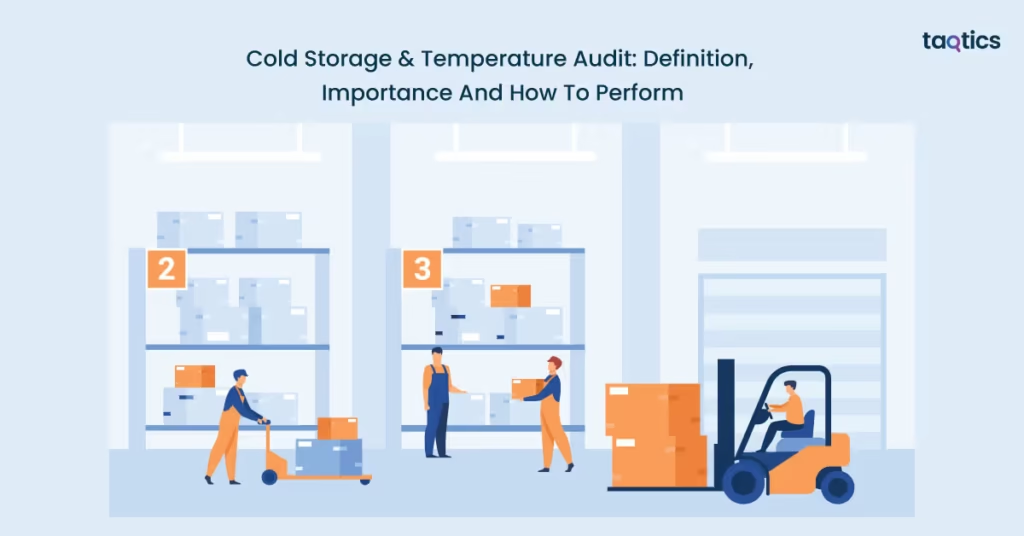
Cold storage and temperature audit ensures that perishable goods are stored at the right temperature to maintain safety, quality, and shelf life. Cold storage and temperature audit is a systematic review of storage facilities, equipment, and processes to verify that they meet industry standards and regulatory requirements. Imagine buying milk from a store only to find it spoiled the next morning. Chances are the storage temperature was not maintained. This simple example shows how critical it is to monitor and record temperatures to avoid foodborne illnesses and economic losses.
Globally, the stakes are high. According to the Food and Agriculture Organization (FAO, 2021), nearly 14% of food is lost between harvest and retail, much of it due to inadequate cold storage. A well-executed audit not only helps businesses comply with food safety laws but also improves operational efficiency by reducing wastage and energy costs. By routinely checking temperature logs, calibrating equipment, and training staff, companies can create a robust cold chain system that protects both products and public health.
What is Cold Storage & Temperature Audit?
Cold storage refers to temperature-controlled facilities used to preserve perishable goods such as food, pharmaceuticals, and certain chemicals by slowing down spoilage and bacterial growth. It plays a pivotal role in maintaining quality and safety within the cold chain, the continuous, temperature-regulated journey of products from source to consumption. A cold storage and temperature audit is the structured process of reviewing these facilities, equipment, and records to ensure they meet regulatory standards and industry best practices. This audit confirms that temperature-sensitive products remain within safe limits throughout storage and transit, safeguarding both public health and business reputation.
The uninterrupted cold chain is crucial because even a short break in optimal conditions can lead to spoilage or product degradation. For example, the World Health Organization (WHO, 2020) estimates that up to 50% of vaccines are wasted globally each year due to temperature control issues during transportation and storage. Typical temperature ranges for cold storage depend on the product type: chilled storage is generally maintained between 32 °F and 39 °F (0 °C to 4 °C), freezer storage ranges from –10 °F to –20 °F (–23 °C to –29 °C), and ultra-low temperature storage, often used for pharmaceuticals like certain COVID-19 vaccines, can reach as low as –122.8 °F (–86 °C). These ranges are critical to preserve the safety, potency, and shelf life of sensitive goods.
What Is The Importance Of Cold Storage & Temperature Audit?
The importance of cold storage and temperature audit lies in ensuring product quality and safety, complying with regulations, identifying and addressing problems, and improving cold chain management.
Ensuring Product Quality and Safety
Many perishable goods, including meat, dairy, vaccines, and laboratory samples, require strict temperature control to maintain their integrity and effectiveness. Any deviation from the optimal range can cause spoilage, bacterial growth, or potency loss, posing risks to both health and business. Temperature logs act as concrete evidence that products have been stored correctly. According to the U.S. Centers for Disease Control and Prevention (CDC, 2022), improper storage temperatures are one of the leading causes of foodborne illness outbreaks in the U.S., a problem that can be mitigated with proper monitoring and auditing.
Compliance with Regulations
Industries such as pharmaceuticals, food processing, and healthcare operate under stringent regulations for temperature control. Agencies like the FDA, USDA, and WHO mandate adherence to prescribed temperature ranges to prevent contamination and degradation. For example, the FDA’s Food Code (2022) specifies that cold-holding temperatures for refrigerated foods must not exceed 41 °F (5 °C). Failure to meet these standards can result in hefty fines, product recalls, and even facility shutdowns — all of which can be avoided through regular cold storage and temperature audits.
Identifying and Addressing Problems
Temperature logs can quickly reveal patterns of fluctuation, spikes, or dips, pointing to issues like equipment malfunction, power outages, or poor handling practices. Timely detection allows for immediate corrective measures, reducing the risk of irreversible product damage. A report by the Global Cold Chain Alliance (GCCA, 2021) found that equipment failures account for nearly 24% of cold chain product losses worldwide, underscoring the value of vigilant monitoring and auditing.
Improving Cold Chain Management
Beyond problem detection, cold storage audits help optimize operational efficiency by analyzing historical temperature data to identify weak points in the cold chain. This information can guide process improvements, staff training, and investment in better equipment or technology. According to Allied Market Research (2023), global cold chain logistics is projected to grow at a CAGR of 17.9% from 2023 to 2032, and businesses that maintain consistent audit practices will be better positioned to capture this growth by minimizing losses and maximizing quality.
A cold storage and temperature audit is more than a compliance formality. It is a strategic safeguard that ensures products stay safe, customers stay satisfied, and operations run efficiently. Without it, businesses risk avoidable losses, regulatory action, and long-term reputational damage.
Which Information Are Typically Recorded In Cold Storage & Temperature Audits?
The information that are typically recorded in cold storage and temperature audits are date and time of recording, temperature readings, initials of the person recording, cold storage unit identification, and corrective actions taken. These details create a transparent and verifiable record that ensures product safety, regulatory compliance, and accountability in the cold chain process.
Date and Time of Recording
Documenting the exact date and time establishes a clear timeline for monitoring temperature conditions. This is crucial because even short-term deviations can compromise product quality. The International Institute of Refrigeration (IIR, 2020) highlights that temperature-sensitive goods can deteriorate within hours if exposed to unsafe conditions, making time-stamped records essential for verifying continuous compliance.
Temperature Readings
Measurements are recorded in either Fahrenheit or Celsius to confirm that the cold storage environment remains within the required range for the specific products. A study by the Journal of Food Protection (2021) found that 20% of refrigerated food facilities in the U.S. recorded at least one incident of unsafe storage temperatures annually, emphasizing the need for precise and consistent documentation.
Initials of the Person Recording
Including the initials of the individual who performed the check adds accountability and ensures traceability in case of discrepancies. This practice also supports quality assurance audits, where records must show who was responsible for specific monitoring tasks. In pharmaceutical cold chains, WHO guidelines (2022) stress that named responsibility reduces the risk of oversight and improves staff diligence.
Cold Storage Unit Identification
When a facility has multiple units, identifying each storage unit avoids confusion and prevents misattribution of temperature logs. This becomes particularly important in large warehouses or distribution hubs. The Global Cold Chain Alliance (2022) reports that multi-unit facilities account for nearly 40% of cold chain-related incidents due to unclear recordkeeping and unit mix-ups, making precise identification a critical best practice.
Corrective Actions Taken
If a recorded temperature falls outside the acceptable range, the specific corrective actions, such as adjusting thermostat settings, transferring products, or servicing equipment, should be documented immediately. This ensures traceability and demonstrates proactive compliance during inspections. The Food Standards Agency (FSA, 2021) found that prompt corrective action reduced spoilage rates by up to 35% in monitored food storage facilities.
Recording these details during a cold storage and temperature audit is about building a defensible safety record that protects products, customers, and the business’s credibility. Without such thorough documentation, even a well-maintained cold chain can fail regulatory scrutiny.
Which Industries widely Use Cold Storage & Temperature Audit?
The industries that widely use cold storage and temperature audit include food, pharmaceuticals, and vaccines, each with unique storage requirements to ensure product safety, potency, and shelf life. These audits help maintain optimal conditions, prevent losses, and ensure compliance with stringent industry regulations.
Food Industry
The food sector relies heavily on cold storage to keep products fresh, safe, and market-ready. Perishable items like meat, dairy, seafood, and fresh produce require strict temperature control — typically 32 °F to 39 °F (0 °C to 4 °C) for chilled goods and –10 °F to –20 °F (–23 °C to –29 °C) for frozen products. According to the United Nations Environment Programme (UNEP, 2022), improper cold storage is a key contributor to the 931 million tonnes of global food waste generated annually, much of which could be avoided through proper temperature audits and monitoring.
Pharmaceutical Industry
Pharmaceutical products such as insulin, biologics, and certain oncology drugs require precise temperature regulation to maintain their chemical stability and therapeutic effectiveness. Most are stored in controlled environments between 36 °F and 46 °F (2 °C to 8 °C), though some biologics may require ultra-low storage at –76 °F to –122.8 °F (–60 °C to –86 °C). The IQVIA Institute (2023) reports that temperature excursions in the pharma cold chain can cost the industry up to $35 billion annually, highlighting the financial and health implications of inadequate audits.
Vaccine Storage
Vaccines are among the most temperature-sensitive products, with most requiring storage between +2 °C and +8 °C (35.6 °F to 46.4 °F) to remain potent. Some, such as certain mRNA COVID-19 vaccines, need ultra-cold conditions as low as –122.8 °F (–86 °C). The World Health Organization (WHO, 2021) warns that exposure to temperatures outside recommended ranges can render vaccines ineffective, risking public health and undermining immunization programs. Cold storage audits are therefore critical to track, verify, and maintain these exacting standards from production to point of administration.
Whether preserving fresh food, maintaining drug stability, or safeguarding vaccines, cold storage and temperature audits act as a quality gatekeeper for industries where even minor deviations can lead to massive losses, health risks, or regulatory penalties.
How Do You Monitor Cold Storage Temperatures?
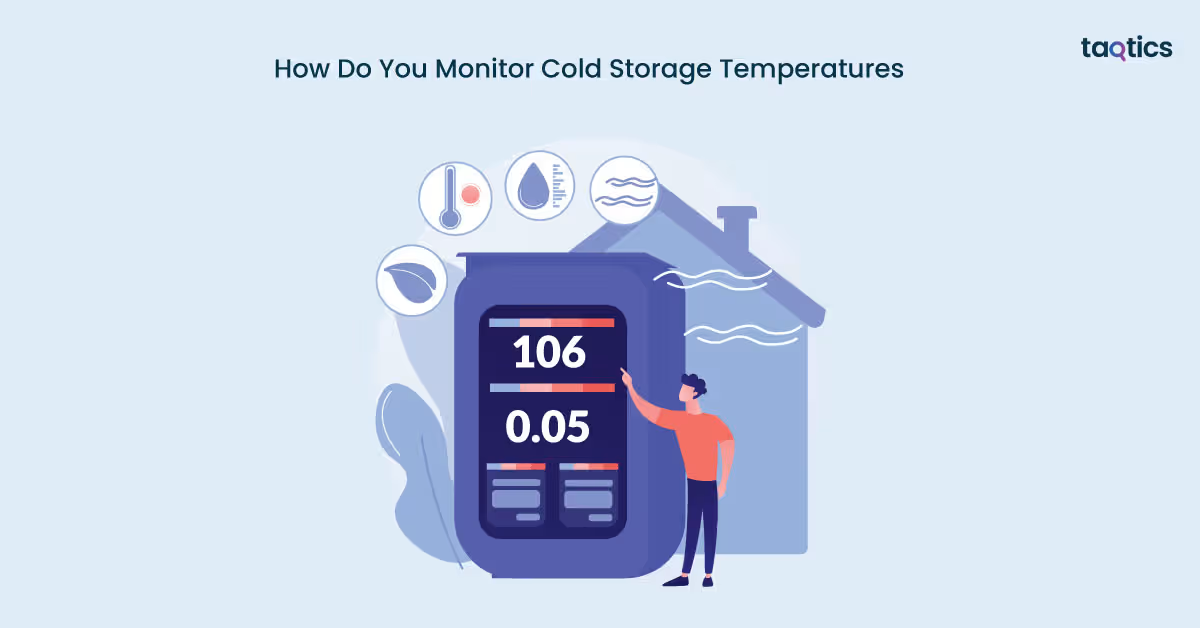
You can monitor cold storage temperatures by using data loggers, wireless sensors, probe thermometers, and continuous monitoring systems, all supported by real-time alerts and dashboards.
Data Loggers
Data loggers are compact electronic devices that record temperature over time, storing the information for later review. They are widely used in both stationary storage units and during transportation. According to the Global Cold Chain Alliance (2022), facilities using automated data loggers reduce temperature-related spoilage by up to 30% compared to manual checks.
Wireless Sensors
Wireless sensors transmit real-time temperature readings to a central system, eliminating the need for manual data retrieval. They are ideal for large-scale operations with multiple storage units. The International Institute of Refrigeration (2021) found that wireless monitoring systems can detect and report deviations up to 80% faster than traditional methods, enabling quicker corrective action.
Probe Thermometers
Probe thermometers provide instant temperature readings by inserting the probe directly into the product or storage environment. While they are best for spot checks, they play a vital role in verifying sensor accuracy. In retail food safety inspections, the U.S. Department of Agriculture (USDA, 2022) reports that over 60% of violations involve improper use or absence of probe thermometers, underlining their importance in cold storage monitoring.
Continuous Monitoring Systems
These systems integrate sensors, data loggers, and software to provide round-the-clock tracking of cold storage conditions. They maintain comprehensive records, generate compliance reports, and can integrate with supply chain management software. A report by MarketsandMarkets (2023) estimates that the cold chain monitoring market will reach $12.6 billion by 2027, driven largely by the adoption of continuous monitoring technologies.
Real-Time Alerts and Dashboards
Real-time alerts and dashboards allow managers to view live temperature data and receive instant notifications via email or SMS when deviations occur. This rapid response capability helps prevent damage before it becomes costly. The World Food Logistics Organization (2022) notes that real-time alert systems can cut cold chain losses by nearly 40%, making them a best-practice investment for any temperature-sensitive operation.
Effective temperature monitoring combines reliable tools and proactive alert systems to safeguard product quality, ensure regulatory compliance, and minimize operational risks in the cold chain.
How Is a Cold Storage & Temperature Audit Performed in Cold Storage?
A cold storage and temperature audit is performed in cold storage by inspecting key infrastructure elements, conducting temperature mapping, and ensuring compliance with regulatory and best-practice standards.
Inspecting Door Seals, Dock Buffers, Levelers, and Pest-Proofing
The audit begins with a physical inspection of door seals, dock buffers, and loading dock levelers to ensure there are no gaps that allow warm air, moisture, or pests to enter. Pest-proofing is also assessed, as pests can compromise both product quality and regulatory compliance. The Food and Agriculture Organization (FAO, 2021) reports that improper sealing and pest intrusion contribute to up to 10% of post-harvest food losses in cold storage facilities worldwide.
Temperature Mapping
Temperature mapping involves placing sensors in strategic areas, including near doors, shelving, and airflow pathways, to identify temperature variations within the cold storage unit. This step ensures that all zones maintain the required temperature, not just areas near thermostats. The International Institute of Refrigeration (IIR, 2020) emphasizes that temperature mapping can reduce storage hot spots by 25–40%, significantly improving product safety and consistency.
Regulatory and Best-Practice Standards
Cold storage audits must align with recognized frameworks such as HACCP (Hazard Analysis and Critical Control Points), which mandates that chilled products be stored below 5 °C (41 °F) and frozen products below –18 °C (–0.4 °F). The Safe Quality Food (SQF) Code provides further guidance, specifying that ambient storage should be ≤ 5 °C, frozen storage ≤ –15 °C, and that facilities must maintain validation records and standard operating procedures (SOPs). According to the Global Food Safety Initiative (GFSI, 2022), companies that adhere to these standards see up to 50% fewer non-compliance incidents during inspections.
Performing a cold storage and temperature audit is a comprehensive process that blends infrastructure integrity, precise temperature mapping, and strict regulatory adherence to safeguard product quality and safety.
How Often Should Cold Storage Temperature Be Verified?
A cold storage temperature should be verified through regular logging, periodic reviews, and corrective actions to ensure stored products remain safe and compliant. The exact frequency depends on the sensitivity of the products, regulatory requirements, and the monitoring systems in place.
Daily Logging and Weekly Review
Temperature should be logged at least once daily, with weekly reviews to identify any trends or deviations. If irregularities are found, corrective action should be taken immediately to prevent spoilage or loss. The U.S. Food and Drug Administration (FDA, 2022) recommends daily monitoring for all refrigerated and frozen storage facilities handling perishable goods, noting that missed daily checks account for 15% of cold chain failures in audits.
Continuous Monitoring vs. Batch Review
Continuous monitoring systems track temperature 24/7 and provide real-time alerts when thresholds are breached, allowing immediate response. In contrast, batch review routines rely on periodic manual checks or reviewing logged data at set intervals, which may delay detection of issues. According to the International Institute of Refrigeration (IIR, 2021), continuous monitoring can reduce temperature excursion impact by up to 80% compared to batch reviews, making it a preferred best practice for high-value or highly sensitive goods.
Verifying cold storage temperatures is not a one-time task. It is instead an ongoing process where daily logs, regular reviews, and real-time monitoring work together to protect product integrity and ensure regulatory compliance.
What Are the Benefits of Effective Temperature Auditing?
The benefits of effective temperature auditing are reduced spoilage, regulatory compliance, quality assurance, and sustainability gains through waste and energy reduction.
Reduced Spoilage
By detecting temperature deviations early, audits help prevent the spoilage of perishable goods, ensuring they remain safe and market-ready. The International Food Policy Research Institute (IFPRI, 2021) estimates that post-harvest losses in perishable food can be cut by up to 35% with proper cold chain temperature monitoring and auditing. This reduction directly translates into higher profitability and less wastage for businesses.
Regulatory Compliance
Temperature auditing provides documented proof that storage and handling meet industry regulations, reducing the risk of penalties, recalls, or shutdowns. For example, the European Food Safety Authority (EFSA, 2022) highlights that consistent recordkeeping during audits decreases non-compliance findings by over 40% in food and pharmaceutical facilities.
Quality Assurance
Maintaining products within their required temperature ranges preserves flavor, texture, potency, and shelf life. This is especially critical for high-value pharmaceuticals and fresh produce. A report by the World Food Logistics Organization (2021) found that facilities conducting regular temperature audits saw 25% fewer customer complaints related to product quality, underscoring its role in customer satisfaction.
Sustainability Wins
Effective auditing reduces waste from spoiled goods and minimizes energy waste caused by inefficient refrigeration systems. The International Energy Agency (IEA, 2022) notes that optimizing cold storage operations can cut energy use by 15–20%, contributing to lower greenhouse gas emissions and operational costs.
In short, temperature auditing is a strategic investment that safeguards product quality, ensures legal adherence, and supports environmental sustainability while boosting profitability.
How Do You Choose a Cold Storage Monitoring Partner or System?
You choose a cold storage monitoring partner or system by evaluating certain criteria and reviewing relevant examples of solutions that meet those standards. The right choice ensures your cold chain remains compliant, efficient, and ready for future operational growth.
Criteria
Key factors to consider when selecting a partner or system include:
- Scalability – Ability to support current operations and expand as your business grows, handling more units, locations, and higher data volumes without performance loss. According to MarketsandMarkets (2023), the global cold chain market will grow from USD 278 billion in 2023 to USD 428 billion by 2028, making scalability essential.
- Real-Time Visibility – Continuous tracking and immediate alerts to address deviations quickly. The Global Cold Chain Alliance (2022) found real-time systems can cut temperature excursion losses by up to 40%.
- Audit Trail Capability – Automated, verifiable records of temperature data, alerts, and corrective actions that speed up inspections. The FDA (2022) reports automated audit trail facilities pass inspections 30% faster.
- Cross-Border Logistics Support – Ability to manage varying international compliance standards, customs checks, and multi-language documentation. The IIR (2021) states 25% of temperature-sensitive shipments face cross-border compliance issues due to inadequate monitoring.
Examples
Some monitoring solutions and service providers that address these criteria include:
- IoT-Enabled Data Loggers – Devices like those from Sensitech and Testo that provide real-time tracking, cloud integration, and automated reporting.
- Cold Chain Management Platforms – Software like Taqtics or Controlant, offering centralized dashboards, predictive alerts, and multi-site scalability.
- Integrated Logistics & Monitoring Providers – Companies such as DHL SmartSensor or FedEx SenseAware, which combine transport with embedded monitoring for seamless cross-border compliance.
In short, choosing the right cold storage monitoring partner means matching critical operational needs with proven, scalable solutions that can grow alongside your supply chain and safeguard your most sensitive products.
What is the cold holding temperature log?
A cold holding temperature log is a record-keeping tool used to document the temperatures of refrigerated or chilled food items during storage, display, or service to ensure they remain within safe limits. It helps verify compliance with food safety regulations and reduces the risk of foodborne illnesses caused by bacterial growth.
In most food safety standards, such as the U.S. FDA Food Code and WHO guidelines, cold-holding temperatures must be maintained at 41 °F (5 °C) or below for perishable foods. The log typically includes:
- Date and time of each temperature check
- Actual temperature reading (°F or °C)
- Product or storage location being checked
- Name/initials of the person recording the data
- Corrective actions taken if the temperature is above the safe range
For example, if a salad bar is checked at 10:00 AM and the thermometer shows 46 °F (8 °C), the log should note the reading and the corrective step (e.g., adding more ice, adjusting refrigeration). According to the CDC (2022), maintaining cold-holding temperatures at or below 41 °F significantly slows bacterial growth, reducing the risk of illnesses like Salmonella and Listeria.
How long to keep temperature logs?
The length of time you should keep temperature logs depends on industry regulations, product type, and local compliance requirements, but in most cases:
- Food Service & Retail – Keep temperature logs for at least 90 days to cover inspection cycles and customer complaint investigations. Many jurisdictions, such as under the U.S. FDA Food Code, recommend retaining them for the shelf life of the product plus the complaint period.
- Pharmaceuticals & Vaccines – Maintain logs for at least 3 years or longer if required by agencies like the U.S. FDA, WHO, or European Medicines Agency (EMA), as these sectors demand traceability for audits and quality investigations.
- Export Cold Chain Operations – Retain logs for up to 5 years to meet cross-border trade compliance, especially when dealing with customs or product liability claims.
A good rule of thumb is: keep temperature records for the entire shelf life of the product, plus any additional period needed for legal or regulatory review. For example, the WHO (2020) advises vaccine storage facilities to retain temperature monitoring data for at least three years to support quality assurance and investigation of any potency issues.
About the Author