Compliance & Safety Checklist: Definition, Components & Digital Tools
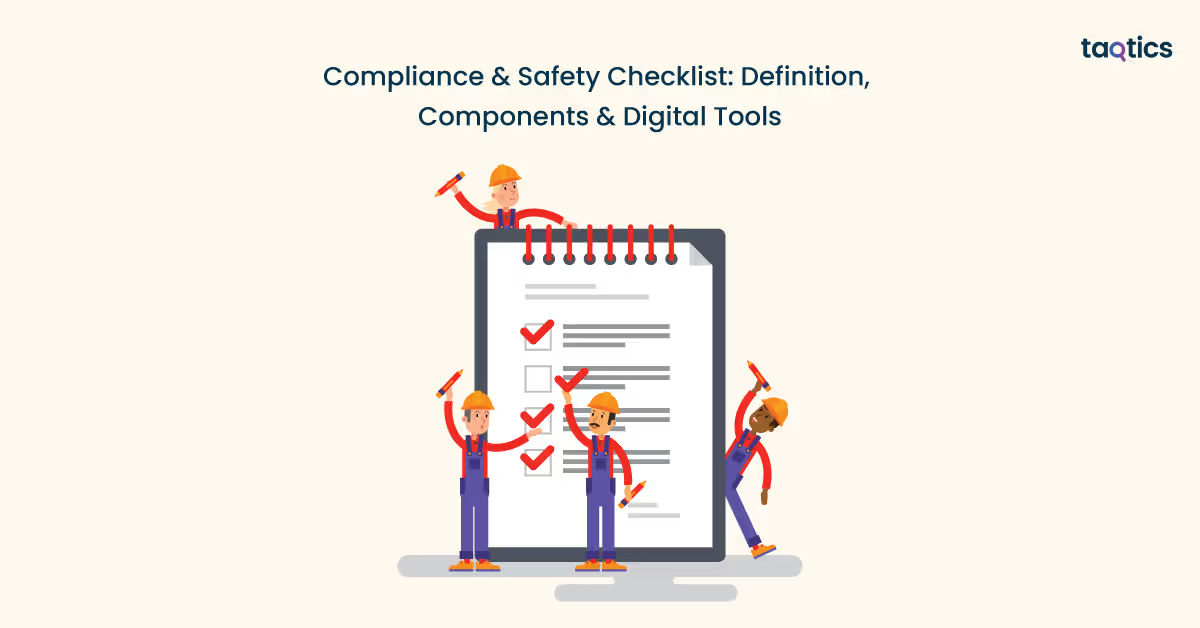
Compliance & Safety Checklist is a structured set of protocols and tasks designed to ensure that restaurants, kitchens, and hospitality operations meet regulatory requirements, maintain safe working conditions, and protect both staff and guests. Compliance & Safety Checklist helps organizations systematically monitor hazards, track corrective actions, and uphold industry standards, reducing the risk of accidents and violations. According to the Occupational Safety and Health Administration (OSHA, 2021), restaurants experience over 100,000 workplace injuries annually in the U.S., highlighting the critical need for rigorous compliance and safety practices.
A well-designed compliance and safety checklist covers multiple operational areas, from food safety and sanitation to equipment maintenance and employee training. It also helps organizations stay prepared for inspections and audits while promoting a culture of accountability and risk awareness. Digital tools like Taqtics further enhance these checklists by automating reminders, tracking completion in real time, and maintaining audit-ready logs, making it easier for businesses to consistently adhere to safety standards and reduce workplace hazards.
What is Compliance & Safety Checklist?
Compliance & Safety Checklist is a structured tool used by restaurants, commercial kitchens, and hospitality operations to ensure that all safety protocols and regulatory requirements are consistently met. It serves as a roadmap for staff to follow best practices, maintain a safe environment, and reduce the risk of accidents, violations, or food safety issues. Unlike routine operational checklists, compliance and safety checklists specifically focus on protecting employees, guests, and the business from legal and health-related risks.
The checklist clearly outlines responsibilities and standards, helping teams understand exactly what needs to be done and when. It also promotes accountability, ensures proper documentation for audits, and supports continuous improvement.
Key elements of a Compliance & Safety Checklist include:
- Food Safety Compliance: Monitoring storage, temperature, labeling, and preparation practices to prevent contamination.
- Sanitation & Hygiene: Ensuring cleaning schedules are followed, surfaces sanitized, and handwashing protocols enforced.
- Equipment & Facility Safety: Regular inspection and maintenance of kitchen equipment, fire suppression systems, and utilities.
- Employee Safety: Proper training, use of PPE, and adherence to workplace safety standards.
- Regulatory Compliance: Meeting local, state, and federal regulations, including OSHA, health department, and labor laws.
- Incident & Hazard Tracking: Recording accidents, near misses, and unsafe conditions for follow-up and corrective action.
By systematically addressing these areas, a compliance and safety checklist ensures that operational risks are minimized, employees work in a safe environment, and guests enjoy a secure and hygienic dining experience.
What Are the Key Components of a Compliance & Safety Checklist?
The key components of compliance and safety checklists include best practices in temperature control, allergen management, storage, hygiene, and incident handling. By systematically addressing these areas, businesses can prevent contamination, reduce workplace accidents, and stay audit-ready.
Temperature Controls
Maintaining correct temperatures is critical for food safety and preventing foodborne illness:
- Refrigeration: Keep below 40°F (4°C).
- Freezing: Maintain at or below 0°F (-18°C).
- Cooking: Cook to required internal temperatures (e.g., poultry, ground meat).
- Hot Holding: Keep foods above 135°F (57°C).
- Monitoring: Use calibrated thermometers, conduct daily checks, and log records.
Allergen Controls
Preventing allergen exposure protects guests and avoids legal and reputational risks:
- Identification: Clearly label all allergen-containing ingredients and finished products.
- Separation: Store allergen foods separately from non-allergen items.
- Cross-Contamination: Use dedicated utensils, cutting boards (color-coded), and cleaning procedures for allergens.
- Training: Educate staff on major allergens, symptoms, and prevention.
Storage Rules
Proper storage ensures food safety and efficiency in the kitchen:
- Organization: Follow FIFO (First-In, First-Out) inventory rotation.
- Elevation: Store items at least 6 inches off the floor and 18 inches from walls.
- Segregation: Raw foods below ready-to-eat foods; chemicals stored separately.
- Containers: Use covered, labeled containers for all foods.
Incident Reporting & Corrective Actions (HACCP)
HACCP-based processes help monitor hazards and take timely corrective measures:
- Identify Hazards: Analyze potential biological, chemical, and physical risks.
- Establish Limits: Set critical limits for Critical Control Points (CCPs).
- Monitor: Regularly check CCPs for compliance.
- Corrective Action: Document procedures for exceeding limits (discard food, re-cook, re-evaluate process).
- Verification: Confirm corrective actions are effective.
- Record-Keeping: Maintain logs for monitoring, corrective actions, and staff training.
General Hygiene & Sanitation
Hygiene and cleanliness protect staff and guests from contamination and illness:
- Handwashing: Provide proper stations, sinks, and staff training.
- Cleaning: Regular cleaning and sanitizing of surfaces, equipment, and tools.
- Pest Control: Prevent access and monitor for activity regularly.
- Staff Health: Enforce policies for sick employees to avoid contamination.
A comprehensive compliance and safety checklist that includes these components ensures that kitchens and hospitality operations run safely, efficiently, and in accordance with regulations. Regular use of these checklists not only reduces risks but also fosters a culture of accountability and continuous improvement across all staff and locations.
How Should Food Safety Incidents Be Documented?
The food safety incidents should be documented systematically to ensure accountability, traceability, and compliance with regulatory standards. Proper documentation provides a clear record of what happened, who was involved, and the corrective actions taken, which is crucial for preventing recurrence and supporting audits or inspections. It also helps management identify patterns or recurring issues in operations, enabling continuous improvement in food safety practices.
- Time and Date: Record the exact time and date the incident occurred to establish a clear timeline.
- Location: Specify the exact area or station in the kitchen or storage where the incident took place.
- Staff Involved: Note the names of employees present, responsible, or who reported the issue.
- Immediate Corrective Action Taken: Detail the steps taken to mitigate the issue, such as discarding affected food, cleaning and sanitizing surfaces or equipment, re-cooking items, or isolating contaminated ingredients.
- Observations and Notes: Include any relevant context, such as the cause of the incident, environmental factors, or unusual occurrences.
- Follow-Up Measures: Record any additional steps taken after the immediate correction, such as staff retraining, process adjustments, or equipment maintenance.
Thorough documentation ensures that food safety incidents are not overlooked and provides a factual basis for evaluating kitchen processes. Using digital tools like Taqtics, incidents can be logged in real time, complete with photos, timestamps, and notifications to managers, making the process faster, more accurate, and audit-ready while improving overall accountability and safety in the kitchen.
How Can Digital Tools Improve Food Safety Compliance Management?
Digital tools can improve food safety compliance management through automation, real-time tracking, and centralized record-keeping, effectively addressing the shortcomings of manual paper-based systems. Digital tools become a savior when manual paper checklists fail due to human error, loss of record or lack of accountability.
- Reducing Human Error: Automated checklists ensure staff follow proper procedures for temperature monitoring, sanitation, allergen controls, and other safety-critical tasks. Step-by-step prompts and validation reduce mistakes and omissions.
- Ensuring Complete and Audit-Ready Records: Digital platforms automatically log every task with timestamps, staff identification, and optional photo evidence. Records are stored centrally, making it easy to retrieve them for inspections, audits, or internal reviews.
- Creating Accountability: Managers gain real-time visibility into task completion. Alerts for missed or overdue items encourage adherence, while recurring issues can be identified and addressed proactively.
By replacing manual paper checklists with digital solutions, kitchens reduce compliance risks, improve operational consistency, and maintain a safer environment. Platforms like Taqtics take this further with checklist automation, real-time tracking, and audit-ready logs, making food safety management more reliable and efficient.
How Taqtics Simplifies Food Safety Compliance?
Taqtics simplifies food safety compliance through digital checklists, temperature logging, incident reporting, corrective action workflows, multi-location visibility, and inspection-ready documentation.
- Digital Checklists: Taqtics replaces paper forms with automated, step-by-step checklists for daily BOH tasks, sanitation routines, and food safety procedures. Staff are guided through each step, ensuring critical tasks are never skipped.
- Temperature Logging: All refrigeration, freezing, cooking, and hot-holding temperatures can be recorded digitally, with automated alerts for deviations. This ensures compliance with food safety regulations and prevents spoilage.
- Incident Reporting: Any food safety or operational incidents can be logged in real time, including details like time, location, and staff involved. Photo or video evidence can also be attached to enhance accuracy and accountability.
- Corrective Action Workflows: When deviations or issues occur, Taqtics triggers corrective action workflows automatically. Managers and staff are guided through immediate steps and follow-up actions to resolve issues efficiently.
- Multi-Location Visibility: For restaurant groups, Taqtics provides a centralized dashboard to monitor compliance across all outlets. Managers can identify trends, recurring issues, or gaps and implement consistent standards across locations.
- Inspection-Ready Documentation: All logs, incident reports, and corrective actions are stored digitally and are easily accessible during audits or health inspections. This ensures restaurants can demonstrate compliance instantly and confidently.
By combining automation, real-time tracking, and centralized documentation, Taqtics makes food safety compliance easier, faster, and more reliable, helping kitchens maintain high standards while reducing operational risks.
What Happens If A Restaurant Fails A Food Safety Inspection?
If a restaurant fails a food safety inspection, several consequences can occur, ranging from operational disruptions to legal and financial penalties. Failing an inspection signals that critical food safety standards were not met, which can affect both the restaurant’s reputation and compliance standing.
- Health Department Warnings: The restaurant may receive formal citations or notices detailing violations that need immediate correction.
- Fines and Penalties: Monetary fines may be imposed depending on the severity of violations and local regulations.
- Temporary Closure: Severe violations, such as imminent health hazards, can lead to partial or full closure until issues are resolved.
- Mandatory Corrective Actions: Restaurants must address violations, submit corrective plans, and often undergo re-inspections.
- Damage to Reputation: Negative publicity from failed inspections can reduce customer trust and decrease footfall.
- Legal Liability: Restaurants may face legal consequences if unsafe food causes illness or injury.
- Operational Disruption: Staff may need to halt certain operations, deep clean facilities, or retrain personnel, affecting service and revenue.
Failing an inspection underscores the importance of consistent food safety compliance, proper training, and regular use of tools like Taqtics to automate checklists, track corrective actions, and maintain audit-ready records to avoid such risks.
How Long Should Food Safety Records Be Kept?
The food safety records should be kept for a period that ensures compliance with local regulations, facilitates audits, and provides traceability in case of incidents.
The key guidelines to maintain the same include varied instructions.
- Minimum Retention Period: Most regulatory agencies recommend keeping records for at least 12–24 months, depending on the type of record and local laws.
- Temperature Logs: Daily logs of refrigeration, freezing, cooking, and hot-holding temperatures should be retained for at least 1 year for audit purposes.
- Incident Reports & Corrective Actions: Maintain records of food safety incidents, deviations, and corrective actions for 1–3 years, depending on severity and regulatory requirements.
- Training & SOP Records: Staff training logs, certifications, and standard operating procedures (SOPs) should be kept for at least 2–3 years.
- Digital Storage: Using platforms like Taqtics, all records can be stored securely, with easy retrieval for inspections, audits, or internal reviews.
By retaining food safety records for the appropriate period, restaurants can demonstrate compliance, identify trends, and respond quickly to any regulatory inquiries or food safety incidents.
Are Digital Food Safety Logs Legally Acceptable?
Yes, the digital food safety logs are legally accepted as long as they accurately record required information, are tamper-proof, and can be retrieved for inspections or audits.
- Accuracy and Completeness: All required data, such as temperatures, timestamps, staff details, and corrective actions, must be recorded properly.
- Audit-Ready: Digital logs should be easily retrievable for health inspections, audits, or legal inquiries.
- Data Integrity: Records must be secure, with protections against tampering or accidental deletion.
- Regulatory Compliance: The system must comply with local and federal food safety regulations (e.g., FDA, USDA, OSHA, or local health departments).
- Supporting Evidence: Many platforms, like Taqtics, allow photo or sensor attachments to strengthen proof of compliance.
Using digital logs not only ensures legal compliance but also improves efficiency, reduces human error, and provides real-time visibility into food safety operations.
About the Author