Franchise Brand Standards Checklist: Definition, Importance & Components
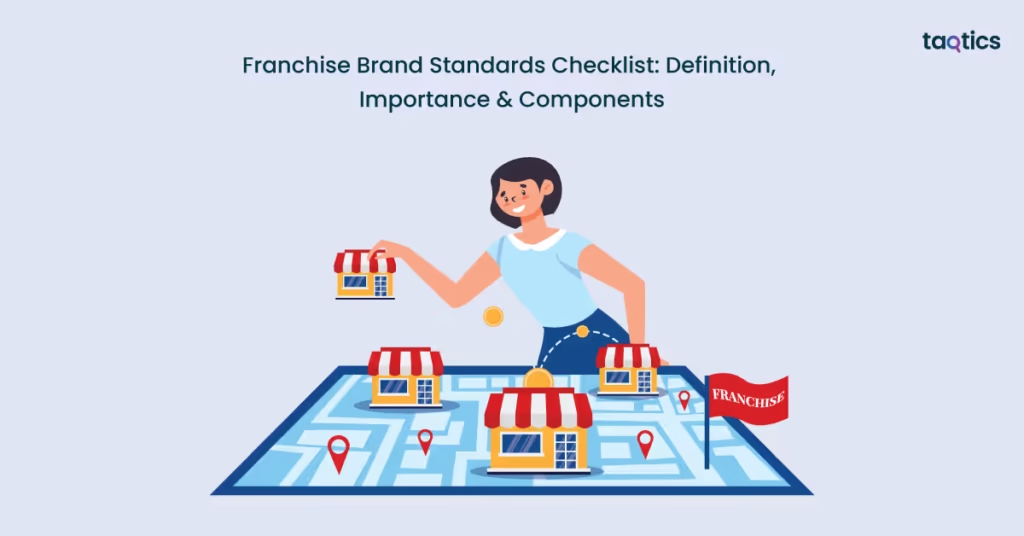
The franchise brand standards checklist is a tool used to ensure that all franchise locations maintain consistent quality, appearance, and customer experience as defined by the parent brand. The franchise brand standards checklist helps franchisees follow uniform operational, service, and visual guidelines, much like following a recipe to ensure the same taste and presentation across multiple kitchens. This consistency strengthens brand reputation and customer trust across locations.
In practical scenarios, using a franchise brand standards checklist allows managers to quickly identify gaps in operations, store layout, cleanliness, or service quality. According to a study in the Journal of Brand Management (2019), adherence to standardized operational checklists improved customer satisfaction scores by up to 20%, highlighting the importance of systematic evaluation and compliance in multi-location franchises.
What Is Franchise Brand Standards Checklist?
A franchise brand standards checklist is a structured tool used by franchisors and franchisees to ensure consistency across all franchise locations.
- Store Appearance: Cleanliness, décor, signage, lighting, and overall visual presentation.
- Employee Behavior: Professionalism, customer interaction, adherence to service protocols, and uniform compliance.
- Customer Service: Wait times, order accuracy, hospitality, and complaint handling.
- Product Quality: Consistency in preparation, presentation, portion sizes, and freshness.
- Safety & Compliance: Food safety, hygiene practices, workplace safety, and local regulatory compliance.
- Operational Procedures: Adherence to standard operating procedures (SOPs) for daily operations, inventory, and equipment use.
Using this checklist ensures that every franchise location consistently reflects the brand’s values and quality standards.
Why Is Maintaining Franchise Brand Standards Important?
Maintaining franchise brand standards is important because it ensures consistency, strengthens customer trust, and supports smooth operations across all franchise locations.
- Ensures Uniformity in Brand Experience: Consistent adherence to brand standards guarantees that customers receive the same quality of products, service, and ambiance at every location. This uniformity enhances recognition and reinforces the brand’s identity, making the franchise experience predictable and reliable for consumers.
- Builds Customer Trust and Enhances Brand Perception: When franchise locations consistently meet established standards, customers develop confidence in the brand. Reliable service and product quality lead to repeat business, positive reviews, and strong brand loyalty, which are critical for long-term success in competitive markets.
- Supports Operational Consistency, Training, and Marketing: Standardized procedures simplify staff training, reduce errors, and improve operational efficiency. Clear standards also aid in marketing by ensuring that promotions, campaigns, and store presentations align with the brand’s overall image. This integration strengthens internal workflows while maintaining a cohesive public brand presence.
Maintaining franchise brand standards is therefore essential for delivering a consistent customer experience, building trust, and ensuring operational and marketing efficiency across all locations.
What Should a Franchise Brand Standards Checklist Include?
A franchise brand standards checklist should include brand identity & visuals, marketing & communications, operations & quality control, legal & compliance, and implementation & monitoring.
Brand Identity & Visuals
This section ensures all locations present a unified brand image. Consistent visuals strengthen brand recognition and customer trust. Key elements include:
- Logo Usage: Guidelines on size, placement, clearance, and approved variations.
- Color Palette: Defined primary, secondary, and accent colors with CMYK, RGB, and HEX codes.
- Typography: Standard fonts for headings, body text, and digital platforms.
- Imagery: Approved photo styles, illustrations, and graphic elements.
- Brand Story/Values: Clear communication of the franchise’s mission, vision, and core values.
Marketing & Communications

Maintaining consistent messaging and communication tone is critical for brand perception and local marketing efforts. Elements include:
- Brand Voice/Tone: Consistent personality across all communications (professional, friendly, etc.).
- Messaging: Approved taglines, key messages, and calls-to-action.
- Digital Presence: Standards for website (mobile-friendly, SEO), social media, and Google Business Profiles.
- Collateral: Templates for flyers, ads, email signatures, and other marketing materials.
- Local Marketing: Guidelines for franchisee-specific campaigns that align with brand strategy.
Operations & Quality Control
Ensures smooth daily operations and product/service consistency across all locations. Key components:
- Facility Standards: Cleanliness, layout, décor, and equipment maintenance.
- Service Delivery: Customer interaction protocols and complaint resolution procedures.
- Product Quality: Consistency in preparation, ingredients, and presentation.
- Supply Chain: Approved vendors and inventory management protocols.
- Technology: Required POS systems, software, and IT standards.
Legal & Compliance
Protects the brand, ensures regulatory adherence, and mitigates legal risks. Elements include:
- Franchise Agreement: Compliance with all contractual terms.
- Trademark Usage: Use only approved logos, trademarks, and brand elements.
- Regulatory Compliance: Adherence to local health, safety, and business regulations.
- Financial Reporting: Accurate royalty payments and contributions to marketing funds.
Implementation & Monitoring
Focuses on ensuring franchisees understand, adopt, and maintain standards consistently. Includes:
- Training: Educating franchisees and staff on brand standards.
- Audits: Regular checks (daily, weekly, monthly) to ensure compliance.
- Software: Tools like Taqtics can be used to monitor adherence and document results.
- Updates: Communicating and phasing in new standards or revisions systematically.
By including these sections, a franchise brand standards checklist provides a comprehensive framework to maintain consistency, quality, and brand integrity across all franchise locations.
How Can You Enforce Franchise Brand Compliance Effectively?
You can enforce franchise brand compliance effectively through clear documentation, regular training, feedback mechanisms, and the use of audit tools.
- Clear Documentation: Provide detailed operations manuals, SOPs, and visual guidelines so franchisees understand expectations and procedures.
- Regular Training and Updates: Conduct onboarding and refresher sessions to keep staff informed about standards, new policies, and best practices.
- Feedback Mechanisms and Consequences: Implement systems for reporting non-compliance, recognizing adherence, and addressing violations promptly.
- Checklists and Mobile Audit Tools: Use structured checklists and digital tools like Taqtics to track compliance, conduct audits, and generate reports efficiently.
This combination of proactive training, monitoring, and accountability ensures consistent adherence to franchise brand standards across all locations.
What Are the Most Common Franchise Compliance Issues?
The most common franchise compliance issues are visual branding inconsistencies, unauthorized promotions, outdated training, service delivery gaps, and local deviations from corporate SOPs.
- Visual Branding Inconsistencies: Incorrect logo usage, color schemes, signage, or décor that do not align with brand guidelines.
- Unauthorized Promotions: Marketing campaigns or discounts run by franchisees without corporate approval, which can dilute brand strategy.
- Outdated Training or Manuals: Staff using old procedures or materials, leading to inconsistent service or operational errors.
- Service Delivery Gaps: Deviations in customer interaction, complaint handling, or quality standards across locations.
- Local Deviations from Corporate SOPs: Altering processes or practices without approval, which can compromise product quality or safety.
Identifying and addressing these common issues through training, audits, and monitoring tools ensures consistent compliance and preserves brand integrity.
How Can Software Like Taqtics Help Manage Brand Standards?
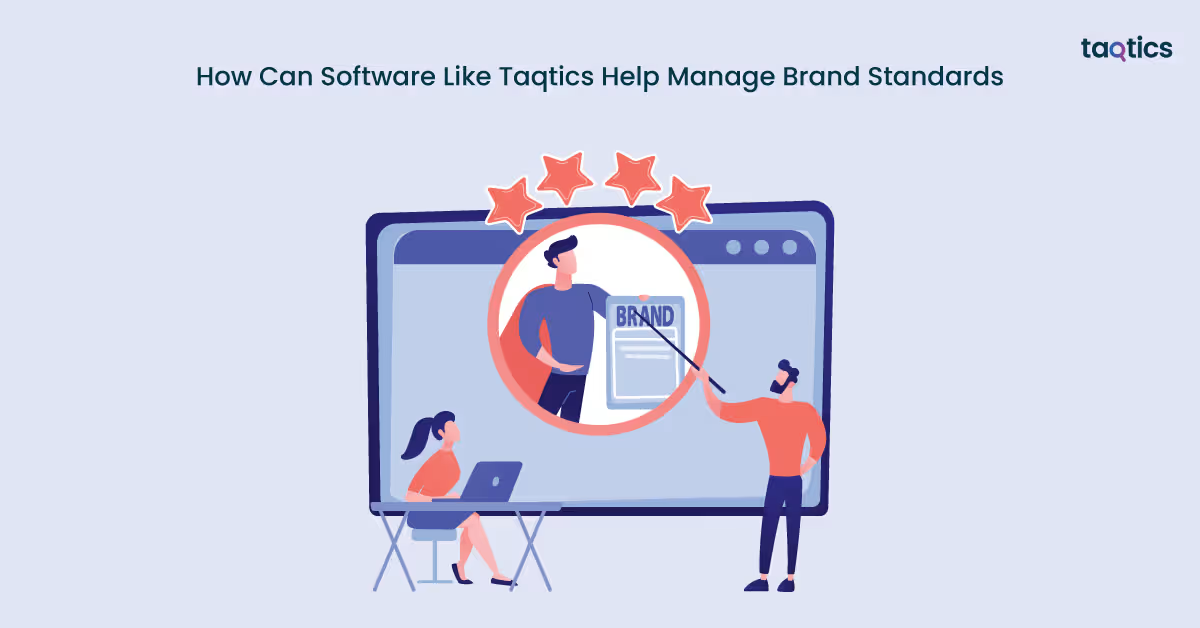
Software like Taqtics help manage brand standards by providing a digital platform that streamlines compliance monitoring, standard enforcement, and operational oversight across multiple franchise locations. It reduces manual effort, ensures consistent adherence to guidelines, and enables data-driven decision-making.
Taqtics offers a suite of features and benefits specifically designed to help franchise brands maintain consistency, monitor compliance, and streamline operations. Its capabilities allow franchisors to track adherence to standards, identify gaps, and take corrective action in real time, while providing franchisees with clear guidance and accountability.
Key Features
Key features focus on the tools and functionalities that make compliance management efficient and accurate across multiple locations:
- Digital Checklists: Standardized checklists for daily operations, audits, and SOP adherence, ensuring consistency across locations.
- Location Audits: Schedule and track audits for individual franchises, identifying gaps and corrective actions.
- SOP Distribution: Share updated standard operating procedures instantly with all franchisees, ensuring everyone works from the latest version.
- Real-Time Compliance Dashboards: Visual dashboards display compliance status, trends, and risk areas for quick decision-making.
- Franchisee Performance Scoring: Measure and compare franchise compliance performance, highlighting high and low performers.
Benefits
Benefits highlight the tangible advantages that Taqtics delivers to both franchisors and franchisees:
- Reduced Manual Effort: Automates logging, reporting, and reminders, freeing managers from time-consuming paperwork.
- Increased Accountability: Tracks actions, responsible staff, and follow-ups to ensure adherence to standards.
- Scalable Operations Oversight: Enables management of multiple locations efficiently, regardless of geographic spread, supporting brand consistency.
By combining these features and benefits, Taqtics ensures franchise operations remain standardized, compliant, and aligned with brand expectations, enhancing overall efficiency and maintaining a strong, unified brand presence.
How Can Brand Standards Support Franchise Growth and Scalability?
Brand standards support franchise growth and scalability by creating a consistent, repeatable, and controllable business model. In short, they enable faster expansion without compromising quality or brand identity.
- Ensure consistent customer experience across all locations
- Build strong brand recognition and customer trust
- Make onboarding and training of new franchisees faster
- Enable easy replication of operations and service models
- Reduce operational errors and variability
- Support centralized monitoring and performance comparison
- Strengthen marketing impact through uniform messaging
- Reduce compliance, quality, and reputational risks
- Increase confidence for investors and prospective franchisees
When combined, these benefits allow franchises to scale efficiently while maintaining control and long-term brand value.
About the Author