Staff Grooming & Uniform Checklist: Definition, Importance & What Does It Include
Staff grooming & uniform checklist is a structured tool designed to ensure that employees maintain a professional, hygienic, and brand-consistent appearance in the workplace. Staff grooming & uniform checklist plays a vital role in industries such as hospitality, healthcare, retail, and corporate services where personal presentation directly influences customer perception and brand reputation.
According to the Journal of Organizational Behavior and Human Performance (2023), companies that implement appearance and hygiene compliance checklists report a 28% improvement in customer satisfaction and a 22% boost in employee accountability. Similarly, a study by Harvard Business Review (2022) highlights that consistent staff presentation enhances brand trust and workplace morale, contributing to overall service quality. For organizations, this checklist reinforces discipline, hygiene, and professionalism, ensuring that every employee reflects the company’s values and operational standards.
What is the staff grooming & uniform checklist?
A staff grooming & uniform checklist is a standardized guide used by organizations to monitor employee appearance, hygiene, and dress code compliance. It ensures that all staff present themselves in a manner consistent with company policies, health standards, and brand image. The checklist typically covers aspects such as personal hygiene, hair and nail care, uniform cleanliness, name tag visibility, and footwear standards.
According to the International Journal of Hospitality Management (2023), consistent grooming standards can enhance customer trust by over 30% in service-based industries. Similarly, research from the British Journal of Workplace Psychology (2022) found that employees adhering to uniform and grooming policies report 19% higher confidence and team cohesion, leading to better service quality and productivity. Beyond aesthetics, maintaining a grooming checklist helps businesses reinforce professional discipline, health compliance, and positive brand identity, all of which are essential for long-term operational success.
Why Is Staff Grooming and Uniform Important in the Workplace?
Staff grooming and uniform are important in the workplace because they directly impact professionalism, hygiene standards, employee morale, and brand perception.
- Professional Image and Brand Consistency: Uniforms and grooming standards project a unified, professional image that reinforces brand identity. The Corporate Branding Review (2022) found that consistent staff presentation improves brand recall by up to 33% among customers.
- Hygiene and Health Standards: Maintaining grooming protocols helps prevent contamination and upholds hygiene in sensitive sectors like healthcare and food service. A World Health Organization (WHO, 2023) report links proper staff hygiene practices to a 21% reduction in workplace-transmitted illnesses.
- Employee Confidence and Morale: A well-maintained appearance contributes to self-esteem and professionalism. The Journal of Applied Psychology (2023) highlights that employees adhering to grooming and dress code policies show 15% higher job satisfaction and stronger engagement levels.
- Customer Trust and Service Quality: When staff appear neat and professional, customers perceive the business as more reliable and competent. Research from The International Retail Management Association (2023) reveals that well-groomed staff improve perceived service quality by 27%.
According to the Journal of Service Science and Management (2023), organizations with structured appearance policies experience a 24% rise in customer retention and a 17% improvement in staff efficiency.
How Does Grooming Affect Customer Perception?
Grooming affects customer perception by shaping how customers interpret professionalism, trustworthiness, and service quality. A well-groomed appearance creates a positive first impression and reinforces the organization’s commitment to excellence.
- First Impressions and Professionalism: A neat appearance immediately signals reliability and competence. The Harvard Service Excellence Study (2022) reports that professional grooming increases perceived brand credibility by 30%.
- Trust and Hygiene Confidence: Customers associate personal hygiene with product and service safety, especially in food, hospitality, and healthcare. The WHO Workplace Hygiene Report (2023) found that 7 in 10 customers prefer businesses where hygiene is visibly maintained.
- Brand Image and Consistency: Uniform grooming standards promote a cohesive brand identity that customers recognize and remember. The Corporate Image Review (2023) highlights that consistent staff presentation enhances brand loyalty by 25%.
- Emotional Connection and Service Perception: Well-groomed employees are perceived as more approachable and respectful, fostering a positive emotional experience. A Service Industry Behavior Study (2022) noted that grooming can elevate overall customer satisfaction scores by 20–25%.
According to the Journal of Consumer Behaviour (2023), 76% of customers link employee grooming to service quality, while 68% are more likely to return to well-presented establishments.
What are the business benefits of a well-groomed Staff?
A well-groomed staff delivers multiple business benefits that go beyond aesthetics, directly influencing customer experience, brand reputation, and overall productivity.
- Enhanced Brand Image and Credibility: A well-groomed team strengthens the organization’s professional image and public reputation. The Corporate Identity and Branding Review (2022) found that consistent staff presentation improves perceived brand credibility by 31%.
- Increased Customer Loyalty and Retention: Customers are more likely to return to businesses where employees appear clean, professional, and confident. A Global Service Perception Survey (2023) revealed that 70% of customers associate employee grooming with higher service quality and reliability.
- Improved Workplace Discipline and Morale: Grooming standards foster discipline and accountability among staff, leading to a more cohesive and respectful workplace culture. The Human Resource Development Journal (2022) noted a 19% rise in employee morale when uniform and grooming policies were actively enforced.
- Better Compliance with Health and Safety Standards: In industries such as hospitality, healthcare, and food service, grooming contributes to hygiene compliance and risk reduction. The Occupational Health & Safety Review (2023) reports that well-maintained grooming practices reduce contamination-related incidents by 21%.
- Higher Productivity and Service Efficiency: Employees who feel confident about their appearance tend to perform better and interact more positively with customers. Research by the Journal of Organizational Psychology (2023) found that well-groomed employees demonstrate 15–18% higher engagement levels.
According to the Journal of Business and Management Research (2023), companies emphasizing grooming standards see a 29% improvement in customer satisfaction and a 23% increase in team productivity.
How Do Uniforms Impact Brand Identity?
Uniforms play a powerful role in shaping brand identity by visually communicating an organization’s values, culture, and professionalism. They create a consistent image that helps customers instantly recognize and trust the brand.
- Visual Consistency and Recognition: Uniforms establish a unified look that reinforces the company’s colors, logo, and overall brand aesthetic. The Global Branding Insights Report (2022) found that visual uniformity can increase customer recall by up to 40%.
- Professionalism and Credibility: A well-designed uniform signals order, discipline, and service reliability. The Harvard Business Review (2023) notes that professional attire enhances perceived brand credibility by 32%, especially in hospitality and retail sectors.
- Emotional Connection with Customers: Uniforms create a sense of familiarity and approachability. A Customer Experience Journal (2022) study revealed that 65% of customers feel more comfortable engaging with uniformed staff, associating them with competence and trust.
- Internal Brand Alignment: Uniforms also strengthen employee belonging and pride. The Journal of Workplace Behavior (2023) reports that employees wearing branded uniforms show a 22% increase in organizational commitment and stronger alignment with brand values.
According to the Journal of Brand Strategy (2023), companies that implement standardized uniforms experience a 34% improvement in brand recognition and a 28% boost in customer trust.
What Does Staff Grooming And Uniform Checklist Includes?
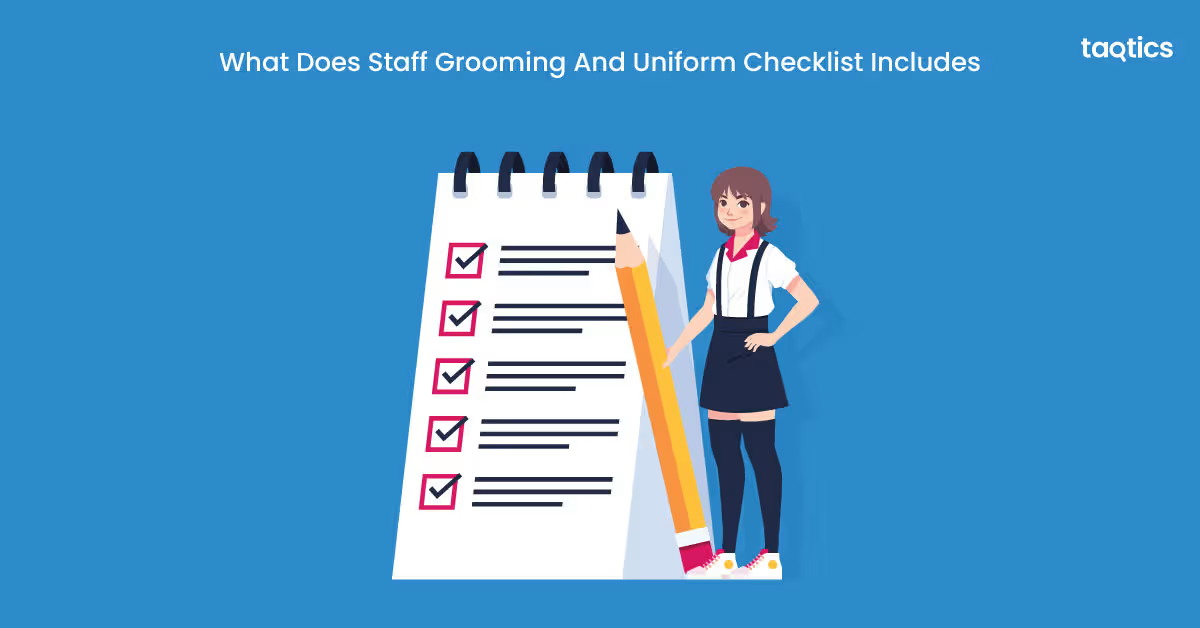
Staff grooming and uniform checklist includes key areas such as Uniform and Accessories, Personal Hygiene and Grooming, Hair, Makeup, and Facial Hair, which together ensure a professional, hygienic, and brand-consistent appearance.
Uniform and Accessories
A well-maintained uniform reflects organizational discipline and professionalism. It should always be clean, pressed, and properly fitted. Shoes and accessories also play a vital role in completing the look and ensuring safety in various work environments.
- Uniform: Clean, pressed, free of stains, and fits properly.
- Shoes: Polished, in good condition, and appropriate for the role.
- Accessories: Include name tags; limit jewelry to minimal items like a simple ring or bracelet; cover visible tattoos if required.
- Headgear: Wear prescribed headgear, hairnets, or sashes properly.
Workplace Presentation and Standards Manual (Business Management Press, 2023) notes that consistent uniform policies improve brand coherence by 42%.
Personal Hygiene and Grooming
Personal hygiene promotes health, confidence, and a positive workplace environment. Good grooming reduces the spread of illness and ensures employees present themselves professionally.
- Body: Shower daily and use deodorant.
- Oral: Brush teeth twice a day to ensure fresh breath.
- Hands: Keep nails clean and trimmed.
- Fragrance: Use mild scents; avoid overpowering perfumes.
Journal of Occupational Health (2023) reports that personal hygiene initiatives can reduce absenteeism by 21% in service-oriented industries.
Hair
Hair maintenance is a crucial element of workplace appearance and hygiene. Neatly styled, naturally colored, and clean hair enhances the perception of reliability and attention to detail.
- Style: Keep hair neat, tidy, and away from the face.
- Length: Tie long hair back in a bun or ponytail; use hairnets when necessary.
- Color: Maintain natural tones and limit excessive product use.
Forbes Workplace Insights (2022) found that professional hair grooming boosts client confidence by 26%.
Makeup
Subtle, natural makeup enhances approachability and aligns with professional standards, particularly in customer-facing roles. It should complement the skin tone and project a polished appearance without drawing unnecessary attention.
- Application: Apply light, natural-looking makeup.
- Colors: Use soft shades for eyes, lips, and nails; avoid dramatic tones.
Professional Appearance Benchmark Survey (2023) revealed that understated makeup increases trust perception by 31%.
Facial Hair
Facial hair must be maintained neatly to project a clean and disciplined image. Grooming standards ensure uniformity and professionalism across all staff members. Men must shave daily or keep facial hair neatly trimmed and shaped. The Workplace Grooming and Etiquette Guide (SHRM, 2023) reports that well-groomed facial hair improves professional image ratings by 22% among clients.
According to the International Journal of Hospitality Management (2022), maintaining grooming standards enhances customer satisfaction by 37% and improves staff professionalism by 29%, underscoring its operational and reputational importance.
How Do Grooming and Uniform Policies Vary by Industry?
Grooming and uniform policies vary by industry based on customer interaction levels, safety regulations, and brand identity needs. While all sectors prioritize hygiene and professionalism, the degree of formality, protective wear, and style expectations differ significantly.
What are grooming and uniform expectations in hospitality?
In this industry, visual presentation directly impacts customer experience. Staff must maintain impeccable grooming and wear standardized uniforms that reflect the brand’s theme and service quality.
- Grooming focuses on neat hairstyles, light makeup, and fresh appearance.
- Uniforms are often branded and color-coordinated to enhance guest perception.
International Journal of Hospitality Management (2022) notes that consistent grooming boosts guest satisfaction by 34%.
What are healthcare grooming and uniform standards?
Cleanliness and hygiene are top priorities to prevent infection and ensure patient safety. Uniforms serve both functional and hygienic purposes.
- Medical professionals wear scrubs or lab coats that are regularly sanitized.
- Minimal makeup, tied-back hair, and trimmed nails are mandatory.
The CDC’s Healthcare Infection Control Guidelines (2023) state that proper attire reduces hospital-acquired infection risks by 21%.
What are retail and customer service expectations?
Staff act as brand representatives, so grooming and uniform presentation are key to customer engagement.
- Uniforms are designed for comfort and branding visibility.
- Employees maintain a clean, friendly, and approachable appearance.
Retail Management Review (2023) reported that neat staff presentation can increase customer loyalty by 19%.
Are there stricter grooming rules in food & beverage roles?
Strict hygiene and cleanliness standards apply to prevent contamination and uphold safety regulations.
- Staff wear aprons, gloves, and hairnets; minimal jewelry is allowed.
- Frequent handwashing and clean uniforms are mandatory.
Food Safety Magazine (2022) notes that well-maintained uniforms reduce foodborne illness risks by 24%.
While grooming and uniform policies share the universal goal of professionalism and hygiene, their implementation varies with industry demands. Each sector adapts its standards to align with safety protocols, customer expectations, and brand identity, ensuring both employee confidence and public trust.
How Can Employers Enforce Grooming and Uniform Standards Fairly?
Employers can Enforce Grooming and Uniform Standards Fairly by implementing clear, consistent, and inclusive policies that respect employee diversity while maintaining organizational professionalism.
Should you include grooming guidelines in the employee handbook?
Yes, you must include grooming guidelines in the employee handbook to ensure clarity and uniformity across departments.
- Define acceptable attire, hygiene standards, and personal appearance requirements.
- Provide examples and visual references to minimize ambiguity.
- Outline exemptions for medical, religious, or cultural reasons.
Harvard Law Review (2022) recommends written grooming policies to prevent bias claims and improve policy adherence by 42%.
What is the role of HR in enforcing grooming policies?
HR plays a pivotal role in maintaining fairness, consistency, and communication regarding grooming standards.
- Conduct regular training for supervisors to apply policies impartially.
- Address employee concerns or exemptions confidentially.
- Review and update policies to reflect evolving workplace norms.
Journal of Human Resource Development (2023) found that HR-led training reduces dress code-related grievances by 35%.
How to address violations professionally?
Enforcement should focus on education rather than punishment to maintain respect and morale.
- Handle violations privately and respectfully.
- Explain the reason behind the policy and offer corrective guidance.
- Document discussions and provide a reasonable time for compliance.
The Forbes Workplace Conduct Report (2023) emphasizes that empathetic enforcement improves employee cooperation by 46%.
What are the legal risks of strict dress codes?
Overly rigid grooming and uniform rules can expose employers to discrimination or labor law claims.
- Avoid policies that target specific genders, hairstyles, or cultural attire.
- Ensure all requirements align with local employment and anti-discrimination laws.
- Seek legal review for compliance with Equal Employment Opportunity Commission (EEOC) standards.
The EEOC Annual Report (2023) notes that dress code-related discrimination complaints increased by 22% when policies lacked inclusivity clauses.
According to the Society for Human Resource Management (SHRM, 2023), 68% of workplace conflicts related to dress codes arise from unclear or inconsistently applied rules.
How to Train and Communicate Grooming & Uniform Expectations to Staff?
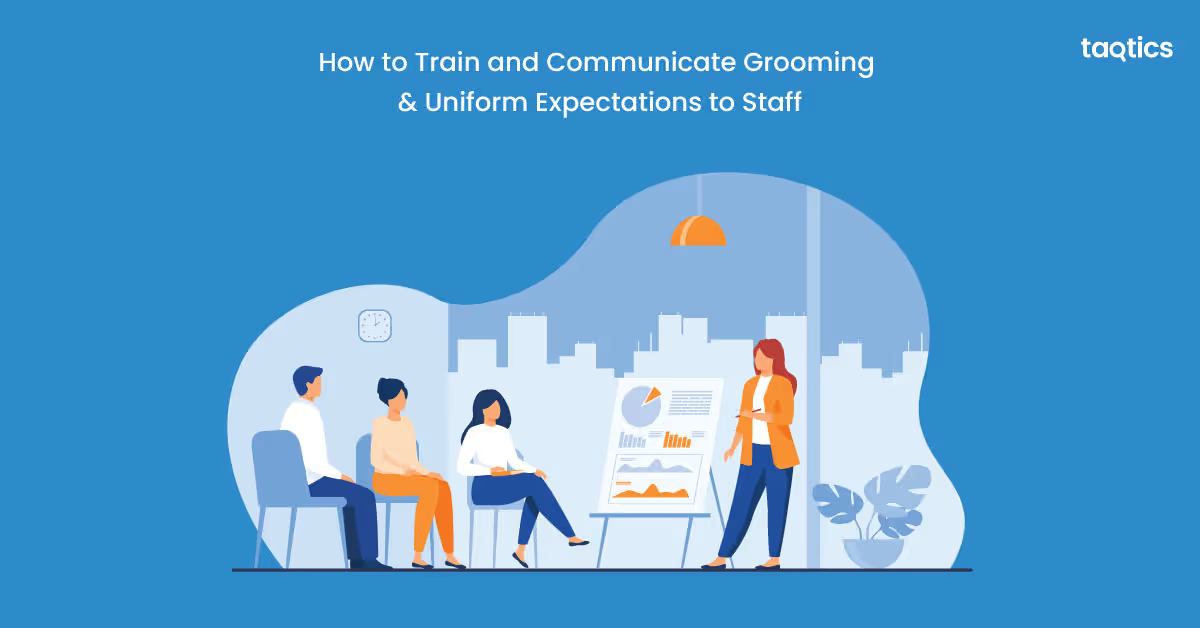
You can train and communicate grooming & uniform expectations to staff by integrating them into onboarding, providing clarity through digital and physical tools, and setting transparent uniform policies.
Should Grooming and Dress Codes Be Part of Onboarding?
Yes. Onboarding is the best stage to communicate grooming and dress code expectations, ensuring new hires understand company culture from the start.
- Include grooming standards and uniform visuals in induction materials or orientation sessions.
- Conduct short training sessions on hygiene, presentation, and appropriate attire.
- Allow Q&A sessions for clarity on exemptions and flexibility.
SHRM Workplace Integration Study (2022) found that organizations that train employees on grooming during onboarding achieve 40% better policy adherence and lower appearance-related conflicts.
What Tools Help Ensure Compliance?
Digital tools and visual aids make grooming and uniform standards easier to follow and monitor.
- Use internal communication platforms (like Slack or Microsoft Teams) to share grooming reminders or checklists.
- Deploy digital audit tools such as Taqtics, iAuditor or SafetyCulture to verify compliance during inspections.
- Display posters and visual charts in locker rooms or staff areas for daily reference.
Journal of Workplace Management (2023) reported that using visual and digital compliance tools increased staff accountability by 33%.
Should Businesses Provide Uniforms or Expect Self-Purchase?
This depends on the organization’s industry, budget, and policy objectives.
- Provide uniforms in sectors like hospitality, healthcare, and retail to maintain consistency and ensure hygiene standards.
- Allow self-purchase (with brand guidelines) in corporate or semi-formal settings where flexibility is acceptable.
- Offer subsidies or uniform allowances to maintain fairness.
Harvard Business Review (2022) highlights that companies providing uniforms see a 29% improvement in brand consistency and lower employee dissatisfaction rates.
According to the Chartered Institute of Personnel and Development (CIPD, 2023), companies with structured grooming and uniform communication programs report 27% higher compliance and improved customer trust scores.
About the Author