Facility Maintenance & Safety Checklist: Definition, Core Elements & How To Conduct
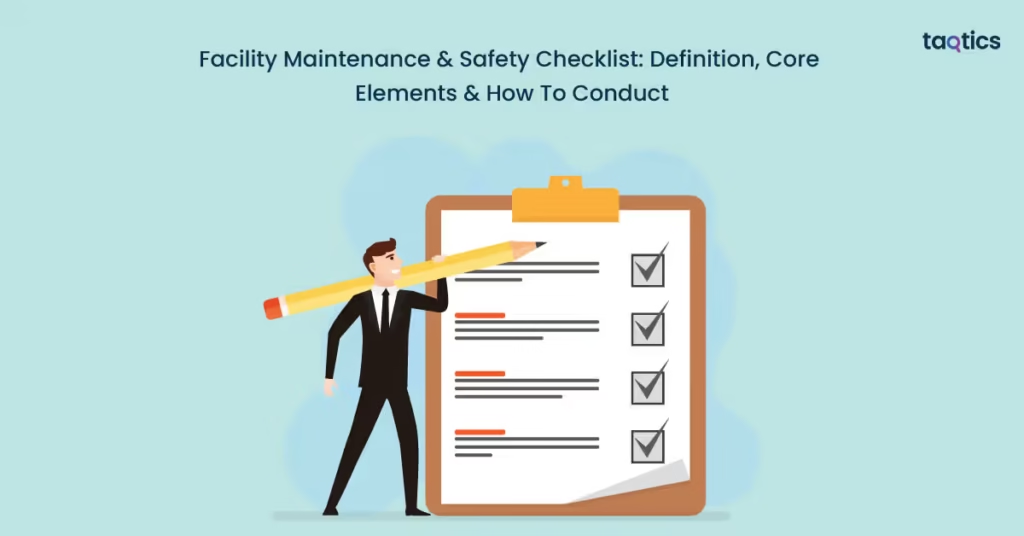
Facility Maintenance & Safety Checklist serves as a structured framework for organizations to systematically inspect, maintain, and ensure the optimal functioning of physical assets, utilities, and safety systems. Facility Maintenance & Safety Checklist plays a crucial role in reducing hazards, preventing costly breakdowns, and ensuring that maintenance routines align with operational standards. Regular inspections help track compliance, detect early signs of wear and tear, and sustain a safe working environment for staff and visitors alike.
According to the International Facility Management Association (IFMA, 2023), companies that adopt proactive maintenance programs experience 35% fewer equipment failures and achieve 25% lower operational costs compared to those relying solely on reactive maintenance. Furthermore, a study in the Journal of Occupational Safety and Health (2022) revealed that structured safety checklists reduce workplace injuries by up to 40%.
By following frameworks such as ISO 45001:2018 (Occupational Health and Safety Management Systems), organizations can strengthen regulatory compliance, promote workforce safety, and enhance long-term asset reliability, turning maintenance and safety practices into a measurable driver of business continuity and performance.
Download the checklist. Run it like a system.
Get the ready-to-use template, and see how Taqtics captures photo proof, timestamps, and compliance automatically.
What Is Facility Maintenance & Safety Checklist?
A Facility Maintenance & Safety Checklist is a structured tool designed to evaluate and document the performance, safety, and compliance of an organization’s physical assets and infrastructure. It ensures systematic inspection, servicing, and management of equipment to prevent breakdowns and maintain safe working conditions.
The three types of facility maintenance are preventive, predictive, and corrective.
- Preventive maintenance: Scheduled inspections and servicing to avoid unexpected equipment failures and extend asset life.
- Predictive maintenance: Use of sensors, data analytics, and performance trends to anticipate issues before they occur.
- Corrective maintenance: Repairs or replacements carried out after faults or safety hazards are detected.
The three points below define the role it plays in an organization.
- It enhances asset longevity by minimizing wear and tear.
- It improves safety outcomes through early detection of hazards.
- It boosts operational efficiency by reducing downtime and repair costs.
According to the U.S. Department of Energy’s Operations & Maintenance Best Practices Guide (2022), implementing structured maintenance programs can result in 10–30% energy savings and extend equipment lifespan by 20–40%.
What Are the Core Elements of a Facility Maintenance & Safety Checklist
The core elements of a facility maintenance & safety checklist are general maintenance, systems and equipment, and safety and security. According to the Building Owners and Managers Association (BOMA, 2023), consistent facility inspections can reduce repair costs by up to 25% and improve occupant satisfaction by over 30%, emphasizing the value of structured maintenance and safety planning.
General Maintenance
- Building exterior: Inspect roofs for leaks, check walls and foundations for cracks, and ensure doors, windows, and frames are secure and functional.
- Interior: Clean and maintain restrooms, corridors, and stairwells; repair damaged flooring, walls, and ceilings.
- Landscaping: Trim vegetation, mow lawns, and clear debris from walkways and parking areas.
- Lighting: Test all lights and emergency lighting; replace faulty bulbs and fixtures.
- Plumbing: Check for leaks or water damage, maintain adequate pressure, and ensure toilets and faucets function properly.
Systems and Equipment
- HVAC: Inspect filters, ducts, and coils; test efficiency and ensure air quality standards are met.
- Electrical: Examine outlets, panels, and wiring for wear or malfunction; secure all electrical connections.
- Appliances: Sanitize and maintain shared appliances like refrigerators and microwaves.
- Elevators: Test emergency brakes, intercoms, and ensure doors and controls are fully operational.
Safety and Security
- Fire safety: Test alarms, sprinklers, and verify extinguisher charge and expiration dates.
- Emergency exits: Keep exit routes clear, illuminated, and accessible.
- Safety equipment: Confirm PPE availability and condition.
- Security: Check locks, cameras, and access control systems; review signage for accuracy.
- Hazardous materials: Ensure all chemicals have updated Safety Data Sheets (SDS).
- Storage: Maintain organized, hazard-free storage areas.
As highlighted by the International Labour Organization (ILO, 2022), facilities with structured safety and maintenance programs experience 50% fewer workplace accidents and demonstrate higher compliance with operational safety standards. A well-maintained facility not only safeguards assets and people but also reinforces operational reliability and brand trust.
What Should a Facility Maintenance & Safety Checklist Include?
A Facility Maintenance & Safety Checklist should include key safety, operational, and compliance components that protect both personnel and assets. These elements help organizations minimize risk, improve emergency readiness, and maintain legal compliance.
Personal Protective Equipment (PPE)
Ensure that PPE such as helmets, gloves, goggles, and masks are available, clean, and used correctly. Regularly inspect for wear or damage and replace items as needed in compliance with OSHA 29 CFR 1910.132 standards.
Slip, Trip, and Fall Hazards
Inspect floors, stairways, and corridors for spills, loose tiles, or uneven surfaces. Ensure anti-slip mats and warning signs are in place to prevent common workplace accidents, which account for over 26% of injuries, according to the U.S. Bureau of Labor Statistics (2023).
Machine Guarding
Check that all machinery has intact guards and safety interlocks. Verify adherence to OSHA 29 CFR 1910.212 lockout/tagout procedures to prevent mechanical hazards and operator injuries.
Emergency Response Equipment (AEDs, Fire Extinguishers)
Test automated external defibrillators (AEDs), fire extinguishers, and sprinkler systems to ensure they are functional, inspected, and accessible. Label all emergency stations clearly and train staff in their use.
Evacuation Routes & Maps
Ensure that all emergency exits are illuminated, unobstructed, and clearly marked with directional signage. Evacuation maps should be posted at key points and updated following any layout changes.
First Aid Kits
Check that all first aid kits are well-stocked, sealed, and easily accessible. Replace expired medical supplies and ensure designated staff members are trained in basic first aid and CPR.
Security Systems (CCTV, Alarms)
Inspect CCTV cameras, intrusion alarms, and access control systems regularly to confirm proper operation and recording. Review surveillance logs for maintenance and safety assurance.
Proper Signage (Hazard, Exit, Fire)
Verify that all hazard, exit, and fire signage is visible, properly illuminated, and compliant with ANSI Z535 or local safety code requirements. Replace damaged or outdated signage promptly.
According to the Occupational Safety and Health Administration (OSHA, 2022), facilities that maintain detailed safety checklists experience up to 45% fewer compliance violations and improved emergency readiness.
How Do You Conduct a Facility Maintenance Safety Audit?
You can conduct a facility maintenance safety audit through four essential stages — Pre-Audit Planning, Use of Audit Templates or Apps, Documentation & Compliance Tracking, and Corrective Actions and Follow-Up.
Pre-Audit Planning
The first step involves defining the audit’s objectives, scope, and key performance indicators. Audit teams, comprising maintenance, safety, and technical experts, review previous inspection records and compliance logs to identify high-risk areas. Pre-audit preparation ensures that inspections are strategically planned and aligned with organizational and legal requirements. Conducting audits during normal operational hours also helps capture accurate performance data and uncover hidden risks.
Use of Audit Templates or Apps
Using digital tools like iAuditor, SafetyCulture, or MaintainX streamlines the inspection process. These platforms allow real-time photo uploads, automated scoring, and customizable checklists tailored to the type of facility. According to the British Institute of Facilities Management (BIFM, 2023), adopting digital audit systems reduces reporting errors by over 35% and improves resolution times for maintenance issues. These tools also centralize data, making follow-ups and regulatory reporting more efficient.
Documentation & Compliance Tracking
Accurate documentation is the backbone of any effective safety audit. All findings should be recorded with severity levels, photographic evidence, and references to relevant standards such as OSHA, NFPA, and ISO 45001. Compliance tracking dashboards help monitor corrective progress and highlight recurring non-conformities. The McKinsey Facility Risk Report (2022) found that organizations leveraging data-driven compliance tracking reduced regulatory penalties by up to 50%, demonstrating the financial and operational value of systematic documentation.
Corrective Actions and Follow-Up
The final stage involves implementing corrective measures, assigning accountability, and setting realistic deadlines for resolution. High-risk issues should be re-inspected to confirm compliance, and preventive maintenance schedules must be updated based on audit findings. According to the World Safety Organization (WSO, 2023), organizations that conduct post-audit reviews and follow-up inspections experience a 45% reduction in recurring safety hazards and stronger safety culture engagement.
Conducting a facility maintenance safety audit is not just about identifying deficiencies — it’s about building a proactive framework for continuous improvement, regulatory alignment, and safer, more efficient facility operations.
What Tools and Software Can Help with Facility Maintenance & Safety Checklists?
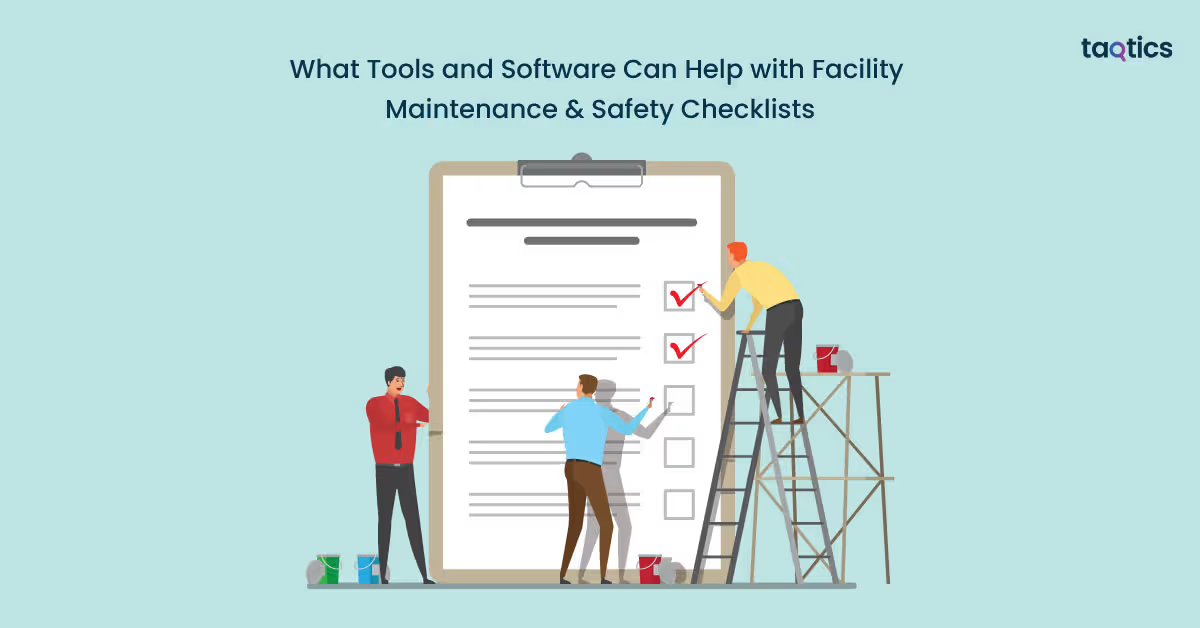
The tools and software that can help with a facility maintenance & safety checklist are CMMS (Computerized Maintenance Management Systems), Digital Checklists and Mobile Apps, QR Codes for Asset Tracking, and Smart Sensors for Predictive Maintenance.
CMMS (Computerized Maintenance Management Systems)
CMMS platforms centralize maintenance data, schedule preventive tasks, and manage work orders efficiently. They allow facility teams to monitor asset performance, log inspections, and ensure compliance with safety standards. The Harvard Business Review (2022) reported that companies using CMMS solutions saw an 18–25% improvement in maintenance productivity and significant cost reductions in unplanned repairs.
Digital Checklists and Mobile Apps
Mobile-based checklists allow real-time inspection tracking and instant reporting from any location. These tools minimize paperwork, ensure consistency, and provide instant access to compliance records. The British Institute of Facilities Management (BIFM, 2023) found that digital checklists improve inspection completion rates by over 40% and reduce reporting time by half compared to manual systems.
QR Codes for Asset Tracking
QR-coded tagging systems help maintenance teams quickly access asset histories, manuals, and maintenance schedules through mobile scanning. Each scan provides real-time visibility into service status and last inspection dates, reducing oversight and data entry errors. The Journal of Facility Automation (2022) noted that QR-based systems reduce asset misidentification incidents by up to 60% and enhance traceability across multi-site operations.
Smart Sensors for Predictive Maintenance
IoT-enabled smart sensors monitor real-time conditions such as temperature, vibration, and humidity, identifying potential failures before they occur. This predictive approach reduces downtime and extends asset lifespan. According to the World Economic Forum’s Smart Infrastructure Report (2023), predictive maintenance powered by sensors can cut equipment-related failures by up to 55% and maintenance costs by up to 30%.
By leveraging these digital tools and technologies, organizations can transform facility maintenance from a reactive process into a proactive, data-driven strategy, one that enhances safety, efficiency, and long-term operational reliability.
How Often Should Facility Maintenance and Safety Checks Be Performed?
Facility maintenance and safety checks should be performed through a structured schedule that includes daily, weekly, monthly, quarterly, and annual tasks, seasonal maintenance, and routine or triggered inspections.
Daily, Weekly, Monthly, Quarterly, and Annual Tasks
Regular inspections form the backbone of an effective maintenance program.
- Daily checks focus on immediate safety risks such as spills, fire exits, and equipment cleanliness.
- Weekly and monthly tasks include HVAC filter inspections, lighting tests, and plumbing checks.
- Quarterly and annual reviews involve deeper audits of electrical panels, elevators, and fire safety systems.
The Building Services Journal (2022) notes that structured multi-frequency inspections increase equipment reliability by 35% and extend asset lifespan by up to 20%.
Seasonal Maintenance (e.g., HVAC before Summer/Winter)
Seasonal checks prepare facilities for weather-related changes, focusing on climate control, insulation, and drainage systems. HVAC systems, for instance, should be serviced before temperature peaks to prevent failure during high demand. According to the American Society of Heating, Refrigerating and Air-Conditioning Engineers (ASHRAE, 2023), pre-season HVAC maintenance can lower energy costs by 10–15% and reduce system failures by 30%.
Routine Inspections vs. Triggered Checks (e.g., After Incidents)
Routine inspections are scheduled assessments that prevent deterioration, while triggered checks occur after incidents like equipment breakdowns or safety violations. Both are essential to maintaining compliance with OSHA and NFPA standards. The National Safety Council (NSC, 2022) highlights that facilities implementing post-incident reviews within 48 hours of an event reduce recurrence risk by up to 50%.
Establishing a clear inspection frequency, combining regular, seasonal, and incident-based checks, creates a proactive safety culture. This approach not only safeguards employees but also optimizes asset performance and long-term operational sustainability.
Who Is Responsible for Facility Maintenance and Safety?
The ones responsible for facility maintenance and safety are the facility managers, safety officers, maintenance technicians, external contractors or vendors, and third-party auditors.
Facility Managers
Facility managers oversee all aspects of maintenance, safety, and compliance. Their responsibilities include budgeting for repairs, scheduling inspections, and coordinating with vendors. The Building Owners and Managers Association (BOMA, 2023) notes that effective facility management can extend asset lifespan by up to 25% and improve resource utilization efficiency by 30%.
Safety Officers
Safety officers ensure adherence to OSHA, NFPA, and local safety regulations. They lead risk assessments, emergency preparedness programs, and employee safety training. According to OSHA (2022), companies with dedicated safety officers report 50% fewer workplace injuries and maintain higher regulatory compliance levels.
Maintenance Technicians
Maintenance technicians carry out preventive, predictive, and corrective tasks to keep systems running smoothly. They are the first responders to breakdowns and play a crucial role in hazard mitigation. As per The Facility Maintenance Journal (2023), skilled technicians help reduce unplanned equipment downtime by up to 35%, saving significant repair costs.
External Contractors/Vendors
Specialized contractors handle complex tasks like HVAC servicing, electrical work, or elevator maintenance that require certified expertise. Vendor partnerships also provide scalability during high-demand periods. The Institute of Workplace and Facilities Management (IWFM, 2022) found that outsourcing specialized maintenance can enhance operational efficiency by 20–25%.
Role of Third-Party Audits
Third-party auditors provide an unbiased evaluation of a facility’s compliance and safety performance. Their audits identify systemic weaknesses and ensure alignment with ISO 41001 and OSHA standards. Research published in the Journal of Occupational Safety and Ergonomics (2023) found that facilities undergoing annual third-party audits achieve 37% higher compliance scores and demonstrate continuous safety improvement.
Facility maintenance and safety are collaborative efforts involving internal staff, vendors, and external auditors. A well-defined responsibility framework ensures accountability, minimizes risk, and promotes a sustainable, safe, and efficient workplace environment.
How Can Facility Maintenance Improve Workplace Safety?
Facility Maintenance improves Workplace Safety through reduced risk of accidents, equipment reliability, emergency readiness, and compliance with legal requirements.
Reduced Risk of Accidents
Regular inspections, cleaning, and hazard mitigation help prevent slips, trips, electrical shocks, and other workplace accidents. Maintenance teams identify structural wear, leaks, and faulty wiring before they become threats. The National Safety Council (NSC, 2022) reports that proactive facility maintenance lowers accident-related costs by 23% and significantly improves worker morale and retention.
Equipment Reliability
Proper maintenance ensures that machinery and systems function safely and efficiently. Faulty or neglected equipment can cause malfunctions, leading to injuries or production losses. The International Facility Management Association (IFMA, 2023) found that organizations implementing predictive maintenance programs experience 30–40% fewer equipment-related incidents compared to those relying solely on reactive repairs.
Emergency Readiness
Facility maintenance enhances preparedness by ensuring that fire alarms, sprinklers, emergency exits, and lighting are fully operational. Maintenance teams also conduct regular drills and checks for AEDs and first-aid kits. According to the National Fire Protection Association (NFPA, 2023), facilities that perform monthly safety checks have a 60% higher success rate in emergency response effectiveness.
Compliance with Legal Requirements
Adhering to OSHA, NFPA, and ISO 45001 standards not only safeguards employees but also protects organizations from legal and financial penalties. Proper documentation of maintenance records demonstrates due diligence during audits. As per OSHA’s 2023 Workplace Compliance Report, facilities with consistent maintenance schedules face 40% fewer violations and maintain higher insurance compliance ratings.
Comprehensive facility maintenance directly translates to a safer, more resilient workplace. By combining preventive actions with compliance protocols, organizations foster a culture of safety that protects both people and assets while sustaining operational excellence.
How Can You Create a Custom Facility Maintenance & Safety Plan?
You can create a custom facility maintenance & safety plan by assessing facility needs and risks, prioritizing critical assets, setting inspection and maintenance schedules, assigning responsibilities, and monitoring and updating regularly.
Assess Facility Needs and Risks
Begin with a detailed risk assessment to identify potential hazards, such as electrical faults, structural weaknesses, or HVAC inefficiencies. Evaluate the building layout, equipment, and workforce exposure. The Occupational Safety and Health Administration (OSHA, 2022) recommends risk mapping and hazard ranking to improve safety outcomes by 30–40% in high-risk environments.
Prioritize Critical Assets
Determine which assets are vital to safety and operations, such as fire suppression systems, electrical panels, and emergency exits, and allocate maintenance resources accordingly. The IFMA Facility Maintenance Benchmark Report (2023) highlights that prioritizing high-impact assets increases operational reliability by up to 45% and reduces unexpected failures significantly.
Set Inspection and Maintenance Schedules
Develop preventive and predictive maintenance calendars, differentiating between daily, weekly, and annual tasks. Schedule system checks based on usage frequency and environmental exposure. Studies in the Journal of Engineering Maintenance (2023) show that facilities following structured maintenance intervals experience 28% fewer equipment breakdowns and improved safety compliance rates.
Assign Responsibilities
Clearly define roles for maintenance staff, safety officers, and contractors. Assign accountability for inspections, documentation, and corrective actions. According to Safety Management Practices Review (2022), clear task ownership improves workflow efficiency by 32% and ensures faster resolution of safety issues.
Monitor, Review, and Update Regularly
Use digital dashboards or Computerized Maintenance Management Systems (CMMS) to track progress and compliance metrics. Conduct quarterly reviews to identify gaps and update protocols as facility conditions evolve. Harvard Business Review (2023) notes that organizations using continuous review models enhance compliance accuracy by over 40%.
A tailored plan ensures operational efficiency and risk mitigation. According to the International Journal of Facility Management (2023), customized safety plans can reduce downtime by 35% and lower maintenance costs by 25%.
Download the checklist. Run it like a system.
Get the ready-to-use template, and see how Taqtics captures photo proof, timestamps, and compliance automatically.
Are There Industry-Specific Facility Maintenance & Safety Checklists?
There are six Industry-Specific Facility Maintenance & Safety Checklists designed to meet the unique operational and compliance needs of different sectors — healthcare facilities, manufacturing plants, educational institutions, office buildings, retail stores, and warehouses & logistics centers.
Healthcare Facilities
Hospitals and clinics require stringent hygiene, ventilation, and equipment sterilization checks. Systems like HVAC and medical gas lines must comply with NFPA 99 (Health Care Facilities Code) and Joint Commission standards. The World Health Organization’s Facility Maintenance Report (2023) found that structured safety protocols in healthcare reduce infection-related incidents by 35%.
Manufacturing Plants
Manufacturing sites focus on machinery calibration, chemical storage, ventilation, and electrical system safety. Compliance with OSHA 29 CFR 1910 and ISO 45001 standards ensures worker safety. A study in the Journal of Industrial Safety (2023) shows that routine maintenance reduces workplace accidents in production environments by up to 40%.
Educational Institutions
Schools and universities require regular inspections of fire systems, laboratories, and playground areas. Proper signage, accessibility compliance, and sanitation are critical. According to the National Center for Education Statistics (2022), well-maintained facilities correlate with a 20% increase in student attendance and reduced injury reports.
Office Buildings
Office spaces focus on HVAC performance, ergonomic safety, lighting, and emergency preparedness. Regular checks for indoor air quality and electrical safety are essential. The American Society of Heating, Refrigerating and Air-Conditioning Engineers (ASHRAE, 2023) reports that optimized HVAC maintenance can improve employee productivity by 11% through enhanced air quality.
Retail Stores
Retail environments prioritize slip and trip prevention, fire safety, refrigeration units, and customer access areas. Maintenance adherence supports both compliance and brand reputation. The Retail Safety Council (2023) notes that proactive maintenance can lower liability claims by up to 27% and improve customer experience scores significantly.
Warehouses & Logistics
These facilities demand rigorous inspection of racking systems, forklifts, conveyor belts, and emergency exits. Compliance with NFPA 101 (Life Safety Code) and ISO 31000 (Risk Management) ensures operational resilience. Research published in the Logistics Safety and Operations Journal (2023) indicates that structured maintenance reduces material handling injuries by 33%.
Each industry requires a specialized facility maintenance and safety checklist tailored to its unique operational and regulatory landscape. Implementing these sector-specific practices not only safeguards people and assets but also drives measurable improvements in efficiency, compliance, and business continuity.
Who uses the facility maintenance checklist?
A Facility Maintenance Checklist is used by facility managers, maintenance technicians, safety officers, and external auditors to ensure buildings operate safely and efficiently. It helps track inspections, identify hazards, and maintain compliance with OSHA and NFPA standards. According to the International Facility Management Association (2023), organizations using such checklists experience 30% fewer safety incidents and 25% lower maintenance costs.
What is the difference between a building maintenance checklist and a facility maintenance checklist?
| Aspect | Building Maintenance Checklist | Facility Maintenance Checklist |
| Primary Focus | Physical structure upkeep (walls, roof, plumbing, lighting) | Comprehensive maintenance of building, assets, systems, and safety operations |
| Scope | Limited to repairs, cleaning, and preservation of the building structure | Covers equipment maintenance, safety compliance, utilities, and occupant health |
| Objective | Ensure the building remains functional and structurally sound | Ensure smooth operations, safety, efficiency, and regulatory compliance |
| Key Components | Plumbing, roofing, lighting, HVAC, electrical repairs | Safety audits, equipment servicing, compliance with OSHA/NFPA, energy management |
| Users | Building supervisors, custodial staff, maintenance technicians | Facility managers, safety officers, compliance auditors, and operations teams |
| Frequency | Performed on a fixed schedule (weekly or monthly) | Continuous and data-driven, includes preventive, predictive, and corrective maintenance |
| Regulatory Focus | Basic building codes and fire safety norms | Broader compliance with OSHA, NFPA, ISO, and local safety regulations |
| Outcome | Structural integrity and aesthetic upkeep | Operational reliability, safety assurance, and reduced downtime |
| Example Tools Used | Paper checklists, inspection logs | CMMS software, IoT sensors, digital dashboards, audit apps |
| Data Source Example | Local Building Code Manuals | International Journal of Facility Management (2023), OSHA Facility Safety Guidelines (2022) |
About the Author