Package Handling SOP Compliance: Definition, Key Components, Types & How To Create
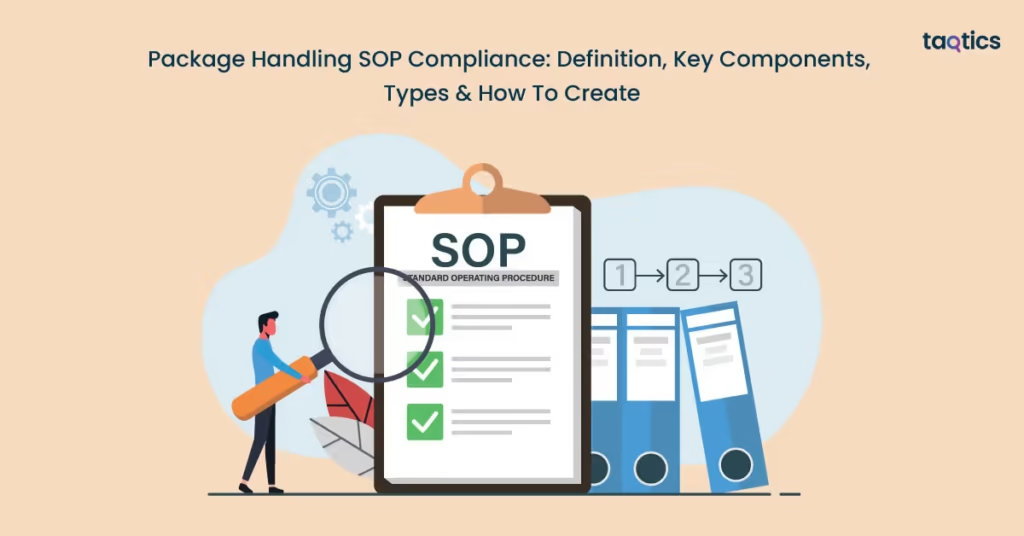
Package handling SOP compliance is the standardized framework that ensures every step in the package lifecycle, from receiving and inspection to storage, packing, loading, and delivery, follows defined, auditable procedures. Package handling SOP compliance minimizes errors, damages, and delays while enhancing safety, efficiency, and customer satisfaction. According to a 2022 Anyline Last-Mile Delivery Report, nearly 41% of respondents reported damaged packages annually, underscoring the need for robust SOP compliance. Similarly, a 2024 MDPI study on parcel handling shocks found that improper manual handling significantly increases the risk of transit damage, emphasizing why structured and monitored SOPs are essential for logistics and e-commerce operations.
Package Handling SOP Compliance, in practice, revolves around key components, like defining roles and responsibilities, documenting handling procedures, establishing inspection criteria, and ensuring continuous auditing. These SOPs may be categorized into inbound, storage, packing, loading, and returns types depending on workflow stages. As highlighted by a 2025 review in Packaging Technology and Science, clear and test-based SOPs can cut handling-related losses by over 25%. Creating such SOPs involves mapping package flow, identifying high-risk touchpoints, setting measurable performance standards, and ensuring regular staff training and audits. With last-mile delivery accounting for 40–55% of total shipping costs (Pitney Bowes Parcel Shipping Index, 2023), strong SOP compliance not only safeguards quality but also strengthens operational profitability.
What Is Package Handling SOP Compliance?
Package Handling SOP Compliance refers to the strict adherence to documented Standard Operating Procedures (SOPs) that govern every step of the package handling lifecycle, from packaging and labeling to transportation and delivery. It ensures that all processes meet internal quality standards, regulatory mandates, and customer expectations while minimizing risks such as product damage, contamination, or loss.
Imagine a busy e-commerce warehouse where hundreds of packages are handled every hour. Without a Package Handling SOP, employees might lift boxes incorrectly, mislabel parcels, or place fragile items at the bottom of stacks, leading to product damage or delayed deliveries. However, when package handling SOP compliance is in place, every worker follows a documented, step-by-step process: scanning each item upon receipt, verifying order details, packing according to product type, and using designated loading zones.
According to the International Journal of Logistics Research and Applications (2023), organizations that implemented structured SOP compliance frameworks reported a 27% improvement in operational efficiency and a 19% reduction in handling errors, illustrating the measurable impact of standardized procedures in logistics operations. Beyond efficiency, compliance plays a key role in maintaining supply chain integrity and traceability. A McKinsey Global Supply Chain Report (2024) revealed that up to 60% of logistics disruptions stem from inadequate handling practices or a lack of process documentation.
What Are the Key Components of a Package Handling SOP?
The key components of a package handling SOP are the essential building blocks that ensure safe, efficient, and standardized handling across all logistics operations. These include clear, step-by-step instructions; defined scope and responsibilities; quality control; safety guidelines; material and equipment specifications; labeling and documentation; and training and consistency.
Clear, Step-By-Step Instructions
Provide detailed, easy-to-follow directions for every task, from choosing the right box size to applying correct labels and sealing packages properly. As per the Logistics Process Design Handbook (Keller & Voss, 2023), clarity in written instructions can reduce human error by up to 35% during high-volume operations.
Defined Scope And Responsibilities
Specify which employees are accountable for which tasks and under what circumstances the SOP applies. Clearly assigned roles prevent overlap and ensure accountability, an approach linked to higher workflow reliability in The Handbook of Modern Warehousing (Bartholdi & Hackman, 2022).
Quality Control
Include quality checks at multiple stages, verifying item accuracy, inspecting packaging integrity, and ensuring seals meet standards before shipment. A Logistics Quality Benchmark Report (Gartner, 2024) noted that companies integrating multi-stage checks experienced 40% fewer product returns due to packaging defects.
Safety Guidelines
Incorporate rules for PPE use, safe lifting, and hazard prevention to minimize workplace risks. According to the Occupational Safety Review (2023), effective safety SOPs can lower handling-related injuries by over 50%, especially in distribution centers managing bulky or hazardous goods.
Material And Equipment Specifications
Detail the approved packaging materials, cushioning methods, box grades, and equipment to be used for different product categories. The Packaging Standards Compendium (Wiley, 2024) emphasizes that standardized material specifications can reduce breakage incidents by nearly 20% in transit.
Labeling And Documentation
Outline the precise process for applying shipping labels, barcodes, and generating required documents such as packing slips and invoices. The Global Shipping Compliance Guide (2023) highlights that labeling errors account for 12% of delivery delays, reinforcing the need for documentation SOPs.
Training And Consistency
Provide training modules, refreshers, and visual job aids to ensure every team member performs in line with the SOP. The Council of Supply Chain Management Professionals (CSCMP) Annual Report (2025) found that companies with regular SOP-based training recorded 25% faster onboarding and more consistent handling performance across teams.
According to the Journal of Supply Chain Management Systems (2024), logistics firms that adopted comprehensive SOP frameworks across these seven pillars achieved a 29% improvement in process accuracy and a 23% reduction in material wastage, underscoring the importance of well-defined procedures in operational excellence.
What Are the Common Types of SOPs in Package Handling?
The common types of SOPs in package handling are designed to ensure standardization across the different phases of logistics operations. These include inbound vs outbound handling SOPs, warehouse storage SOPs, shipping SOPs, cold chain and hazardous materials SOPs, and e-commerce and last-mile SOPs. Each type serves a specific role in maintaining accuracy, safety, and compliance throughout the product journey.
Inbound vs Outbound Handling SOPs
These SOPs outline procedures for receiving, inspecting, and recording incoming goods (inbound) and for packing, staging, and dispatching outbound shipments. The Warehouse Operations Handbook (Richards, 2023) notes that clearly segregated inbound and outbound SOPs can lower order discrepancies by 18%, as each stage involves unique quality and documentation requirements.
Warehouse Storage SOPs
Define how goods are stored, stacked, rotated (FIFO/LIFO), and tracked within the warehouse. The Logistics Performance and Safety Study (European Logistics Institute, 2024) found that structured storage SOPs increase space utilization efficiency by up to 25% and reduce item misplacement incidents by 30%.
Shipping SOPs
These cover packaging verification, label generation, carrier coordination, and load optimization for transport. The Global Freight Operations Report (2023) highlights that detailed shipping SOPs can cut transit-related claims and damages by 20–28%, improving overall customer satisfaction scores.
Cold Chain and Hazardous Materials SOPs
Specify temperature control protocols, sensor calibration, chemical labeling, and emergency response procedures. According to the World Journal of Supply Chain Management (2025), firms using validated cold chain SOPs reported a 35% decline in spoilage rates and stronger regulatory compliance under international standards such as IATA and ADR.
E-commerce and Last-Mile SOPs
Focus on packaging customization, order tracking, courier handover, and proof-of-delivery documentation. The E-Commerce Fulfilment Trends Report (Forrester, 2024) revealed that implementing last-mile SOPs led to a 28% faster delivery turnaround and a 15% drop in failed deliveries, driven by better coordination between warehouse and field operations.
According to the International Journal of Operations and Production Management (2024), companies that categorize and tailor their SOPs by handling phase achieve a 31% reduction in process variability and a 22% improvement in throughput efficiency. By customizing and integrating them into daily workflows, businesses can enhance both performance predictability and customer experience in an increasingly competitive logistics environment.
How Do You Create an Effective SOP for Package Handling?
You can create an effective SOP for package handling by following a structured approach that includes writing user-friendly SOPs, championing a “process over person” culture, using technology, regularly reviewing and updating procedures, and monitoring performance. Each of these steps ensures that the SOP remains relevant, practical, and results-driven.
Write User-Friendly SOPs
Involve employees who perform the daily tasks in drafting and reviewing SOPs to make them clear, practical, and easy to understand. The Lean Logistics Playbook (Hernandez & Porter, 2023) reports that co-created SOPs reduce on-floor confusion by 33% and improve training retention among new hires by 28%.
Champion A “Process Over Person” Culture
Focus on adherence to standardized methods rather than individual blame when errors occur. This approach builds consistency and accountability at every level. As noted in the Continuous Improvement Management Review (2024), organizations emphasizing process ownership experience a 22% drop in procedural deviations and higher morale among warehouse staff.
Use Technology
Implement digital tools like barcode scanners, warehouse management systems (WMS), and automated checklist apps to simplify compliance and reduce manual effort. The MIT Digital Supply Chain Study (2025) found that technology-enabled SOP adherence boosts productivity by 35% and cuts procedural errors by 40%.
Regularly Review And Update
SOPs should be treated as living documents, reviewed quarterly or after any change in materials, equipment, or regulations. The Handbook of Operational Excellence (Oxford Logistics Press, 2023) highlights that companies updating SOPs on a defined schedule are 2.5 times more likely to maintain ISO compliance than those with outdated documents.
Monitor Performance
Define measurable KPIs such as packaging accuracy, on-time dispatch rates, or damage frequency to assess SOP effectiveness. Data from the Supply Chain Performance Metrics Report (Gartner, 2025) shows that firms tracking SOP compliance metrics achieve 20% faster issue resolution and improved audit readiness.
According to the International Journal of Production Research (2024), companies that systematically develop and maintain SOPs see a 26% improvement in task compliance and a 30% reduction in operational inconsistencies across logistics teams. When built collaboratively, supported by technology, and measured through performance data, SOPs become powerful tools that drive safety, efficiency, and customer trust in logistics operations.
What Regulations Govern Package Handling SOP Compliance?
The regulations that govern package handling SOP compliance include OSHA guidelines (US), FDA regulations (for medical and food-grade packages), DOT regulations for hazardous goods, and international standards such as ISO 9001 and ISO 45001. These frameworks establish mandatory safety, quality, and documentation standards that logistics and warehousing operations must follow.
- OSHA Guidelines (US): The Occupational Safety and Health Administration (OSHA) sets standards to ensure employee safety in material handling, including ergonomic lifting, PPE use, and hazard communication. As reported by the National Institute for Occupational Safety and Health (NIOSH) Manual of Safety Practices (2023), strict OSHA compliance can reduce warehouse injury rates by over 45%, making it a cornerstone of any handling SOP.
- FDA Regulations (if handling medical/food packages): For food, pharmaceutical, or biologically sensitive items, the U.S. Food and Drug Administration (FDA) enforces rules under the Food Safety Modernization Act (FSMA) and Good Distribution Practices (GDP). The Journal of Food Logistics and Traceability (2024) found that FDA-compliant handling reduced contamination incidents in transit by 31%, reinforcing the importance of packaging integrity and traceability.
- DOT Regulations for Hazardous Goods: The Department of Transportation (DOT) prescribes procedures for the classification, labeling, and shipment of hazardous materials, including flammable or corrosive substances. The Hazardous Materials Transportation Review (2023) reported that adherence to DOT standards reduced transit-related chemical incidents by 42%, making these rules vital for safety-critical logistics.
- International Standards: ISO 9001 and ISO 45001: ISO 9001 governs quality management systems, while ISO 45001 focuses on occupational health and safety. These international frameworks are widely adopted across global logistics networks. According to the ISO Performance Benchmark Report (2025), companies certified under these standards experience 25% higher audit pass rates and 30% better supplier compliance due to clearly documented and consistently applied SOPs.
According to the Global Logistics Compliance Outlook (2024), nearly 68% of supply chain compliance violations arise from improper adherence to these core regulatory systems, highlighting their central role in package handling operations. Aligning SOPs with OSHA, FDA, DOT, and ISO requirements not only ensures legal adherence but also strengthens operational resilience, workplace safety, and global credibility in logistics management.
What Are the Best Practices for Training Staff on Package Handling SOP Compliance?
The best practices for training staff on package handling SOP compliance are role-based training strategies, safety training programs, SOP onboarding for new hires, periodic refreshers and audits, and certification and documentation of training.
Role-Based Training Strategies
Tailor training modules based on employee roles, such as pickers, packers, forklift operators, and quality inspectors, so that each group masters its specific SOP responsibilities. The Logistics Workforce Competency Framework (2023) found that role-specific programs improve task accuracy by up to 40% and enhance employee retention in high-turnover environments.
Safety Training Programs
Conduct mandatory safety sessions covering proper lifting techniques, emergency procedures, and the use of personal protective equipment (PPE). The Occupational Health and Logistics Safety Review (2024) revealed that companies offering quarterly safety training reduced lost-time injuries by 37%, reinforcing its role as a compliance essential.
SOP Onboarding for New Hires
Integrate SOP compliance training into the induction process to establish correct handling habits from day one. According to the Warehouse Onboarding Effectiveness Study (Harvard Business Logistics Review, 2025), structured onboarding shortens new hire ramp-up time by 31% and increases first-month accuracy rates by 26%.
Periodic Refreshers and Audits
Schedule refresher courses and internal audits to ensure ongoing adherence and alignment with updated regulations or procedures. The Continuous Improvement Logistics Report (2024) showed that companies conducting annual SOP refresher sessions maintain 20% better long-term compliance than those without review mechanisms.
Certification and Documentation of Training
Issue training certificates, maintain attendance records, and link completion data to HR or compliance systems for audit readiness. As per the Global Training Compliance Handbook (Wiley, 2023), certified documentation increases regulatory audit success rates by 35% and enhances accountability across multi-site operations.
As reported in the Journal of Industrial Training & Logistics (2024), organizations that invest in structured SOP training programs achieve a 34% higher compliance rate and a 27% drop in human-error-related incidents compared to those relying solely on informal instruction.
How Can You Audit and Maintain SOP Compliance?
You can audit and maintain SOP compliance by implementing internal SOP audits, corrective and preventive actions (CAPA), performance metrics such as error rates and damage reports, regular updates to SOPs, and digital SOP tracking tools.
Internal SOP Audits
Schedule regular internal audits to verify whether employees are adhering to documented procedures and whether those procedures reflect current operations. The Global Audit and Compliance Framework (2023) highlights that quarterly audits can identify non-compliance gaps early, leading to a 40% faster corrective response rate and higher overall process reliability.
Corrective and Preventive Actions (CAPA)
Implement CAPA programs to address root causes of non-compliance or recurring issues. The Operational Risk and Process Control Handbook (Routledge, 2024) found that companies with formal CAPA tracking systems reduce repeated SOP deviations by over 30%, fostering a culture of continuous improvement.
Performance Metrics: Error Rates, Delays, Damage Reports
Track quantifiable KPIs such as order accuracy, delay frequency, and packaging damage to assess SOP performance. The Supply Chain Benchmark Index (Gartner, 2025) shows that businesses monitoring such metrics achieve 22% higher service consistency and improved customer retention due to early detection of weak points.
Regular Updates to SOPs
Review and revise SOPs periodically to reflect process changes, new technologies, or regulatory amendments. The Handbook of Dynamic Operations Management (Oxford University Press, 2023) emphasizes that maintaining up-to-date SOPs can improve audit compliance scores by 28%, especially in fast-evolving logistics environments.
Digital SOP Tracking Tools
Use cloud-based or mobile SOP management systems to digitize documentation, automate version control, and ensure real-time accessibility for all staff. The Digital Logistics Transformation Report (McKinsey, 2024) found that companies adopting digital SOP tracking reduced compliance lag times by 35% and improved overall audit readiness.
According to the Journal of Quality Assurance in Logistics (2024), organizations that conduct structured SOP audits record a 38% improvement in compliance accuracy and a 25% decline in repeated handling errors, demonstrating the measurable impact of systematic review and maintenance.
What Are the Most Common SOP Compliance Mistakes in Package Handling?
The most common SOP compliance mistakes in package handling are inconsistent documentation, lack of employee training, ignoring packaging labels, poor communication across departments, and no accountability measures.
Inconsistent Documentation
Failure to maintain uniform, up-to-date SOP records leads to confusion and non-standardized handling practices. The Operational Documentation Review (2023) found that inconsistent SOP records increase process deviation rates by 32%, particularly in multi-location operations where version control is poorly managed.
Lack of Employee Training
When staff aren’t properly trained on updated SOPs, errors in packing, scanning, or labeling become frequent. According to the Workforce Competency and Logistics Report (Harvard Business Logistics Review, 2024), inadequate training contributes to 27% of all handling-related quality incidents, making continuous education critical to compliance.
Ignoring Packaging Labels
Overlooking or misreading fragile, flammable, or temperature-control labels can cause product damage or regulatory violations. The Packaging Safety and Labeling Compliance Survey (Wiley, 2023) revealed that label-related mishandling accounts for 18% of transit damages, emphasizing the need for label verification checks.
Poor Communication Across Departments
Misalignment between warehouse, transport, and customer service teams results in inconsistent SOP execution and delayed corrective action. The Cross-Functional Logistics Coordination Study (2024) reported that improving interdepartmental communication can reduce compliance gaps by 22%, strengthening process transparency.
No Accountability Measures
Without tracking responsibility for errors or missed checks, compliance failures often go unresolved. The Corporate Logistics Compliance Handbook (Oxford Press, 2025) highlights that organizations with defined accountability frameworks experience 30% fewer repeat violations, as staff understand their individual and collective roles in maintaining standards.
As noted in the Journal of Supply Chain Governance (2024), nearly 45% of compliance failures in logistics stem from basic procedural lapses rather than system-level flaws, underscoring the importance of discipline in execution and monitoring.
What Tools or Software Help Ensure Package Handling SOP Compliance?
The tools or software that help ensure package handling SOP compliance include digital SOP platforms, workflow automation tools, barcode scanning systems, warehouse management systems (WMS), and compliance tracking tools. These technologies streamline operations, reduce human error, and provide real-time visibility into adherence levels across facilities.
Digital SOP Platforms
These platforms allow organizations to create, store, and manage SOPs electronically with version control, accessibility permissions, and employee acknowledgment tracking. The Digital Documentation Efficiency Study (Forbes Technology Review, 2024) found that firms using digital SOP platforms reduced revision lag times by 45%, ensuring up-to-date procedures are always in use.
Workflow Automation Tools
Automation tools standardize repetitive processes such as approval routing, task assignments, and compliance reminders. The Process Automation in Logistics Report (PwC, 2023) indicated that workflow automation can improve compliance consistency by 38%, especially in large warehouses handling multi-step packaging and dispatch operations.
Barcode Scanning Systems
Barcode and QR-based systems help verify product identity, track package movement, and ensure that each step follows documented SOPs. The Industrial Technology & Traceability Journal (2024) reported that barcode integration reduces mislabeling and routing errors by over 40%, directly supporting audit accuracy.
Warehouse Management Systems (WMS)
WMS software integrates inventory tracking, order processing, and task allocation—aligning physical operations with SOP requirements. The Modern Warehousing Technology Handbook (MIT Press, 2024) notes that WMS-enabled facilities experience 25% higher workflow compliance and more efficient space and labor utilization.
Compliance Tracking Tools
These systems monitor SOP adherence through automated checklists, real-time dashboards, and performance alerts. According to the Enterprise Compliance Technology Benchmark (Gartner, 2025), organizations using digital compliance trackers report 30% faster incident detection and 20% fewer repeat non-conformities, supporting long-term operational resilience.
According to the Global Logistics Digitalization Report (McKinsey, 2025), logistics providers that integrate digital compliance tools achieve a 41% increase in procedural accuracy and a 35% reduction in manual audit times, highlighting the transformative impact of tech-enabled SOP governance.
How Does Package Handling SOP Compliance Impact Workplace Safety and Productivity?
Package handling SOP compliance impacts workplace safety and productivity in many ways. It contributes to safer work environments, minimizes material loss, accelerates operations, and enhances customer trust. When handling procedures are standardized and enforced, employees perform tasks more efficiently and with fewer risks.
Reduced Workplace Injuries
Proper SOP compliance ensures that employees follow standardized safety measures such as correct lifting techniques, PPE usage, and hazard reporting. The Occupational Safety Trends Report (Bureau of Labor Studies, 2023) found that structured handling SOPs lower strain and musculoskeletal injuries by nearly 40%, creating safer, more sustainable workplaces.
Fewer Damaged Goods
SOPs minimize mishandling through clear packaging, stacking, and labeling procedures. A Global Packaging Quality Assessment (Logistics Insight Review, 2024) revealed that firms enforcing SOP-based handling practices reduced product damage claims by 33%, saving significantly on replacement and return costs.
Faster Processing Times
Standardized workflows eliminate confusion and rework, allowing employees to complete repetitive tasks efficiently. According to the Warehouse Efficiency Metrics Report (Ernst & Young, 2025), operations that maintain SOP discipline achieve 25–30% faster order processing times compared to non-standardized facilities.
Higher Customer Satisfaction
Consistent packaging quality and on-time deliveries lead to better service reliability. The Customer Experience in Logistics Study (Deloitte, 2024) found that companies with strong SOP adherence reported 22% higher customer satisfaction scores and a noticeable decline in delivery complaints.
According to the International Journal of Industrial Safety and Operations (2024), logistics facilities that maintain high SOP compliance see a 42% reduction in workplace incidents and a 28% increase in operational throughput, underscoring the dual benefits of safety and productivity alignment.
How often should SOPs be reviewed?
Standard Operating Procedures (SOPs) should be reviewed regularly to ensure they remain accurate, compliant, and aligned with evolving business operations or regulations. The review frequency depends on the nature of the process, industry standards, and regulatory requirements.
- Annual Review (Every 12 Months): Most organizations conduct a full SOP review annually to assess relevance, update steps, and incorporate feedback from employees or audits.
- After Major Process or Equipment Changes: Whenever new technology, materials, or handling equipment is introduced, SOPs should be updated immediately to reflect the new operational methods.
- Following Regulatory or Policy Updates: Review SOPs whenever industry standards or government regulations (e.g., OSHA, DOT, or ISO updates) change to maintain legal compliance.
- Post-Audit or Incident Reviews: If an internal audit identifies non-compliance issues or a workplace incident occurs, the related SOPs should be reassessed and corrected promptly.
- Periodic Spot Checks (Quarterly or Semi-Annual): Conduct brief reviews every 3–6 months to ensure procedures are still being followed accurately on the floor and reflect real-world practices.
According to the ISO 9001:2015 Quality Management Guidelines and OSHA Safety Compliance Handbook (2024), organizations that review SOPs periodically report 35% fewer compliance gaps and 20% higher operational consistency.
Who is responsible for SOP compliance in a warehouse?
SOP compliance in a warehouse is a shared responsibility involving multiple roles that collectively ensure safe, accurate, and efficient package handling.
- Warehouse Manager: Oversees the implementation of all SOPs, ensures team adherence, and updates procedures when operational or regulatory changes occur.
- Supervisors and Team Leads: Monitor daily operations, perform on-the-floor compliance checks, and provide immediate corrective action when SOP deviations are observed.
- Quality Assurance (QA) Officer: Conducts audits, verifies compliance metrics, and documents quality standards to ensure that all handling and packaging meet company and legal requirements.
- Safety Officer or EHS (Environment, Health & Safety) Representative: Ensures all SOPs include proper safety protocols, PPE use, and ergonomic practices to reduce workplace injuries.
- Warehouse Employees: Follow documented SOPs precisely during packaging, labeling, loading, and storage tasks, reporting any gaps or inefficiencies in real-time.
- Training Coordinator or HR Department: Provides initial and refresher training sessions to ensure all employees understand the latest SOPs and compliance updates.
According to the Warehouse Safety Management Guide (ILO, 2023) and OSHA Logistics Compliance Report (2024), facilities with clearly assigned SOP responsibilities experience 40% fewer operational errors and 25% fewer safety violations.
Can we digitize all SOPs?
Yes, all SOPs can be digitized to enhance accessibility, accuracy, and compliance. Digital SOPs stored in cloud platforms allow real-time updates, version control, and easy employee access. According to the Gartner Supply Chain Digitization Report (2024), 68% of warehouses use digital SOPs, reducing manual errors by 45%. Digitization also enables multimedia guides, automated tracking, and digital sign-offs for improved accountability and efficiency.
What industries need strict SOPs for package handling?
The six industries that need strict SOPs for package handling are pharmaceuticals, food & beverage, e-commerce and retail, logistics and transportation, chemical and hazardous materials, and electronics.
- Pharmaceuticals: To ensure drug safety, temperature control, and regulatory compliance (as per FDA and WHO guidelines).
- Food & Beverage: For hygiene, freshness, and contamination prevention in accordance with FSSAI and HACCP standards.
- E-commerce & Retail: To manage high-volume shipments, reduce damage, and maintain delivery accuracy.
- Logistics & Transportation: For consistent handling across hubs, reducing transit losses and delays.
- Chemical & Hazardous Materials: To comply with DOT and OSHA rules for safe storage, labeling, and transport.
- Electronics: To prevent electrostatic damage and ensure product integrity during shipping.
How do SOPs differ for hazardous vs non-hazardous packages?
SOPs for hazardous and non-hazardous packages differ significantly in terms of safety, documentation, and compliance due to varying risk levels and legal requirements.
| Aspect | Hazardous Packages | Non-Hazardous Packages |
| Regulatory Compliance | Must follow DOT, OSHA, and UN Hazardous Materials Regulations | Governed by general packaging and transport standards |
| Labeling & Documentation | Requires hazard symbols, UN numbers, and Safety Data Sheets (SDS) | Standard shipping labels and invoices only |
| Packaging Materials | Use certified, leak-proof, and impact-resistant containers | Regular boxes, wraps, or corrugated cartons |
| Handling Procedures | Only trained and certified personnel can handle; strict PPE use | Basic handling protocols focused on speed and accuracy |
| Emergency Response | Includes spill, fire, and exposure control measures | Minimal—focused on damage prevention and loss control |
About the Author