
Machinery & Equipment Maintenance: Definition, Importance & Types
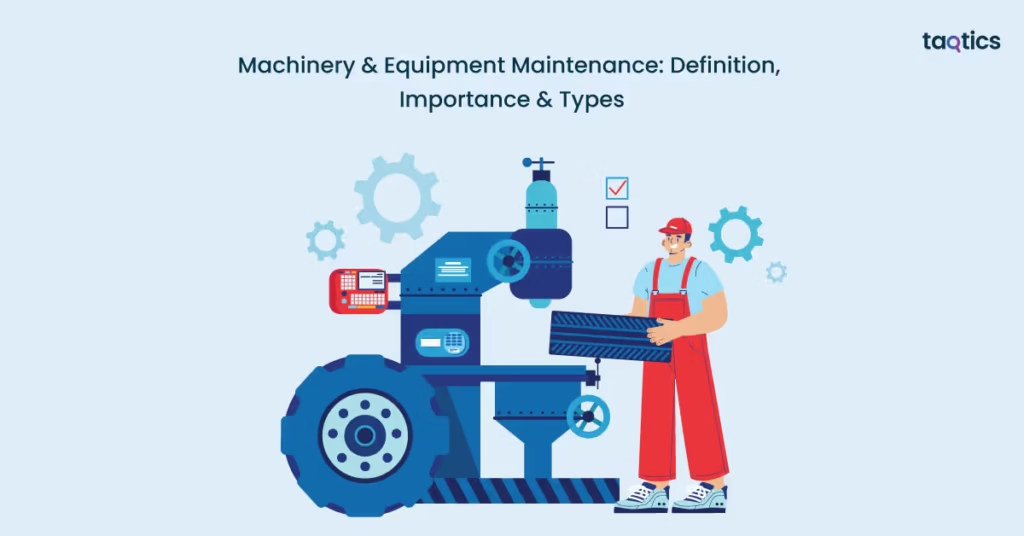
Machinery and equipment maintenance is the systematic process of servicing, inspecting, repairing, and optimizing machines and tools to keep them operating reliably throughout their useful life — a cornerstone of efficient manufacturing operations. Machinery and equipment maintenance ensures that production lines run smoothly, minimizing unplanned downtime and costly interruptions that can erode competitiveness. According to the Zipdo Education report 2025, companies that adopt preventive maintenance strategies report up to a 40 % reduction in repair costs and a 12 % decrease in equipment downtime, while many manufacturers see 25–35 % less unexpected breakdowns with structured maintenance programs.
In manufacturing, equipment reliability directly impacts productivity, safety, compliance, and profitability. Well‑maintained machines deliver consistent quality, reduce scrap and rework, and help meet regulatory standards that protect workers and products alike. With the rise of digital tools, including IoT-enabled sensors, predictive analytics, and platforms like Taqtics that modernize maintenance operations, companies can monitor machine health in real time, schedule maintenance proactively, and standardize documentation and compliance processes to further enhance uptime and operational resilience.
What Is Machinery and Equipment Maintenance in Manufacturing?
Machinery and equipment maintenance in manufacturing refers to the systematic process of inspecting, servicing, repairing, and optimizing machines and equipment used in production to ensure they operate efficiently, safely, and reliably.
It is a mission-critical function because the reliability of machinery directly affects production continuity, product quality, worker safety, and overall operational costs. Downtime caused by equipment failure can halt entire production lines, lead to missed deadlines, and incur significant financial losses.
The five key assets typically maintained in manufacturing
- CNC machines and lathes: Precision equipment essential for component fabrication.
- Conveyor systems: Critical for smooth material flow across production lines.
- Pumps and motors: Ensure consistent operation of fluid and mechanical systems.
- Compressors: Support pneumatic systems used in automation and material handling.
- Other heavy machinery: Industrial presses, mixers, and cutting equipment that are central to manufacturing processes.
Proper maintenance of these assets ensures operational reliability, safety, and maximized equipment lifespan.
Why Is Maintenance Crucial for Manufacturing Success?
Maintenance is crucial for manufacturing success because it directly impacts productivity, safety, and profitability across operations.
- Minimize downtime: Regular maintenance prevents unexpected equipment failures, ensuring continuous production and avoiding costly interruptions.
- Boost productivity & efficiency: Well-maintained machines operate at optimal performance, maximizing output and reducing energy and resource wastage.
- Enhance safety: Proper upkeep lowers the risk of accidents and injuries caused by malfunctioning or worn-out equipment.
- Extend asset life: Routine maintenance and timely repairs prolong the operational lifespan of expensive machinery, delaying replacement costs.
- Quality control: Consistently serviced equipment produces uniform, high-quality products, maintaining customer satisfaction and compliance with standards.
By integrating structured maintenance practices, manufacturers can achieve smoother operations, higher efficiency, and long-term business resilience.
What Are the Main Types of Maintenance in Manufacturing?
The main types of maintenance in manufacturing are designed to ensure machinery reliability, minimize downtime, and optimize operational efficiency.
- Routine/Preventive Maintenance: Scheduled inspections, cleaning, lubrication, and minor tune-ups are performed to prevent equipment failures before they occur.
- Predictive Maintenance (PdM): Uses sensors, IoT devices, and data analysis (e.g., vibration, temperature, and performance metrics) to forecast potential failures, enabling proactive repairs.
- Corrective Maintenance: Reactive maintenance is performed after a machine breaks down to restore its functionality.
- Condition-Based Maintenance (CBM): Maintenance is performed based on the actual condition or performance of the equipment rather than a fixed schedule, ensuring timely intervention only when needed.
Each maintenance type plays a crucial role in balancing cost, machine uptime, and operational safety in manufacturing environments.
What Is the Difference Between Preventive and Predictive Maintenance?
The difference between preventive and predictive maintenance lies in their approach to ensuring machinery reliability and minimizing downtime in manufacturing operations.
| Feature | Preventive Maintenance (PM) | Predictive Maintenance (PdM) |
| Approach | Scheduled, time- or usage-based maintenance (e.g., weekly, monthly) | Data-driven, condition-based maintenance triggered by real-time equipment metrics |
| Cost | Moderate recurring cost due to routine tasks, regardless of machine condition | Higher upfront cost for sensors and monitoring systems, but reduces unnecessary maintenance |
| Tools Required | Checklists, maintenance logs, basic diagnostic tools | IoT sensors, vibration/temperature analysis, analytics software, condition monitoring systems |
| Effectiveness | Prevents common failures, simple to implement, may cause unnecessary downtime | Optimizes maintenance timing, reduces unplanned breakdowns, maximizes machine uptime |
| When to Use | Best for critical equipment with predictable wear patterns or regulatory schedules | Best for high-value machinery or systems where unexpected failures are costly or disruptive |
| Taqtics Support | Task scheduling, reminders, and logging of routine maintenance activities | Integrates sensor data and condition alerts to trigger maintenance tasks proactively |
Combining both approaches makes manufacturers balance cost, reliability, and efficiency while leveraging digital tools like Taqtics to streamline operations and enhance safety.
How Can Manufacturers Create an Effective Maintenance Plan?
Manufacturers can create an effective maintenance plan by following a structured approach that ensures machinery reliability, reduces downtime, and optimizes operational efficiency.
- Conduct asset inventory and criticality analysis: Identify all equipment and assess which machines are most critical to production, safety, and quality.
- Choose maintenance strategy per asset type: Decide whether preventive, predictive, corrective, or condition-based maintenance is best suited for each piece of equipment.
- Set maintenance KPIs: Track metrics such as Mean Time to Repair (MTTR), Mean Time Between Failures (MTBF), and Overall Equipment Effectiveness (OEE) to measure performance and improvement areas.
- Use CMMS (like Taqtics): Digitally manage maintenance schedules, work orders, machine history, and compliance documentation to streamline operations and reduce human error.
- Establish standard operating procedures (SOPs): Document step-by-step instructions for maintenance tasks, inspections, and emergency responses to ensure consistency and safety.
- Train staff and assign responsibilities: Ensure personnel are trained in maintenance procedures, safety practices, and proper use of tools, with clear ownership for tasks and reporting.
By implementing these steps, manufacturers can maximize equipment uptime, maintain product quality, and foster a proactive, data-driven maintenance culture.
How Does Maintenance Software Like Taqtics Improve Manufacturing Uptime?
Maintenance software like Taqtics improves manufacturing uptime by digitizing and streamlining maintenance operations, reducing unplanned downtime, and ensuring machines run at peak efficiency.
- Task automation: Automatically schedules routine maintenance, inspections, and follow-ups to prevent missed tasks.
- Digital checklists & SOPs: Provides standardized workflows for maintenance, ensuring consistency and reducing human error.
- Real-time status tracking: Monitors ongoing maintenance activities, equipment health, and task completion in real time.
- Work order assignments: Assigns and tracks maintenance tasks for specific technicians, ensuring accountability and timely execution.
- Preventive maintenance schedules: Supports time- or usage-based maintenance to reduce unexpected breakdowns.
- Asset history logs: Maintains detailed records of repairs, inspections, and replacements, enabling data-driven decisions.
- KPI monitoring: Tracks critical metrics like MTTR, MTBF, and OEE to optimize performance and identify bottlenecks.
- Team collaboration & mobile access: Enables frontline teams to report issues, update tasks, and access SOPs from anywhere on the shop floor.
A manufacturing plant using Taqtics reduced machine downtime by 20% in six months by implementing automated preventive schedules and real-time monitoring of critical assets.
How to Choose the Right Maintenance Management Software?
You can choose the right maintenance management software by looking for key features that support efficient, scalable, and data‑driven maintenance operations, whether you run a small plant or a large multi‑site facility.
- Task assignment: The ability to assign work orders and maintenance tasks to specific technicians with clear deadlines and priorities.
- Multi‑site support: Centralized management that lets you monitor and coordinate maintenance across multiple facilities or production lines.
- Reporting & analytics: Built‑in dashboards and reports to track performance metrics, trends, and compliance status so you can make informed decisions.
- Ease of use: A user‑friendly interface that minimizes training time and encourages adoption across teams.
- Mobile‑first design: Mobile accessibility enables technicians to receive tasks, update statuses, and access documentation directly from the shop floor. Taqtics
- Integrations (IoT, ERP, sensors): Seamless connection with IoT condition monitoring, enterprise systems (like ERP), and sensor data helps automate maintenance triggers and enrich insights.
Taqtics is designed to be mobile‑friendly and simple to use, helping frontline technicians and supervisors quickly adopt the platform with minimal training. Plus, it scales with your needs, from single sites to multi‑location operations, enabling consistent task execution, automated reminders, and real-time progress tracking across teams.
What Tools and Checklists Are Essential for Equipment Maintenance?
Tools and checklists essential for equipment maintenance help standardize procedures, reduce errors, and ensure machines operate safely and efficiently. Implementing structured checklists makes it easier for maintenance teams to track tasks, document inspections, and comply with safety standards.
- Daily inspection checklist: Verify equipment condition, leaks, abnormal noises, and proper operation before starting production.
- Lubrication schedules: Track routine oiling, greasing, and fluid replacements to reduce wear and extend machine life.
- Calibration logs: Maintain records of measuring instruments, sensors, and control systems to ensure accuracy and product quality.
- Cleaning schedules: Outline regular cleaning tasks for machines, conveyors, and work areas to prevent contamination and improve efficiency.
- Safety checks: Confirm guards, emergency stops, PPE compliance, and signage are in place and functional.
- Tool availability checks: Ensure required maintenance tools are in proper condition and readily accessible for technicians.
| Task | Status | Notes |
| Inspect machine guards | Yes/No | Replace or repair if damaged |
| Check lubrication levels | Yes/No | Refill as needed |
| Test emergency stop | Yes/No | Ensure immediate response |
| Clean work surfaces | Yes/No | Remove debris and dust |
| Verify calibration | Yes/No | Record date & next due |
| Confirm tool availability | Yes/No | Replace missing tools |
Using digital platforms like Taqtics, these checklists can be converted into mobile-friendly, real-time forms, enabling automatic tracking, reminders, and history logs for better accountability and maintenance efficiency.
What Are the Key Metrics to Track Maintenance Performance?
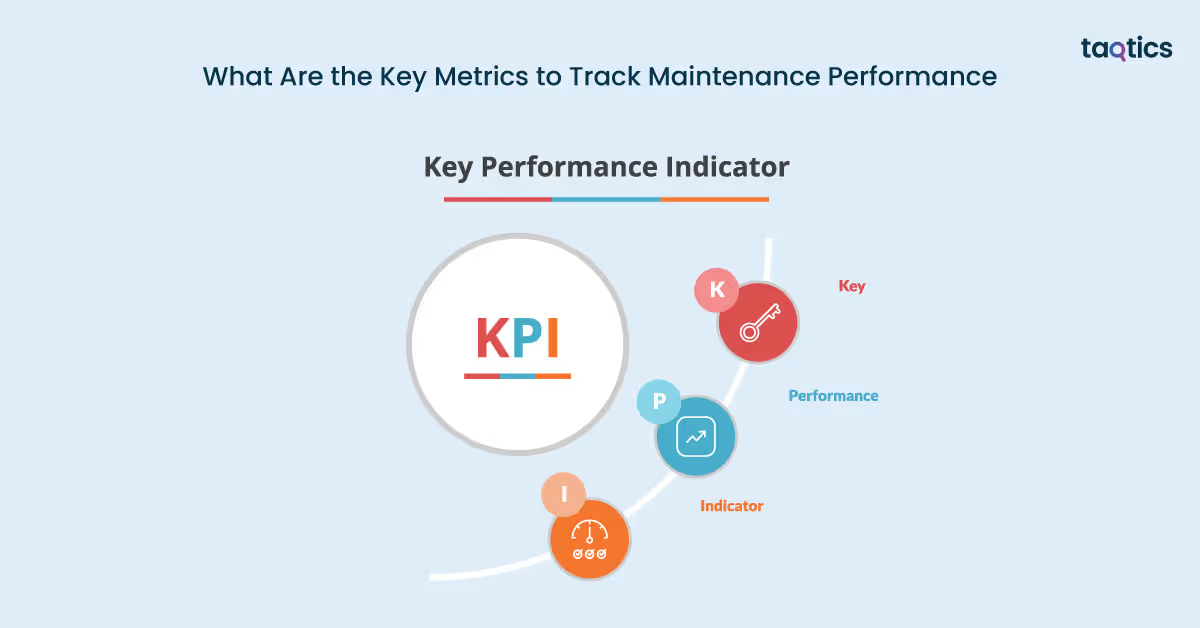
Key metrics to track maintenance performance help manufacturers measure the effectiveness of maintenance programs, identify improvement areas, and optimize equipment uptime.
Key metrics to track maintenance performance help manufacturers measure the effectiveness of maintenance programs, identify improvement areas, and optimize equipment uptime.
Mean Time Between Failures (MTBF)
MTBF measures the average duration a machine operates without failure. It reflects equipment reliability and the effectiveness of maintenance practices. Key points include:
- Indicates how often machines fail unexpectedly
- Helps prioritize preventive maintenance
- Ideal benchmark: ≥500 hours for critical equipment
Mean Time to Repair (MTTR)
MTTR calculates the average time needed to repair a failed machine and restore operations. It is a measure of maintenance efficiency. Consider:
- Lower MTTR reduces production downtime
- Highlights bottlenecks in repair processes
- Ideal benchmark: <4 hours for essential machinery
Downtime Rate
Downtime rate represents the proportion of production time lost due to equipment failure. Tracking this helps minimize disruptions. Key aspects:
- Identifies machines causing frequent interruptions
- Guides prioritization of maintenance resources
- Ideal benchmark: <5% for well-maintained operations
Schedule Compliance
Schedule compliance tracks how many planned maintenance tasks are completed on time. Its importance includes:
- Ensures preventive maintenance is consistently performed
- Reduces unplanned equipment failures
- Ideal benchmark: ≥95% timely completion
Maintenance Backlog
Maintenance backlog shows pending maintenance work relative to planned capacity. Monitoring this ensures maintenance resources are balanced. Highlights:
- Prevents overloading technicians
- Indicates resource or scheduling gaps
- Ideal benchmark: 10–15% of planned maintenance
Overall Equipment Effectiveness (OEE)
OEE measures overall asset efficiency by combining availability, performance, and product quality. Key points:
- Provides a comprehensive view of machine productivity
- Helps identify process, operational, or maintenance improvements
- Ideal benchmark: ≥85% for world-class operations; typical 60–75%
Tracking these KPIs enables manufacturers to proactively optimize maintenance schedules, reduce unplanned downtime, and improve equipment reliability and productivity.
What is the cost of equipment downtime?
The cost of equipment downtime refers to the total financial impact a manufacturing operation incurs when machinery or equipment is not operational. Downtime can be caused by unplanned breakdowns, maintenance delays, or process disruptions, and it affects both direct and indirect costs.
What’s the ROI of maintenance software?
The ROI of maintenance software is typically high, with companies recovering their investment quickly while achieving measurable cost savings and improved uptime.
- Reduced unplanned downtime: 30–50% less downtime through preventive and predictive maintenance.
- Lower maintenance costs: 20–30% savings on emergency repairs and inventory waste.
- Improved productivity: Maintenance teams become 25% more efficient with task automation and mobile access.
- Extended asset life: Proactive maintenance prolongs machinery lifespan, reducing capital replacement costs.
- Fast payback: Typical ROI of 300–500% within 2 years; payback often in 6–18 months.
Software like Taqtics helps achieve this ROI through automated scheduling, real-time monitoring, KPI tracking, and centralized documentation.
About the Author