
Quality Control In Manufacturing: Definition, Importance & Key Aspects
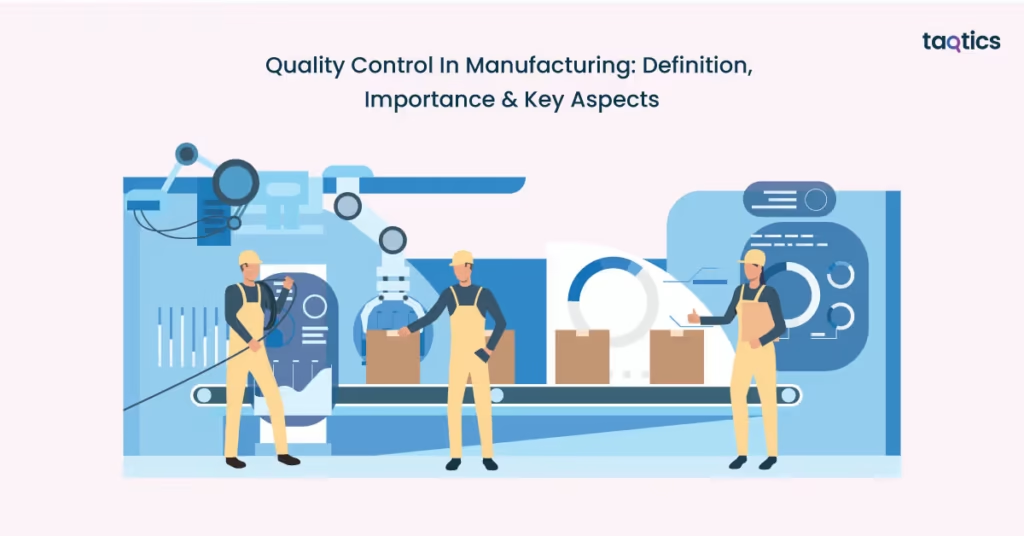
Quality control in manufacturing is the systematic process by which companies inspect, monitor, and adjust production activities to ensure products meet specified standards and customer expectations, whether it is checking the fit of parts off a CNC machine in the morning or verifying finished units before packing at day’s end. Quality control in manufacturing helps catch defects early, prevent faulty goods from reaching customers, and maintain consistent output quality. According to the data shared by worldmetrics.org, effective quality control can reduce defect rates by up to 50 % and cut inspection time by as much as 60 % with automation and digital monitoring.
In practical terms, strong quality control impacts every aspect of a factory’s performance: it supports regulatory compliance, reduces waste and rework costs, and strengthens brand reputation in competitive markets. According to research on statistical quality control methods, applying data-driven techniques such as control charts and root cause analysis significantly improves manufacturing efficiency and defect detection, contributing to long-term operational improvements and cost savings.
What Is Quality Control In Manufacturing?
Quality control (QC) in manufacturing is the systematic process of inspecting, testing, and monitoring products during or after production to ensure they meet predefined quality standards and specifications. It focuses on identifying defects or deviations and taking corrective action before products reach customers, ensuring reliability, safety, and customer satisfaction.
Unlike quality assurance (QA), which is proactive and designed to prevent defects by improving processes, QC is reactive and centers on detecting errors. For example, in the automotive industry, QC involves checking engines, brakes, and assemblies for tolerance and performance deviations before delivery; in electronics, it includes testing smartphones or circuit boards for battery life, screen calibration, and connectivity issues; and in food manufacturing, it covers verifying packaging, weight, labeling, and hygiene compliance before distribution.
By combining QC with QA, manufacturers can maintain consistent product quality, reduce waste, minimize rework, and ensure compliance with industry standards.
Why Is Quality Control Important In Manufacturing?
Quality control is important in manufacturing because it ensures products meet standards, protects consumers, and supports business success. Key reasons include:
- Improves product quality: Detects and corrects defects to ensure reliable, consistent output.
- Enhances customer satisfaction: High-quality products build trust and loyalty.
- Reduces costs: Minimizes waste, rework, and production errors.
- Prevents recalls and safety hazards: Identifies issues before products reach the market.
- Ensures regulatory compliance: Meets industry standards and avoids legal penalties.
- Provides competitive advantage: Companies with strong QC gain market credibility and customer preference.
This structured approach highlights how QC directly contributes to operational efficiency, safety, and profitability.
What Are The Key Aspects of QC in Manufacturing
The key aspects of quality control (QC) in manufacturing encompass the processes and practices that ensure products meet defined standards and customer expectations.
- Inspection and Testing: Involves physical checks, automated tests, and measurements of raw materials, in-process items, and final products to verify quality at every stage of production.
- Defect Detection: Identifies substandard items and separates them from acceptable products to prevent defective goods from reaching customers.
- Standard Adherence: Ensures products comply with technical specifications, safety regulations, and industry standards such as ISO, guaranteeing consistency and regulatory compliance.
- Data Collection: Gathers information from equipment and operators to analyze cycle times, defect causes, and process bottlenecks, enabling data-driven quality improvements.
- Corrective Actions: Focuses on identifying the root causes of defects and implementing measures to prevent recurrence, continuously improving processes and product quality.
These aspects create a structured QC framework that helps manufacturers reduce waste, improve reliability, and enhance customer satisfaction.
What Are The Types Of Quality Control In Manufacturing?
The types of quality control (QC) in manufacturing include process-based, product-based, statistical, and preventive vs. corrective quality control. Each type focuses on specific stages of production or methods of monitoring quality.
- Process-Based QC: Focuses on monitoring and controlling the production process itself to prevent defects. Example: Ensuring proper machine calibration during assembly.
- Product-Based QC: Involves inspecting the finished product to detect defects before it reaches customers. Example: Final inspection of packaged electronics for functionality.
- Statistical QC (SQC/SPC): Uses statistical methods and data analysis to monitor process performance and detect variations. Example: Control charts tracking dimensions of machined components.
- Preventive vs. Corrective QC: While preventive QC implements measures to avoid defects before they occur, such as standardized procedures and employee training, corrective QC detects defects and takes action to correct them and prevent recurrence. Example: Identifying a faulty batch and investigating root causes.
These types can be combined to create a comprehensive QC program that ensures consistent quality, reduces waste, and enhances operational efficiency.
What Are The 7 Quality Control Tools Used In Manufacturing?
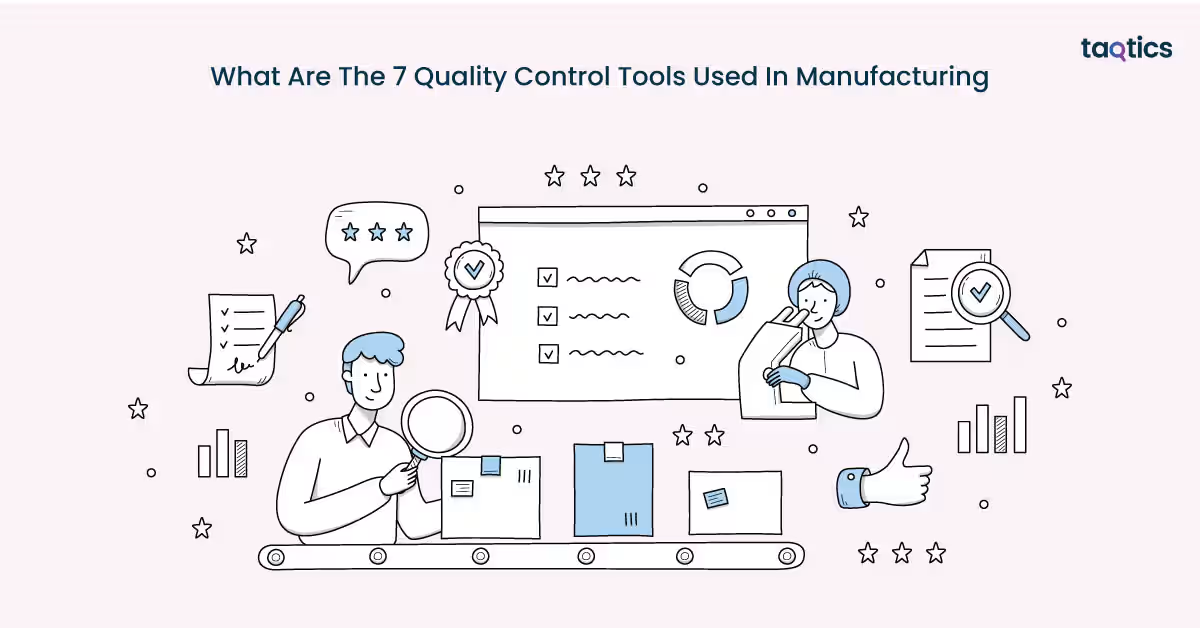
The 7 quality control (QC) tools used in manufacturing include tools, like flowcharts, check sheets, control charts, etc., that help identify defects, understand causes, and implement corrective actions.
Flowcharts
Flowcharts visually map out the step-by-step production process, helping identify bottlenecks, inefficiencies, or potential defect points.
- Useful for spotting process steps that may cause errors
- Helps standardize workflows for consistency
- Example: Mapping the assembly line workflow for automotive parts
Check Sheets
Check sheets are structured forms used to collect and record data systematically, making it easier to analyze trends and defects.
- Tracks frequency and types of defects
- Simplifies data collection for analysis
- Example: Recording defective electronic components per production shift
Control Charts
Control charts monitor process variation over time and detect deviations from acceptable limits, ensuring processes remain stable.
- Highlights trends, shifts, or unusual variations
- Supports early detection of potential issues
- Example: Charting thickness measurements of metal sheets in a rolling mill
Pareto Charts
Pareto charts identify the most significant factors contributing to defects using the 80/20 principle, helping prioritize improvement efforts.
- Focuses on major sources of defects
- Guides resource allocation for maximum impact
- Example: Highlighting top causes of product rejects in a packaging line
Histograms
Histograms display the distribution of data points, helping understand variability and the frequency of defects.
- Shows how often different defect types or measurements occur
- Supports statistical analysis of production quality
- Example: Analyzing weight variations in batches of packaged food products
Scatter Diagrams
Scatter diagrams examine the relationship between two variables to identify potential causes of defects.
- Reveals correlations between process parameters and defects
- Helps investigate root causes systematically
- Example: Comparing machine temperature and defect rate in injection molding
Cause-and-Effect Diagrams (Fishbone/Ishikawa)
Cause-and-effect diagrams systematically identify potential root causes of a quality problem, promoting structured problem-solving.
- Breaks down causes into categories like people, machines, materials, methods
- Supports team analysis and corrective action planning
- Example: Investigating reasons for paint defects in automotive assembly
These tools form the foundation of statistical quality control and continuous improvement initiatives in manufacturing.
What Are Common Quality Control Methods In Manufacturing?
The common quality control methods in manufacturing are Six Sigma, Lean Manufacturing, ISO 9001 standards, and Total Quality Management (TQM).
Six Sigma
Six Sigma is a data-driven methodology that focuses on reducing process variation and defects to improve product quality. It uses the DMAIC (Define, Measure, Analyze, Improve, Control) framework to systematically identify problems, implement solutions, and maintain improvements. For example, automotive manufacturers use Six Sigma to reduce assembly defects to fewer than 3.4 per million opportunities, ensuring higher reliability and customer satisfaction.
Lean Manufacturing
Lean Manufacturing emphasizes the elimination of waste and non-value-added activities to improve efficiency and product quality. It promotes process standardization, continuous flow, and just-in-time production to minimize errors and delays. For instance, a packaging line may be streamlined to reduce bottlenecks and prevent mistakes, improving both speed and output quality.
ISO 9001 Standards
ISO 9001 is an internationally recognized framework for implementing quality management systems (QMS). It ensures that processes consistently meet customer and regulatory requirements through documentation, audits, and corrective actions. Food processing plants, for example, adopt ISO 9001 to maintain hygiene standards, accurate labeling, and consistent product quality.
Total Quality Management (TQM)
TQM is a holistic approach that engages all employees in continuous quality improvement across the organization. It focuses on customer satisfaction, defect prevention, and process enhancement. In practice, factory teams are encouraged to proactively identify quality issues and implement solutions, fostering a culture of accountability and excellence throughout production.
These QC methods are often integrated into manufacturing operations to achieve high-quality products, minimize defects, and maintain compliance with industry standards.
What Causes Quality Issues In Manufacturing?
The factors that cause quality issues in manufacturing are human error, equipment failure, poor process design, lack of standardization, and supplier quality problems.
- Human Error: Mistakes made by operators or staff during production, assembly, or inspection can lead to defects. Examples include incorrect machine settings, improper handling of materials, or mislabeling products.
- Equipment Failure: Malfunctioning or poorly maintained machinery can produce inconsistent or defective products. Regular maintenance and monitoring are essential to prevent downtime and maintain quality.
- Poor Process Design: Inefficient or flawed production processes can create bottlenecks, inconsistencies, or variations in output, resulting in defective products or increased waste.
- Lack of Standardization: Without standardized procedures, employees may follow different methods, leading to inconsistent quality and higher defect rates across shifts or locations.
- Supplier Quality Problems: Substandard raw materials, components, or services from suppliers can compromise the quality of the final product, even if in-house processes are flawless.
Addressing these factors through training, preventive maintenance, process improvement, standard operating procedures, and supplier quality management is critical to maintaining high manufacturing standards.
How Is Quality Control Implemented On The Factory Floor?
Quality control is implemented on the factory floor through a combination of strategic setups, defined roles, standardized procedures, and technology integration to ensure consistent product quality.
- Setting Up QC Stations: Dedicated quality control stations are placed at key points in the production line to inspect raw materials, in-process items, and finished products. These stations help detect defects early and prevent faulty products from moving down the line.
- Role of Operators and Supervisors: Operators are responsible for monitoring quality during their tasks, performing basic checks, and reporting deviations. Supervisors oversee production, verify inspection results, and ensure corrective actions are taken when issues arise.
- Standard Operating Procedures (SOPs): SOPs define step-by-step instructions for production and inspection activities, ensuring consistency and reducing variability. They guide staff on proper procedures, testing methods, and acceptable quality standards.
- Training & Skill Development: Continuous training ensures that employees understand quality standards, inspection techniques, and corrective actions. Skilled workers are better equipped to identify defects and maintain high-quality outputs.
- Integration with ERP/MES Systems: QC data is often integrated with Enterprise Resource Planning (ERP) or Manufacturing Execution Systems (MES) to monitor performance, track defects, and generate reports in real time. This digital integration allows faster decision-making and proactive quality management.
By combining these practices, factories can maintain consistent quality, minimize defects, and improve overall production efficiency.
What Metrics And KPIs Are Used In Manufacturing Quality Control?
The metrics and KPIs used in manufacturing quality control include First Pass Yield (FPY), Defects per Million Opportunities (DPMO), Cost of Poor Quality (COPQ), scrap rate, rework rate, and audit compliance score.
First Pass Yield (FPY)
First Pass Yield measures the percentage of products that meet quality standards without requiring any rework or corrections. It reflects the efficiency of the production process and the ability to produce defect-free items on the first attempt.
A higher FPY indicates fewer defects, smoother operations, and better overall process reliability.
Defects per Million Opportunities (DPMO)
DPMO tracks the number of defects detected per one million production opportunities. It provides a standardized measure to compare process quality across different production lines or plants.
Lower DPMO values indicate higher process consistency, better quality control, and fewer defective products reaching customers.
Cost of Poor Quality (COPQ)
Cost of Poor Quality quantifies the financial impact of defects, including scrap, rework, warranty claims, and lost productivity. Monitoring COPQ helps manufacturers understand the economic consequences of quality issues and prioritize improvement initiatives.
Reducing COPQ directly improves profitability and operational efficiency.
Scrap Rate & Rework Rate
Scrap rate measures the percentage of materials discarded due to defects, while rework rate tracks the percentage of products requiring correction to meet standards. Both indicators highlight waste and inefficiencies in the production process.
Lower scrap and rework rates demonstrate effective quality control and cost management.
Audit Compliance Score
Audit compliance score evaluates how well production processes adhere to internal SOPs, quality procedures, and regulatory standards.
High compliance scores indicate strong process discipline, reduced risk of defects, and consistent product quality, supporting both operational excellence and regulatory requirements.
Tracking these KPIs allows manufacturers to maintain high-quality standards, optimize processes, reduce costs, and enhance customer satisfaction.
What Is The Role Of Quality Control Software In Manufacturing?
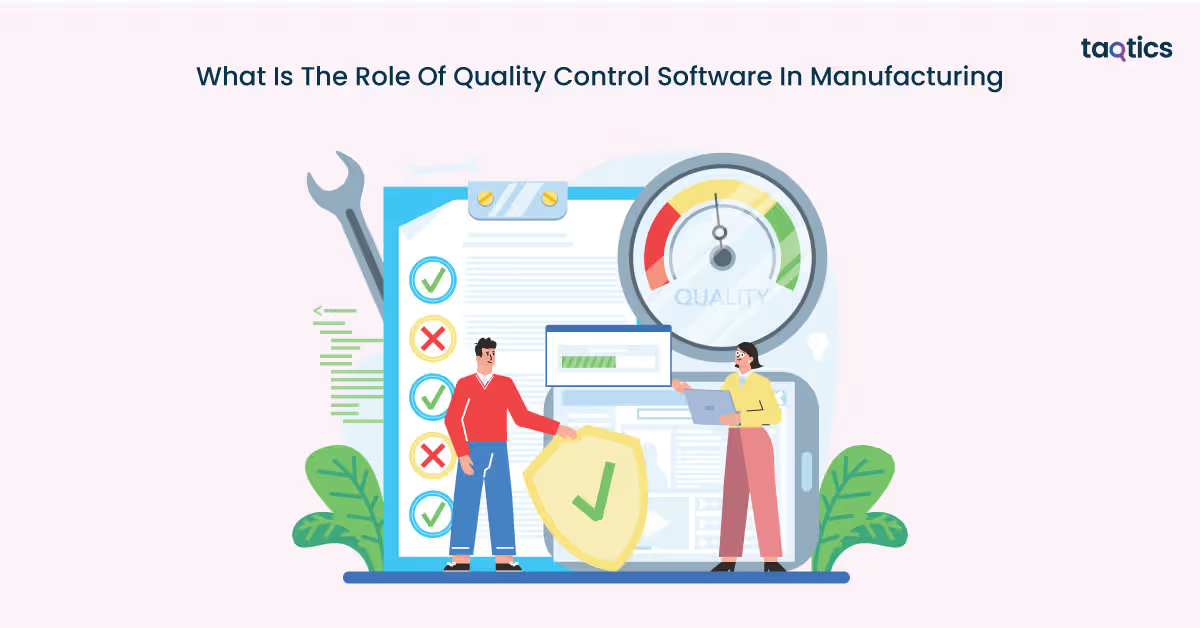
The role of quality control (QC) software in manufacturing is to streamline and enhance quality management processes by leveraging digital tools, real-time monitoring, and data analytics.
- Digitizing Quality Checklists: QC software replaces paper-based inspection forms with digital checklists, making it easier to standardize inspections, record results, and track compliance across multiple production lines.
- Real-Time Data Collection: Sensors, mobile devices, and digital entry tools allow QC software to capture inspection data instantly. Real-time monitoring helps detect deviations early and ensures timely corrective actions.
- Automated Alerts for Out-of-Spec Products: When a product falls outside specified quality parameters, the software generates automatic alerts for operators or supervisors, preventing defective items from moving further down the production line.
- Analytics Dashboards: QC software provides visual dashboards to analyze trends, defect causes, process bottlenecks, and KPIs such as FPY, DPMO, and scrap rates. These insights enable data-driven decision-making and continuous improvement.
- Integration with ERP and IoT: By connecting with Enterprise Resource Planning (ERP) systems and IoT-enabled machinery, QC software allows seamless tracking of production, inventory, and equipment performance. This integration improves traceability, process control, and overall operational efficiency.
QC software plays a crucial role in modern manufacturing by automating quality checks, providing actionable insights, and supporting proactive quality management.
How Does Taqtics Help With Quality Control In Manufacturing?
Taqtics helps with quality control in manufacturing by providing a digital platform that streamlines inspections, monitoring, and compliance processes, ensuring consistent product quality and faster issue resolution.
Key Features
To streamline quality control in manufacturing, Taqtics provides a range of powerful features designed to simplify inspections, standardize workflows, and capture real-time data.
- Digital Quality Checklists: Replace paper forms with digital checklists for standardized inspections and real-time data capture.
- Real-Time Issue Tracking: Immediately flags defects or deviations, allowing quick corrective actions.
- Custom SOP Workflows: Tailor standard operating procedures for different production lines, ensuring consistent execution.
- Compliance Documentation: Maintain all quality records digitally for easy retrieval and audit readiness.
These features enable teams to monitor processes efficiently and maintain consistent product quality across all production lines.
Benefits
The capabilities of Taqtics translate into clear operational advantages for manufacturers. By leveraging these features, teams experience faster issue resolution, improved accountability, reduced paperwork, and audit-ready compliance, making quality management more effective and less time-consuming.
- Reduced Paperwork: Eliminates manual forms and logs, saving time and reducing errors.
- Faster Issue Resolution: Alerts and tracking ensure defects are addressed quickly, minimizing production delays.
- Improved Accountability: Clear assignment and tracking of QC tasks enhance responsibility among operators and supervisors.
- Audit-Readiness: Digital records and workflows simplify internal and external audits, ensuring regulatory compliance.
By combining these features and benefits, Taqtics supports proactive quality control, reduces waste, and strengthens operational efficiency on the factory floor.
How Can Manufacturers Improve Their Quality Control Processes?
Manufacturers can improve their quality control processes by adopting a combination of strategic assessments, digital tools, and workforce engagement to ensure consistent product quality and operational efficiency.
- Conducting Gap Analysis: Regularly evaluating current QC processes against best practices or industry standards helps identify weaknesses, inefficiencies, and areas for improvement. This allows manufacturers to prioritize corrective actions and optimize quality workflows.
- Adopting Digital Transformation: Integrating digital tools such as automated inspections, IoT sensors, and data analytics enhances real-time monitoring, reduces human error, and provides actionable insights for process improvements.
- Employee Training & Ownership: Empowering employees through continuous training ensures they understand quality standards, inspection techniques, and their role in maintaining product quality. Encouraging ownership of QC responsibilities fosters accountability and proactive defect detection.
- Investing in QC Software Tools: Using dedicated quality control software, like Taqtics, helps digitize checklists, track defects in real time, enforce SOPs, and maintain compliance documentation, enabling faster corrective actions and overall process improvement.
By implementing these strategies, manufacturers can strengthen their quality control framework, reduce defects, and enhance customer satisfaction.
What’s the difference between quality control and quality assurance?
The difference between quality control and quality assurance lies in their approach, focus, and timing within the production process.
| Aspect | Quality Control (QC) | Quality Assurance (QA) |
| Definition | Detects defects in products during or after production | Ensures processes are designed to prevent defects from occurring |
| Approach | Reactive | Proactive |
| Focus | Product-oriented | Process-oriented |
| Timing | During or after production | Throughout the production process |
| Techniques | Inspections, testing, measurements | Process audits, SOP development, training |
| Goal | Identify and correct defects | Prevent defects and improve process quality |
| Examples | Inspecting finished electronic boards for defects | Implementing standardized assembly procedures and employee training |
This comparison highlights that QC ensures the final product meets standards, while QA strengthens the processes to produce quality consistently, making both essential for manufacturing excellence.
About the Author