Food Safety & Temperature Control Checklist

A food safety and temperature control checklist plays a vital role in preventing foodborne illnesses and ensuring regulatory compliance. A food safety and temperature control checklist helps reduce the risk of contamination by ensuring all perishable items are stored, cooked, and held at safe temperatures. According to the World Health Organization (WHO), unsafe food causes 600 million cases of foodborne diseases and 420,000 deaths globally each year, with temperature abuse being one of the top contributing factors. The U.S. FDA notes that bacteria can double in number every 20 minutes when food is kept in the “danger zone” between 5°C and 60°C (41°F–140°F).
Maintaining proper temperature control, from delivery and storage to preparation and service, is essential to uphold food quality, meet HACCP (Hazard Analysis and Critical Control Points) standards, and pass health inspections. This checklist ensures that staff consistently log key temperatures, identify risks early, and take corrective action before violations occur. By integrating this into daily operations, businesses can reduce food waste, protect customer health, and build trust through safe, high-quality service.
What is Food Safety & Temperature Control Checklist?
Food safety and temperature control checklist is a structured tool used to ensure that food is stored, prepared, and served at safe temperatures to prevent contamination and foodborne illnesses. Food safety and temperature control checklist helps staff consistently monitor critical control points such as cold storage, cooking, cooling, hot-holding, and reheating throughout all stages of food handling. According to the Centers for Disease Control and Prevention (CDC), improper temperature control is one of the top five causes of foodborne illness outbreaks in food service operations. Bacteria can multiply rapidly when food is kept in the “danger zone” between 5°C and 60°C (41°F and 140°F), with some pathogens doubling in number every 20 minutes.
The checklist typically covers essential components: ensuring refrigerators maintain temperatures at or below 5°C (41°F) for cold storage; confirming foods reach safe internal temperatures during cooking (e.g., 74°C or 165°F for poultry); monitoring the cooling process so that food drops from 60°C to 21°C (140°F to 70°F) within 2 hours and to 5°C (41°F) within 6 hours; verifying hot-holding temperatures stay above 60°C (140°F); and reheating leftovers to a minimum of 74°C (165°F) before serving. By using this checklist as part of daily operations, food businesses can uphold HACCP principles, comply with local food safety regulations, and protect customers from foodborne risks.
Why Temperature Matters?
Temperature matters because it directly affects the growth and survival of harmful bacteria such as Salmonella, E. coli, and Listeria, which are leading causes of foodborne illness. These pathogens thrive in what’s known as the danger zone, temperatures between 4°C and 60°C (40°F and 140°F), where bacteria can multiply rapidly, sometimes doubling every 20 minutes. For example, Salmonella can grow exponentially at room temperature, increasing the risk of serious illness, especially in vulnerable populations like children, the elderly, and immunocompromised individuals.
Maintaining food outside this danger zone is crucial: cold temperatures slow down bacterial metabolism and reproduction, while high temperatures during cooking or reheating kill harmful microorganisms. For instance, Listeria monocytogenes, which can still grow at refrigeration temperatures, requires thorough cooking above 74°C (165°F) to be destroyed. Therefore, strict temperature control at every stage of food handling, from storage and preparation to serving, not only ensures regulatory compliance but also plays a critical role in protecting public health.
What Are the Core Temperature Ranges & Safe Thresholds?
The core temperature ranges & safe thresholds are essential benchmarks used to prevent bacterial growth and ensure food safety during storage, preparation, and service. For cold storage, refrigerators must be kept at or below 4°C (40°F), while freezers should maintain temperatures at or below –18°C (0°F) to halt microbial activity and preserve food quality.
For cooking, different types of animal-source foods have specific minimum internal temperature requirements to ensure pathogens are eliminated. For example, poultry should reach at least 74°C (165°F), and ground beef should reach 71°C (160°F). When it comes to holding and cooling, hot foods must be rapidly cooled from 57°C (135°F) to 21°C (70°F) within 2 hours, and then to 5°C (41°F) or below within a total of 6 hours to minimize the risk of bacterial growth.
Thawing must be done using approved methods only, such as under refrigeration, in cold running water (below 21°C/70°F), or in a microwave if the food is to be cooked immediately afterward. Following these safe thresholds ensures that food remains out of the danger zone and significantly reduces the risk of foodborne illness.
What are the Equipment & Tools for Food Safety & Temperature Control?
The equipment and tools for food safety and temperature control are essential for accurately monitoring, recording, and maintaining safe food temperatures throughout the handling process. Thermometers are the most commonly used tools and come in various types. Digital thermometers offer quick, precise readings and are ideal for busy kitchens. In contrast, dial thermometers are durable but slower to respond, and thermocouples provide fast, highly accurate readings and are suitable for a wide range of food types. Each has its pros and cons depending on the application.
To ensure accuracy, thermometers must be routinely tested using calibration methods such as the ice point method (should read 0°C or 32°F) and the boiling point method (should read 100°C or 212°F, adjusted for altitude). Data loggers are also widely used, especially in cold chain logistics and HACCP-compliant systems, as they continuously record temperature over time and provide digital records for audits.
Additionally, time–temperature indicators (TTIs), such as temperature-sensitive tags or probes used in steam tables, help track whether foods have stayed within safe temperature limits during storage or holding. By using these tools effectively, food businesses can prevent temperature abuse, meet regulatory standards, and protect public health.
What are the Common Risks & Mistakes of Food Safety & Temperature Control?
The common risks & mistakes of food safety and temperature control often occur due to improper techniques, lack of training, or failure to follow critical safety protocols. These errors can lead to bacterial contamination, foodborne illnesses, and regulatory violations. Key risks include:
- Incorrect thermometer usage: Using the wrong type of thermometer, failing to calibrate, or not measuring from the correct part of the food can result in unsafe temperature readings.
- Slow cooling of hot foods: Failing to cool food quickly enough (e.g., not reaching 21°C/70°F within 2 hours) allows bacteria to grow rapidly in the danger zone.
- Hot holding at unsafe temperatures: Keeping cooked foods below 60°C (140°F) can lead to bacterial growth, especially during buffet or service holding periods.
- Thawing on counters: Leaving food out at room temperature for thawing exposes it to unsafe temperatures for too long, increasing the risk of contamination.
- Neglecting calibration: Uncalibrated thermometers can provide false readings, leading to undercooked or improperly stored food.
- Improper cold storage: Overloading fridges, blocking air circulation, or setting temperatures too high can cause cold foods to warm above safe levels.
By addressing these common mistakes, food service teams can strengthen their temperature control practices and significantly reduce safety risks.
What are the Regulations & Standards Overview?
The regulations & standards overview for food safety and temperature control outlines the key authorities, frameworks, and protocols that guide safe food handling practices globally and locally. These standards are designed to protect public health by minimizing the risk of foodborne illnesses through strict monitoring of critical control points, especially temperature.
In the United States, the USDA Food Safety and Inspection Service (FSIS) regulates meat, poultry, and egg products. At the same time, the FDA Food Code provides science-based guidelines for retail and food service establishments. These codes define safe temperature ranges for storage, cooking, holding, cooling, and reheating, and mandate the use of proper monitoring equipment.
Internationally, food safety is governed by systems such as HACCP (Hazard Analysis and Critical Control Points) and ISO 22000, both of which emphasize proactive risk management. Under HACCP, temperature is a critical control point (CCP) that must be closely tracked to prevent, eliminate, or reduce food safety hazards to acceptable levels.
By adhering to these regulations and standards, food businesses ensure legal compliance, pass health inspections, and maintain high safety and quality standards across their operations.
What are the Best Practices for Different Settings?
The best practices for different settings ensure that food safety and temperature control measures are adapted to the unique challenges of each environment, whether at home, in commercial kitchens, or during food transport.

- Home Kitchens: Prioritize fridge organization by storing raw meats on lower shelves to prevent drips, and keep the refrigerator at or below 4°C (40°F). Use food thermometers to check internal cooking temperatures, and label leftovers with dates, consuming them within 3–4 days. Avoid thawing food on countertops and follow proper reheating temperatures.
- Restaurants: Implement hot-hold temperature charts to track foods kept in warming units, ensuring they stay above 60°C (140°F). Use daily temperature logs for refrigerators, freezers, and cooked foods, and assign shift-based responsibilities so staff consistently monitor critical control points. Regular thermometer calibration and cleaning are also essential.
- Catering & Transport: Use insulated food carriers or hot boxes to maintain temperatures during delivery. Equip vehicles or containers with temperature monitoring devices, such as data loggers or thermometers, and maintain transport logs to document that food remained within safe ranges. Pre-chill or preheat carriers as needed based on food type.
By following these tailored best practices, each setting can maintain strong food safety standards and ensure consistent temperature control across all stages of food handling.
How to Monitor & Document Temperature?
To monitor and document temperature effectively, food handlers must use the right tools, follow consistent schedules, and take corrective action when temperatures fall outside safe limits.
- Documentation tools include traditional log sheets, digital logging systems, and mobile apps that streamline recordkeeping and reduce human error. These tools should clearly record the date, time, food item, temperature reading, and the staff member responsible for the check.
- Check frequency is guided by FDA Food Code recommendations; refrigerators and freezers should be checked at least every 4 hours, while hot-holding equipment should be monitored every 2 hours. Regular monitoring helps detect issues early and ensures food remains outside the danger zone (4°C to 60°C or 40°F to 140°F).
- When temperatures are found to be out of range, documented corrective actions must be taken immediately. This may include discarding unsafe food, adjusting equipment settings, or recalibrating thermometers. Keeping detailed records of these actions demonstrates due diligence and supports HACCP compliance.
By implementing consistent monitoring and documentation practices, food businesses can maintain food quality, protect public health, and stay audit-ready.
What is the danger zone temperature range?
The danger zone temperature range refers to the range between 4°C and 60°C (40°F and 140°F), where harmful bacteria such as Salmonella, E. coli, and Listeria can grow rapidly. Within this zone, bacteria can double in number every 20 minutes, significantly increasing the risk of foodborne illness if food is left at unsafe temperatures for too long.
Perishable foods should be kept below 4°C (40°F) for cold storage or above 60°C (140°F) when hot holding to stay out of the danger zone. Leaving food in this range for more than 2 hours (or 1 hour in hot conditions above 32°C/90°F) is considered unsafe and may require the food to be discarded. Understanding and avoiding the danger zone is a core principle of safe food handling.
How often should fridge/freezer temps be checked?
Fridge/freezer temperatures should be checked at least every 4 hours, according to FDA Food Code recommendations. This frequency helps detect temperature deviations early enough to take corrective action before food safety is compromised. For high-risk environments, such as healthcare or catering services, continuous monitoring or more frequent checks (e.g., every 2 hours) may be required.
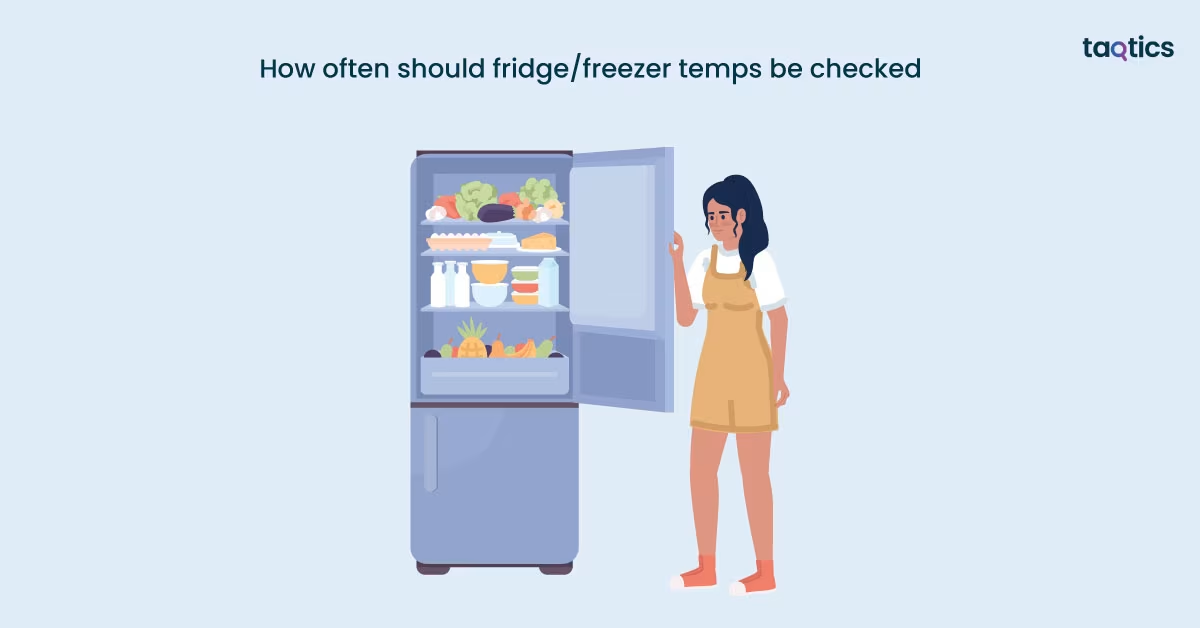
In addition, it’s best practice to record the temperatures in log sheets or digital systems during each check, noting the time, temperature, and person responsible. Using automated data loggers or remote monitoring systems can enhance reliability and provide alerts if temperatures rise above safe limits, which are 4°C (40°F) for refrigerators and –18°C (0°F) for freezers.
How to calibrate a food thermometer?
A food thermometer is calibrated to ensure it gives accurate temperature readings, which are crucial for preventing foodborne illness and maintaining regulatory compliance. Inaccurate thermometers can lead to undercooked or improperly stored food, posing serious health risks. Calibration should be done regularly, especially if the thermometer has been dropped, exposed to extreme temperatures, or is showing inconsistent results.
- One of the most common and reliable methods is the ice point method. To perform this, fill a glass with crushed ice and add cold water to form a slushy mixture. Let it sit for about a minute to stabilize the temperature. Then, insert the thermometer probe into the center of the ice water without touching the sides or bottom of the glass. Wait for the reading to settle. A properly calibrated thermometer should read 0°C (32°F). If it doesn’t, adjust it using the calibration nut (on analog thermometers) or reset button (on digital models) until it reads correctly.
- Another method is the boiling point method. Begin by bringing a pot of clean water to a rolling boil. Insert the thermometer probe into the boiling water, again avoiding the sides and bottom of the pot. Allow the temperature to stabilize. The thermometer should read 100°C (212°F) at sea level. Note that the boiling point decreases with altitude, and hence adjustments may be necessary based on your location. If the thermometer does not read accurately, recalibrate it to match the correct boiling point for your altitude.
Thermometers should be calibrated daily in high-use commercial kitchens or at least weekly in lower-risk settings. Calibration is also recommended after extreme temperature change or if questionable readings are observed. Keeping thermometers accurate ensures proper cooking, cooling, and holding temperatures, supporting both food safety and compliance efforts.
About the Author