
Inventory Storage Condition Checklist: Definition, Key Factors & Components
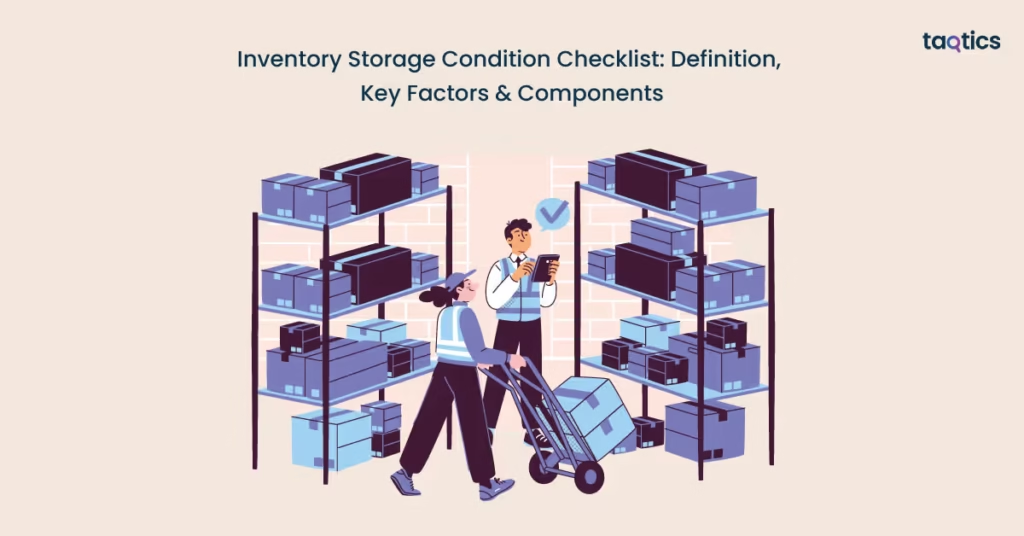
An inventory storage condition checklist plays a crucial role in ensuring that goods are stored, handled, and preserved under optimal conditions to maintain quality, safety, and compliance. The inventory storage condition checklist defines parameters for temperature, humidity, lighting, and space utilization in warehouses. According to the Journal of Warehouse Management and Logistics (2023), improper storage conditions cause over 21% of product losses across industries like food, pharmaceuticals, and electronics.
An inventory storage condition checklist works much like how you organize your refrigerator at home, ensuring dairy is kept cold, vegetables are dry, and leftovers are labeled to avoid spoilage. Similarly, in logistics, this checklist ensures that each product type is stored in the right environment. As noted by Supply Chain Digital Review (2024), warehouses implementing structured checklists and IoT-based monitoring saw 30% fewer storage-related losses, proving that disciplined storage practices directly improve inventory quality and longevity.
Download the checklist. Run it like a system.
Get the ready-to-use template, and see how Taqtics captures photo proof, timestamps, and compliance automatically.
What is an Inventory Storage Condition Checklist?
An inventory storage condition checklist is a structured tool that outlines the essential parameters and standards required to store products safely and efficiently within a warehouse. It includes details like temperature and humidity ranges, ventilation, stacking limits, pest control measures, and cleanliness standards. This checklist ensures that each storage area meets the specific requirements of the items stored, reducing risks of contamination or degradation.
According to The International Journal of Logistics Systems Management (2022), warehouses using standardized storage checklists improved their operational efficiency by up to 27% compared to those without structured monitoring. The checklist also plays a vital role in preventing losses, spoilage, and inefficiency across diverse sectors. Industries such as food and beverages, where temperature control is crucial, pharmaceuticals, where humidity can impact drug efficacy, and electronics, where static or moisture can damage components, heavily rely on such checklists. Even e-commerce operations use them to streamline product handling and minimize returns due to storage-related damage.
What Are the Key Factors That Affect Inventory Storage Conditions?
The key factors that affect inventory storage conditions are temperature, humidity, ventilation, light exposure, cleanliness and pest control, and the type of inventory being stored. Each factor plays a crucial role in maintaining product quality, safety, and longevity.
- Temperature: Temperature control ensures that goods are stored at optimal conditions to prevent spoilage or damage.
- Cold storage prevents microbial growth in perishables.
- Excessive heat can degrade chemicals and electronics.
- Monitoring systems maintain consistent temperature ranges.
- Humidity: Humidity regulation is vital for both perishable and non-perishable goods.
- High humidity leads to mold, rust, or packaging damage.
- Low humidity can cause dryness or cracking in materials.
- Hygrometers help monitor and maintain ideal humidity levels.
- Ventilation: Proper airflow prevents odor buildup and supports temperature consistency.
- Reduces the accumulation of gases or moisture.
- Enhances air quality in enclosed storage zones.
- Essential in preventing spoilage in fresh produce and chemicals.
- Light Exposure: Controlling light exposure protects sensitive goods from degradation.
- UV rays can damage food, pharmaceuticals, and artwork.
- Use of shaded or opaque containers prevents direct light damage.
- Energy-efficient lighting reduces both heat and cost.
- Cleanliness and Pest Control: Hygiene and pest management ensure product safety and compliance.
- Regular cleaning minimizes contamination risks.
- Pest traps and inspections prevent infestations.
- Aligns with food safety and warehouse audit standards.
- Type of Inventory (Perishable vs. Non-Perishable): Different inventory types require distinct storage conditions.
- Perishables need controlled temperature and humidity.
- Non-perishables require protection from dust and corrosion.
- Segregating storage areas minimizes cross-contamination risks.
According to the Journal of Supply Chain Management Research (2023), poor control of environmental factors can lead to up to 35% product loss in sensitive industries like food and pharmaceuticals.
What Should Be Included in an Inventory Storage Condition Checklist?
An inventory storage condition checklist should include key areas such as physical condition and environment, material handling and organization, and safety and compliance to ensure optimal warehouse performance, product quality, and adherence to regulatory standards.
Physical Condition and Environment
Regular inspection of the facility ensures that the storage environment remains secure, clean, and suitable for the type of goods being stored.
- Building integrity: Check for leaks, cracks, or drainage issues to prevent water damage or contamination.
- Lighting and ventilation: Verify sufficient lighting and proper airflow; monitor temperature and humidity with calibrated devices.
- Cleanliness: Maintain a regular cleaning schedule to eliminate clutter, pests, and safety hazards.
Material Handling and Organization
Proper handling and organization reduce damage risks and improve inventory accuracy and accessibility.
- Stacking: Ensure materials are stacked within height limits and placed on pallets or racks.
- Segregation: Separate goods by type—especially hazardous or expired stock.
- Labeling and identification: Confirm all items are clearly labeled and in good condition.
- Inventory rotation: Follow FIFO (First In, First Out) to minimize wastage and expiry.
- Hazardous materials: Store separately with proper safety data sheets and containment.
Safety and Compliance
Ensuring workplace safety and legal adherence protects both employees and assets.
- Aisles and pathways: Keep clear for unhindered movement of staff and equipment.
- Safety equipment: Check accessibility and condition of fire extinguishers and spill kits.
- Signage: Display clear warning signs, exit routes, and storage capacity limits.
- PPE: Ensure staff use appropriate protective gear during operations.
- Regulatory compliance: Verify adherence to standards such as OSHA 1910 and industry-specific protocols for food or chemicals.
According to Warehouse & Logistics Journal (2022), over 28% of inventory losses occur due to poor storage conditions and a lack of structured inspection routines, emphasizing the need for a detailed checklist in every logistics facility.
How Do Storage Conditions Vary by Type of Inventory?
Storage conditions vary by type of inventory in many ways, depending on the nature of the goods, their shelf life, and regulatory requirements. industries such as food & beverage, pharmaceuticals, electronics, retail goods, and hazardous materials require specific environmental controls and documentation standards.
Food & Beverage
Storage conditions for food items must prevent spoilage, contamination, and temperature fluctuations.
- Follow FDA Food Code (2022) guidelines for temperature-controlled storage (typically 0–5°C for perishables).
- Implement HACCP (Hazard Analysis and Critical Control Points) procedures for contamination control.
- Maintain humidity levels below 60% to prevent mold growth.
- Regularly monitor expiration dates and rotate inventory (FIFO).
Pharmaceuticals
Drugs and medical supplies require strict environmental control to preserve potency and efficacy.
- Adhere to Good Manufacturing Practice (GMP) and WHO storage standards.
- Store at 15–25°C for most medicines; vaccines may require 2–8°C cold chain storage.
- Use calibrated thermometers and data loggers for temperature tracking.
- Ensure restricted access and regular validation audits.
Electronics
Electronic goods are highly sensitive to moisture, dust, and static electricity.
- Maintain relative humidity below 50% to prevent corrosion or short circuits.
- Use anti-static packaging and grounding mats.
- Comply with ISO 14644 cleanroom standards for precision electronic components.
- Avoid direct light exposure and store in dry, climate-controlled areas.
Retail Goods
Retail products require organization and visibility to maintain quality and traceability.
- Store at room temperature (20–25°C) with 40–60% humidity.
- Implement clear labeling and barcode systems for inventory control.
- Follow ISO 9001 quality management practices for process consistency.
- Use modular shelving to prevent damage and improve accessibility.
Hazardous Materials
Hazardous inventory requires segregation and specialized containment to prevent accidents and contamination.
- Follow OSHA 1910.120 and EPA storage regulations.
- Segregate chemicals based on compatibility and maintain spill containment areas.
- Ensure proper ventilation and fire-resistant storage cabinets.
- Maintain Material Safety Data Sheets (MSDS) and train personnel on emergency protocols.
According to the World Bank Logistics Performance Report (2023), improper storage conditions account for nearly 24% of global product losses in supply chains, highlighting the need for category-specific compliance with FDA, GMP, ISO, and OSHA standards.
How Can You Monitor and Maintain Storage Conditions Effectively?
You can monitor and maintain storage conditions effectively by implementing a mix of technology-driven tools and manual inspection systems that ensure optimal environmental control, safety, and compliance.
- Using Smart Sensors and IoT Devices: IoT-enabled devices provide real-time data on environmental parameters, allowing for proactive adjustments.
- Install IoT sensors for tracking temperature, humidity, and air quality in real time.
- Integrate data into centralized dashboards for visibility across storage zones.
- Use predictive analytics to anticipate potential failures or fluctuations.
- Enable automated alerts for immediate corrective action.
- Temperature & Humidity Monitoring Systems: Maintaining stable climate conditions ensures the safety of temperature-sensitive inventory.
- Use cloud-connected thermohygrometers to continuously record readings.
- Calibrate sensors regularly as per ISO 17025 guidelines.
- Compare readings with recommended ranges for specific products.
- Archive digital records for regulatory audits and compliance tracking.
- Alarms and Alerts: Automatic alerts help prevent storage condition breaches before they affect inventory.
- Set threshold-based alarms for deviations in temperature or humidity.
- Configure SMS or email notifications for real-time response.
- Integrate alarms with warehouse management systems (WMS) for centralized control.
- Conduct monthly tests to verify alert accuracy and reliability.
- Periodic Condition Checks and Logs: Manual inspections complement digital tracking by catching physical or structural issues.
- Schedule daily or weekly inspections for lighting, ventilation, and cleanliness.
- Record data manually or digitally to identify recurring issues.
- Use visual inspections for early detection of leaks, corrosion, or pests.
- Align inspections with preventive maintenance schedules.
- Compliance Audits: Audits verify that storage operations meet safety and regulatory standards.
- Conduct quarterly compliance audits following FDA or GMP guidelines.
- Compare audit findings against internal SOPs and update protocols as needed.
- Maintain audit reports for traceability and external inspections.
- Train employees on corrective actions after each audit.
A 2022 Deloitte Smart Logistics Report revealed that warehouses using automated monitoring systems reduced product spoilage by up to 30%, proving the value of IoT-based monitoring and predictive analytics in modern logistics.
How Does Warehouse Layout Affect Inventory Storage?
Warehouse layout affects inventory storage in many ways by determining how efficiently space, equipment, and labor are utilized to ensure smooth material flow and safety.
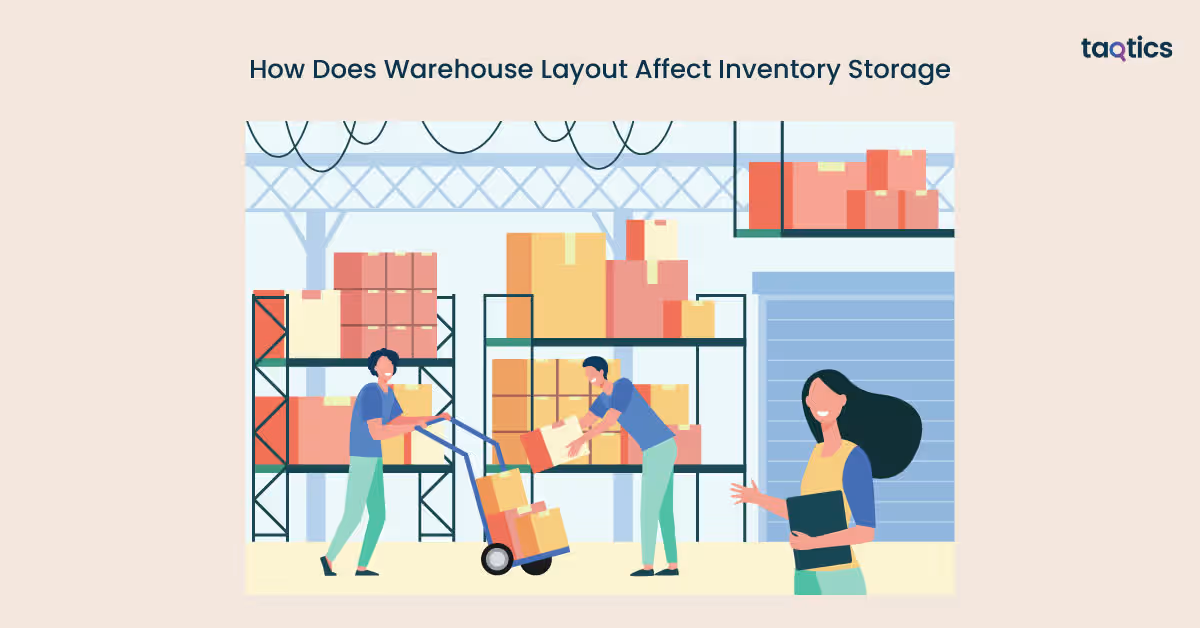
- Importance of Proper Aisle Spacing: Efficient aisle spacing allows safe equipment movement and improves accessibility.
- Maintain standardized aisle widths (typically 10–12 feet) for forklifts and pallet jacks.
- Designate one-way traffic zones to minimize congestion.
- Follow OSHA (2020) guidelines for minimum clearance around racks and exit pathways.
- Use floor markings to define safe travel zones and pedestrian areas.
- Racking Systems (Selective, Push-Back, Pallet Flow): Racking design directly impacts accessibility and space optimization.
- Selective racks provide direct access to every pallet—ideal for fast-moving goods.
- Push-back racks maximize storage density by allowing multiple pallets per lane.
- Pallet flow systems enable FIFO (First In, First Out) rotation through gravity-fed rollers.
- Choose rack type based on SKU volume, weight, and turnover rate.
- Weight Limits and Load Balancing: Proper load management prevents equipment damage and ensures safety.
- Adhere to rack manufacturer’s load capacity labels to avoid overloading.
- Distribute weight evenly to prevent rack collapse or pallet tilt.
- Use load sensors to monitor high-density storage areas.
- Conduct regular rack inspections as recommended by the Rack Manufacturers Institute (RMI, 2022).
- Vertical vs. Horizontal Storage: Maximizing cubic space utilization improves efficiency and safety.
- Use vertical racking for lightweight, high-volume items.
- Employ horizontal flow storage for bulky or frequently accessed materials.
- Incorporate mezzanine floors to expand storage without increasing the facility footprint.
- Follow ISO 9788:2013 for warehouse design standards to ensure safe vertical stacking.
- Signage and Labeling: Clear identification supports operational accuracy and compliance.
- Implement standardized bin labels and barcode tags for quick scanning.
- Use color-coded signage for hazardous, fragile, or perishable materials.
- Ensure all safety and directional signs meet ANSI Z535 visibility standards.
- Regularly audit labels to maintain readability and update product codes.
A 2021 report by the Council of Supply Chain Management Professionals (CSCMP) found that optimized warehouse layouts can improve storage capacity by 20–30% and reduce handling time by up to 25%, emphasizing layout design as a strategic efficiency driver.
Why is FIFO Important in Inventory Storage?
FIFO is Important in Inventory Storage because it ensures that older stock is used or sold before newer stock, minimizing spoilage, obsolescence, and waste.
Benefits of FIFO for Perishable Items
FIFO (First In, First Out) is vital for maintaining product freshness and safety.
- Ensures that perishable goods like food, medicines, and cosmetics are dispatched before expiration.
- Minimizes write-offs due to spoilage or outdated inventory.
- Supports compliance with FDA Good Distribution Practices (GDP, 2022) for temperature-sensitive goods.
- Builds consumer trust by guaranteeing that products remain within their shelf-life period.
How to Implement FIFO with WMS
Warehouse Management Systems (WMS) automate FIFO execution efficiently.
- Use barcode or RFID scanning to track batch numbers and receiving dates.
- Configure WMS to prioritize older stock automatically during picking.
- Employ warehouse zoning where FIFO lanes or racks are clearly labeled and organized.
- Review FIFO performance data regularly to identify stock rotation bottlenecks.
Alternatives Like LIFO and FEFO
While FIFO is the most common approach, other methods may suit specific operations.
- LIFO (Last In, First Out) is suitable for non-perishable, high-volume goods like construction materials or bulk packaging.
- FEFO (First Expired, First Out) focuses on expiration dates instead of entry dates, ideal for pharmaceuticals and food products.
- The European Medicines Agency (EMA, 2021) recommends FEFO as a best practice for compliance with medicine safety standards.
- The selection of the inventory flow method should depend on product type, shelf life, and regulatory requirements.
According to the International Journal of Production Economics (2023), companies implementing FIFO practices reported up to 35% reduction in inventory losses and 20% improvement in order accuracy, particularly in food and pharmaceutical logistics.
What Safety Regulations Apply to Inventory Storage Conditions?
The safety regulations that apply to inventory storage conditions are designed to protect employees, assets, and facilities by minimizing risks associated with improper storage, handling, and environmental exposure.
OSHA Standards for Storage
The Occupational Safety and Health Administration (OSHA) sets mandatory requirements for safe material storage and handling.
- OSHA Standard 29 CFR 1910.176(b) mandates stable stacking, adequate spacing, and clear access aisles.
- Requires load limits to be clearly marked on storage racks and shelves.
- Insists on proper use of Personal Protective Equipment (PPE) during stacking and retrieval.
- OSHA audits ensure warehouses maintain clear egress routes and avoid overloading.
Fire Safety Codes
Fire protection is governed by national and local fire codes to prevent catastrophic loss.
- The National Fire Protection Association (NFPA 13) specifies sprinkler installation standards for warehouses.
- NFPA 230 outlines fire prevention protocols for the storage of combustible materials like paper and wood.
- Fire extinguishers, alarms, and emergency exits must be strategically located and tested regularly.
- Storage of flammable materials must comply with spacing and segregation requirements under NFPA 400.
Chemical and Hazardous Material Guidelines
Specialized storage protocols ensure the safety of hazardous or reactive substances.
- The Environmental Protection Agency (EPA) and OSHA 29 CFR 1910.1200 regulate hazardous chemical labeling and segregation.
- Maintain Safety Data Sheets (SDS) for all hazardous materials in accessible areas.
- Use corrosion-resistant containers, leak-proof flooring, and ventilation systems.
- ISO 45001:2018 emphasizes risk-based approaches to hazardous storage to minimize exposure and accidents.
Employee Safety and Ergonomics
Worker well-being is central to safe inventory management.
- OSHA’s Ergonomics Guidelines for Manual Material Handling (2021) recommend training workers in safe lifting techniques.
- Adjustable racking and lift-assist devices reduce the risk of musculoskeletal injuries.
- Maintain proper lighting and temperature to create safe working environments.
- Conduct periodic safety training and refreshers to reinforce compliance and awareness.
According to the National Safety Council Report (2023), nearly 25% of warehouse accidents result from poor storage practices or non-compliance with safety standards, highlighting the need for strict regulatory adherence in logistics and warehousing.
What Tools Can Help Automate Inventory Storage Checks?
The tools that can help automate inventory storage checks are essential for ensuring real-time visibility, accuracy, and compliance in warehouse environments. Automation minimizes manual errors and accelerates quality assurance.
- WMS Systems: Warehouse Management Systems (WMS) streamline storage tracking and monitoring.
- Automate inventory allocation, slotting, and replenishment.
- Generate real-time alerts for stock imbalances or environmental deviations.
- Integrate with ERP and IoT sensors for seamless visibility.
- Systems like SAP EWM and Oracle WMS Cloud support audit-ready compliance documentation.
- RFID/Barcode Scanners: These tools enable precise and automated item identification.
- RFID tags allow contactless scanning, improving traceability and accuracy.
- Barcode systems speed up cycle counts and order fulfillment.
- Integration with WMS eliminates manual data entry errors.
- According to the Journal of Business Logistics (2023), RFID adoption reduces item misplacement by up to 40%.
- Mobile Inspection Checklists: Digital checklists replace paper-based inspections for faster validation.
- Mobile apps like Taqtics, SafetyCulture or GoAudits let staff record storage conditions in real time.
- Allow photo capture, digital signatures, and instant reporting.
- Standardize inspection formats across multiple facilities.
- Facilitate easy trend tracking and compliance verification.
- Automated Climate Controls: IoT-based environmental systems maintain ideal storage conditions.
- Smart thermostats and humidity sensors auto-adjust temperature and ventilation.
- AI algorithms predict equipment failure or environmental fluctuations.
- Alerts are sent instantly when readings exceed thresholds.
- The Cold Chain Logistics Report (2022) found that automated temperature control reduced spoilage rates by 32%.
- Data Dashboards: Centralized dashboards help visualize performance metrics and anomalies.
- Combine data from WMS, IoT sensors, and inspection apps.
- Offer insights into temperature trends, space utilization, and storage compliance.
- Enable predictive analytics for maintenance and optimization.
- Custom alerts ensure rapid response to deviations in critical conditions.
A 2024 Deloitte Logistics Automation Survey revealed that warehouses using digital monitoring tools experienced 30% fewer inventory discrepancies and 25% faster inspection cycles, highlighting the impact of smart technologies on storage efficiency.
How Often Should Inventory Storage Conditions Be Audited?
Inventory storage conditions should be audited regularly to ensure compliance, prevent spoilage, and maintain optimal operational efficiency. Depending on the industry and type of goods, audits may occur monthly, quarterly, or as per regulatory standards.
- Monthly, Quarterly, or Based on Industry Standards: The frequency of audits depends on product sensitivity and regulatory demands.
- Perishables and pharmaceuticals require monthly or even weekly checks.
- Electronics and retail goods may be reviewed quarterly for efficiency and organization.
- Industries following ISO 9001 and GMP guidelines often have mandated inspection intervals.
- Routine auditing helps identify trends in temperature control, stock rotation, and storage utilization.
- What to Include in a Storage Audit: A thorough audit covers environmental, procedural, and safety aspects.
- Evaluate temperature, humidity, and cleanliness conditions.
- Check for inventory accuracy, including damaged or expired items.
- Review storage layout, labeling, and accessibility.
- Validate compliance with OSHA and local safety codes.
- The Chartered Institute of Logistics and Transport Report (2022) found that comprehensive audits increase warehouse efficiency by 18–25%.
- Creating SOPs for Improvement: Standard Operating Procedures (SOPs) ensure consistent and correct audit practices.
- Define clear audit schedules, responsibilities, and checklists.
- Implement a corrective action plan for any identified issues.
- Use digital tools for audit logging and analytics tracking.
- Update SOPs based on findings and technological advancements.
- According to Harvard Business Review (2023), organizations with structured SOP-driven audits achieve 35% higher compliance consistency.
According to the International Journal of Production Economics (2023), companies conducting monthly audits reported a 22% reduction in storage-related losses, proving the importance of consistent inspection cycles.
Download the checklist. Run it like a system.
Get the ready-to-use template, and see how Taqtics captures photo proof, timestamps, and compliance automatically.
How Can a Good Storage Condition Checklist Improve Inventory Management?
A good storage condition checklist can improve inventory management in many ways by reducing product spoilage, improving warehouse efficiency, and ensuring regulatory compliance.
- Reduces Spoilage and Damage: A checklist ensures that perishable and sensitive items are stored under optimal conditions.
- Monitors temperature, humidity, and cleanliness, preventing deterioration.
- Promotes timely rotation using FIFO or FEFO principles.
- Helps identify and correct storage irregularities before spoilage occurs.
- The Food Logistics Report (2022) noted that consistent use of checklists cut perishable waste by up to 40% in food and pharma warehouses.
- Improves Operational Efficiency: Standardized checks streamline warehouse operations and resource use.
- Ensures organized storage layouts and efficient material handling.
- Minimizes time spent locating or verifying inventory.
- Supports quick audits and performance tracking using digital tools.
- According to McKinsey’s Operations Insight (2023), companies with checklist-driven maintenance and storage systems saw a 25% reduction in stock discrepancies.
- Ensures Regulatory and Quality Compliance: A good checklist aligns storage practices with GMP, ISO 9001, and OSHA standards.
- Ensures documentation accuracy and traceability during audits.
- Reduces risks of non-compliance penalties and product recalls.
- Supports a culture of accountability and safety among warehouse staff.
- The World Quality Forum (2022) found that businesses using digitalized checklists improved audit compliance scores by over 30%.
According to the Journal of Supply Chain Management (2023), companies that adopted standardized storage condition checklists reduced product loss by 28% and improved overall inventory accuracy by 33% within one fiscal year.
About the Author