
Meat & Seafood Handling Checklist: Definition, Components & How Taqtics Can Help
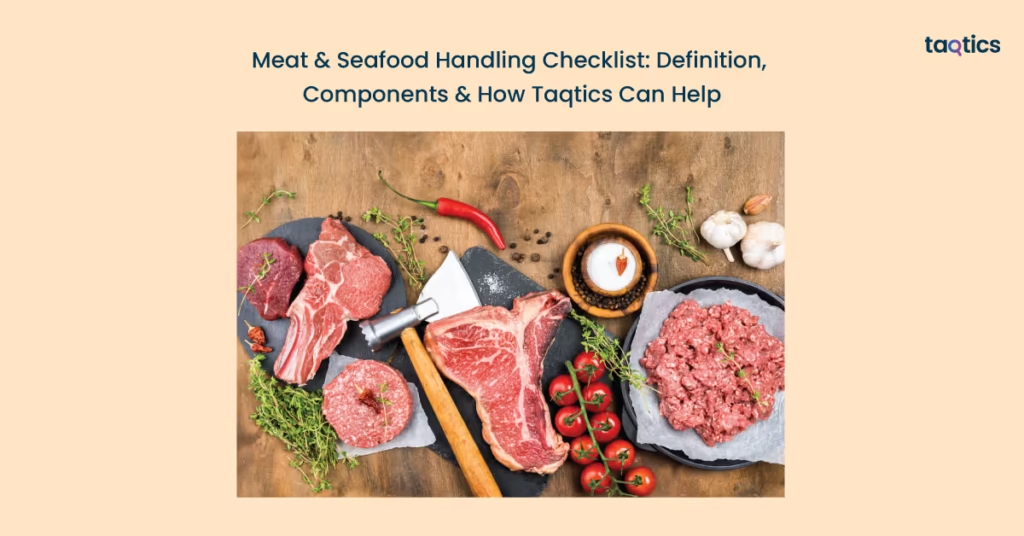
A meat and seafood handling checklist ensures that raw proteins are stored, prepared, displayed, and sold under strict hygiene and temperature controls to prevent contamination and spoilage. A meat and seafood handling checklist also standardizes daily procedures such as cold storage monitoring, cleaning, labeling, and rotation so that safety and quality remain consistent across shifts. According to the 2023 CDC Foodborne Illness Surveillance Report, raw meat and seafood are among the leading sources of foodborne illness when improper handling or storage practices occur.
A meat handling checklist plays a critical role in maintaining regulatory compliance, reducing shrinkage, and protecting customer health in retail environments. The 2022 FAO Food Loss and Waste Assessment found that improper cold storage and handling contribute significantly to protein category waste across retail supply chains. By including components such as temperature checks, cross-contamination controls, sanitation routines, and digital execution tools like Taqtics, retailers can ensure safe handling practices, improve accountability, and maintain consistent quality across all store locations.
What is a Meat & Seafood Handling Checklist?
A meat and seafood handling checklist is a structured tool used by supermarkets and food retailers to ensure raw meat and seafood are stored, handled, prepared, and displayed safely and hygienically. It provides step-by-step guidelines for maintaining proper temperatures, preventing cross-contamination, verifying product quality, and following food safety standards.
The meat handling checklist typically includes tasks such as monitoring cold storage temperatures, inspecting product freshness, maintaining the cleanliness of cutting areas and tools, labeling and expiry checks, and documenting corrective actions when issues occur. It helps staff follow consistent handling procedures across shifts and departments.
By using a meat and seafood handling checklist, retailers can reduce food safety risks, prevent spoilage and shrinkage, maintain regulatory compliance, and ensure customers receive safe, high-quality products.
What Should A Supermarket Meat & Seafood Handling Checklist Include?
A supermarket meat and seafood handling checklist should include clear procedures for receiving, storage, preparation, hygiene, and sanitation to ensure food safety, maintain quality, and prevent contamination.
Receiving & Storage
Receiving and storage checks ensure that only safe, high-quality products enter the store and are stored under correct temperature conditions from the start.
- Accept deliveries only from approved and registered suppliers.
- Check receiving temperatures: chilled items at 5°C (41°F) or below and frozen items solid with no thawing signs.
- Inspect packaging for damage, leaks, or unusual odors (especially ammonia-like smell in seafood).
- Follow FIFO rotation and verify use-by or sell-by dates before storage.
Storage & Display
Proper storage and display maintain cold chain consistency, product quality, and food safety for customers.
- Maintain cold chain: chillers at ≤4°C (40°F) and freezers at ≤-18°C (0°F).
- Avoid overloading cases; allow airflow around products for even cooling.
- Prevent cross-contamination by storing raw meat and seafood below ready-to-eat items.
- Ensure packaging is intact and properly labeled with product name, weight, and supplier details.
Preparation & Handling
Safe preparation and handling practices reduce contamination risks and maintain hygiene standards.
- Ensure staff follow strict personal hygiene and wear PPE such as gloves, aprons, and hairnets.
- Thaw products safely under refrigeration, cold running water, or during cooking—never at room temperature.
- Sanitize knives, boards, weighing scales, and surfaces between tasks and product types.
- Prepare products in small batches to minimize exposure to the temperature danger zone.
Daily Sanitation
Daily sanitation maintains a clean working environment and prevents contamination or pest issues.
- Clean and sanitize work surfaces, sinks, and equipment at regular intervals.
- Empty and sanitize waste bins frequently and keep them covered.
- Maintain pest control by keeping doors closed, screens intact, and areas clean.
Including these elements in a meat handling checklist helps supermarkets maintain food safety compliance, reduce spoilage and shrinkage, and deliver fresh, safe products to customers every day.
How Often Should Supermarket Staff Record Temperatures For Meat And Seafood?
Supermarket staff should record temperatures for meat and seafood multiple times a day to maintain cold chain integrity and ensure food safety. Regular monitoring helps detect fluctuations early and prevents products from entering unsafe temperature ranges.
- Opening check: Record case and product temperatures before the store opens to confirm safe overnight storage.
- Mid-shift check: Monitor temperatures during peak trading hours when doors open frequently and equipment load increases.
- Closing check: Verify temperatures at the end of the day to ensure units are stable before overnight storage.
- Additional checks during high-risk periods: Increase monitoring during heat waves, power interruptions, equipment servicing, or frequent door issues.
To maintain proper documentation and compliance, staff should log display case or storage unit temperature, actual product temperature (especially for high-risk proteins), date and time of reading, staff initials or name for accountability, and any corrective action taken if temperatures are out of range each time.
What Are The Most Common Inspection Failures In Meat And Seafood Departments?
The most common inspection failures in meat and seafood departments usually result from breakdowns in temperature control, hygiene discipline, documentation, and stock management. These gaps not only risk regulatory penalties but can also compromise food safety and customer trust.
- Case temperatures out of range: Display chillers and storage units that exceed safe limits (generally ≤5°C/41°F for chilled and ≤-18°C/0°F for frozen) can allow bacteria to multiply. Inspectors often check both air temperature and product temperature, and repeated deviations without action can lead to violations.
- No corrective actions documented: Recording a temperature deviation without documenting what was done (e.g., moving stock, calling maintenance, discarding product) signals weak food safety control. Inspectors expect to see a clear trail of monitoring, action, and verification.
- Cross-contamination risks (raw stored above ready-to-eat): Storing raw meat or seafood above ready-to-eat (RTE) foods can lead to drips and contamination. Lack of separation between different protein types or allergens is a frequent inspection concern.
- Unclean slicers, grinders, and drains: Meat processing equipment must be cleaned and sanitized regularly. Residue buildup in slicers, grinders, cutting boards, or floor drains can harbor bacteria and is a major red flag during inspections.
- Poor date coding or expired products on display: Missing or incorrect labels, unclear use-by dates, or expired products left on shelves indicate poor stock rotation and increase food safety risk. Inspectors often spot-check display cases for compliance.
- Thermometers not calibrated: If probe thermometers and built-in gauges are not regularly calibrated, temperature logs lose credibility. Inspectors may ask for calibration records to confirm accuracy.
Strengthening temperature monitoring, enforcing strict sanitation routines, maintaining proper storage hierarchy, and documenting corrective actions consistently help meat and seafood departments remain compliant, safe, and inspection-ready.
How Can Taqtics Help Standardize Meat & Seafood Safety Checks?
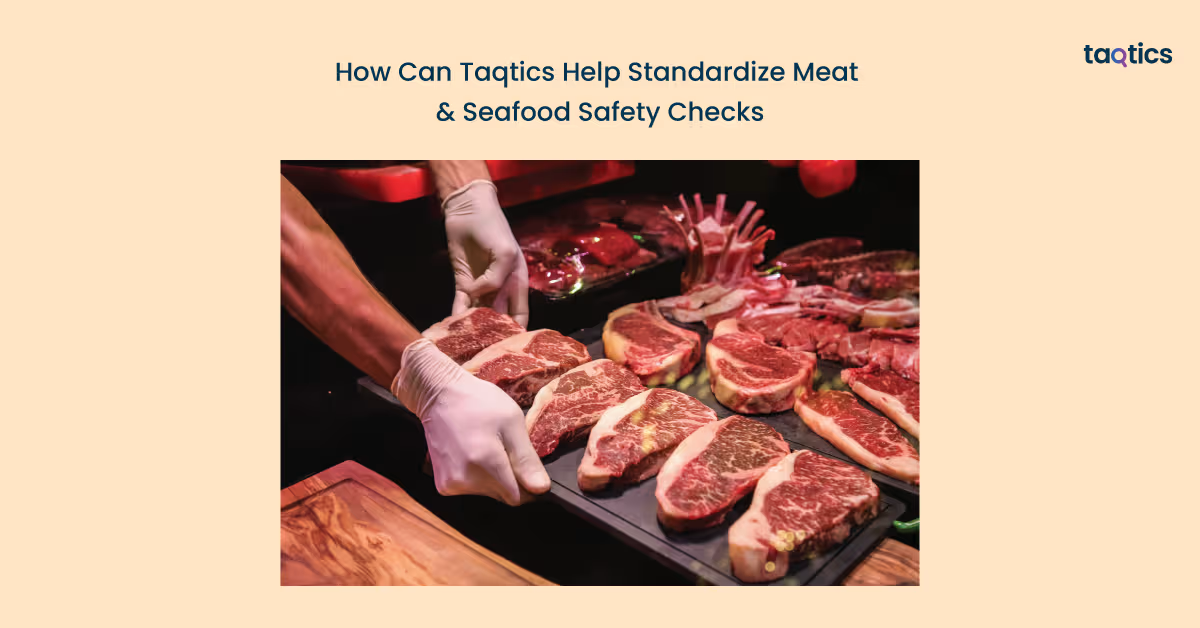
Taqtics can help standardize meat and seafood safety checks by converting manual processes into structured digital workflows that ensure consistency, accountability, and compliance across all shifts and stores.
- Digital SOPs and role-based task lists: Create structured opening, mid-shift, and closing checklists for meat and seafood teams so every employee follows the same handling and hygiene procedures.
- Temperature log prompts with photo proof: Staff receive automated reminders to record case and product temperatures and can upload photos of thermometer readings to ensure accuracy and traceability.
- Automatic escalation for temperature breaches: If recorded temperatures exceed safe limits, alerts can be sent instantly to supervisors or maintenance teams for immediate action.
- Audit-ready reports for compliance: All checks, corrective actions, and logs are stored digitally and can be exported for internal audits, inspections, or compliance reviews.
- Training checklists for new hires: Standardized onboarding checklists help new employees learn proper meat and seafood handling procedures and ensure consistent execution from day one.
By digitizing meat and seafood safety checks with Taqtics, supermarkets can improve compliance, reduce food safety risks, and maintain consistent quality standards across locations.
What Training Should Supermarket Staff Complete?
Supermarket staff should complete structured food safety and operational training to ensure safe handling, compliance, and consistent execution across departments. The training should focus on hygiene, temperature control, contamination prevention, and clear escalation authority.
- Basic food handler hygiene: Proper handwashing, glove use, uniform standards, illness reporting, and sanitation practices to prevent contamination.
- Cross-contamination prevention: Safe storage hierarchy (raw below ready-to-eat), separate tools for different proteins, cleaning between tasks, and allergen segregation.
- Thermometer use and calibration: Correct probe placement, reading stabilization time, logging procedures, and how to calibrate thermometers to ensure accurate temperature monitoring.
- Allergen awareness (especially for value-added items): Identifying major allergens, proper labeling, preventing cross-contact, and confidently responding to customer allergen inquiries.
- “Stop sale” authority and escalation rules: Clear guidance that empowers staff to remove unsafe products immediately and escalate temperature breaches, contamination risks, or equipment failures without delay.
Comprehensive and recurring training ensures staff understand both the “how” and the “why” behind food safety procedures, helping supermarkets reduce risk, stay compliant, and protect customer trust.
How Do You Build an HACCP-Style Approach For A Supermarket Seafood Counter?

You can build an HACCP-style approach for a supermarket seafood counter by identifying risks and setting structured controls that protect product safety from receiving to sale.
- Hazard identification: Identify key risks such as temperature abuse, cross-contamination, poor hygiene, improper thawing, and allergen exposure in seafood handling.
- Critical Control Points (CCPs): Determine where control is essential—typically receiving temperatures, storage/display temperatures, thawing, preparation areas, and cleaning/sanitation points.
- Set critical limits: Define measurable safety limits (e.g., chilled seafood at ≤5°C/41°F, frozen at ≤-18°C/0°F, no room-temperature thawing, proper separation from ready-to-eat items).
- Monitoring procedures: Record case and product temperatures, inspect hygiene and storage practices, and check labeling and expiry at scheduled intervals (opening, mid-shift, closing).
- Corrective actions: If limits are breached, move products to safe storage, discard unsafe items, sanitize affected areas, and log maintenance or process fixes immediately.
- Verification activities: Supervisors review logs, calibration records, and sanitation checks regularly to confirm procedures are followed correctly.
- Recordkeeping: Maintain temperature logs, cleaning schedules, receiving records, corrective action reports, and training records for audit readiness.
Following this HACCP-style structure helps seafood counters maintain food safety compliance, reduce spoilage risk, and ensure customers receive fresh and safe products consistently.
How Do We Reduce Shrink Without Increasing Food-Safety Risk?
You can reduce shrink without increasing food-safety risk by improving forecasting, rotation discipline, and handling practices while maintaining strict temperature and hygiene controls.
- Improve demand forecasting: Order and prepare quantities based on actual sales trends to avoid overstocking highly perishable items.
- Follow strict FIFO/FEFO rotation: Move older stock to the front and sell it first so products are used within safe timelines.
- Use timely markdown strategies: Discount near-expiry items early enough to sell safely before quality declines, rather than waiting until they must be discarded.
- Maintain cold chain discipline: Keep products within safe temperature ranges at all times to extend usable shelf life without compromising safety.
- Handle products carefully: Avoid overhandling, overstacking, or display damage that can shorten shelf life and lead to unnecessary waste.
- Track shrink with reason codes: Record why items are wasted (expiry, damage, temperature issues, overproduction) to address root causes.
- Train staff on “safe to sell vs unsafe” rules: Make clear that safety always comes first, products outside safe limits should never be sold just to reduce waste.
By combining accurate planning, disciplined rotation, and strong food safety practices, supermarkets can reduce shrinkage while maintaining high safety and quality standards.
About the Author