
Shelf Replenishment Checklist: Definition, Components & Tools
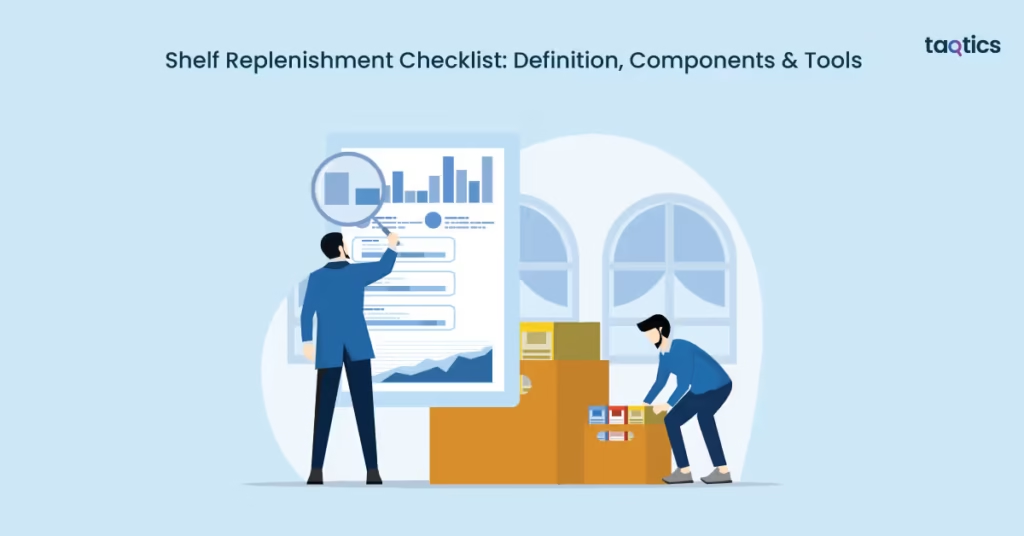
A shelf replenishment checklist ensures that products are consistently restocked on the sales floor to maintain availability and visual appeal. A shelf replenishment checklist also helps store teams track stock movement from the backroom to shelves, ensuring timely refilling and preventing missed sales opportunities. According to a 2023 NielsenIQ retail availability study, nearly 1 in 5 shoppers will switch brands or stores if a desired product is out of stock, highlighting the direct impact of poor replenishment on revenue.
A shelf replenishment checklist plays a vital role in improving on-shelf availability, inventory accuracy, and store productivity. The 2022 Zebra Technologies Retail Vision Study reported that over 70% of retail associates spend significant time locating items for restocking, often due to inefficient replenishment processes. By including components such as stock level checks, backroom coordination, and digital task tracking tools, a well-structured checklist helps retailers ensure faster restocking, better shelf presentation, and a more reliable shopping experience.
What Is a Shelf Replenishment Checklist?
A shelf replenishment checklist is a structured tool used by retail stores to ensure that products are consistently restocked from the backroom to the sales floor in a timely and organized manner. It guides store teams through a standardized process for checking shelf stock levels, identifying low or empty spots, retrieving items from storage, and refilling shelves accurately.
The checklist typically includes steps such as verifying current stock levels, confirming correct product placement, following FIFO (First-In, First-Out) rotation, checking pricing labels, and updating inventory systems after replenishment. It helps ensure that shelves remain full, organized, and aligned with planograms.
By using a shelf replenishment checklist, retailers can:
- Reduce out-of-stock situations and missed sales opportunities.
- Improve product visibility and display consistency.
- Maintain accurate inventory records.
- Speed up replenishment tasks and improve staff efficiency.
- Enhance overall customer satisfaction through better product availability.
A well-executed replenishment process ensures that the right products are available at the right time, supporting smooth store operations and stronger sales performance.
What Are The Core Components Of Shelf Replenishment Checklist?
The core components of a shelf replenishment checklist include pre-replenishment checks, execution of stocking, quality control, promotional verification, safety measures, and key focus areas to ensure shelves remain fully stocked and accurate.
Pre-Replenishment Shelf Assessment
This stage focuses on identifying what needs to be restocked before starting the replenishment process. Proper assessment helps prioritize tasks and prevents unnecessary movement of inventory.
- Identify empty shelves or out-of-stock (OOS) gaps across categories.
- Note low-stock items that require immediate replenishment.
- Identify overstocked items that need to be moved back to the stockroom to avoid clutter.
Execution: Stocking & Merchandising
This stage ensures products are replenished correctly and displayed according to store standards. Accurate execution maintains shelf presentation and improves product visibility.
- Bring required stock from the backroom or warehouse to the sales floor.
- Replenish shelves according to the approved planogram.
- Maintain correct product facings and alignment.
- Front-face items by pulling them forward to create a full and organized display.
Quality & Accuracy Control
This stage ensures that replenished shelves meet quality and pricing standards. Regular checks prevent customer dissatisfaction and compliance issues.
- Remove expired, damaged, or defective products from shelves.
- Follow FIFO by placing newer stock behind older stock.
- Verify that price labels match the products displayed.
Promotion & Special Display Check
This stage focuses on high-visibility promotional areas that directly influence sales. Ensuring these zones remain stocked and accurate maximizes promotional impact.
- Check end-caps and promotional displays for sufficient stock levels.
- Ensure promotional signage, tags, and pricing are accurate and updated.
Safety & Cleanliness
This stage ensures that replenishment activities do not disrupt store safety or cleanliness. Maintaining a clean environment supports both staff efficiency and customer experience.
- Keep aisles clear of cartons, boxes, and packaging during restocking.
- Clean shelves and products while replenishing to maintain neat displays.
Key Focus Areas
These priorities help retailers maintain effective and responsive replenishment practices.
- Prioritize fast-moving items, especially during peak hours.
- Check perishable goods daily for freshness and near-expiry dates.
- Update inventory systems if actual stock levels differ from recorded data.
Including these core components in a shelf replenishment checklist helps retailers maintain consistent product availability, improve shelf presentation, and ensure accurate inventory management.
What Are The Most Common Reasons Shelves Go Empty Even When Inventory Exists?
The most common reasons shelves go empty even when inventory exists include phantom inventory, mis-picks, backroom disorganization, poor shelf capacity planning, planogram drift, labor gaps, inaccurate counts, and shrinkage or damage.
- Phantom inventory: Phantom inventory occurs when items appear available in the system but cannot be physically located due to incorrect scanning, misplaced stock, or delayed updates.
- Mis-picks from the backroom: Staff may pick the wrong SKU or product variant during replenishment, leaving the required item unavailable on shelves even though it exists in storage.
- Backroom disorganization: A cluttered or poorly structured backroom makes it difficult for staff to locate items quickly, resulting in delayed or missed replenishment.
- Poor shelf capacity planning: When minimum and maximum shelf levels are not defined correctly, shelves may run empty faster than replenishment cycles can refill them.
- Planogram drift: Failure to maintain the approved shelf layout can lead to incorrect product placement, reducing visibility and creating perceived stockouts.
- Labor gaps: Insufficient staffing or poorly timed replenishment schedules can delay restocking activities, causing shelves to remain empty despite available stock.
- Inaccurate inventory counts: Errors in physical counts or delayed system updates create mismatches between recorded and actual stock levels, leading to false stock availability.
- Shrinkage and product damage: Theft, breakage, or spoilage can reduce usable stock, even when systems still show inventory as available.
These issues create a gap between recorded stock and actual shelf availability. Addressing these issues through better organization, accurate tracking, and structured replenishment processes helps retailers maintain consistent shelf availability and prevent lost sales.
What Is The Difference Between Shelf Replenishment And Inventory Replenishment?
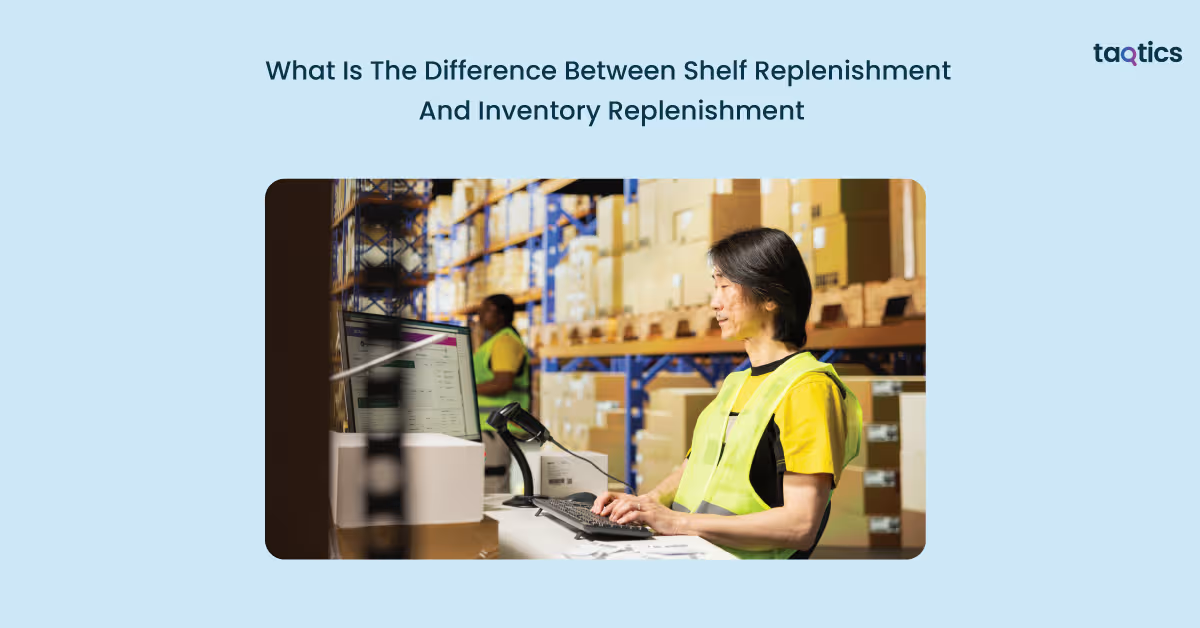
The difference between shelf replenishment and inventory replenishment lies in their scope, purpose, and stage in the inventory flow. While shelf replenishment focuses on moving stock from the backroom to the sales floor, inventory replenishment deals with ordering and distributing stock from warehouses or distribution centers to stores.
| Basis | Shelf Replenishment | Inventory Replenishment |
| Definition | Process of moving products from backroom to sales floor | Process of ordering and distributing stock from DC or supplier to store |
| Scope | In-store execution activity | Supply chain and planning activity |
| Primary objective | Keep shelves full and presentable | Ensure adequate stock is available in store or warehouse |
| Inventory flow | Backroom → Shelf | Distribution center/supplier → Store |
| Responsibility | Store staff, merchandisers, floor managers | Inventory planners, supply chain teams, buyers |
| Frequency | Multiple times daily or as needed | Weekly, monthly, or demand-based |
| Tools used | Replenishment checklists, handheld scanners, planograms | ERP systems, demand forecasting tools, auto-replenishment systems |
| Impact on customers | Directly affects on-shelf availability and shopping experience | Ensures long-term stock availability and prevents stockouts |
Both processes work together to maintain consistent product availability. Inventory replenishment ensures that stores have enough stock overall, while shelf replenishment ensures that this stock is placed on shelves where customers can easily find and purchase it.
How Often Should Shelves Be Replenished Daily, Hourly, Or Weekly?
Shelves should be replenished at intervals based on product demand, store traffic, and category movement rather than following a single fixed schedule. An effective replenishment cadence ensures that fast-moving items remain available while slower products are maintained without unnecessary effort.
Fast-moving categories such as essentials, groceries, and promotional products often require replenishment multiple times a day, and sometimes hourly during peak periods. Slow-moving or seasonal items can be checked less frequently, with daily or even weekly reviews depending on sales velocity.
Retailers typically structure replenishment around key points in the day.
- Morning store readiness: Shelves are fully stocked, organized, and front-faced before opening so the store is prepared for customers and visually appealing.
- Mid-day top-up: During peak hours, staff perform quick checks and refill fast-selling items to prevent gaps and missed sales opportunities.
- Closing recovery: At the end of the day, teams restock, organize, and prepare shelves for the next day to ensure smooth opening operations.
In most stores, replenishment happens daily for all categories, with more frequent checks for high-demand products. Aligning replenishment frequency with product movement helps maintain availability, improve sales, and enhance the overall shopping experience.
How Do You Prioritize Shelf Replenishment When You’re Short-Staffed?
When you’re short-staffed, shelf replenishment should be prioritized based on sales impact, visibility, and operational efficiency rather than attempting to refill every section at once.
- Prioritize top sellers and high-demand items: Apply the 80/20 principle by replenishing fast-moving products that drive the majority of sales and are most likely to run out quickly.
- Focus on promotional and high-visibility zones: Ensure promotional displays, end-caps, and entrance areas remain fully stocked since they directly influence customer buying decisions and store perception.
- Use timeboxing for replenishment tasks: Break replenishment into short, focused time blocks so staff can complete high-priority tasks efficiently without being overwhelmed.
- Assign zone ownership: Allocate specific sections or categories to each staff member to avoid duplication of work and ensure accountability for shelf availability.
- Replenish during low-traffic windows: Use quieter store hours to refill slower-moving items and organize shelves without disrupting customer flow.
- Track critical stock gaps: Maintain a quick list of urgent out-of-stock items so teams can address them first before moving to lower-priority tasks.
Prioritizing replenishment strategically helps retailers maintain shelf availability, improve efficiency, and protect sales even when operating with limited staff.
How Do Planograms Affect Shelf Replenishment, and What Is Planogram Compliance?

Planograms affect shelf replenishment by defining where each product should be placed, how much space it gets, and how many facings it requires. When teams follow this layout, they can restock shelves faster and more accurately, reducing guesswork and preventing empty gaps or overstocking in the wrong areas.
To keep shelves aligned with the approved layout, retailers rely on planogram compliance, which measures how closely actual shelves match the planned design. It ensures products are placed in the right positions with correct facings and category flow. Poor compliance often leads to misplaced items, hidden stock, and artificial stockouts even when inventory is available.
To ensure planogram compliance, businesses must take care of certain things.
- Confirm each product is in its designated planogram location.
- Verify the correct number of facings for each SKU.
- Ensure shelf labels and prices match displayed products.
- Remove misplaced items from incorrect sections.
- Check that fast-moving items have enough shelf space.
Maintaining planogram compliance ensures accurate replenishment, consistent shelf presentation, and easier product discovery for customers.
What KPIs Should You Track For Shelf Replenishment?
The KPIs you should track for shelf replenishment include on-shelf availability, stockout rate, time to replenish, shelf accuracy, inventory record accuracy, and backroom-to-shelf execution rate.
- On-shelf availability (OSA): This measures how often products are available on shelves for customers and is calculated by dividing the number of SKUs available on shelf by the total SKUs expected on shelf and multiplying by 100.
- Stockout rate: This tracks how frequently products are missing from shelves and can be measured by dividing the number of out-of-stock SKUs by the total SKUs and multiplying by 100 over a specific period.
- Time-to-replenish (gap-to-fill): This indicates how quickly empty shelves are refilled and is measured by calculating the average time taken between identifying a shelf gap and completing the replenishment.
- Shelf accuracy/label accuracy: This ensures products and price labels match correctly and is measured by calculating the percentage of shelves where product placement and pricing align with system records and planograms.
- Inventory record accuracy: This compares system-recorded stock with actual physical inventory and is measured by dividing accurate inventory records by total records checked and multiplying by 100.
- Backroom-to-shelf execution rate: This reflects how efficiently stock moves from backroom to shelf and is measured by dividing completed replenishment tasks by total required replenishment tasks within a given timeframe and multiplying by 100.
Tracking these KPIs helps retailers improve replenishment speed, maintain shelf accuracy, and ensure a reliable shopping experience for customers.
What Tools Help Standardize Shelf Replenishment Across Multiple Stores?
The tools that help standardize shelf replenishment across multiple stores include POS and inventory signals, pick lists, digital checklists, audit tools, photo proof systems, and issue-tracking platforms.
- POS and inventory signals: Real-time sales and inventory data help identify low-stock or out-of-stock items automatically, enabling timely replenishment across all stores.
- Automated pick lists: System-generated pick lists guide staff on which items to retrieve from the backroom and restock, ensuring accuracy and consistency in replenishment tasks.
- Digital checklists: Standardized digital replenishment checklists ensure every store follows the same steps for gap checks, restocking, and shelf presentation.
- Audit tools: Digital audit systems help managers verify whether replenishment standards and planograms are being followed consistently across stores.
- Photo proof and visual verification: Staff can upload shelf images after replenishment, allowing supervisors to confirm execution quality and identify gaps remotely.
- Issue tracking and task management tools: These tools allow teams to log stock issues, assign corrective tasks, and track completion, ensuring quick resolution of replenishment gaps.
Using these tools together helps retailers maintain consistent shelf availability, improve accountability, and standardize replenishment execution across multiple store locations.
How Can Taqtics Help You Execute Shelf Replenishment Checklists Consistently?
Taqtics can help you execute shelf replenishment checklists consistently by digitizing processes, standardizing workflows, and providing real-time visibility into store execution.
- Run digital SOP checklists and daily tasks: Taqtics allows retailers to create and deploy standardized shelf replenishment checklists that guide teams through gap checks, restocking, front-facing, and price verification. Daily tasks can be assigned and tracked to ensure consistent execution.
- Capture photo and location proof for execution: Store staff can upload photos of replenished shelves and tag locations as proof of completion. This helps managers remotely verify that shelves are filled correctly and aligned with planograms.
- Use audits and reporting to improve compliance: Built-in audit tools and performance dashboards help monitor replenishment consistency across stores. Managers can identify gaps, track compliance scores, and take corrective actions quickly.
- Ensure accountability across teams and locations: Task tracking and real-time updates ensure every replenishment activity is completed on time and by the assigned staff member.
Standardizing processes and providing actionable insights, Taqtics helps retailers maintain consistent shelf availability, improve compliance, and execute replenishment checklists efficiently across all stores.
How Do You Train Staff On A Shelf Replenishment SOP That Actually Sticks?
You can train staff on a shelf replenishment SOP that actually sticks by keeping training practical, frequent, and accountability-driven rather than relying only on one-time sessions.
- Use micro-training instead of long sessions: Deliver short, focused training modules that cover one aspect at a time, such as gap checks, FIFO rotation, or planogram alignment. Smaller lessons are easier to remember and apply on the floor.
- Conduct quick 5-minute daily huddles: Start shifts with brief team huddles to highlight priority SKUs, promotion zones, and replenishment focus areas. This keeps everyone aligned and ready for execution.
- Provide on-floor coaching: Supervisors should coach staff during actual replenishment activities, demonstrating correct methods and correcting errors in real time to reinforce learning.
- Run regular spot audits: Conduct quick, random checks to ensure SOPs are being followed. Immediate feedback helps staff stay consistent and prevents bad habits from forming.
- Clarify roles and responsibilities: Define who performs replenishment tasks (store associates) and who verifies completion (supervisors or managers). Clear sign-offs improve accountability and ensure tasks are completed properly.
- Reinforce with digital checklists and reminders: Use structured checklists or task tools to guide staff through each step and maintain consistency across shifts and stores.
When training is continuous, practical, and supported by clear accountability, shelf replenishment SOPs become routine habits rather than one-time instructions.
What Are The Best Practices To Reduce Stockouts And Overstock At The Same Time?
The best practices to reduce stockouts and overstock at the same time focus on balancing demand, visibility, and replenishment accuracy.
- Set clear reorder points: Define minimum stock thresholds for each SKU so replenishment is triggered before shelves run empty but not so early that excess inventory builds up.
- Maintain appropriate safety stock: Keep buffer stock for fast-moving or unpredictable items to prevent sudden stockouts, while regularly reviewing levels to avoid unnecessary overstocking.
- Align shelf capacity with demand: Ensure shelf space and backroom storage reflect actual sales velocity so fast-moving products have enough space and slow-moving items do not occupy excess capacity.
- Ensure accurate inventory counts: Conduct regular cycle counts and update systems promptly to maintain accurate stock data, which supports better ordering and replenishment decisions.
- Coordinate with promotion forecasting: Align inventory planning with upcoming promotions and seasonal demand to ensure sufficient stock without over-ordering once the promotion ends.
- Use data-driven replenishment planning: Analyze sales trends and historical demand patterns to make informed stocking decisions and maintain balanced inventory levels.
Applying these practices helps retailers maintain steady product availability, minimize excess inventory, and create a more efficient and responsive replenishment process.
About the Author