
Cash Drop & Safe Count Checklist: Definition, Importance, & Components
A cash drop and safe count checklist is a structured tool used by retail stores and cash-intensive businesses to record and verify cash transfers from registers to safes and ensure that the physical cash balance matches transaction records. A cash drop and safe count checklist helps employees follow a standardized process for depositing excess cash, counting safe balances, and documenting each step to reduce errors, discrepancies, and potential theft.
Research from the National Retail Federation in the National Retail Security Survey (2023) reports that retail shrinkage continues to cost businesses billions annually, with internal theft and administrative mistakes being major contributors, highlighting the need for strong cash control procedures. A cash drop and safe count checklist also functions as an internal control mechanism that improves accountability and financial transparency in retail operations. It typically includes components, such as register ID, cashier name, drop amount, time of deposit, safe balance verification, dual-staff confirmation, and variance reporting.
According to the Association of Certified Fraud Examiners in the Report to the Nations on Occupational Fraud and Abuse (2022), organizations with formal monitoring and internal control practices detect fraud faster and suffer lower financial losses. Implementing structured verification tools like cash drop and safe count checklists, therefore, strengthens financial accuracy, operational discipline, and loss-prevention efforts in retail environments.
What Is Cash Drop & Safe Count Checklist?
A cash drop and safe count checklist is a standardized document or digital checklist used by retail stores and cash-handling businesses to record, verify, and monitor the transfer of cash from cash registers to a secure safe and to confirm the total cash balance stored in the safe. It helps employees follow a consistent process for depositing excess cash, counting safe contents, documenting amounts, and identifying any discrepancies.
The checklist typically includes details such as cashier name, register number, drop amount, time of deposit, safe balance verification, staff signatures, and variance notes. By ensuring that every cash drop and safe count is properly recorded and verified, the checklist strengthens internal financial controls, reduces the risk of theft or errors, and improves accountability in daily cash management operations.
Why Is a Cash Drop and Safe Count Checklist Important for Retail Stores?
A cash drop and safe count checklist is important for retail stores because it helps maintain accurate cash management, reduces financial risk, and ensures accountability in daily store operations.
- Prevents cash discrepancies: Regularly verifying cash amounts helps identify shortages or overages early.
- Reduces theft and fraud risk: Structured documentation and dual verification make it harder for internal theft to go unnoticed.
- Improves accountability: Recording cashier names, register IDs, and signatures ensures responsibility for each transaction.
- Strengthens internal controls: A standardized process ensures compliance with store policies and financial auditing requirements.
- Supports accurate financial reporting: Proper documentation helps reconcile daily sales with the physical cash in the safe.
- Enhances operational discipline: Staff follow clear procedures for handling and depositing excess cash during shifts.
A cash drop and safe count checklist acts as a critical control tool that helps retail stores protect cash assets, maintain transparency, and improve overall store-level financial management.
What are the Core Components of the Cash Drop & Safe Count Checklist?
The core components of the cash drop and safe count checklist are cash drop (register to safe) procedures and safe count (daily or shift-end verification) processes.
Cash Drop (Register to Safe)
Cash drops involve transferring excess cash from the register drawer into a secure safe during store hours to reduce the amount of cash exposed at the point of sale.
- Trigger Points: Cash drops should be performed when register drawers exceed a predetermined cash limit or during peak business hours when large amounts of cash accumulate.
- Dual Custody: Whenever possible, a second employee or supervisor should witness the cash removal and deposit process. This practice increases accountability and transparency.
- Documentation: Each drop should be recorded in a daily deposit drop log or sealed deposit envelope. The log typically captures the date, time, cashier name, register ID, and the exact amount deposited.
- Security: Deposits should not be made simultaneously by multiple employees to ensure clear responsibility and accurate tracking of each cash drop.
Safe Count (Daily or Shift End)
Safe counts are conducted to confirm that the physical cash stored in the safe matches the amounts recorded in the POS or back-office system.
- Verification: The safe should be counted at the beginning and end of each day or shift to maintain consistent monitoring of cash balances.
- Reconciliation: Staff must count all cash, coins, and checks and compare the total with POS or accounting system records. Any difference should be documented as an overage or shortage with a reason noted.
- Sign-Off: Both employees performing the safe count should sign the activity sheet to confirm that the recorded safe balance is accurate and verified.
Best Practices for Loss Prevention
The best practices for loss prevention include implementing clear procedures that protect cash, reduce internal risks, and maintain accountability in retail operations.
- Limit Access: Restrict safe access to authorized personnel only and keep the number of employees holding safe keys or codes to a minimum. Controlled access improves accountability and reduces the risk of internal misuse.
- Out-of-Sight Handling: Always count cash in a secure, non-public area such as a back office or cash room. Keeping cash handling away from customers and the sales floor prevents exposure of cash amounts and improves overall security.
- Deterrence: At closing time, leave cash drawers empty and open. This indicates that no cash is stored in the register overnight and discourages theft or attempted break-ins.
- Consistency: Use standardized digital or paper checklists for cash drops, safe counts, and reconciliations. Consistent processes help staff follow the same procedures every day, improve record accuracy, and ensure the store remains audit-ready.
When consistently followed, this checklist strengthens internal controls, supports accurate financial reporting, and builds a culture of responsibility among store staff.
How Do You Prevent Cash Shrinkage in Retail?
You can prevent cash shrinkage in retail by implementing structured cash management procedures, monitoring systems, and clear accountability across store operations. Cash shrinkage typically occurs when the physical cash in registers or safes does not match recorded transactions. This can result from employee theft, incorrect change given to customers, transaction errors, unrecorded refunds, or weak reconciliation processes. Without proper oversight, these issues can accumulate and lead to significant financial losses for retail businesses.
- CCTV monitoring: Install cameras around registers, safes, and cash rooms to deter dishonest behavior and provide evidence if discrepancies occur.
- Dual-control policies: Require two employees to be present during sensitive activities such as safe counts, cash drops, or deposit preparation to increase accountability.
- Random audits: Conduct unannounced checks of registers and safe balances to detect irregularities early and discourage fraudulent activities.
Managers can further control cash discrepancies by using system-based checks and strengthening staff practices. They can use the POS system to track every transaction, including voids, refunds, and manual adjustments, making it easier to trace discrepancies. In addition, they can allow only authorized employees to perform high-risk actions such as refunds, overrides, or cash adjustments. Regularly training staff on correct cash handling, reconciliation procedures, and store policies can also help in reducing errors and ensuring compliance.
What Are Common Mistakes in Cash Drop and Safe Count Procedures?
The common mistakes in cash drop and safe count procedures are operational gaps that weaken cash control and increase the risk of discrepancies, errors, or internal theft.
- Single-person counts: Allowing one employee to perform cash counts alone reduces accountability and increases the risk of manipulation or undetected errors. Dual verification is recommended for sensitive cash handling activities.
- No documentation: Failing to record cash drops, safe counts, or reconciliation details creates gaps in financial records and makes it difficult to trace discrepancies.
- Irregular drops: Not performing cash drops when register drawers exceed the set cash limit leaves large amounts of cash exposed at the register, increasing theft risk.
- Manual log errors: Paper-based logs or manual entry mistakes can lead to incorrect records, missing information, or inaccurate cash tracking.
- Lack of audit trail: Without system tracking or transaction history, managers cannot easily verify who performed certain actions, such as refunds, voids, or cash adjustments.
- No reconciliation with POS: When the physical safe balance is not compared with POS or back-office records, discrepancies may go unnoticed for long periods.
Avoiding these mistakes by implementing structured procedures, proper documentation, and system-based tracking helps retailers maintain stronger cash control and reduce financial risk.
How Can Retail Operation Management Software Improve Cash Control?
Retail Operation Management Software can Improve Cash Control by deploying Taqtics. The platform helps retail stores standardize cash handling procedures, improve accountability, and ensure that daily cash operations such as drops and safe counts are performed consistently across locations.
- Digital checklists: Cash drop and safe count procedures can be converted into structured digital checklists, ensuring staff follow the correct steps every time.
- Task compliance tracking: Managers can track whether cash handling tasks are completed on schedule and verify staff compliance with store policies.
- Automated alerts for cash drops: The system can trigger alerts when cash drawers reach preset limits, reminding staff to perform cash drops promptly.
- Real-time safe count verification: Store managers can review and verify safe count records instantly, improving accuracy and oversight.
- Audit-ready reports: Automated reports maintain a clear record of cash handling activities, helping stores stay prepared for financial audits.
- Multi-store visibility: Regional or head-office teams can monitor cash operations across multiple locations from a centralized dashboard.
- Role-based approvals: Sensitive actions such as cash adjustments or discrepancy approvals can be restricted to authorized personnel.
- Incident logging: Any cash variance or unusual activity can be recorded and investigated through structured incident reports.
By digitizing cash control processes and improving operational visibility, Taqtics helps retailers reduce cash discrepancies, improve compliance, and maintain stronger financial discipline across their store network.
What Is the Difference Between Manual and Digital Cash Drop Checklists?
The difference between manual and digital cash drop checklists lies in how cash handling tasks are recorded, monitored, and verified within retail operations.
| Aspect | Manual Cash Drop Checklist | Digital Cash Drop Checklist |
| Documentation Method | Paper logs are maintained in registers or store offices | Cloud-based documentation stored digitally |
| Record Accuracy | Prone to manual entry errors and missing records | Automated entries reduce human errors |
| Audit Trail | Limited or no audit trail | Complete digital audit trail with timestamps |
| Tracking | Difficult to track activities across shifts or locations | Real-time tracking of cash drops and safe counts |
| Compliance Approach | Reactive – issues discovered after reconciliation | Proactive – alerts and reminders help prevent issues |
| Visibility | Records are usually available only in-store | Managers can access data remotely |
| Accountability | Harder to verify who performed each action | User-based tracking shows who completed tasks |
The digital cash drop checklists provide stronger oversight, better transparency, and improved compliance compared to traditional manual paper-based systems.
How Do Multi-Location Retailers Standardize Safe Count Procedures?
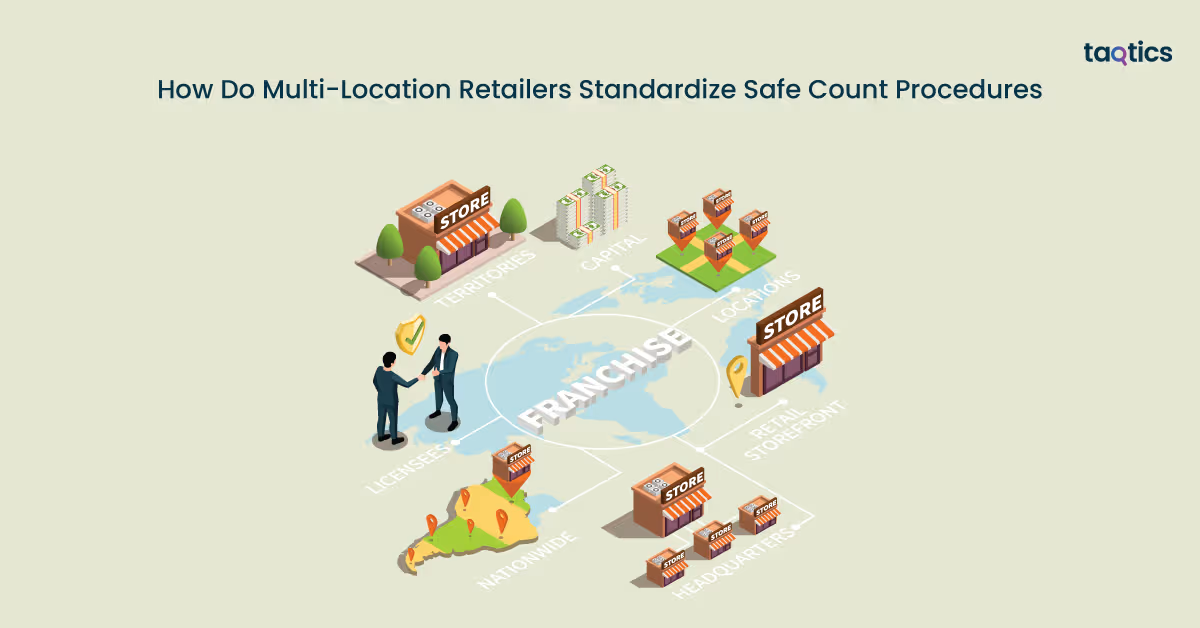
Multi-location retailers standardize safe count procedures through SOP digitization, centralized reporting, compliance dashboards, and regional audit tracking.
- SOP digitization: Safe count procedures are converted into standardized digital workflows or checklists. This ensures every store follows the same step-by-step process for counting cash, documenting totals, and verifying discrepancies.
- Centralized reporting: Safe count records from all stores are consolidated into a single system. Head office or finance teams can review store-level cash balances, drop records, and variance reports without relying on individual paper logs.
- Compliance dashboards: Managers use dashboards to track whether daily or shift-end safe counts are completed on time. These dashboards highlight missed tasks, delayed counts, or discrepancies that require attention.
- Regional audit tracking: Area or regional managers monitor compliance across multiple stores. By reviewing audit reports and variance patterns, they can identify problem areas, conduct investigations, and ensure stores follow standardized cash control practices.
Combining standardized procedures with centralized monitoring enables multi-location retailers to maintain consistent safe count processes, improve accountability, and strengthen cash management across their entire store network.
Is cash drop mandatory in retail?
No, cash drop is not mandatory in retail, but it is widely considered a best practice for cash management and loss prevention.
- Reduce theft risk: Less cash in the register lowers the incentive for robbery or internal theft.
- Improve cash control: Regular deposits into the safe make it easier to track and reconcile cash.
- Enhance employee safety: Limiting visible cash at registers reduces the risk of robbery incidents.
- Maintain accurate reconciliation: Structured cash drops help ensure that POS records match physical cash balances.
Retail stores typically perform cash drops when the cash drawer exceeds a predetermined limit or during busy hours when large amounts of cash accumulate.
How much cash should be kept in a register?
The amount of cash that should typically be kept in a register is ₹2,000 to ₹10,000 (or an equivalent small operating amount). However, it depends on and varies per the store’s cash handling policy, store size, and transaction volume.
- Store type and sales volume: High-traffic stores may keep a slightly higher float for change.
- Security policies: Lower limits reduce the risk of theft or robbery.
- POS reconciliation requirements: Smaller cash amounts make counting and balancing registers easier.
- Peak business hours: Cash limits help ensure that excess cash is dropped regularly during busy periods.
Many retail chains set a predetermined threshold for each register. Once the drawer reaches this limit, staff are required to perform a cash drop to maintain security and proper cash control.
About the Author