Price Accuracy Audit Checklist: Definition, Importance & Components
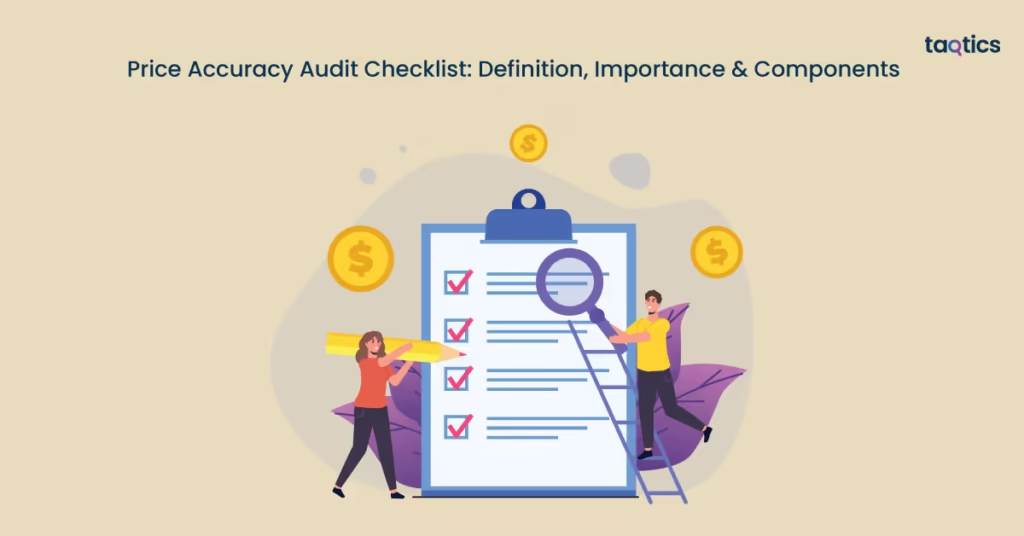
A price accuracy audit checklist ensures that the prices displayed on shelves, systems, and invoices match accurately, helping retailers maintain transparency and trust with customers. A price accuracy audit checklist also acts as a structured tool to detect pricing discrepancies, prevent revenue leakage, and ensure compliance with legal and regulatory standards in retail environments. According to a 2023 report by Retail Dive, nearly 21% of shoppers lose trust in a brand after encountering pricing inconsistencies, highlighting how even minor errors can impact customer loyalty and brand perception.
A price accuracy audit checklist is essential for operational efficiency, as it streamlines regular audits across stores, POS systems, and online platforms to maintain consistency. The Food Industry Association (FMI) 2022 study found that pricing errors can cost retailers up to 1–2% of annual revenue due to overcharges, undercharges, and compliance penalties, making systematic price verification critical. By outlining key components such as shelf label verification, system price validation, promotional checks, and staff accountability, a well-designed checklist helps businesses reduce errors, enhance customer satisfaction, and protect profitability.
What Is a Price Accuracy Audit Checklist and Why Is It Important?
A price accuracy audit checklist is a structured tool that helps businesses verify that the shelf price, scanned price, and advertised price always match. It ensures pricing consistency across stores, systems, and promotions so customers are charged exactly what they see.
It is important because:
- Accurate pricing builds customer trust by ensuring shoppers are charged fairly and transparently at checkout.
- It protects brand reputation, as frequent pricing errors can lead to negative reviews and reduced loyalty.
- It helps maintain legal and regulatory compliance, since many consumer protection laws require businesses to honor displayed or advertised prices.
- It improves operational efficiency by reducing billing errors, refunds, and customer complaints.
- It minimizes customer churn and dissatisfaction caused by overcharging or pricing inconsistencies.
- It supports smoother store operations by enabling quick identification and correction of pricing discrepancies.
What Should Be Included in a Retail Price Accuracy Checklist?
A retail price accuracy checklist should include clear verification steps across store displays, billing systems, compliance requirements, and backend operations to ensure consistent and correct pricing at every customer touchpoint.
In-Store Shelf & Display Audit
This section focuses on verifying that all physical price displays in the store match system pricing and promotional commitments.
- Shelf tags must exactly match the price in the POS system to avoid billing discrepancies.
- Price labels should be placed directly under the correct product, especially for similar items with different variants or prices.
- Promotional signage such as “Sale,” “Clearance,” or “Reduced” must be current, clearly visible, and applied only to the correct items.
- Endcaps and special floor displays should reflect accurate promotional or featured pricing for all listed SKUs.
- All tags must be legible, undamaged, and present to ensure customers can clearly view pricing information.
POS & System Check
This section ensures that the billing and backend systems correctly reflect displayed prices and promotions.
- Random scan accuracy tests should be conducted to confirm items ring up at the advertised or shelf price.
- Promotional pricing must activate and deactivate exactly as scheduled to prevent overcharging or undercharging.
- Multi-buy offers or bundle deals like “2 for ₹X” should calculate correctly in the POS without manual intervention.
Compliance & Legal Standards
This section helps retailers stay aligned with pricing regulations and manufacturer policies.
- The store should always charge the lowest among advertised, posted, or labeled prices to avoid customer disputes.
- Minimum Advertised Price (MAP) guidelines set by manufacturers must be followed where applicable.
- Tax inclusion or exclusion on price tags should comply with local regulations and remain consistent with billing.
Data & Operations
This section focuses on backend accuracy and synchronization across systems and channels.
- SKU names and codes should be standardized across inventory, POS, and pricing systems to prevent mismatches.
- Price updates made in backend systems must reflect quickly on shelf labels and POS without delay.
- Online and in-store prices should remain aligned wherever omnichannel pricing policies require consistency.
Implementing a comprehensive checklist not only ensures legal compliance and smoother store operations but also strengthens brand credibility, minimizes complaints, and supports a transparent and reliable shopping experience for customers.
What Are Best Practices for Maintaining Long-Term Price Accuracy?
The best practices for maintaining long-term price accuracy include conducting frequent audits, actionable steps, and using digital tools. Together, these practices help retailers maintain consistent pricing, reduce errors, and improve customer trust over time.
- Conduct audits daily, weekly, or immediately after promotional or price updates to ensure shelf, system, and advertised prices remain aligned.
- Increase audit frequency in high-traffic stores or during major sale periods when pricing changes are more frequent.
- Take actionable steps whenever discrepancies are found instead of simply marking them as resolved.
- Identify the root cause of pricing errors, whether due to system delays, incorrect data entry, or outdated shelf labels, to prevent recurrence.
- Maintain clear internal communication so pricing corrections are implemented quickly across departments.
- Use digital tools such as handheld scanners or mobile audit devices to instantly verify shelf prices against the central database.
- Ensure real-time synchronization between backend systems, POS, and shelf labels to minimize manual errors and delays.
By following these best practices consistently, retailers can maintain long-term price accuracy, reduce pricing errors, and deliver a transparent, reliable shopping experience that strengthens customer trust and operational efficiency.
What Causes Price Inaccuracies in Retail Stores?
There are five major factors that cause price inaccuracies in retail stores. These include manual price updates and human error, POS system synchronization issues, promotions not updated on shelf labels, barcode or SKU mismatches, and vendor price changes not reflected in-store.
- Manual price updates and human error: Pricing that is updated manually on shelf labels or systems increases the chances of mistakes such as incorrect entries, missed updates, or misplaced tags. Even small errors during labeling or data entry can create mismatches between displayed and billed prices.
- POS system synchronization issues: When backend pricing systems and POS terminals are not synchronized in real time, price updates may reflect in one system but not the other. This delay often results in customers being charged differently from what is displayed on shelves or online.
- Promotions not updated on shelf labels: Promotional campaigns and discounts frequently change, and if shelf labels or signage are not updated promptly, customers may see outdated offers. This leads to confusion, billing disputes, and loss of trust.
- Barcode or SKU mismatches: Incorrect or outdated barcodes and SKU information can cause items to scan at the wrong price. This is especially common when new products replace old ones or when similar items share incorrect tagging.
- Vendor price changes not reflected in-store: When suppliers revise prices and the updates are not quickly implemented in store systems or shelf labels, discrepancies arise. This can lead to undercharging, overcharging, and inconsistencies across locations.
Addressing system gaps, improving coordination, and conducting regular audits allow businesses to minimize discrepancies, ensure accurate billing, and maintain a consistent and trustworthy shopping experience for customers.
How Common Are Price Accuracy Errors in Retail?
Price accuracy errors, which are very common in retail, accounting for 1–3% of items scanned incorrectly during routine checks, continue to be a persistent operational challenge across the industry. According to the National Institute of Standards and Technology (NIST) retail pricing studies, pricing error rates in stores typically range between 1% and 2%, with higher rates observed during promotional periods and major pricing transitions. These audit findings highlight how even well-managed retail environments experience discrepancies between shelf prices, scanned prices, and advertised promotions.
Price inaccuracies tend to vary by store size and operational structure. Large retail chains usually have centralized pricing systems and automated updates, which help reduce manual errors but can still face synchronization delays across multiple locations. Independent retailers, on the other hand, often rely on manual updates and smaller teams, increasing the likelihood of human error and delayed promotional changes. As a result, smaller stores may experience higher pricing inconsistencies if regular audits are not conducted.
Certain periods of the year also see noticeable spikes in pricing errors.
- During holidays, clearance sales, and large promotional events, frequent price changes increase the risk of mismatched shelf labels and system prices.
- Rapid inventory turnover and last-minute discounting can cause delays in updating POS systems or signage.
- High customer traffic during sale periods makes discrepancies more visible and more likely to result in complaints.
The price accuracy errors remain a common retail issue, but consistent audits, system synchronization, and timely promotional updates can significantly reduce their frequency and impact on customer experience.
Who Is Responsible for Price Accuracy in a Retail Store?
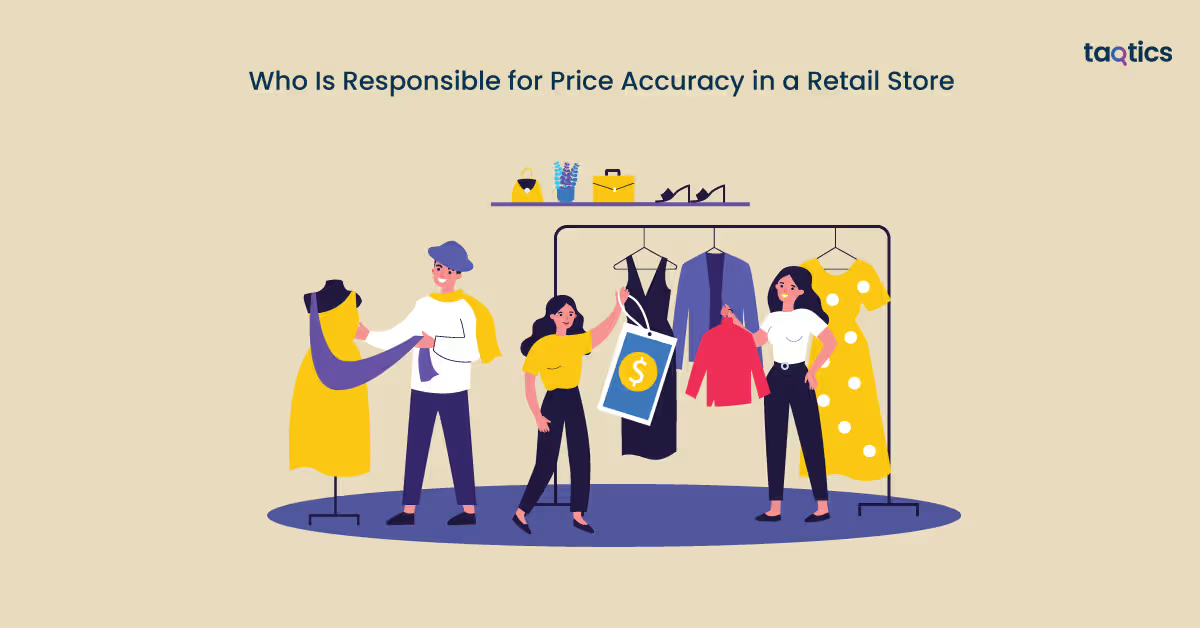
Store managers and pricing coordinators are responsible for price accuracy in a retail store. They ensure that shelf prices, POS system rates, and promotional offers remain consistent and up to date across all sections of the store.
Typically, responsibility is shared across multiple roles to maintain accuracy and accountability.
- Store Manager: Oversees overall price accuracy, ensures audits are conducted regularly, and resolves escalated pricing discrepancies.
- Pricing Coordinator or Inventory Executive: Updates prices in the system, implements promotional changes, and verifies that shelf labels match POS data.
- Floor Staff and Merchandisers: Replace and align shelf tags, check promotional signage, and report mismatches noticed during daily operations.
- Cashiers and POS Operators: Identify scanning errors at checkout and report discrepancies for immediate correction.
- Regional or Operations Managers: Monitor compliance across multiple stores and ensure standardized pricing processes are followed.
When these roles work collaboratively with clear accountability, retailers can maintain consistent pricing, reduce errors, and deliver a reliable customer experience.
What Happens If a Retailer Fails a Price Accuracy Audit?
If a retailer fails a price accuracy audit, it can face financial, legal, and reputational consequences that directly impact operations and customer trust. Repeated pricing discrepancies signal weak internal controls and can lead to immediate corrective actions from management or regulatory authorities.
- The retailer may have to offer refunds, honor the lowest displayed price, or compensate customers for incorrect billing.
- Frequent errors can result in customer complaints, negative reviews, and a decline in trust and loyalty.
- Regulatory bodies or consumer protection authorities may impose warnings, penalties, or compliance notices if pricing violations persist.
- The store may be required to conduct re-audits, staff retraining, and stricter monitoring to restore compliance.
- Operational costs can increase due to manual corrections, system fixes, and additional supervision.
- Brand reputation may suffer, especially if pricing issues become public or recurring across multiple locations.
Failing a price accuracy audit not only affects immediate revenue and compliance but also highlights the need for stronger processes, regular monitoring, and better coordination across pricing, merchandising, and billing systems.
How Can Retailers Train Employees to Maintain Price Accuracy?
Retailers can train employees to maintain price accuracy by building clear processes, practical knowledge, and accountability into everyday store operations.
- Provide structured onboarding that explains how shelf pricing, POS systems, promotions, and backend updates are connected.
- Conduct hands-on training sessions where employees practice updating shelf tags, verifying promotional signage, and performing scan accuracy checks.
- Educate staff on common causes of pricing errors, such as misplaced labels, delayed system updates, or incorrect SKU entries.
- Train employees to immediately report discrepancies rather than ignoring or informally correcting them.
- Use mock audits or random spot checks to reinforce audit readiness and build accountability.
- Offer refresher sessions before major sales, seasonal promotions, or system upgrades when pricing changes are frequent.
- Set clear ownership by defining who is responsible for updating, verifying, and approving price changes.
Effective training ensures that staff understand not only how to update prices, but also why accuracy directly impacts customer trust, compliance, and revenue.
How Does Price Accuracy Affect Customer Trust and Loyalty?
Price accuracy affects customer trust and loyalty by shaping how reliable and transparent a brand appears during every purchase.
- Consistent pricing builds trust, as customers feel assured they are being charged fairly and honestly.
- Accurate pricing enhances brand credibility and positions the store as dependable and customer-focused.
- Pricing errors or overcharges create frustration, leading to complaints, negative reviews, and reduced loyalty.
- Repeated discrepancies can make customers switch to competitors they perceive as more transparent.
- Clear and reliable pricing improves the overall shopping experience and encourages long-term engagement.
Maintaining price accuracy not only prevents disputes but also strengthens customer relationships, making it a key factor in building lasting loyalty and a positive brand reputation.
About the Author