Shelf Labeling Checklist: Definition,Importance & Components
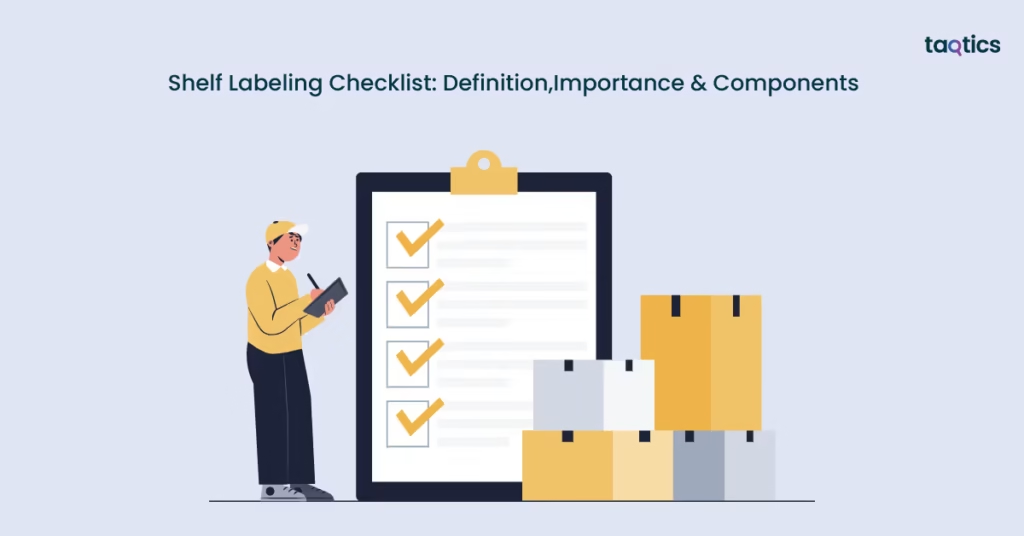
A shelf labeling checklist ensures that every product displayed in a retail store has accurate, clear, and updated pricing and product information visible to customers. A shelf labeling checklist also helps retailers maintain consistency between shelf tags, POS systems, and promotional signage, reducing pricing errors and improving the overall shopping experience. According to a 2023 Retail Dive report, nearly 72% of in-store purchase decisions are influenced by clear and accurate shelf information, showing how proper labeling directly impacts sales and customer confidence.
A shelf labeling checklist plays a critical role in compliance, operational efficiency, and brand credibility by ensuring that labels are legible, correctly placed, and updated on time. The National Institute of Standards and Technology (NIST) 2022 retail pricing study found that pricing and labeling errors typically occur in 1–2% of audited items, often due to misplaced or outdated shelf tags. By including components such as price verification, promotional labeling checks, SKU alignment, and tag clarity, a well-structured checklist helps retailers minimize discrepancies, improve customer trust, and maintain accurate store operations.
What Is a Shelf Labeling Checklist And Why Is It Important?
A shelf labeling checklist is a structured tool used by retailers to ensure that all product labels on shelves are accurate, clear, and correctly placed. It helps verify that each item has the right price tag, product information, and promotional details displayed so customers can easily identify products and pricing.
It is important because:
- It ensures pricing accuracy by confirming that shelf labels match POS system prices and current promotions.
- It supports planogram compliance by helping staff verify that products and labels are placed according to store layout and merchandising standards.
- It improves inventory control by aligning SKU details, barcodes, and product names with shelf tags and backend systems.
- It enhances customer navigation by making it easier for shoppers to locate products, understand pricing, and make purchase decisions quickly.
- It reduces customer confusion and complaints caused by missing, misplaced, or outdated labels.
- It strengthens operational efficiency by enabling faster audits and quicker correction of labeling errors.
Using a shelf labeling checklist consistently helps retailers maintain organized displays, accurate pricing, and a smooth shopping experience.
What Should Be Included On A Shelf Labeling Checklist?
A shelf labeling checklist should include clear verification points for accuracy, placement, maintenance, and compliance to ensure every label on the shelf is correct, visible, and aligned with store systems.
Accuracy & Data Validation
This section focuses on confirming that all label information matches the actual product and system data.
- SKU details such as product name, size, and variant should exactly match the item placed on the shelf.
- The label price must align with the POS system data and any ongoing advertised or promotional prices.
- Barcodes should be clearly visible and easily scannable to prevent billing or inventory errors.
- Promotional tags, offer labels, or shelf stoppers should be correctly placed and updated according to current campaigns.
Placement & Positioning
This section ensures labels are positioned correctly and support store layout standards.
- Labels must be placed directly below or above the corresponding product to avoid customer confusion.
- Placement should follow planogram guidelines for shelf height, spacing, and product adjacency.
- Tags should be easy to read, with clear fonts and proper visibility for customers.
- Organized brand blocking should be maintained so labels support neat, brand-specific sections.
Condition & Maintenance
This section focuses on keeping labels clean, legible, and well-maintained.
- Labels should be clean, straight, and free from dust, bends, or stains.
- Torn, faded, or illegible labels must be replaced immediately to maintain clarity.
- Any missing tags or empty label slots should be identified and updated quickly.
- Label materials should be suitable for the environment, such as waterproof tags for refrigerated or fresh sections.
Regulatory & Special Notes
This section ensures labels meet legal and informational requirements.
- Required product details like ingredients, allergens, or expiry information should be present where applicable.
- Labels must comply with local language and regulatory standards to ensure transparency and legal adherence.
Including these elements in a shelf labeling checklist helps retailers maintain accurate displays, improve customer navigation, and ensure consistent compliance across the store.
How Does Shelf Labeling Affect Retail Operations?
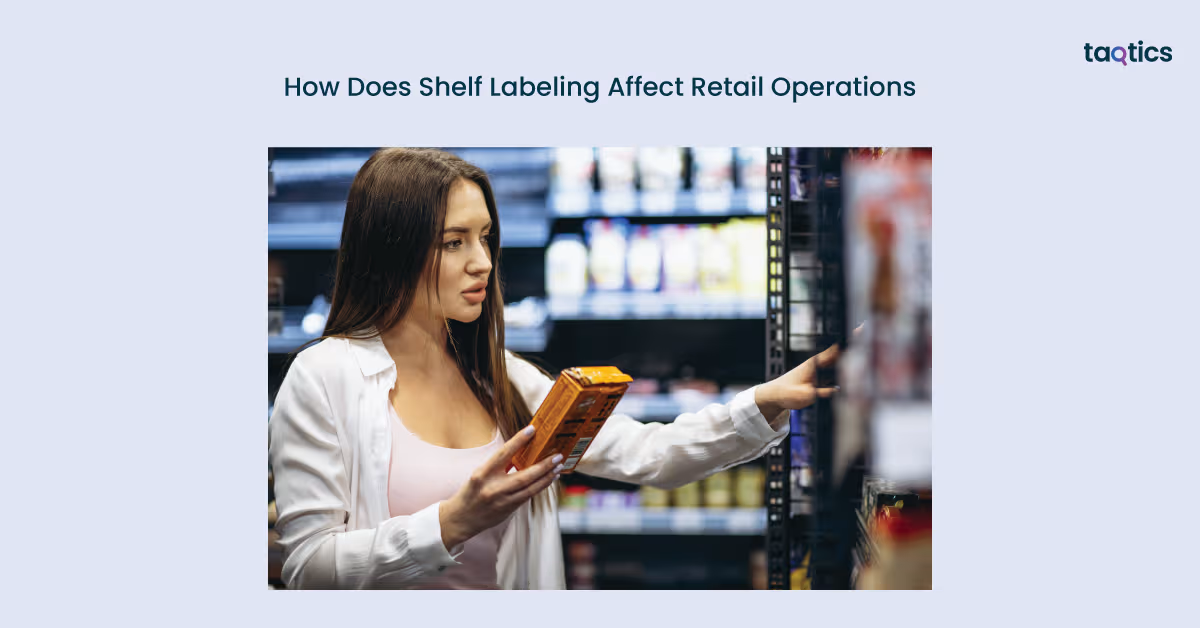
Shelf labeling affects retail operations by ensuring accurate pricing, organized displays, and seamless coordination between store systems and customer-facing information.
- Accurate shelf labels support inventory management by aligning product details, SKUs, and prices with backend systems, reducing stock mismatches and billing errors.
- Clear and correct labeling builds customer trust and improves conversion rates, as shoppers are more likely to purchase when pricing and product information are transparent and easy to understand.
- Well-maintained labels improve employee efficiency by helping staff quickly locate products, restock shelves correctly, and resolve customer queries without confusion.
- Consistent labeling minimizes time spent correcting errors, allowing teams to focus on sales and service rather than manual fixes.
- Integration with POS systems, ERP platforms, and inventory software ensures that price updates and product information remain synchronized across all channels.
- Real-time alignment between shelf labels and digital systems helps prevent discrepancies, refunds, and operational delays.
Effective shelf labeling plays a key role in maintaining smooth store operations, accurate inventory control, and a reliable shopping experience for customers.
What Are the Best Practices for Shelf Labeling in Retail?
The best practices for shelf labeling in retail include labeling at eye level, keeping the spacing consistent, avoiding clutter, using color coding for promotions, and conducting regular audits and updates.
- Place labels at eye level wherever possible so customers can quickly view product details and pricing without difficulty.
- Keep spacing between labels consistent to maintain a neat and organized shelf layout that supports easy product identification.
- Avoid clutter by limiting unnecessary stickers, outdated tags, or overlapping labels that can confuse shoppers.
- Use color coding or distinct tag designs to highlight promotions, discounts, or special offers for better visibility.
- Ensure promotional labels are clearly differentiated from regular pricing to prevent misunderstandings.
- Conduct regular audits and timely updates to replace damaged, missing, or outdated labels and maintain accuracy.
Following these best practices helps retailers improve store presentation, enhance customer experience, and maintain accurate and efficient shelf management.
What Are the Different Types of Shelf Labels Used In Retail?
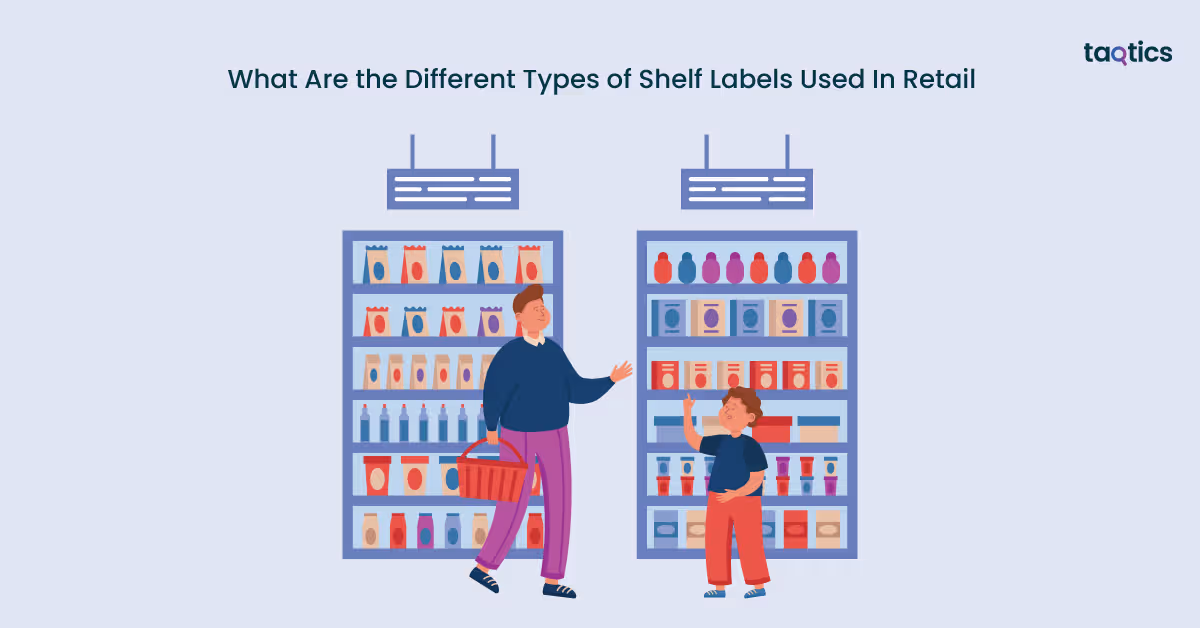
The different types of shelf labels used in retail are paper labels, plastic shelf strips, magnetic labels, and digital shelf labels (ESLs). Each type serves a specific purpose depending on store format, budget, and frequency of price or product updates.
- Paper labels: These are the most commonly used and cost-effective shelf labels in retail stores. They are easy to print and replace, making them suitable for stores with frequent price or product changes. However, they can tear, fade, or require regular manual updates.
- Plastic shelf strips: Plastic strips hold printed labels securely and protect them from damage. They are durable, reusable, and ideal for maintaining organized and uniform shelf displays. While slightly higher in upfront cost than paper labels alone, they offer long-term usability and neat presentation.
- Magnetic labels: Magnetic labels are flexible and easy to reposition, making them ideal for metal shelving and dynamic store layouts. They allow quick updates without adhesive residue and are commonly used in warehouses, supermarkets, and hardware stores where layout changes are frequent.
- Digital shelf labels (ESLs): Electronic shelf labels automatically sync with POS and inventory systems, enabling real-time price updates. They reduce manual effort, improve pricing accuracy, and support dynamic pricing strategies. Although they involve higher initial investment, they provide long-term efficiency and reduce labeling errors.
While paper and plastic labels work well for cost-effective and organized displays, magnetic and digital labels offer greater flexibility and automation. Using the appropriate combination helps retailers maintain accurate pricing, efficient operations, and a seamless shopping experience.
Are Digital Shelf Labels Worth It?
Yes, digital shelf labels are worth it for many retailers, especially medium-to-large stores with frequent price changes and multiple SKUs.
- They significantly reduce pricing errors and manual work. A 2023 Deloitte study found retailers using digital shelf labels reduced pricing labor costs by up to 70% and improved promotional compliance by 23%, while some stores saw 90% fewer pricing errors.
- They offer a strong return on investment over time. A Forrester Total Economic Impact study reported a 277% five-year ROI and payback within about 18 months for electronic shelf label systems.
- They improve operational efficiency and productivity by eliminating constant printing and manual label replacement, allowing staff to focus on customer service and merchandising.
- Real-time price updates ensure shelf and POS pricing remain aligned, improving accuracy and customer trust while enabling dynamic promotions and faster price changes.
However, the upfront investment can be high (around $5–$20 per label plus system setup), so smaller retailers with limited budgets may find traditional labels more practical initially.
About the Author