Allergen Management Software for Accurate Menus, Cross-Contact Control and Safer Orders
Digitize allergen matrix checks, recipe and supplier reviews, kitchen cross-contact controls, staff readiness, guest-request handling, delivery labels, incident reviews, reports, and corrective-action closure across every outlet.
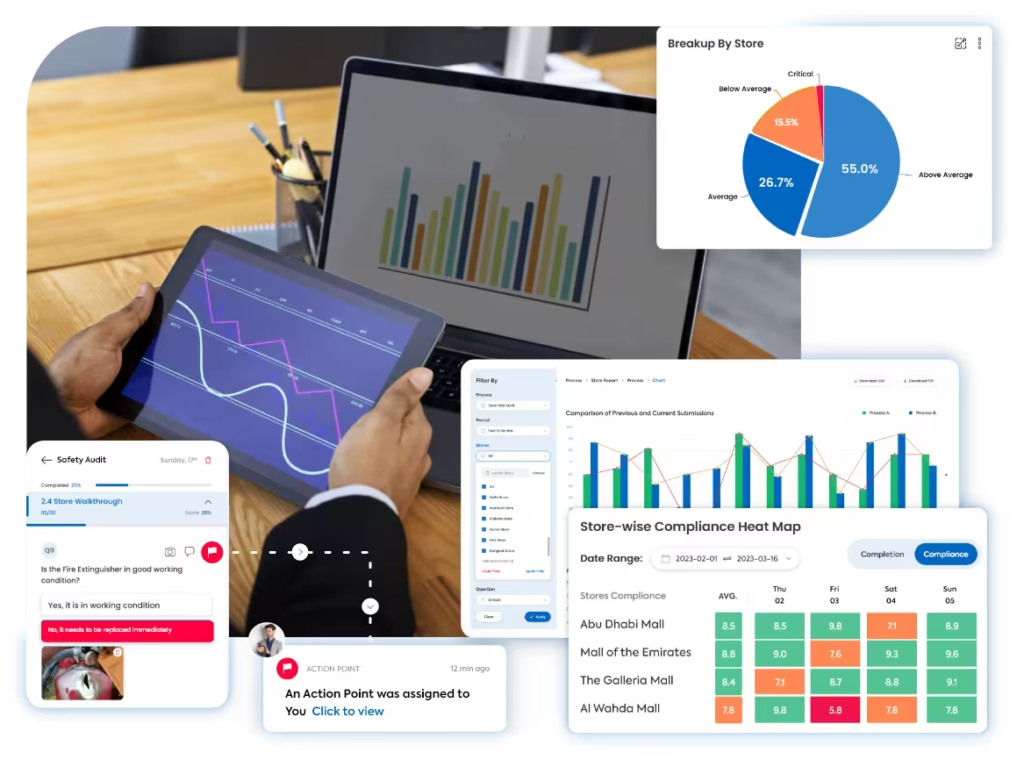
A clearer way to manage allergen risk across every outlet and service channel
Taqtics connects allergen matrices, recipes, ingredient and supplier records, kitchen controls, training, customer requests, delivery labels, incident reviews, reports, and corrective actions for restaurants, QSRs, cafés, cloud kitchens, hotels, bakeries, food courts, supermarkets, and food-service operations.
Where spreadsheets, paper checks, and disconnected allergen records break down
Select a common gap to see why outdated menu information, unverified kitchen controls, inconsistent communication, and manual follow-up create avoidable allergen risk.
Menu, recipe, and supplier changes make allergen information easy to outdate
Seasonal items, substitutions, new ingredients, changed garnishes, and revised recipes must be reflected in matrices, menus, labels, and staff guidance.
Cross-contact controls are difficult to verify without structured evidence
Shared utensils, boards, fryers, grills, surfaces, storage areas, cleaning steps, and packaging stations need consistent checks and proof.
Guest allergen requests can break between counter, kitchen, and handoff
Teams need a clear trail from customer request and POS note through manager confirmation, kitchen preparation, final order check, label, and delivery handoff.
HQ cannot see repeat allergen risks across outlets
Without one dashboard, outdated matrices, training gaps, missing labels, cross-contact risks, incidents, and overdue corrective actions stay hidden.
What Allergen Management Audits Should Cover
Move through five control areas to review menu and recipe accuracy, supplier declarations, storage and cross-contact controls, cleaning, training, customer requests, POS and kitchen communication, delivery labels, incidents, and corrective actions.
Keep customer-facing allergen information aligned with approved recipes and ingredients
Confirm that allergen matrices, menus, recipe versions, supplier records, labels, and launch approvals reflect the same current source of truth.
Prevent cross-contact through storage, preparation, cooking, and service
Verify that allergen ingredients are identified, segregated, handled, and prepared using approved controls throughout the kitchen workflow.
Verify cleaning procedures and staff readiness before allergen requests occur
Confirm that teams understand the controls, can execute changeovers, and know when to stop, check, and escalate.
Protect allergen requests from guest communication through final handoff
Review how allergen information is captured, confirmed, communicated, prepared, checked, labeled, and handed to the customer or rider.
Control incidents, near misses, repeat gaps, and corrective-action closure
Turn every missing label, incorrect ingredient, cross-contact risk, training gap, or complaint into an accountable investigation and verified fix.
How Taqtics Digitizes Allergen Management Audits
Set allergen controls once, schedule audits by outlet and risk, capture verified evidence on mobile, surface high-risk failures immediately, and turn every gap into accountable follow-up.
Make Every Allergen Control Check Easier to Trust
Verify the outlet, menu item, recipe version, ingredient or supplier record, kitchen control, service channel, evidence, manager confirmation, score, incident response, and follow-up behind every allergen audit.
Is the allergen matrix current for this menu item and recipe version?
Menu item, recipe version, matrix proof, and manager sign-off requiredAre allergen ingredients segregated, sealed, and clearly labeled in storage?
Was the guest allergen request marked in POS and confirmed with the kitchen?
Validated observations
Confirm where, when, for which menu item, recipe, ingredient, risk, and service channel each allergen check was submitted.
Validated observations
Confirm where, when, for which menu item, recipe, ingredient, risk, and service channel each allergen check was submitted.
- Geo-fenced, shift-based, menu-launch, and risk-based submissions
- Menu item, recipe, ingredient, supplier, allergen category, photo, document, comment, and user fields
- Storage, cleaning, cross-contact, POS, kitchen, label, delivery, training, and incident evidence
- Timestamped outlet-level allergen management audit trail
Standardized scoring
Apply common allergen instructions, critical-risk rules, evidence requirements, sign-offs, and score logic across outlets and service channels.
Standardized scoring
Apply common allergen instructions, critical-risk rules, evidence requirements, sign-offs, and score logic across outlets and service channels.
- Allergen category, menu item, recipe version, supplier, and control fields
- Required evidence and manager confirmation for failed high-risk checks
- Critical scoring for matrix, cross-contact, label, communication, and training failures
- Automated outlet and category allergen audit score calculation
Corrective actions
Assign outdated information, cross-contact risks, training gaps, labeling failures, communication breakdowns, incidents, and complaints and track them to closure.
Corrective actions
Assign outdated information, cross-contact risks, training gaps, labeling failures, communication breakdowns, incidents, and complaints and track them to closure.
- Owners, priorities, containment steps, review times, and food-safety deadlines
- Escalations for high-risk allergen gaps, incidents, and overdue actions
- Matrix updates, recipe review, supplier follow-up, retraining, process change, and closure proof
- Root-cause, repeat-risk, and recurrence visibility
Connect audits with corrective action tracking software so allergen risks are not left unresolved.
Run Different Audits for Different Allergen Risks
Allergen management is not one checklist. Run targeted programs for menu accuracy, ingredient and supplier changes, storage and cross-contact controls, cleaning, staff readiness, order communication, delivery labels, incidents, and corrective-action closure.
Menu Allergen Matrix Audits
Menu item, allergen category, recipe version, menu board, QR menu, printed menu, review owner, approval, and customer-facing information.
Ingredient and Supplier Declaration Audits
Approved ingredients, supplier declarations, substitute products, packaging labels, specifications, recipe changes, and launch approvals.
Cross-Contact and Storage Audits
Shared equipment, utensils, fryers, boards, surfaces, storage bins, segregation, handwashing, cleaning steps, and manager verification.
Staff Training and Guest Request Audits
Allergen awareness, escalation, guest communication, POS and KDS notes, kitchen handoff, manager review, and refresher training.
Delivery and Takeaway Allergen Audits
Order ID, customer name, special instructions, allergen stickers, packaging separation, seal status, final check, and handoff proof.
Incident, Complaint and Corrective-Action Audits
Near misses, incorrect orders, wrong ingredients, missing labels, complaints, immediate controls, root cause, owners, deadlines, and closure proof.
Allergen Management Reports That Reveal Real Risk
Turn allergen audit data into outlet, menu item, recipe, ingredient, supplier, kitchen-control, service-channel, training, incident, and corrective-action visibility across the full network.
View all report insights
- Menu matrix, recipe, ingredient, supplier, storage, cleaning, training, order, label, and incident reports
- Outdated, incomplete, unapproved, and conflicting allergen-information exceptions
- Cross-contact risks by outlet, kitchen area, equipment, process, shift, and menu category
- Training completion, staff-awareness, POS, KDS, and kitchen-communication gaps
- Delivery and takeaway label failures, special-instruction misses, complaints, and near misses
- Open, overdue, high-risk, and closed corrective actions
- AI-based recurring pattern detection from historical allergen audit and incident data
Start With a Ready-to-Use Allergen Management Checklist
Use structured templates to define allergen matrix, recipe, ingredient, supplier, storage, cross-contact, cleaning, training, customer-request, POS and kitchen communication, delivery-label, incident, evidence, scoring, and corrective-action requirements.
See How Multi-Location Teams Improve Food Safety and Outlet Execution
Explore how restaurant, café, QSR, and food-retail teams use Taqtics to standardize audits, strengthen food-safety execution, close operational gaps, and improve network-wide visibility.
Americana Group — KFC Middle East
How Americana digitized quality, food-safety, supplier, and OHS audits across KFC outlets, commissaries, and warehouses while accelerating corrective action.

Barns Café Operational Transformation
How Barns Café replaced paper SOPs and scattered follow-ups with digital checklists, audits, issue routing, training, and asset control across 1,000+ outlets.


Global Supermarket Chains
How supermarket teams digitized store audits, multi-level reviews, corrective actions, inventory checks, planogram execution, and leadership dashboards.
Allergen Management Software Questions
What is allergen management software?
Allergen management software helps food businesses schedule, complete, verify, and report allergen matrix checks, recipe and ingredient reviews, supplier declarations, storage and cross-contact controls, training, customer requests, order labels, incidents, and corrective actions across locations.
What should an allergen management audit include?
It should include menu and matrix accuracy, recipe versions, ingredients, supplier declarations, storage segregation, cross-contact prevention, cleaning and changeover procedures, staff training, customer-request handling, POS and kitchen communication, delivery labels, incidents, and corrective actions.
Can Taqtics help audit allergen cross-contact controls?
Yes. Taqtics can support checks for shared equipment, utensils, boards, fryers, grills, surfaces, storage areas, handwashing, cleaning, changeover procedures, packaging stations, evidence, and manager verification.
Can Taqtics track menu allergen matrix and recipe accuracy?
Yes. Teams can review menu items, allergen categories, recipe versions, ingredient and supplier changes, QR and printed menus, menu boards, approval dates, documents, photos, comments, and outlet-level exceptions.
Can failed allergen checks create corrective actions?
Yes. Failed matrix, recipe, supplier, storage, cross-contact, cleaning, training, POS, kitchen, label, delivery, incident, or complaint checks can create actions with owners, containment steps, priorities, deadlines, escalations, and closure proof.
Can Taqtics generate allergen management reports?
Yes. Reports can compare allergen audit scores, outdated information, recipe and supplier exceptions, cross-contact risks, training gaps, missing labels, incidents, high-risk actions, overdue issues, and recurring allergen patterns across outlets and regions.
Make Every Allergen Management Audit Reliable and Actionable
Digitize allergen audits, verify menu and kitchen controls with evidence, identify recurring outlet risks in reports, and close high-risk corrective actions faster across every location.