Incident Follow-Up Audit Software for Stronger Corrective Action and Safer Sites
Standardize incident follow-up across construction sites, contractors, projects, and field operations. Verify immediate controls, investigation evidence, root causes, corrective actions, responsible owners, closure proof, and recurring risks from one connected workflow.
A Clearer Way to Verify What Happened, What Changed, and Whether the Risk Is Closed
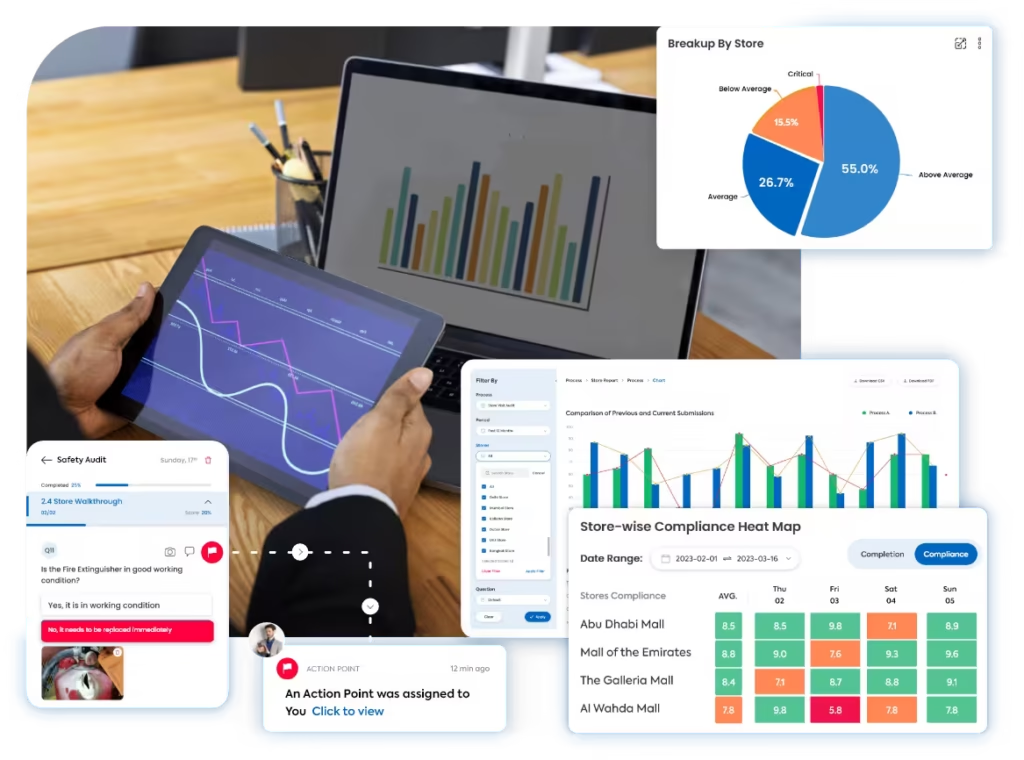
Taqtics connects incident records, investigation evidence, root-cause analysis, corrective actions, preventive controls, reviewer verification, and recurrence reporting across every project and contractor.
Where Manual Incident Follow-Up Breaks Down
Select a common gap to see why email threads, spreadsheets, chat groups, and disconnected investigation files make incident closure unreliable.
Teams may record the incident but fail to confirm isolation, barricading, first aid, stop-work controls, supervisor notification, or preservation of the scene.
Photos, witness statements, permits, equipment details, training records, work methods, and site conditions may sit in different files.
Without one workflow, owners, deadlines, escalation, completion evidence, reviewer approval, and preventive actions can become disconnected from the incident.
When follow-up data is not analyzed across sites, teams can miss recurring causes, contractors, activities, equipment types, or weak controls.
What an Incident Follow-Up Audit Should Cover
Move through five control areas to verify immediate response, investigation quality, root causes, corrective actions, preventive controls, closure, and organizational learning.
Verify the Immediate Response Before Moving Into Investigation
Confirm that people are protected, the hazard is controlled, required notifications are made, and the scene is preserved.
Build the Investigation Around Verifiable Evidence
Connect what happened to the exact project, people, task, equipment, permit, environment, and supporting records.
Separate Immediate Causes From Deeper System Causes
Use structured root-cause review to identify why the incident occurred and what allowed the conditions to exist.
Turn Investigation Findings Into Corrective and Preventive Actions
Make each action specific, owned, time-bound, evidence-based, and linked to the cause it is intended to address.
Verify Effectiveness Before the Incident Is Finally Closed
Confirm that actions were completed properly, controls work in practice, and the same risk has not simply been transferred elsewhere.
How Taqtics Digitizes Incident Follow-Up
Standardize incident review, capture evidence, investigate causes, assign corrective and preventive actions, and verify effectiveness before final closure.
Make Every Incident Follow-Up Easier to Verify
Verify the project, incident, work activity, evidence, investigation, root cause, action owner, due date, closure proof, reviewer, and recurrence status behind every follow-up.
Were immediate controls applied and verified before the affected work area was released?
Evidence requiredDoes the investigation identify direct, contributing, and underlying causes supported by evidence?
Are corrective and preventive actions assigned to owners with deadlines and verification requirements?
Validated observations
Keep the incident, location, activity, evidence, people, equipment, and investigation records connected.
+
Validated observations
Keep the incident, location, activity, evidence, people, equipment, and investigation records connected.
- Project, site, zone, contractor, work activity, and incident context
- Timestamped follow-up with investigator, reviewer, and responsible owner
- Photographs, witness statements, comments, documents, and supporting evidence
- Permit, equipment, training, RAMS/JSA, maintenance, or inspection references
Standardized scoring
Use consistent severity, investigation, root-cause, action-quality, and closure criteria across incidents.
+
Standardized scoring
Use consistent severity, investigation, root-cause, action-quality, and closure criteria across incidents.
- Incident-specific instructions and objective review questions
- Required evidence for investigation and root-cause decisions
- Critical, high, medium, and lower-risk follow-up priorities
- Standardized closure and effectiveness-review criteria
Corrective actions
Turn investigation findings into owned corrective and preventive actions that can be verified before closure.
+
Corrective actions
Turn investigation findings into owned corrective and preventive actions that can be verified before closure.
- Owners, priorities, due dates, escalation, and reviewer responsibility
- Routing to contractors, supervisors, EHS, engineering, maintenance, HR, or project management
- Repair, retraining, procedure updates, design changes, work controls, or preventive-action requirements
- Closure evidence, effectiveness review, rejection, reopening, approval, and repeat-risk tracking
Incident Follow-Up Reports That Show Where Corrective Action Is Failing
Turn follow-up data into visibility across incident categories, root causes, contractors, open actions, overdue closures, investigation quality, recurrence, and preventive-control effectiveness.
View all report insights +
- Total incidents under follow-up
- Incident follow-up completion rate
- Incident severity distribution
- Incidents by project and contractor
- Incidents by work activity
- Near miss versus injury versus property-damage trends
- Immediate-control verification
- Investigation completion status
- Root-cause categories
- Contributing-factor trends
- Open corrective actions
- Open preventive actions
- Overdue actions
- Average action-closure time
- Rejected or reopened closures
- Effectiveness-review status
- Repeat incidents by project
- Repeat incidents by contractor
- Recurring equipment or activity risks
- AI-detected recurring incident and root-cause patterns
Start With a Ready-to-Use Incident Follow-Up Checklist
Define investigation evidence, root-cause review, action requirements, responsibilities, deadlines, closure proof, effectiveness checks, and recurrence tracking inside Taqtics.
Incident Follow-Up Audit Software Questions
What is incident follow-up audit software?+
Incident follow-up audit software helps teams verify immediate controls, investigation quality, root causes, corrective and preventive actions, closure evidence, and recurrence after an incident or near miss.
What should an incident follow-up audit cover?+
It can cover immediate response, notifications, scene control, evidence, witness information, investigation records, root causes, corrective actions, preventive actions, reinspection, effectiveness review, and final closure.
Can photographs, witness statements, and documents be attached?+
Yes. Teams can capture photographs, comments, witness statements, permits, RAMS/JSA, training records, equipment details, maintenance records, and other investigation evidence.
Can root-cause analysis be standardized?+
Yes. Templates can guide teams through direct causes, contributing factors, system causes, evidence requirements, reviewers, and required actions.
Can corrective and preventive actions be assigned to different teams?+
Yes. Actions can be routed to contractors, supervisors, EHS, engineering, maintenance, HR, procurement, or project managers with deadlines and escalation.
Can overdue incident actions be escalated?+
Yes. Actions can include owners, due dates, priorities, overdue status, reminders, escalation, required evidence, and reviewer approval.
Can closure evidence be rejected or reopened?+
Yes. Reviewers can reject insufficient evidence, reopen the action, request additional corrective work, and verify the control again before closure.
Can near misses be included in the same workflow?+
Yes. Near misses, injuries, property damage, environmental incidents, equipment incidents, and other event types can use tailored follow-up templates.
Can incident trends be compared across contractors and projects?+
Yes. Reports can compare incident categories, root causes, action closure, recurrence, contractors, sites, work activities, and equipment types.
Can Taqtics identify recurring incident causes?+
Yes. Historical follow-up data can surface repeated causes, weak corrective actions, recurring contractors, high-risk activities, and similar incidents across locations.
Turn Every Incident Into Verified Corrective Action
Standardize incident follow-up, strengthen investigations, assign corrective and preventive actions, verify effectiveness, and reduce repeat risks across every construction and field operation.