
Pest Control Audit Software for Food Safety, IPM Records and Corrective Actions
Digitize pest sighting logs, IPM inspections, bait station and trap checks, exclusion reviews, sanitation and waste audits, contractor service records, trend analysis, reports, and corrective-action closure across every location.
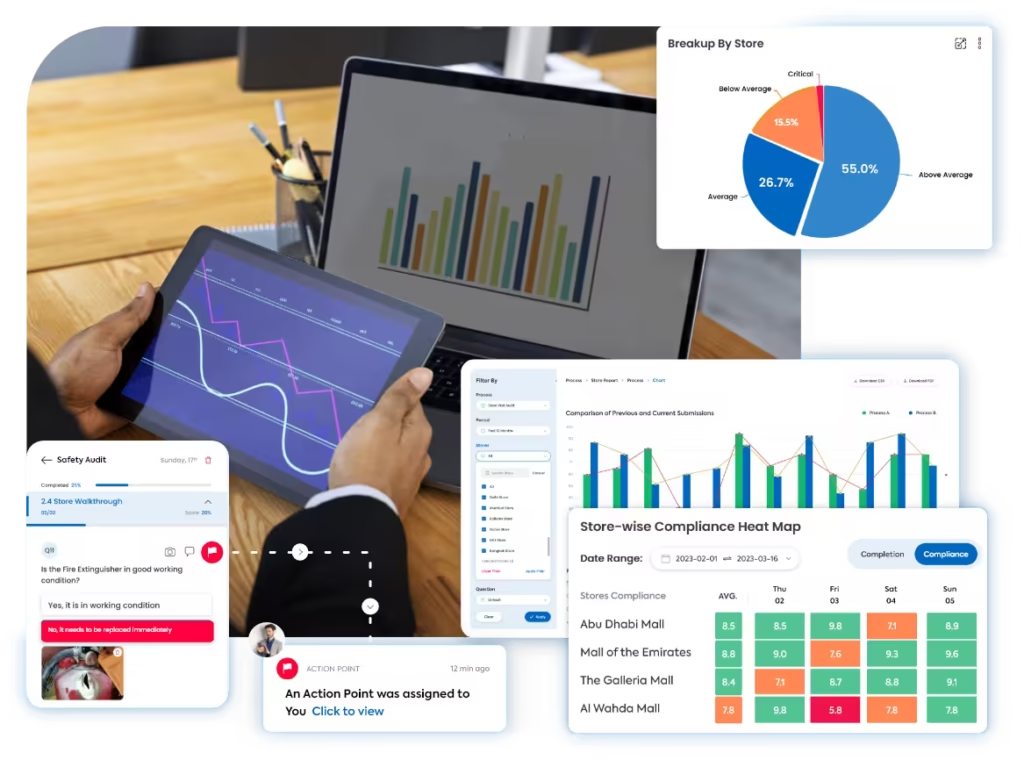
A clearer way to manage pest risk across every location and facility zone
Taqtics connects pest sightings, monitoring devices, pest-proofing, sanitation, waste, storage, exterior risks, contractor records, trend reviews, reports, and corrective actions for restaurants, QSRs, cloud kitchens, supermarkets, hotels, warehouses, and multi-site food operations.
Where paper sighting logs, vendor reports, and disconnected follow-up break down
Select a common gap to see why incomplete sightings, unresolved entry points, unassigned contractor recommendations, and limited trend visibility allow pest risks to repeat.
Pest sightings lose value when the evidence and response trail is incomplete
Teams need pest type, exact zone, date, time, photo proof, immediate containment, escalation, responsible owner, follow-up, and verified closure.
Door gaps, damaged seals, cracks, drains, and openings stay unresolved too long
Pest-proofing defects need assigned repair owners, deadlines, before-and-after evidence, reinspection, and escalation when the risk remains open.
Service reports do not automatically turn recommendations into site action
Device findings, treatment records, activity trends, sanitation observations, and vendor recommendations need owners, due dates, evidence, and closure review.
HQ cannot see repeat pest risks across sites and zones
Without one dashboard, repeated sightings, active devices, sanitation hotspots, structural gaps, seasonal spikes, and overdue corrective actions remain hidden.
What a Pest Control Audit Should Cover
Move through five IPM control areas to review sightings and devices, exclusion and structural risks, sanitation and waste, storage and exterior conditions, contractor records, pest trends, and corrective-action closure.
Document pest activity and confirm every monitoring device is correctly placed, mapped, serviced, and reviewed
Create a reliable record for sightings, bait stations, traps, and flying-insect devices with evidence and action history.
Prevent pest access by identifying and closing exclusion and structural defects
Inspect the physical barriers that protect kitchens, stores, warehouses, loading bays, and food-storage zones.
Remove food, water, shelter, and waste conditions that attract or sustain pest activity
Verify that sanitation, storage, and waste controls reduce attraction and make pest evidence easier to detect.
Verify exterior conditions and contractor pest-management work
Review the site perimeter, service documentation, device maps, treatment records, and recommendations that support the IPM program.
Identify recurring activity, control root causes, and verify corrective-action closure
Turn repeat sightings, active devices, sanitation gaps, structural risks, and vendor recommendations into accountable prevention work.
How Taqtics Digitizes Pest Control Audits
Set IPM standards once, schedule inspections by site and risk, capture verified observations on mobile, surface active pest risks immediately, and turn every failed check into accountable follow-up.
Make Every Pest Control Finding Easier to Trust
Verify the site, zone, pest type, device, inspection time, activity evidence, structural or sanitation condition, contractor record, risk score, immediate response, and follow-up behind every pest control audit.
Is bait station B-14 clean, accessible, mapped correctly, and free from damage?
Device ID, zone, condition, activity level, photo, and inspector comment requiredAre external doors, drains, vents, and service openings protected against pest entry?
Are waste, storage, and under-equipment areas free from pest evidence and attraction risks?
Validated observations
Confirm where, when, for which pest type, device, zone, and site condition each pest control check was submitted.
Validated observations
Confirm where, when, for which pest type, device, zone, and site condition each pest control check was submitted.
- Geo-fenced daily, weekly, monthly, seasonal, and incident-based submissions
- Pest type, device ID, mapped zone, activity level, severity, photo, document, comment, vendor, and user fields
- Sighting, trap, exclusion, sanitation, waste, storage, perimeter, treatment, and contractor evidence
- Timestamped site-level pest control audit trail
Standardized scoring
Apply common IPM instructions, device rules, risk ratings, evidence requirements, and score logic across every site and zone.
Standardized scoring
Apply common IPM instructions, device rules, risk ratings, evidence requirements, and score logic across every site and zone.
- Pest type, device, zone, contractor, structural condition, sanitation, and severity fields
- Required evidence and supervisor confirmation for active sightings and critical failures
- Critical scoring for pest activity, damaged devices, open entry points, waste, and sanitation failures
- Automated site, zone, device, and category pest control score calculation
Corrective actions
Assign sightings, damaged devices, entry points, structural defects, sanitation gaps, waste risks, vendor recommendations, and repeat activity and track them to closure.
Corrective actions
Assign sightings, damaged devices, entry points, structural defects, sanitation gaps, waste risks, vendor recommendations, and repeat activity and track them to closure.
- Owners, priorities, immediate containment, repair or cleaning deadlines, and food-safety escalation
- Escalations for active infestation indicators, repeat sightings, contractor gaps, and overdue actions
- Exclusion repair, sanitation, waste removal, stock protection, vendor treatment, reinspection, and closure proof
- Root-cause, repeat-zone, seasonal, and recurrence visibility
Connect audits with corrective action tracking software so pest risks are not left unresolved.
Run Different Audits for Different Pest Risks
Pest control is not one checklist. Run targeted programs for sightings and devices, exclusion and structural protection, sanitation and waste, contractor service, trend analysis, root-cause prevention, and corrective-action closure.
Pest Sighting and Monitoring Device Audits
Pest type, location, device ID, map match, trap or bait condition, activity signs, inspection status, immediate response, and evidence.
Entry Point and Structural Exclusion Audits
Door seals, docks, drains, vents, screens, pipe gaps, cracks, holes, standing water, damaged surfaces, repairs, and reinspection proof.
Sanitation, Waste and Storage Audits
Food debris, grease, spills, clutter, under-equipment zones, bins, garbage rooms, stock clearance, sealed containers, damaged packaging, and cleaning proof.
Exterior Perimeter and Harbourage Audits
Vegetation, standing water, loading bays, drains, lighting, waste zones, exterior gaps, roofline, harbourage, and site maintenance actions.
Contractor Service Report Audits
Service visits, device-map updates, activity findings, treatment records, chemical use, recommendations, follow-up owners, approvals, and closure proof.
Pest Trend and Corrective-Action Audits
Repeat sightings, active zones, seasonal spikes, overdue actions, root cause, repair, cleaning, treatment, reinspection, prevention plans, and verified closure.
Pest Control Reports That Reveal Real Risk
Turn pest control audit data into site, zone, pest-type, device, structural, sanitation, waste, contractor, trend, and corrective-action visibility across the full network.
View all report insights
- Pest sighting, bait station, trap, fly-unit, exclusion, sanitation, waste, storage, perimeter, contractor, and trend reports
- Active, repeated, unresolved, high-severity, and seasonal pest-risk exceptions
- Device activity by pest type, device ID, mapped zone, site, region, inspection frequency, and contractor
- Entry-point, structural, sanitation, waste, storage, harbourage, and exterior risk visibility
- Contractor recommendations, treatment records, service follow-up, and completion gaps
- Open, overdue, high-risk, contained, reinspected, and closed corrective actions
- AI-based recurring pattern detection from historical pest audit, sighting, device, and action data
Start With a Ready-to-Use Pest Control Audit Checklist
Use structured templates to define pest sightings, monitoring devices, maps, exclusion, structural defects, sanitation, waste, storage, exterior perimeter, contractor records, trend review, evidence, scoring, and corrective-action requirements.
See How Multi-Location Teams Improve Food Safety and Outlet Execution
Explore how restaurant, café, QSR, and food-retail teams use Taqtics to standardize audits, strengthen food-safety execution, close operational gaps, and improve network-wide visibility.
Americana Group — KFC Middle East
How Americana digitized quality, food-safety, supplier, and OHS audits across KFC outlets, commissaries, and warehouses while accelerating corrective action.

Barns Café Operational Transformation
How Barns Café replaced paper SOPs and scattered follow-ups with digital checklists, audits, issue routing, training, and asset control across 1,000+ outlets.


Global Supermarket Chains
How supermarket teams digitized store audits, multi-level reviews, corrective actions, inventory checks, planogram execution, and leadership dashboards.
Pest Control Audit Software Questions
What is pest control audit software?
Pest control audit software helps food businesses and facility teams schedule, complete, verify, score, and report pest sightings, monitoring devices, entry points, sanitation, waste, storage, contractor service, trend reviews, and corrective actions across sites.
What should a pest control audit include?
It should include pest sighting logs, bait stations, traps, flying-insect devices, device maps, entry-point proofing, structural deficiencies, sanitation, waste, storage, exterior perimeter, contractor reports, trend analysis, and corrective actions.
Can Taqtics track pest sighting logs?
Yes. Taqtics can capture pest type, exact zone, date, time, activity evidence, photos, immediate action, escalation, responsible owner, follow-up notes, reinspection, and closure proof.
Can Taqtics audit bait stations, traps, and monitoring devices?
Yes. Teams can audit device ID, pest-map match, placement, access, condition, activity level, damage, service status, inspection proof, comments, timestamps, and site-level history.
Can failed pest control checks create corrective actions?
Yes. Failed sighting, device, entry-point, structural, sanitation, waste, storage, perimeter, contractor, or trend checks can create actions with owners, containment, deadlines, priorities, escalations, reinspection, and closure proof.
Can Taqtics generate pest control audit reports?
Yes. Reports can compare site scores, sighting trends, device activity, exclusion risks, sanitation hotspots, contractor follow-up, open and overdue actions, repeat zones, seasonal patterns, and recurring pest risks.
Make Every Pest Control Audit Reliable and Actionable
Digitize pest control audits, verify sightings and IPM controls with evidence, identify recurring site risks in reports, and close high-priority corrective actions faster across every location.