
Food Safety Audit Software for Multi-Location Operations
Run structured food safety audits, verify hygiene and HACCP checks, capture temperature proof, score compliance automatically, and close corrective actions across every location.
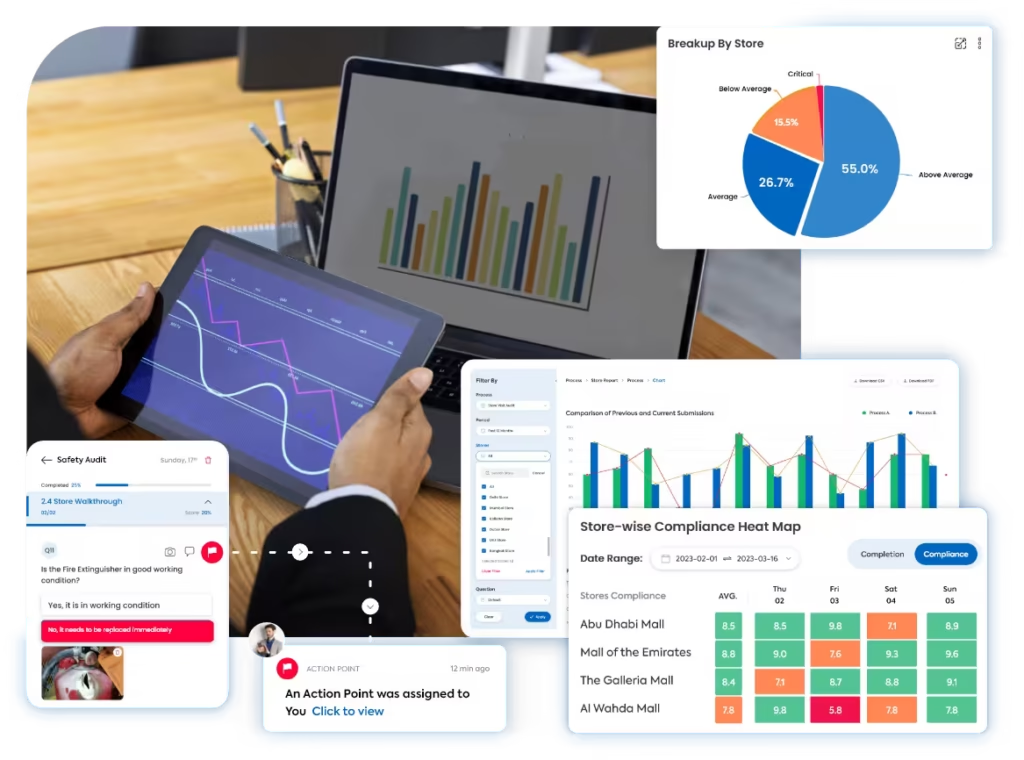
A clearer way to manage food safety and hygiene audits
Taqtics brings food safety standards, mobile evidence, scoring, reports, and corrective actions into one connected workflow for restaurants, QSRs, hotels, cloud kitchens, supermarkets, and food-service teams.
Where manual food safety audits create risk
Select a common gap to see why disconnected checks reduce trust and delay corrective action.
Temperature records are difficult to verify
Chiller, freezer, cooking, cooling, reheating, and holding checks often lack timestamps, location proof, or supporting evidence.
The same hygiene standard is interpreted differently
Handwashing, uniforms, sanitation, storage, and food-handling routines can vary between shifts, auditors, and locations.
Failed food safety checks remain open
When action tracking sits outside the audit, owners, priorities, deadlines, escalations, and closure proof are easily missed.
HQ cannot see repeat food safety risks
Recurring hygiene failures, temperature deviations, allergen risks, pest issues, and overdue actions stay hidden across locations.
What a Food Safety and Hygiene Audit Should Cover
Move through the five coverage areas to review the people, food handling, temperature, sanitation, allergen, documentation, and follow-up controls that matter most.
Personal hygiene and frontline food-safety behaviour
Confirm employees follow the hygiene routines required before and during food preparation and service.
Safe food handling and HACCP discipline
Review the controls that prevent contamination and keep critical preparation processes within approved standards.
Temperature control, receiving, storage, and rotation
Verify the readings and stock practices that protect food throughout receiving, storage, preparation, and service.
Cleaning, sanitation, equipment, pests, and waste
Confirm the physical environment and equipment support safe food production and hygienic operations.
Allergen control, records, and corrective-action readiness
Check whether each location can prevent allergen incidents, demonstrate compliance, and close identified risks.
How Taqtics Digitizes Food Safety Audits
Set the food-safety standard once, guide execution at every location, calculate results automatically, and turn failed checks into accountable follow-up.
Make Every Food Safety Observation Easier to Trust
Verify the location, time, temperature, evidence, score, and follow-up behind every critical finding.
Is hot-held food within the approved temperature and holding-time limit?
Temperature value and station photo requiredAre food-contact surfaces clean and sanitized before use?
Are allergen ingredients labelled and separated correctly?
Validated observations
Confirm where, when, and with what proof every food-safety response was submitted.
Validated observations
Confirm where, when, and with what proof every food-safety response was submitted.
- Geo-fenced and time-bound submissions
- Live photos, comments, and temperature values
- Timestamped location-level audit trail
Standardized scoring
Apply the same instructions, critical limits, answer types, and scoring rules across locations.
Standardized scoring
Apply the same instructions, critical limits, answer types, and scoring rules across locations.
- Question-level instructions and objective answers
- Temperature, numeric, critical, and conditional scoring
- Automated food-safety score calculation
Corrective actions
Assign failed hygiene, temperature, allergen, storage, or sanitation findings and track them to closure.
Corrective actions
Assign failed hygiene, temperature, allergen, storage, or sanitation findings and track them to closure.
- Owners, priorities, and food-safety deadlines
- Escalations for overdue critical actions
- Closure proof and status tracking
Connect audits with corrective action tracking software so failed checks are not left unresolved.
Run Different Checks for Different Food Safety Risks
Food safety is not one checklist. Run targeted programs for daily hygiene, HACCP, sanitation, allergens, storage, and inspection readiness.
Daily Hygiene Checks
Handwashing, uniforms, gloves, sanitizer, workstations, counters, bins, service areas, and washrooms.
Allergen Control Audits
Allergen storage, labelling, staff awareness, cross-contact prevention, menu communication, and incident readiness.
HACCP and CCP Checks
Critical control points, cooking, cooling, reheating, hot holding, cold holding, and verification logs.
Kitchen Sanitation Audits
Prep surfaces, equipment, drains, floors, sinks, cleaning tools, chemicals, and cleaning schedules.
Storage and Rotation Audits
FIFO, FEFO, date labels, expiry, chilled and frozen storage, receiving, and thawing discipline.
Inspection Readiness Audits
Temperature, cleaning, training, pest, calibration, supplier records, and previous action closure.
Food Safety Reports That Show What Needs Attention
Turn food-safety audit data into clear visibility across locations, critical risks, corrective actions, and recurring compliance patterns.
View all report insights
- Food safety score by location
- Strongest and weakest locations
- Temperature deviation and CCP trends
- Hygiene, sanitation, and cleaning gaps
- Allergen, storage, FIFO, and expiry risks
- Pest control, waste, and documentation gaps
- Open vs closed corrective actions
- AI-based recurring pattern detection from historical audit data
Start With a Ready-to-Use Food Safety Audit Checklist
Use structured templates to define hygiene checks, temperature fields, HACCP controls, allergen rules, evidence requirements, scoring, and corrective-action triggers.
See How Restaurant Teams Standardize Brand Execution
Explore how multi-location restaurant, café, QSR, and food-retail teams use Taqtics to standardize audits, improve food-safety and SOP execution, track issues, and strengthen visibility.
Americana Group — KFC Middle East
How Americana digitized quality, food-safety, supplier, and OHS audits across KFC outlets, commissaries, and warehouses while accelerating corrective action.

Barns Café Operational Transformation
How Barns Café replaced paper SOPs and scattered follow-ups with digital checklists, audits, issue routing, training, and asset control across 1,000+ outlets.


Global Supermarket Chains
How supermarket teams digitized store audits, multi-level reviews, corrective actions, inventory checks, planogram execution, and leadership dashboards.
How Food Safety Audits Fit Into a Food Safety Management System
A food safety management system, or FSMS, is the broader framework a food business uses to identify hazards, define controls, monitor critical activities, maintain records, verify performance, and improve food safety over time.
A food safety audit is one of the verification mechanisms inside that broader system. The audit tests whether procedures, hygiene controls, monitoring records, corrective actions, training, and other food-safety requirements are actually being followed at the location being reviewed.
Food safety audit software supports the operational side of an FSMS by digitizing checks, evidence, scoring, records, corrective actions, and audit tracking. It does not replace the organization’s responsibility to define the food-safety plan, applicable legal requirements, hazard controls, and certification framework.
Food Safety Management System
The policies, procedures, hazard controls, monitoring, records, responsibilities, verification activities, and improvement processes used to manage food-safety risk.
Food Safety Audit
A structured review that tests whether defined food-safety controls and procedures are being implemented consistently and supported by reliable evidence.
Food Safety Audit Software
Software used to configure audits, schedule reviews, collect field evidence, calculate scores, track findings, assign corrective actions, and compare results across locations.
What Digital Food Safety Auditing Tools Should Help Teams Do
The most useful audit tools make field observations easier to verify and make follow-up easier to manage across restaurants, hotels, QSRs, cloud kitchens, cafés, and other food-service locations.
Create sections for hygiene, food handling, temperature, allergens, storage, sanitation, pests, records, and other location-specific controls.
Run routine, shift-based, monthly, risk-triggered, internal, supplier, or readiness audits by location, team, or operating frequency.
Record answers, readings, comments, photos, timestamps, documents, and location information against individual findings.
Use critical questions, numeric fields, conditional logic, weighted scores, pass-or-fail rules, and defined evidence requirements.
Turn non-conformities into owned actions with priorities, deadlines, escalation, closure evidence, and follow-up verification.
Compare scores, recurring failures, open risks, action status, and location performance without rebuilding reports manually.
What Happens During a Food Safety Audit?
The exact scope varies by business and standard, but a food safety audit typically moves from preparation and evidence gathering to on-site verification, reporting, corrective action, and follow-up.
Prepare the Audit
Define scope, locations, requirements, previous findings, high-risk processes, records, and responsible auditors.
Inspect On Site
Observe hygiene, food handling, storage, sanitation, equipment, temperatures, employee practices, and physical conditions.
Review Records
Check temperature logs, cleaning records, training evidence, pest records, supplier documents, calibration, and previous corrective actions.
Report Findings
Document compliant controls, non-conformities, evidence, severity, scores, and areas needing immediate containment or action.
Close & Verify
Assign corrective actions, track deadlines and proof, verify completion, and use repeat findings to strengthen the food-safety system.
Types of Food Safety Audits
Food businesses use different audit types depending on who is performing the review and what the organization needs to verify.
Internal Food Safety Audits
Performed by the organization or its representatives to verify internal controls, identify gaps early, and prepare locations for external review.
Supplier or Partner Audits
Used to evaluate suppliers, vendors, commissaries, contractors, or other partners against agreed food-safety and quality requirements.
External or Certification Audits
Performed by independent auditors, customers, certification bodies, or other external organizations against a defined standard or requirement.
Restaurant Food Safety Audits
Focus on live outlet conditions such as personal hygiene, storage, temperatures, cross-contamination, sanitation, allergens, pest control, and records.
Food Safety Audits for Hotels and Restaurants
Can cover kitchens, buffets, banqueting, receiving, storage, room-service preparation, cold chain, sanitation, guest-facing food areas, and corrective action.
Food Safety Compliance Audits
Verify whether defined legal, certification, customer, company, or operating requirements are being implemented and documented consistently.
Track More Than the Final Audit Score
A strong food safety audit tracking process preserves the history behind the score so managers can see where risk is recurring and whether corrective actions are actually being closed.
See which locations completed required audits, which are due, and which have been missed or delayed.
Track failed temperature, hygiene, allergen, sanitation, storage, documentation, or food-handling controls separately from the overall score.
Keep photos, readings, comments, timestamps, location information, reviewer activity, and finding history attached to the audit record.
Monitor action owner, priority, due date, escalation, proof of closure, and re-verification for each failed control.
Compare repeated non-conformities by location, audit type, category, time period, or operating area to identify where additional support is needed.
How Restaurants and Hotels Can Prepare for a Food Safety Audit
Readiness comes from having current procedures, trained teams, complete records, controlled food-safety risks, and evidence that previous issues were corrected.
Train the Team
Make sure employees understand the food-safety procedures relevant to their role and can demonstrate them during live operations.
Keep Documentation Current
Maintain required logs, training records, sanitation records, pest-control records, calibration records, supplier documentation, and previous action history.
Verify High-Risk Areas
Review temperature control, cross-contamination, allergens, storage, expiry, sanitation, pests, employee hygiene, and equipment condition before the audit.
Close Previous Findings
Confirm earlier non-conformities have an owner, completed corrective action, supporting proof, and verification rather than remaining as open audit notes.
Use the Same Audit Standard
Apply the same questions, scoring rules, evidence requirements, and critical-failure logic across locations so results are comparable.
Run Internal Audits Regularly
Use internal food safety audits to identify gaps before external inspections or certification reviews and to verify that controls remain effective.
Food Safety Audit vs Inspection vs Hygiene Audit
These terms are related but not identical. Keeping them distinct helps this page answer informational searches without competing unnecessarily with narrower checklist and inspection pages.
Food Safety Audit Software Questions
What is food safety audit software?
Food safety audit software helps teams inspect hygiene, food handling, temperature logs, HACCP checks, storage, allergens, cleaning, pest control, documentation, and corrective actions across restaurants, QSRs, kitchens, supermarkets, hotels, and food-service locations.
What should a food safety audit include?
A food safety audit should include personal hygiene, cross-contamination controls, temperature logs, receiving, storage, FIFO, allergen control, sanitation, equipment condition, pest control, waste handling, documentation, and corrective actions.
Can Taqtics be used for HACCP and CCP checks?
Yes. Taqtics can be configured for HACCP checks, critical control point monitoring, temperature logs, corrective actions, verification records, and audit-ready reporting.
Can teams capture temperature logs on mobile?
Yes. Teams can capture chiller, freezer, cooking, reheating, cooling, hot holding, cold holding, and display temperatures using numeric fields, timestamps, comments, and photo proof.
Can failed food safety checks create corrective actions?
Yes. Failed hygiene, temperature, allergen, storage, cleaning, pest-control, documentation, or food-handling checks can create actions with owners, deadlines, priorities, escalations, and closure proof.
What is a food safety management system?
A food safety management system is the broader framework used to identify food-safety hazards, define controls, monitor performance, maintain records, verify implementation, manage corrective actions, and continuously improve food-safety practices. Audits are one of the verification activities within that system.
What is food safety audit tracking?
Food safety audit tracking means monitoring the full audit lifecycle, including schedules, completion status, findings, evidence, scores, critical failures, action owners, deadlines, escalations, closure proof, and recurring risk patterns across locations.
What are the main types of food safety audits?
Common types include internal or first-party audits, supplier or second-party audits, external or third-party audits, operational restaurant food safety audits, hygiene audits, HACCP audits, and other compliance audits based on the requirements that apply to the business.
Can food safety audit software be used by hotels and restaurants?
Yes. Hotels and restaurants can use food safety audit software for kitchens, receiving, storage, buffets, food preparation, cold chain, employee hygiene, sanitation, allergens, pest control, guest-facing food areas, records, and corrective actions.
Is a food hygiene audit the same as a food safety audit?
Not exactly. A hygiene audit usually focuses more narrowly on cleanliness, sanitation, personal hygiene, equipment, facilities, waste, and contamination prevention. A food safety audit can include those areas plus food handling, temperature control, allergens, records, traceability, hazard controls, and corrective actions.
What is the difference between a food safety audit and an inspection?
An audit is generally a broader review of systems, processes, records, controls, and implementation over time. An inspection usually focuses more directly on current conditions and compliance at a particular location and point in time. The exact terminology can vary by regulator, certification scheme, or organization.
Can Taqtics generate food safety audit reports automatically?
Yes. Reports can include food-safety scores, hygiene gaps, temperature deviations, allergen risks, storage issues, cleaning gaps, evidence, open actions, overdue risks, and recurring trends.
Make Every Food Safety Audit Reliable and Actionable
Digitize food safety and hygiene audits, verify critical checks with proof, generate reports instantly, and close corrective actions faster across every location.