Temperature-Controlled Storage Audit Software for Reliable Cold-Chain Compliance
Standardize cold-room, chiller, freezer, and temperature-controlled storage inspections across every warehouse. Verify temperature and humidity readings, equipment condition, sensor calibration, product placement, door discipline, alarm readiness, and corrective action for every cold-chain deviation.
A clearer way to protect every temperature-sensitive product
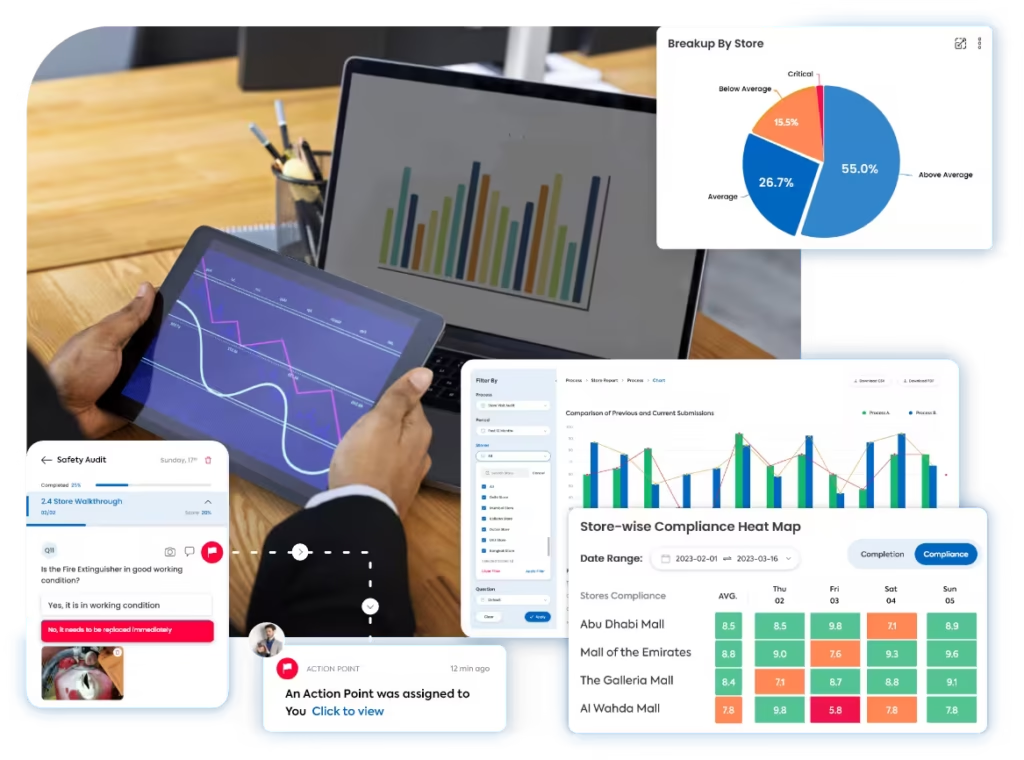
Taqtics connects cold-chain checklists, zone-level readings, equipment inspections, calibration evidence, product-condition checks, alarms, reports, ownership, and corrective actions across every cold room, chiller, freezer, and shift.
Where manual cold-chain inspections break down
Select a common gap to see how disconnected readings and paper logs increase product, compliance, and operational risk.
Cold-room readings are captured differently across shifts
Paper logs and spreadsheets make it difficult to enforce the same reading frequency, approved range, method, and sign-off requirements.
Managers cannot verify where or how a reading was taken
Manual records often separate the temperature value from the storage zone, device, timestamp, product condition, photograph, and inspector.
Temperature deviations are discovered too late
Without connected alerts, inspections, and product records, repeated warm zones, open doors, equipment faults, and alarm failures can remain unnoticed.
Excursions remain open without product and equipment follow-up
When actions sit outside the audit workflow, containment, product assessment, repair, root-cause investigation, approval, and closure evidence are easily missed.
What a Temperature-Controlled Storage Audit Should Cover
Review temperature and humidity control, refrigeration equipment, sensor calibration, product placement, segregation, doors, alarms, backup power, excursions, and corrective actions.
Keep Every Storage Zone Within Its Approved Range
Verify current readings, historical trends, monitoring frequency, device placement, and environmental stability.
Verify Refrigeration and Monitoring Equipment Is Reliable
Inspect cold-storage equipment, sensors, displays, data loggers, and calibration status before they affect product condition.
Protect Temperature-Sensitive Products Through Correct Storage
Review placement, segregation, stock rotation, packaging, clearance, and product condition inside controlled zones.
Control Heat Entry and Maintain Monitoring During Disruption
Inspect doors, curtains, seals, defrost routines, alarms, backup power, and emergency response controls.
Contain, Investigate, and Close Every Temperature Excursion
Connect each deviation with affected stock, immediate controls, technical action, product assessment, approval, and closure.
How Taqtics Digitizes Temperature-Controlled Storage Audits
Set the approved range once, guide teams through every cold-chain check, calculate compliance automatically, and convert deviations into accountable actions.
Make Every Cold-Chain Finding Easier to Verify
Verify the facility, storage zone, reading, approved range, device, product, evidence, score, responsible owner, and closure status behind every cold-chain observation.
Is the current zone temperature within the approved operating range?
Reading and evidence are requiredAre the temperature sensor and display within calibration validity?
Are products positioned with adequate airflow and clearance?
Validated observations
Confirm where, when, and with which device each cold-chain reading and condition was captured.
+
Validated observations
Confirm where, when, and with which device each cold-chain reading and condition was captured.
- Facility, cold room, freezer, chiller, zone, and equipment context
- Geo-verified and timestamped inspection with responsible-user details
- Temperature, humidity, device, sensor, product, batch, and exposure records
- Live photographs, comments, alarm evidence, calibration documents, and trend references
Standardized scoring
Apply consistent ranges, inspection instructions, critical rules, and deviation classifications across facilities.
+
Standardized scoring
Apply consistent ranges, inspection instructions, critical rules, and deviation classifications across facilities.
- Zone- and product-specific approved temperature and humidity ranges
- Compliant, Non-compliant, N/A, and numeric reading controls
- Critical, major, and minor excursion classifications
- Weighted scoring with automatic cold-chain compliance calculation
Corrective actions
Contain affected products and track every cold-chain deviation through approved closure.
+
Corrective actions
Contain affected products and track every cold-chain deviation through approved closure.
- Owners, priorities, deadlines, product holds, and overdue escalations
- Routing to warehouse, quality, maintenance, engineering, supplier, or transport teams
- Product transfer, quarantine, monitoring, repair, investigation, release, or disposal requirements
- Recovery readings, closure evidence, quality approval, and reopening when required
Connect cold-chain audits with corrective action tracking software so temperature deviations are not left unresolved.
Cold-Chain Reports That Show Where Temperature Risk Is Building
Turn audit data into visibility across in-range performance, equipment condition, calibration, product storage, alarms, excursions, affected stock, corrective actions, and recurring cold-chain risk.
View all report insights +
- Overall cold-chain compliance score
- Facility, room, freezer, chiller, and zone performance
- In-range versus out-of-range readings
- Temperature and humidity trend exceptions
- Hot and cold spot findings
- Refrigeration equipment defects
- Sensor and calibration non-compliance
- Door-open and seal-condition findings
- Alarm, notification, and escalation failures
- Backup power and emergency readiness
- Blocked airflow and product-placement issues
- Product segregation and condition findings
- Excursion duration and severity
- Affected product, batch, and quantity
- Held, released, transferred, and disposed stock
- Open, overdue, and completed corrective actions
- Average excursion-resolution time
- AI-detected recurring cold-chain risk patterns
Start With a Ready-to-Use Temperature-Controlled Storage Audit Checklist
Define approved ranges, reading frequency, equipment checks, calibration, alarm tests, product controls, evidence, deviation severity, scoring, and corrective-action triggers inside Taqtics.
Temperature-Controlled Storage Audit Software Questions
What is temperature-controlled storage audit software?+
Temperature-controlled storage audit software helps logistics and quality teams inspect cold rooms, freezers, chillers, refrigeration equipment, monitoring devices, product storage, alarms, excursions, and corrective actions through one digital workflow.
What should a temperature-controlled storage audit cover?+
An audit can cover temperature and humidity, refrigeration equipment, sensors, calibration, alarms, backup power, door seals, airflow, product placement, segregation, stock rotation, excursions, affected products, and action closure.
Can audits be assigned by warehouse, cold room, freezer, and shift?+
Yes. Audits can be assigned by facility, warehouse, cold room, freezer, chiller, storage zone, equipment, product category, shift, role, frequency, and deadline.
Can inspectors record numeric temperature and humidity readings?+
Yes. Questions can capture numeric readings, approved limits, device details, sensor ID, date, time, product information, photographs, comments, and supporting documents.
Can Taqtics verify thermometer and sensor calibration?+
Yes. Teams can record device IDs, calibration dates, expiry dates, certificates, reference checks, accuracy results, and corrective actions for overdue or failed devices.
Can out-of-range readings create corrective actions automatically?+
Yes. Failed or critical readings can create actions for product hold, transfer, equipment inspection, repair, monitoring, root-cause investigation, quality review, release, or disposal.
Can photographs and evidence be required for temperature deviations?+
Yes. Taqtics can require live photographs, comments, readings, device information, product details, alarm records, calibration evidence, and closure proof.
Can excursions be classified by severity and duration?+
Yes. Teams can classify deviations as critical, major, or minor based on range, exposure duration, product sensitivity, affected quantity, alarm status, and operational impact.
Can cold-chain performance be compared across facilities?+
Yes. Reports can compare facilities, rooms, freezers, chillers, zones, shifts, equipment, product categories, in-range readings, excursions, and corrective-action performance.
Can Taqtics identify recurring cold-chain risks?+
Yes. Historical audit data can highlight repeated temperature rises, alarm failures, calibration gaps, door-seal issues, blocked airflow, equipment defects, and recurring deviations by room, shift, equipment, or product category.
Make Every Cold-Chain Audit Reliable and Actionable
Digitize temperature-controlled storage inspections, verify readings and equipment, contain excursions, protect affected products, and close corrective actions across every controlled storage zone.