How to Create a Restaurant Business Plan?

A restaurant business plan turns an idea into a structured plan for launching, operating, funding, and growing a restaurant.
It explains what the restaurant will be, who it will serve, how it will compete, how the operation will work, how much capital it requires, and how the business expects to become financially sustainable.
For a new restaurant, the business plan can help organize decisions before money is committed. For an existing restaurant, it can become a working document for reviewing strategy, operations, financial performance, staffing, marketing, and future growth.
This guide explains how to create a restaurant business plan step by step, what each section should contain, and how to turn the written plan into an operating model that teams can actually execute.
What is a Restaurant Business Plan?
A restaurant business plan is a written document that describes the restaurant concept, target market, competitive position, menu and service model, marketing strategy, management structure, day-to-day operations, financial projections, funding requirements, and long-term objectives.
Think of it as the blueprint for the restaurant. It forces the owner to connect the creative idea — the cuisine, experience, name, design, and brand — with the practical decisions required to open and run the business.
A useful business plan should answer questions such as:
- What type of restaurant are you opening?
- Who is the target customer?
- Why will customers choose this restaurant instead of nearby alternatives?
- What menu and service model will you offer?
- Where will the restaurant operate?
- Who will manage and staff it?
- How will daily operations work?
- How will you attract customers?
- How much will the restaurant cost to launch and operate?
- How much funding is required?
- When can the restaurant reasonably reach break-even and profitability?
Why is a Restaurant Business Plan Important?
A strong plan is useful because restaurant decisions are interconnected. The concept influences the target customer. The target customer influences the menu, pricing, location, service style, marketing, and design. Those decisions then affect staffing, equipment, startup costs, working capital, and expected revenue.
Create a clear roadmap
The plan helps turn a restaurant idea into specific objectives, milestones, responsibilities, budgets, and decisions. It reduces the risk of making major choices in isolation.
Test the concept before launch
Market research, competitor analysis, pricing, operating assumptions, and financial projections can expose weaknesses before the business commits fully to the idea.
Support funding conversations
Potential lenders or investors generally need more than enthusiasm for the concept. A structured plan helps explain the opportunity, required capital, operating model, financial assumptions, and how the founders expect to use the funds.
Allocate resources more deliberately
Planning staffing, equipment, suppliers, marketing, rent, food costs, technology, and other expenses together makes it easier to understand what the restaurant will need to operate.
Keep the business plan useful after opening
The plan should not become a document that is forgotten after funding or launch. Review it when market conditions, operating costs, customer behaviour, growth targets, or the restaurant model changes.
What Should a Restaurant Business Plan Include?
A complete restaurant business plan usually combines ten core areas. The depth of each section will depend on whether the plan is for internal planning, financing, investment, a new location, or a larger multi-unit concept.

- Executive summary
- Restaurant concept and company description
- Market and competitor analysis
- Location and restaurant design
- Menu, pricing, and service model
- Organization and staffing
- Restaurant operations plan
- Marketing and launch strategy
- Financial plan and funding
- Legal, licensing, safety, and compliance considerations
1. Define the Restaurant Concept and Company Description
Start by clearly explaining what the restaurant is. Your concept should connect the cuisine, dining format, customer experience, service model, price point, atmosphere, and reason the restaurant should exist in the market.
Define the concept
Describe the restaurant type — for example, QSR, café, casual dining, fine dining, cloud kitchen, bakery, specialty concept, or another format — and explain the experience you intend to create.
Clarify the value proposition
Explain what makes the restaurant meaningfully different. The differentiator could come from the menu, convenience, price, service, experience, location, sourcing philosophy, format, specialization, or a combination of these factors.
Develop the brand identity
The restaurant name, visual identity, tone of communication, décor, menu presentation, and customer experience should reinforce the same concept. Brand choices should make sense for the target customer rather than being designed independently from the business model.
Describe ownership and management
Include the proposed ownership structure, founders, key management roles, and any relevant experience that supports the concept.
2. Research the Target Market and Competition
The market analysis should demonstrate that the restaurant is designed for a real customer need rather than only for the founder’s personal preference.

Define the target customer
Study the likely customer’s age, income, lifestyle, dining habits, dietary preferences, spending behaviour, location, and reasons for choosing one restaurant over another.
The target customer should influence menu design, pricing, service style, marketing channels, hours of operation, location, and ambience.
Analyze local competitors
Review nearby restaurants serving the same customer or competing for the same dining occasion. Compare:
- menu and cuisine;
- pricing;
- service style;
- location;
- customer experience;
- reviews and recurring complaints;
- promotions and marketing;
- strengths and weaknesses.
Identify market gaps
Look for customer needs that existing restaurants do not serve particularly well. A market gap might involve cuisine, dietary needs, delivery, convenience, price point, operating hours, service experience, location, or another unmet expectation.
Use SWOT analysis to sharpen the strategy
A simple strengths, weaknesses, opportunities, and threats analysis can help connect internal capabilities with external market conditions.
- Strengths: advantages such as an experienced chef, unique menu, strong location, supplier access, or recognizable concept.
- Weaknesses: limitations such as limited capital, inexperienced management, high operating costs, or staffing challenges.
- Opportunities: customer trends, underserved areas, new delivery channels, partnerships, or growth in a specific dining segment.
- Threats: strong competitors, rising input costs, regulatory change, labour shortages, or shifts in local demand.
3. Plan the Location, Layout, and Ambience
The location and physical design should support both customer demand and operational efficiency.
Choosing a location
Consider customer accessibility, visibility, foot traffic, parking or transport access, nearby demand generators, local demographics, rent, competition, delivery radius, and any operational restrictions attached to the site.
Designing the restaurant layout
The layout should support efficient movement for customers and employees. Think through entrance and waiting areas, seating, kitchen and preparation zones, service and pickup areas, storage, waste flow, restrooms, staff movement, delivery routes, accessibility, and safety.
Planning the ambience
Lighting, music, furniture, décor, colour, signage, and the overall atmosphere should reinforce the concept and the expectations of the intended customer.
4. Build the Menu, Pricing, and Service Model
The menu is both a customer-facing product and a major operational driver.
Align the menu with the concept
Choose dishes that fit the cuisine, positioning, kitchen capability, ingredient availability, target customer, and intended dining experience.
Build menu economics
Estimate ingredient costs, preparation requirements, portion sizes, waste, labour requirements, and expected selling price for each important menu category.
A balanced menu should give customers sufficient choice without creating unnecessary purchasing, training, preparation, inventory, and waste complexity.
Define the service model
Explain whether service will be counter-based, table service, self-service, takeaway, drive-through, delivery-led, buffet, hybrid, or another format. The service model influences staffing, technology, floor design, kitchen flow, and operating procedures.
5. Create the Organization and Staffing Plan
Explain who will run the restaurant and how responsibilities will be divided.

Depending on the format, roles may include restaurant or general managers, shift managers, kitchen leaders, cooks, servers, hosts, cashiers, bartenders, cleaning teams, and inventory or receiving responsibility.
The plan should cover staffing levels, reporting structure, responsibilities, recruitment, onboarding, training, scheduling, compensation assumptions, and employee-retention considerations.
6. Write the Restaurant Operations Plan
The operations plan explains how the restaurant will function once the doors open. This is the point where the business plan moves from concept to execution.
Map the operating day
Document what should happen before opening, during service, at shift changes, after service, and during closing.
Typical operating areas include:
- opening readiness;
- kitchen preparation;
- food safety and hygiene;
- receiving and storage;
- inventory checks;
- service readiness;
- cleaning schedules;
- customer service;
- cash and POS controls;
- equipment checks;
- maintenance and issue reporting;
- shift handovers;
- closing procedures.
Plan inventory and supplier management
Explain the purchasing process, key suppliers, delivery schedules, receiving controls, storage requirements, inventory monitoring, and how the restaurant will respond to shortages or supplier disruption.
Define quality-control processes
Describe how food quality, preparation, portioning, presentation, service, hygiene, and customer experience will be checked against the restaurant’s standards.
Also explain how operational problems will be reported, assigned, escalated, and resolved.
7. Create the Restaurant Marketing and Launch Plan
Explain how the restaurant will generate awareness, attract first-time customers, and encourage repeat visits.
Define the positioning
The marketing plan should clearly communicate the restaurant’s concept, value proposition, customer segment, and why the experience is relevant to that audience.
Choose marketing channels
Depending on the restaurant, the plan may include social media, local search, email or messaging, influencer partnerships, loyalty programmes, delivery-platform visibility, local events, PR, paid advertising, and launch promotions.
Plan the launch
Consider whether you will use a soft opening before the full launch. A controlled soft opening can help test kitchen flow, service, staffing, menu execution, and guest feedback before operating at full volume.
8. Build the Restaurant Financial Plan
The financial plan connects the concept and operating model to financial reality.
Estimate startup costs
Possible startup costs include deposits, fit-out, equipment, furniture, signage, licences, professional fees, opening inventory, technology, pre-opening payroll, launch marketing, and working capital.
Create the operating budget
Estimate fixed and variable expenses such as rent, food and beverage costs, labour, utilities, technology, maintenance, marketing, insurance, delivery commissions, professional services, and other overhead.
Forecast sales and revenue
Build sales assumptions from expected customer volume, average transaction value, seating capacity, table turns where relevant, opening hours, delivery demand, seasonality, and the ramp-up period after launch.
Prepare core financial statements
The plan may include projected profit and loss statements, cash-flow statements, break-even analysis, capital expenditure, working-capital requirements, and funding requirements.
Explain how the restaurant will be funded
Funding may come from founder capital, bank financing, investors, partners, crowdfunding, or other sources. Explain how much funding is required, what it will be used for, and how the financing structure affects ownership or repayment obligations.
9. Address Legal, Licensing, Safety, and Compliance Requirements
Legal and regulatory requirements depend on the location and restaurant format, so the business plan should identify the specific licences, permits, registrations, insurance, and food-safety obligations that apply to the proposed restaurant.
Common planning areas can include business registration, food-service and health permits, liquor licensing where applicable, fire and safety approvals, employee requirements, insurance, food-handling and sanitation standards, facility safety, recordkeeping, and inspection readiness.
Use the relevant local authority or professional adviser to verify exact requirements rather than relying on a generic business-plan template for legal guidance.
10. Write the Executive Summary Last
The executive summary appears first in the finished business plan, but it is often easier to write after the rest of the plan has been completed.
Include the restaurant name and proposed location, concept and service model, target customer, market opportunity, competitive advantage, management team, high-level operating strategy, marketing approach, key financial projections, funding requirement, and long-term objectives.
Keep the executive summary clear enough that a reader can understand the concept and why the business is worth examining before reading the full plan.
How to Review and Finalize a Restaurant Business Plan
Check whether the sections agree with each other
The concept, customer, menu, pricing, location, staffing, operating model, marketing, and financial assumptions should tell one consistent story.
Challenge the assumptions
Review whether revenue assumptions are realistic, whether costs are complete, whether staffing matches operating hours, and whether the proposed location and price point make sense for the target customer.
Get external feedback
Where appropriate, ask experienced operators, mentors, accountants, advisers, potential investors, or other relevant reviewers to challenge the plan and identify gaps.
Update the plan as the restaurant changes
A restaurant business plan should remain a working document. Review it periodically and whenever there is a major change in the market, location strategy, menu, financing, operating model, expansion plan, or cost structure.
Common Restaurant Business Plan Mistakes to Avoid
- Overly optimistic financial projections. Build forecasts around defensible assumptions rather than only best-case performance.
- Weak market research. A good concept still needs a clear customer and a realistic understanding of local competition.
- An unclear value proposition. Readers should understand why the restaurant deserves a place in the market.
- An incomplete operations plan. The plan should explain how the restaurant will function after launch, not only how it will look.
- Ignoring staffing requirements. Labour needs, responsibilities, training, and retention affect both service quality and financial performance.
- Underestimating working capital. Opening costs are only part of the funding requirement.
- Writing the plan only for investors. It should also help the founders and management team make better operating decisions.
- Never updating it. A plan loses value when assumptions change but the document does not.
Restaurant Business Plan Checklist
Before you call the plan complete, confirm that it includes:
- Executive summary
- Restaurant concept and value proposition
- Ownership and company description
- Target customer
- Market and competitor analysis
- SWOT analysis
- Location and layout plan
- Menu and pricing strategy
- Service model
- Organization and staffing plan
- Restaurant operations plan
- Supplier and inventory approach
- Quality-control process
- Marketing and launch strategy
- Startup budget
- Revenue forecast
- Projected P&L and cash flow
- Break-even assumptions
- Funding requirement
- Legal, licensing, insurance, and compliance requirements
- Key milestones and review dates
Restaurant Business Plan FAQs
What is the purpose of a restaurant business plan?
A restaurant business plan explains the restaurant concept, target market, operating model, marketing strategy, management structure, financial projections, and funding requirements. It helps owners organize decisions and can also support conversations with lenders or investors.
What should be included in a restaurant business plan?
Typical sections include an executive summary, company and concept description, market analysis, location, menu and service model, staffing, operations, marketing, financial projections, funding, and legal or compliance considerations.
When should you create a restaurant business plan?
Create the plan before opening or committing major capital. Existing restaurants can also use a business plan when reviewing strategy, seeking funding, expanding to additional locations, changing the concept, or planning major operational changes.
How often should a restaurant business plan be updated?
Review it periodically — often at least annually — and whenever major assumptions change, such as the menu, target market, operating costs, location, funding structure, expansion strategy, or business model.
What is the operations section of a restaurant business plan?
The operations section explains how the restaurant will run day to day. It can cover opening and closing routines, kitchen workflow, food safety, suppliers, inventory, staffing responsibilities, customer service, cleaning, maintenance, equipment, quality control, and issue resolution.
Should the executive summary be written first?
It appears first in the finished plan, but it is often easier to write last because the other sections provide the information needed to summarize the concept, market, operations, team, financial projections, and funding requirement accurately.
Conclusion
A restaurant business plan is most useful when it connects the restaurant idea to the realities of the market, operation, staffing, finances, and customer experience.
Define the concept clearly. Research the market. Build the menu and pricing around real economics. Plan how the restaurant will operate every day. Create realistic financial projections. Understand the legal and food-safety requirements that apply to the location. Then keep reviewing the plan as the business changes.
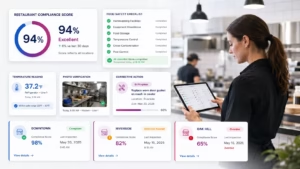
Once the restaurant opens, the written plan needs to become repeatable execution. Taqtics Restaurant Management Software helps multi-location restaurant teams digitize recurring tasks, audits, corrective actions, training, and operational visibility across outlets.
About the Author