Material Handling Equipment Audit Software for Safer Equipment Operations
Standardize inspections across forklifts, pallet trucks, reach trucks, stackers, conveyors, dock equipment, and other warehouse handling assets. Verify equipment condition, operator readiness, safety devices, maintenance status, and defect closure before unsafe equipment disrupts operations.
A clearer way to inspect every handling asset
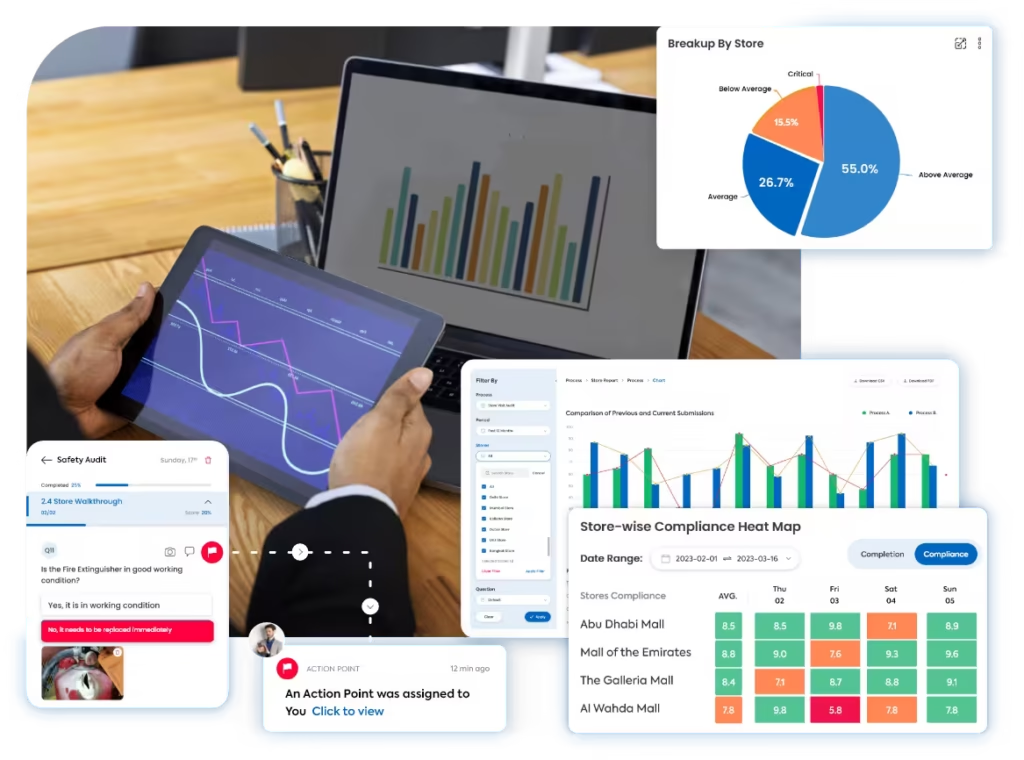
Taqtics connects equipment inspection templates, asset-level observations, photographic evidence, safety scoring, maintenance actions, and return-to-service approval across every warehouse, dock, yard, and operating shift.
Where manual equipment inspections break down
Select a common gap to see why paper checks and disconnected defect reports make equipment risk difficult to verify and control.
The same equipment receives different inspection outcomes
Without clear questions, defect definitions, and critical-failure rules, operators may interpret tyre wear, fork damage, leaks, warning lights, and safety-device condition differently.
Maintenance teams cannot confirm which asset failed
Manual reports often separate the defect from the asset ID, equipment type, location, operator, hour meter, inspection time, photograph, and operating condition.
Inspection findings do not reliably trigger repair or service
Hydraulic leaks, damaged tyres, worn forks, battery issues, brake defects, and overdue servicing may remain outside the maintenance workflow.
Equipment can return to operation without approved repair evidence
When isolation, repair, testing, and reviewer approval are tracked separately, unsafe equipment may be released before the defect is fully resolved.
What a Material Handling Equipment Audit Should Cover
Move through five equipment areas to verify asset identity, structural condition, operating controls, safety systems, operator readiness, maintenance status, and defect closure.
Confirm the Correct Asset Is Ready for Inspection
Verify the equipment identity, documentation, inspection status, and operating authorization before the asset is used.
Inspect the Physical and Mechanical Condition of the Equipment
Identify damage, wear, leakage, instability, and component failure before equipment enters operation.
Verify That Operating Controls and Safety Devices Work Correctly
Test the functions that allow the operator to move, stop, lift, warn others, and respond safely.
Confirm the Operator and Work Area Support Safe Equipment Use
Review operator authorization and the conditions surrounding equipment movement, charging, parking, and load handling.
Turn Equipment Defects Into Controlled Maintenance Actions
Classify the defect, prevent unsafe use, route the repair, and verify testing before the asset returns to operation.
How Taqtics Digitizes Material Handling Equipment Audits
Set the inspection standard once, guide operators and inspectors through every asset check, classify defects automatically, and control repair and return-to-service approval.
Make Every Equipment Finding Easier to Verify
Verify the asset, equipment type, location, shift, operator, inspection time, defect, evidence, score, maintenance owner, and return-to-service status behind every finding.
Are the forks, mast, chains, carriage, and load backrest free from visible damage?
Evidence is required for a failed responseDo the brakes, steering, horn, lights, beacon, and reverse alarm operate correctly?
Is the battery, LPG, fuel, and hydraulic system secure and free from leakage?
Validated observations
Confirm exactly which asset was inspected and preserve the evidence supporting every equipment finding.
+
Validated observations
Confirm exactly which asset was inspected and preserve the evidence supporting every equipment finding.
- Warehouse, area, equipment type, asset ID, serial number, and hour-meter context
- Geo-verified and timestamped inspection with operator or inspector details
- Live photographs of components, controls, warning devices, leaks, wear, and damage
- Shift, attachment, load, incident, service, and defect references where required
Standardized scoring
Apply the same inspection instructions, defect definitions, critical-failure rules, and scoring logic across assets, sites, and shifts.
+
Standardized scoring
Apply the same inspection instructions, defect definitions, critical-failure rules, and scoring logic across assets, sites, and shifts.
- Equipment-specific condition standards and question-level guidance
- Compliant, Non-compliant, and N/A answer rules
- Critical, major, and minor equipment-defect classifications
- Weighted scoring with automatic out-of-service triggers
Corrective actions
Assign equipment defects and track isolation, repair, testing, and return-to-service approval through closure.
+
Corrective actions
Assign equipment defects and track isolation, repair, testing, and return-to-service approval through closure.
- Owners, priorities, deadlines, isolation status, and overdue escalations
- Routing to warehouse, maintenance, EHS, fleet, vendor, or rental-provider teams
- Repair, replacement, servicing, tagging, lockout, testing, or operator retraining requirements
- Closure evidence, technician notes, reviewer approval, reinspection, and reopening when required
Connect equipment audits with corrective action tracking software so critical defects are not left unresolved.
Equipment Reports That Show Where Handling Risk Is Increasing
Turn inspection data into visibility across equipment condition, safety devices, critical defects, maintenance actions, operator compliance, return-to-service status, and recurring asset risks.
View all report insights +
- Overall material handling equipment compliance score
- Site, department, equipment-type, and asset-level performance
- Fork, mast, chain, carriage, and attachment defects
- Tyre, wheel, and wheel-nut findings
- Brake, steering, and control failures
- Horn, light, beacon, alarm, and visibility-device defects
- Seat-belt, interlock, guard, and presence-sensor findings
- Battery, charging, LPG, fuel, and hydraulic issues
- Leaks, fluid levels, and overheating findings
- Capacity-plate and documentation gaps
- Operator authorization and PPE compliance
- Operating-area and pedestrian-control gaps
- Open, overdue, and completed maintenance actions
- Out-of-service and conditional-use equipment
- Repair, test, and return-to-service status
- Average equipment-defect closure time
- Repeat defects by asset, model, shift, and location
- AI-detected equipment reliability and safety patterns
Start With a Ready-to-Use Material Handling Equipment Audit Checklist
Define asset details, component checks, safety-device tests, operator requirements, defect severity, evidence rules, maintenance actions, and return-to-service controls inside Taqtics.
Material Handling Equipment Audit Software Questions
What is material handling equipment audit software?+
Material handling equipment audit software helps logistics teams inspect forklifts, pallet trucks, reach trucks, stackers, conveyors, dock equipment, attachments, safety systems, maintenance status, and corrective actions through one digital workflow.
What equipment can be inspected with Taqtics?+
Teams can configure inspections for forklifts, reach trucks, order pickers, pallet trucks, stackers, tow tractors, conveyors, dock levellers, scissor lifts, lifting attachments, and other warehouse handling assets.
What should a material handling equipment audit cover?+
An audit can cover asset identity, forks and mast, chains and attachments, tyres, wheels, brakes, steering, controls, warning devices, power systems, hydraulics, operator readiness, maintenance status, and return-to-service approval.
Can inspections be assigned by asset, equipment type, and shift?+
Yes. Inspections can be assigned by site, department, equipment type, asset ID, operator role, shift, frequency, service interval, hour-meter trigger, and deadline.
Can critical equipment defects trigger an out-of-service status?+
Yes. Critical failures can trigger immediate alerts, isolation instructions, out-of-service tagging, equipment holds, priority maintenance, escalation, and mandatory reinspection.
Can inspectors capture photographs, hour-meter readings, and defect comments?+
Yes. Questions can require live photographs, comments, asset details, hour-meter readings, fluid levels, tyre condition, component measurements, operator details, and supporting service documents.
Can failed checks create maintenance actions automatically?+
Yes. Failed or critical checks can create maintenance actions with owners, priorities, deadlines, repair instructions, isolation status, escalation rules, and closure-evidence requirements.
Can repair evidence be approved before equipment returns to service?+
Yes. Reviewers can assess technician notes, repair photographs, replaced parts, test results, functional checks, and reinspection evidence before approving return to service.
Can equipment performance be compared across sites and asset types?+
Yes. Reports can compare warehouses, departments, equipment types, asset models, individual assets, shifts, operators, defect categories, maintenance closure, and historical compliance trends.
Can Taqtics identify recurring equipment defects?+
Yes. Historical audit data can surface repeated tyre wear, fork damage, leaks, alarm failures, battery issues, brake defects, safety-device failures, and repeat maintenance by asset, model, location, or shift.
Make Every Equipment Inspection Reliable and Actionable
Digitize material handling equipment audits, verify defects, isolate unsafe assets, assign maintenance, and control return-to-service approval across every warehouse operation.