Mastering restaurant compliance, the complete guide
Restaurant compliance is the system of controls, checks, documentation, training, and corrective actions a restaurant uses to meet food safety requirements, workplace regulations, internal operating procedures, and brand standards. For multi-unit operators, compliance also requires visibility across locations so problems are identified and corrected before they become repeat failures.
Running one compliant restaurant is challenging.
Running 20, 50, or 500 locations under the same operating standards is a completely different problem.
Every outlet has different managers, shift teams, equipment conditions, customer volumes, and local operating pressures. Yet headquarters expects every location to follow the same food safety procedures, complete the same critical checks, maintain the same brand standards, and be ready when an inspector walks through the door.
That is where restaurant compliance becomes an operational management problem, not simply a documentation problem.
A temperature log sitting in a folder does not prove that the right action was taken when a refrigerator went outside its permitted range. A cleaning checklist marked complete does not prove that the kitchen was actually cleaned. An audit score does not tell leadership whether failed items were eventually corrected.
For multi-unit restaurant operators, the real goal is to build a restaurant compliance system that answers five questions:
- Was the required process completed?
- Was it completed correctly and at the right time?
- Is there evidence that it happened?
- What happened when something failed?
- Is the same problem appearing in other locations?
Modern restaurant compliance management connects all five.
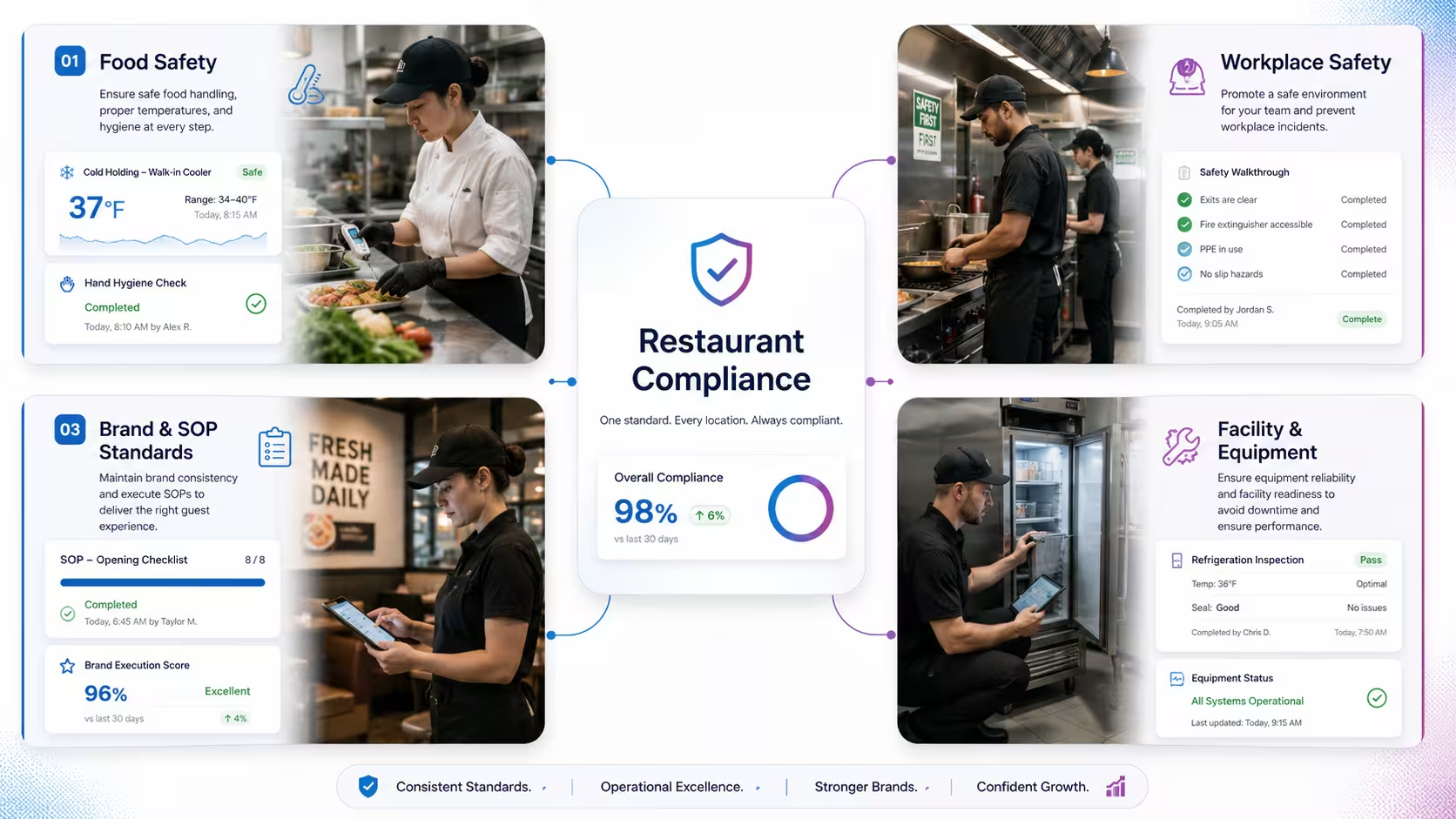
The 4 Pillars of Restaurant Compliance in Multi-Location Operations
Multi-unit restaurant compliance normally spans four connected areas: food safety, workforce and workplace requirements, brand and SOP execution, and facility or equipment standards. Strong compliance programs connect everyday execution, supporting evidence, exceptions, corrective actions, and management visibility instead of treating each requirement as a separate paperwork exercise.
1. Food Safety and Health Code Standards
Food safety is the most visible part of restaurant compliance because failures can directly affect customers and trigger regulatory action.
In the United States, the FDA Food Code provides a model framework for safeguarding public health in retail and food-service establishments. Actual enforceable requirements depend on the state and local jurisdiction operating the inspection program.
HACCP, or Hazard Analysis and Critical Control Point, is a preventive food-safety system that identifies biological, chemical, and physical hazards and establishes controls at points where those risks can be prevented, eliminated, or reduced.
For restaurant teams, this translates into operational controls such as:
- Receiving food at approved conditions
- Cold and hot holding temperature checks
- Cooking and reheating controls
- Cooling procedures
- Cross-contamination prevention
- Handwashing and personal hygiene
- Allergen controls
- Cleaning and sanitizing
- Pest-management checks
- Employee health procedures
- Safe food storage and labeling
The operational challenge is ensuring these controls happen consistently across every shift and every location, not simply documenting them inside an SOP manual.
2. Labor and Workplace Safety Compliance
Restaurant labor compliance extends beyond schedules and payroll. Operators must consider workplace safety, youth employment restrictions, applicable wage and hour rules, and state or local requirements. Multi-state restaurant groups therefore need location-specific controls instead of assuming one national checklist can cover every operating jurisdiction.
Restaurants expose employees to hot equipment, sharp tools, slippery surfaces, electrical hazards, repetitive movement, heavy lifting, cleaning chemicals, and other workplace risks.
Operational teams need clear procedures for identifying hazards, reporting incidents, confirming required checks, and escalating problems that cannot be corrected at the restaurant level.
This matters because compliance cannot live only with HR.
Restaurant managers need simple workflows that translate regulations and company policies into clear actions at the unit level.
3. Brand Consistency and Franchise SOP Adherence
Food can be safe while the restaurant still fails operationally.
A customer may enter a location where:
- Opening standards were missed.
- The menu board is outdated.
- Uniform standards are inconsistent.
- Promotional material is incorrectly installed.
- Restrooms have not been inspected.
- Drive-through procedures are being skipped.
- Service standards vary by shift.
- Closing procedures are incomplete.
For franchisors, these variations become more difficult to control because operating responsibility is distributed across different owners and management teams.
A structured restaurant compliance program should therefore include food safety SOP checklists for restaurants alongside operational, customer experience, brand, and franchise standards.
Compliance is not simply about passing an inspection. It is about making sure the operating model customers were promised is actually being executed.
4. Facility and Equipment Maintenance Compliance
Facility compliance connects equipment condition, sanitation, preventive maintenance, safety, and food quality. A broken refrigerator, damaged electrical cable, blocked handwashing station, malfunctioning fryer, or overdue safety check can quickly become an operational or regulatory problem if locations lack a structured method for reporting and resolving it.
Multi-unit operators therefore need to track more than whether an issue was noticed.
They need to know:
What failed → who owns it → how severe it is → when it must be fixed → whether proof of repair was submitted → whether the issue keeps recurring.
That transition from detection to verified closure is one of the biggest differences between simply conducting audits and actually managing compliance.
Turn compliance standards into daily execution.
Schedule food safety checks, SOPs, audits, and corrective actions across every restaurant, with proof and accountability built into the workflow.
Why Paper Logs and One-Size-Fits-All Audit Tools Break Down at Scale
Paper fails because it records answers without creating real-time visibility or accountability. Digital audit tools solve much of that problem, but multi-unit operators should evaluate more than form creation. The critical question is whether the platform connects recurring execution, evidence, audits, corrective actions, organizational responsibility, and location-level analytics in one workflow.
The Hidden Cost of “Pencil-Whipping” Paper Checklists
A paper checklist can tell you that someone ticked a box.
It cannot reliably tell you:
- Where the checklist was completed.
- Whether the person was physically at the restaurant.
- Whether the check happened at the required time.
- Whether a photo was captured as proof.
- Whether the same image was reused.
- Whether a failed item generated an action.
- Whether the action was eventually closed.
- Which locations repeatedly fail the same standard.
This creates what operations teams often experience as compliance without visibility.
Head office sees completion percentages.
The actual condition of the restaurants can be very different.
The problem gets worse when records are spread across clipboards, spreadsheets, email threads, shared drives, and messaging groups.
By the time operations leaders discover a pattern, the same failure may already exist across several outlets.
Taqtics vs. SafetyCulture vs. Jolt vs. Paper
SafetyCulture and Jolt are established digital platforms, so evaluating restaurant audit software should not be reduced to whether a platform can create a checklist.
The more useful comparison is how closely each operating model matches the needs of your restaurant group.
| Capability | Taqtics | SafetyCulture | Jolt | Paper |
|---|---|---|---|---|
| Core positioning | Multi-location operations, audits, SOPs, issues and compliance | Broad inspection and safety platform | Restaurant operations platform | Manual documentation |
| Digital checklists | Yes | Yes | Yes | No |
| Photo evidence | Yes | Yes | Yes, depending on workflow | Manual attachments only |
| Restaurant audit workflows | Yes | Yes | Yes | Manual |
| Corrective action tracking | Automated workflows and escalation capabilities | Corrective actions and notifications | Operational follow-up depends on workflow | Manual |
| Multi-location structure | Designed around location, department, role and operating hierarchy | Configurable enterprise structure | Multi-location restaurant management | Manual |
| Issue management beyond audits | Dedicated issue workflows | Actions and issue workflows | Depends on use case and configuration | No |
| Broader operating workflows | Audits, SOPs, issues, training, assets, VM and reporting | Strong inspection and safety workflows | Restaurant checklists, scheduling, labeling and food safety workflows | Separate manual processes |
| Best evaluation fit | Groups wanting an integrated multi-location operations and compliance layer | Organizations prioritizing flexible inspections across multiple industries | Restaurant groups prioritizing restaurant-specific operational workflows | Small or low-complexity operations |
This distinction matters when restaurant groups evaluate SafetyCulture alternatives for restaurants or Jolt software alternatives for multi-unit franchises.
The right question is not:
“Which software has checklists?”
Almost every modern platform does.
The better questions are:
- Can this system model our operating hierarchy?
- Can failed standards automatically reach the right person?
- Can we track corrective actions until closure?
- Can we compare recurring failures across locations?
- Can teams use the same environment for daily SOP execution and formal audits?
Those questions reveal the operational difference much faster.
Stop chasing failed audit points manually.
With Taqtics, failed standards can trigger corrective actions, owners, deadlines, escalation, and closure proof automatically.
Step-by-Step Framework for Strong Health Inspection Readiness
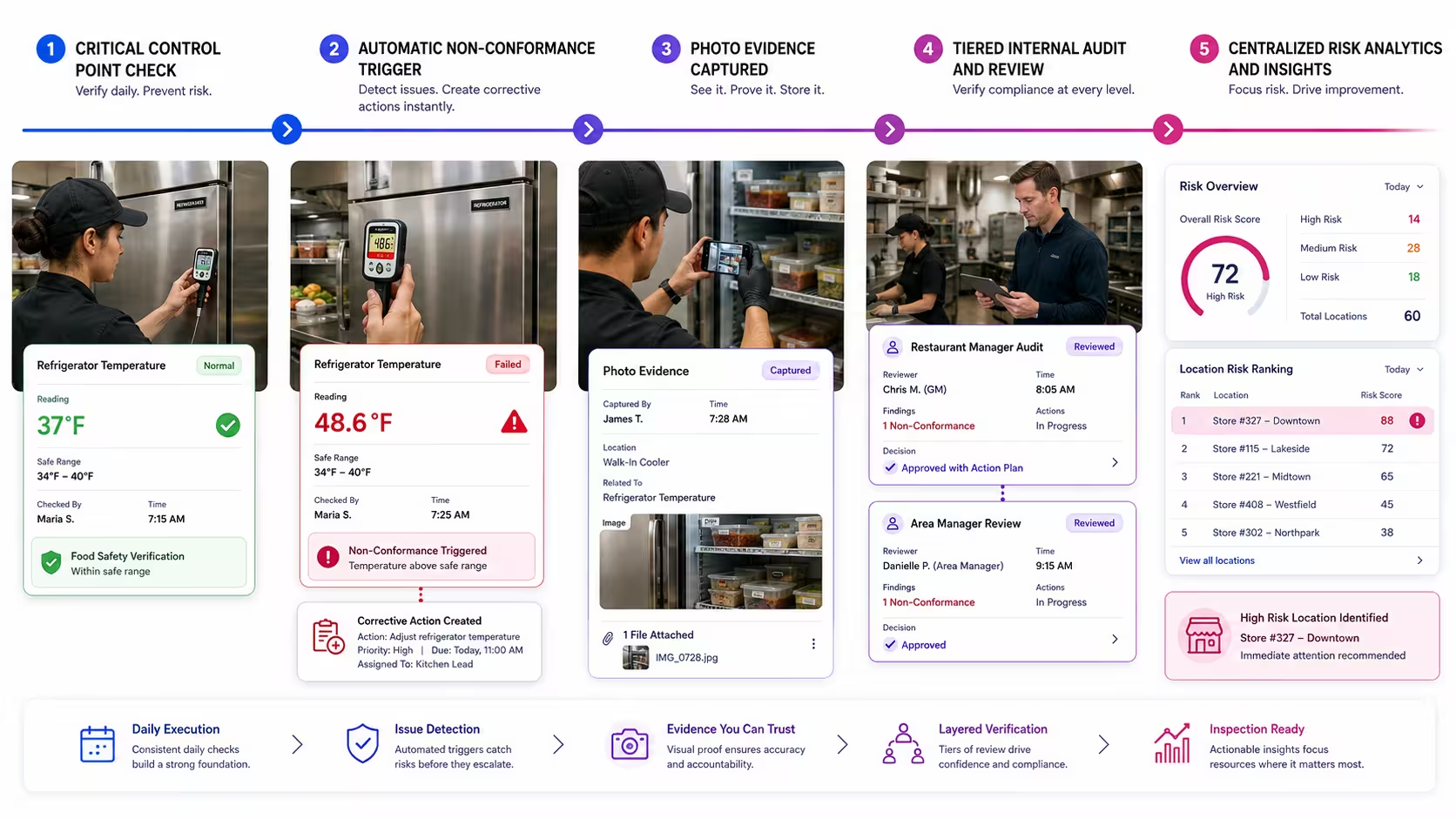
Health inspection readiness should be an everyday operating condition rather than a last-minute cleanup exercise. Restaurants achieve this by turning critical food-safety controls into recurring tasks, capturing reliable evidence, escalating exceptions immediately, conducting internal audits at multiple management levels, and reviewing patterns before regulators or customers discover them.
Step 1: Digitize Daily Critical Control Points
Start with the controls that carry the highest food-safety risk.
These may include receiving temperatures, cold storage, cooking, holding, cooling, reheating, sanitizer concentration, allergen procedures, employee hygiene, and other controls required by your food-safety program.
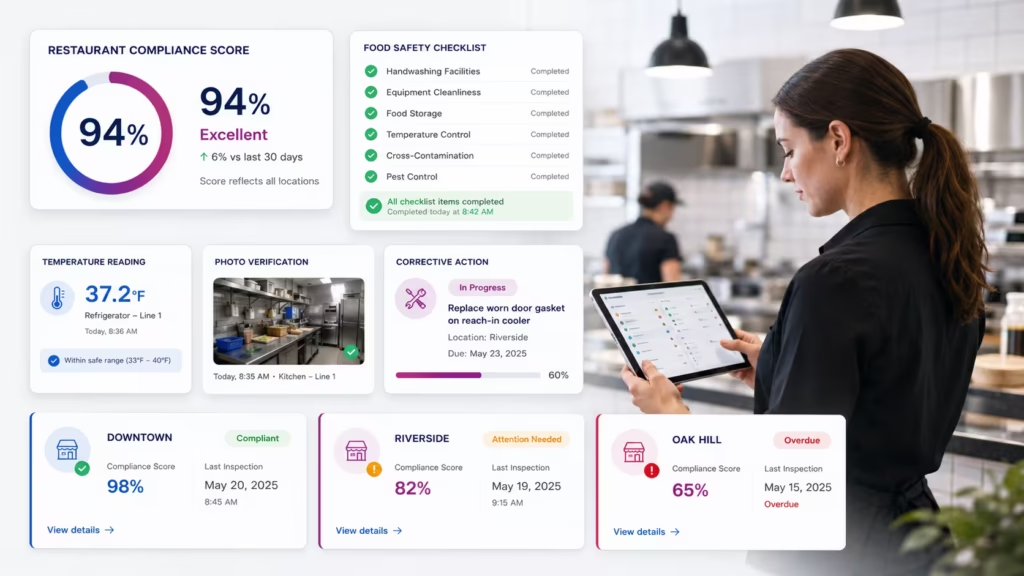
Instead of asking employees to write temperatures on paper, use digital HACCP temperature logs that capture structured readings and flag values outside the required limits.
The system should distinguish between:
Normal reading → record retained
and
Abnormal reading → corrective action required
Step 2: Establish Automated Non-Conformance Triggers and Corrective Actions
A failed checklist response should not disappear inside a completed form.
Suppose a walk-in refrigerator reading is outside your approved range.
A strong workflow can require the employee to:
- Record the reading.
- Identify the affected unit.
- Capture supporting evidence.
- Document the immediate correction.
- Notify the responsible manager.
- Create a follow-up action if required.
- Verify that conditions returned to the acceptable range.
That is very different from simply writing the number on a temperature sheet.
Step 3: Implement Visual Proof
Photos and videos help managers verify conditions that cannot be represented reliably by a checkbox.
Examples include:
- Kitchen cleanliness
- Food storage
- Product labeling
- Personal protective equipment
- Pest evidence
- Restroom conditions
- Equipment damage
- Promotional setup
- Exterior cleanliness
- Closing condition
For higher-risk workflows, location and time validation can make this evidence more reliable.
Step 4: Schedule Tiered Internal Mock Audits
Not every compliance review should be performed by the same person.
A strong multi-unit program can operate at multiple levels:
- Shift team: Daily critical checks
- General Manager: Weekly operational review
- Area or District Manager: Structured location audit
- Food Safety or Quality Team: Specialist inspection
- Operations leadership: Trend and exception review
Tiered auditing creates multiple layers of verification before an external inspection happens.
Step 5: Use Analytics to Identify Risk Before the Next Audit
The most valuable compliance question is often not:
“Which restaurants failed this month?”
It is:
“Which restaurants are likely to fail again?”
Look for patterns such as:
- Repeated temperature deviations
- Repeated hygiene failures
- Declining audit scores
- Late checklist completion
- High corrective-action aging
- Frequently reopened issues
- Equipment failures concentrated at specific locations
- Specific standards failing across an entire region
- Locations completing critical processes unusually quickly
- Managers with consistently overdue actions
A centralized multi-location dashboard turns compliance records into operational risk signals.
Make inspection readiness part of every shift.
Digitize critical checks, capture proof, flag exceptions, and know which locations need attention before the inspector arrives.
The Multi-Unit Restaurant Compliance Checklist
A restaurant compliance checklist should separate high-frequency frontline controls from deeper management audits. Daily checks protect critical food-safety and operating conditions, weekly reviews identify emerging risks, and monthly audits validate whether controls actually work. Multi-unit operators should standardize the core checklist while accommodating jurisdiction-specific requirements.
Below is a practical restaurant compliance checklist that can be adapted to your own SOPs and local requirements.
Opening Shift Restaurant Compliance Checklist
- Verify refrigerators and freezers are operating within approved limits.
- Check food received or carried over from the previous shift for approved storage, labeling, dating, and condition.
- Confirm handwashing stations are accessible, stocked, and functioning.
- Verify food-contact surfaces have been cleaned and sanitized.
- Check sanitizer preparation according to your approved procedure.
- Inspect prep areas for evidence of pests or contamination.
- Confirm raw and ready-to-eat products are stored to prevent cross-contamination.
- Check staff hygiene, uniforms, and required protective equipment.
- Inspect critical kitchen equipment before service begins.
- Confirm required food-safety records and certifications are available.
Mid-Shift Food Safety and Operations Checklist
- Complete required cooking, holding, cooling, or reheating temperature checks.
- Confirm TCS foods are managed according to approved time and temperature controls.
- Inspect food storage and preparation practices.
- Verify allergen-handling procedures are being followed.
- Recheck sanitizer and cleaning conditions.
- Inspect floors, drains, preparation surfaces, and waste areas.
- Confirm employee illness and hygiene procedures are being followed.
- Record equipment or facility issues immediately.
- Create corrective actions for any failed critical standard.
Closing Shift Restaurant Compliance Checklist
- Verify food is correctly stored, covered, labeled, and dated.
- Record required end-of-day equipment temperatures.
- Discard or isolate food according to approved procedures.
- Clean and sanitize food-contact surfaces.
- Clean cooking equipment according to the required schedule.
- Inspect grease, waste, and drainage areas.
- Verify chemicals are correctly stored.
- Confirm doors, storage areas, and restricted zones are secured.
- Record unresolved maintenance problems.
- Review outstanding corrective actions before handover.
Weekly Restaurant Manager Compliance Review
- Review all missed or late compliance tasks.
- Review temperature deviations.
- Check corrective actions that remain open.
- Inspect deep-cleaning areas.
- Review pest-control observations.
- Check food storage and labeling practices.
- Review equipment maintenance issues.
- Verify required employee certifications or training status.
- Conduct a manager-led food-safety inspection.
- Coach the team on recurring failures.
Monthly Area Manager Restaurant Audit
- Complete a full food-safety and hygiene audit.
- Review documentation against actual restaurant conditions.
- Validate that previous findings were corrected.
- Review recurring failures from the previous 30 to 90 days.
- Compare the restaurant with regional performance.
- Inspect facility and equipment condition.
- Review brand and customer-experience standards.
- Assess manager follow-through on corrective actions.
- Create formal improvement plans for repeated failures.
- Escalate critical or recurring risks to regional leadership.
Do not just create the checklist. Make sure it gets done.
Schedule recurring restaurant checklists by location and role, collect proof from the floor, and automatically surface missed or failed tasks.
How Multi-Unit Restaurant Audit Software Changes Compliance Management
Multi-unit restaurant audit software creates value when it connects restaurant execution with management response. Instead of collecting completed forms, it should schedule checks, verify evidence, identify failures, assign corrective actions, track deadlines, escalate unresolved problems, and show leadership which restaurants or standards require attention across the network.
Consider what happens in a traditional process.
A district manager performs an audit.
The score is 78%.
Photos are placed into a report.
The report is emailed to the restaurant manager.
Someone creates an Excel action tracker.
The manager sends updates through email or WhatsApp.
Three weeks later, nobody is completely certain whether every finding was corrected.
A digital compliance workflow changes the sequence:
Audit → Failed standard → Responsible owner → Corrective action → Deadline → Evidence → Verification → Closure → Trend reporting
That is the operational value of multi-unit restaurant audit software.
Schedule Compliance Instead of Chasing It
Head office can establish recurring routines by location, role, frequency, or operating requirement.
Restaurant teams see what must be completed.
Managers see what is overdue.
Regional leaders see where execution is breaking down.
This removes a large amount of manual follow-up.
Route Failures to the Right Owner
Not every failed question should go to the General Manager.
A refrigeration fault may need facilities.
A food-safety failure may need the restaurant manager and quality team.
A training issue may belong to L&D.
A brand-standard failure may need operations.
The value of structured workflows is that responsibility follows the problem instead of relying on someone to forward an email or message.
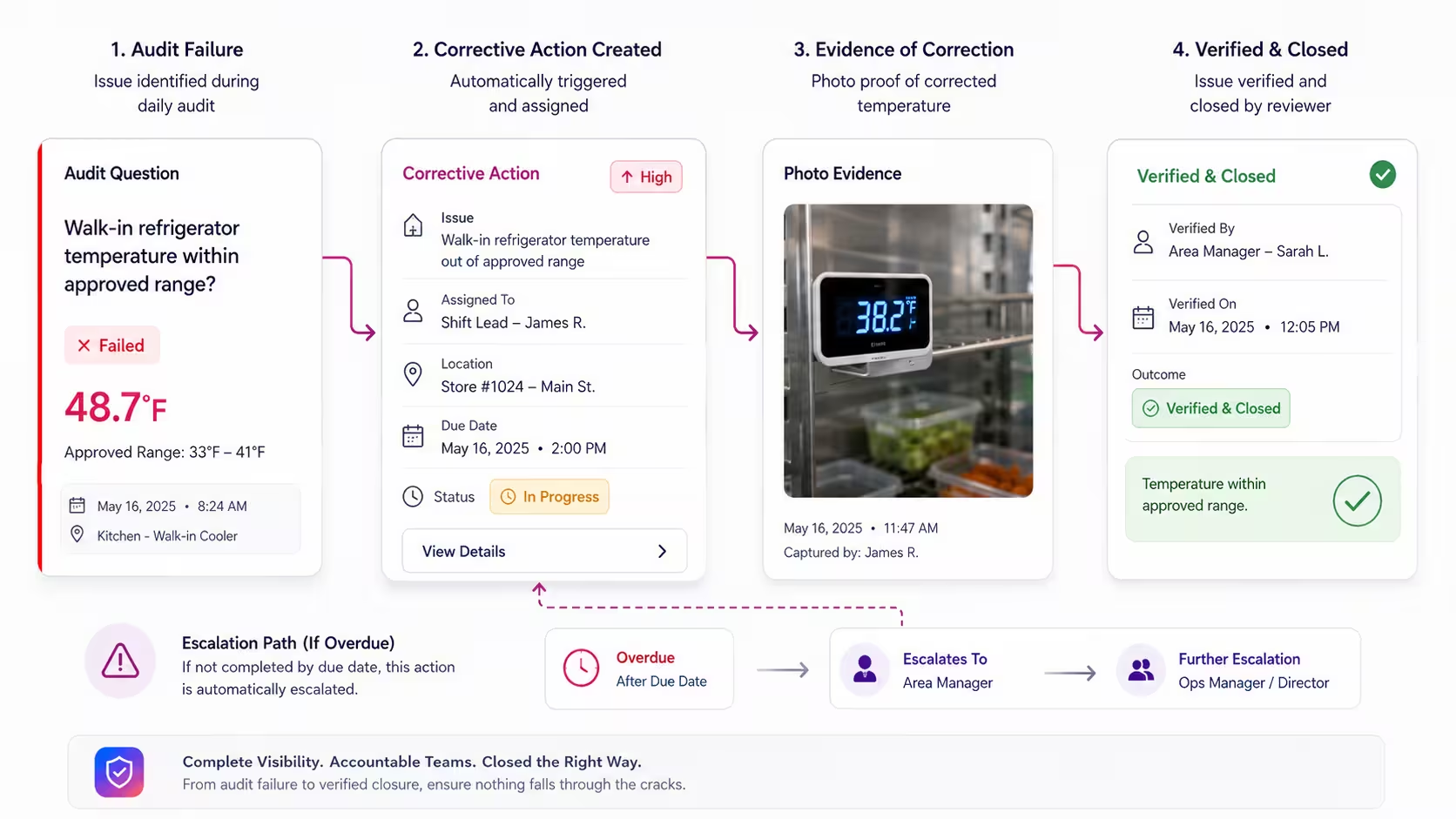
Keep Compliance Evidence Together
The strongest compliance record connects:
Question + answer + timestamp + evidence + responsible person + corrective action + closure proof
When records are fragmented across systems, proving what happened becomes much harder.
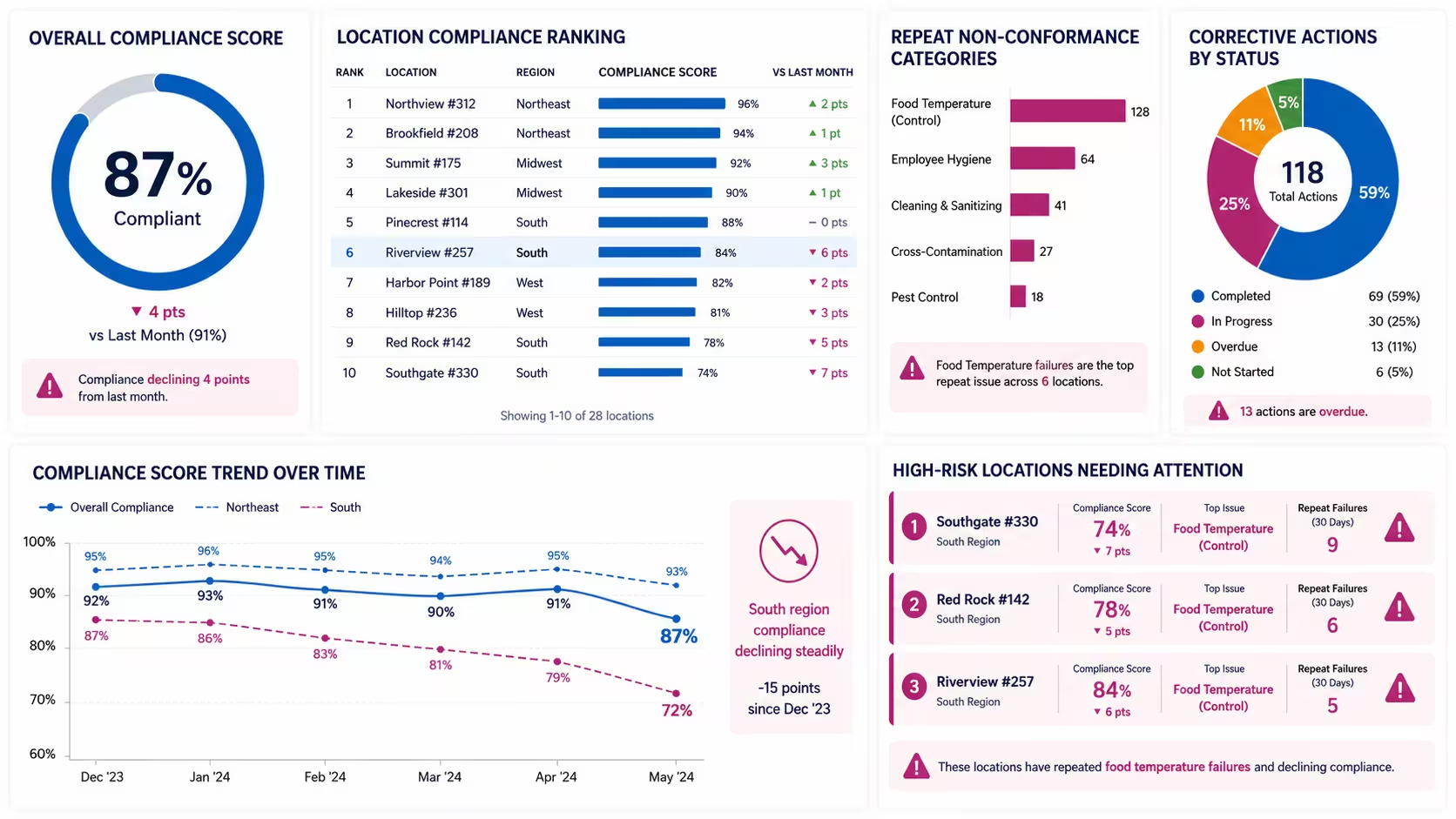
Compare Compliance Across Restaurants
The final step is moving beyond individual audit reports.
Operations leaders should be able to compare:
- Locations
- Regions
- Audit categories
- Failed standards
- Corrective-action aging
- Repeat findings
- Compliance trends
- High-risk locations
- Manager performance
- Closure rates
That is how restaurant compliance starts contributing to operational improvement rather than simply creating more documentation.
How Taqtics Transforms Multi-Unit Restaurant Compliance
Taqtics gives multi-location restaurant operators one environment for recurring SOP execution, mobile audits, issue management, corrective actions, visual evidence, training, assets, and centralized reporting. This allows headquarters to move from manually chasing compliance records to continuously monitoring how standards are executed across every location.
Digitize Restaurant SOPs and Checklists
Restaurant teams can replace paper routines with scheduled digital checklists for opening, closing, food safety, hygiene, shift readiness, equipment checks, customer experience, and other recurring operating procedures.
Instead of relying on managers to remember every routine, tasks can be scheduled according to the required location, role, date, time, or frequency.
Capture Proof at the Point of Execution
For standards that require verification, teams can submit supporting evidence directly from the restaurant.
Depending on the workflow, this can include:
- Photos
- Videos
- Files
- Signatures
- Temperature or numeric readings
- Structured responses
- Location-based verification
This creates a stronger operating record than a simple checkbox.
Turn Failed Checks Into Corrective Actions
The goal of an audit should not be to generate a score and a PDF.
The goal should be to identify what needs to change.
With structured corrective-action workflows, restaurant groups can route failed standards to the relevant team, set deadlines, monitor overdue actions, capture closure evidence, and escalate unresolved problems.
Manage Issues Outside Formal Audits
Not every problem appears during an audit.
A broken refrigerator, damaged sign, leaking pipe, pest observation, safety hazard, or equipment issue may be discovered during normal restaurant operations.
A dedicated issue-management workflow allows frontline teams to report these problems when they happen instead of waiting for the next scheduled inspection.
Give Regional and Head Office Teams Real-Time Visibility
Multi-unit operators need more than individual reports.
They need to know:
- Which locations are consistently compliant?
- Which restaurants repeatedly fail the same standards?
- Which corrective actions are overdue?
- Which regions are improving or declining?
- Which issues are appearing across multiple stores?
- Which compliance areas require management intervention?
Centralized reporting makes these patterns visible without waiting for teams to consolidate dozens of spreadsheets.
See compliance across every restaurant from one place.
Bring SOPs, food safety checks, audits, issues, corrective actions, proof, and compliance reporting together across your restaurant network.
Restaurant Compliance Should Be Continuous, Not Inspection-Driven
A restaurant that becomes compliant only when an inspector arrives does not have a compliance system.
It has an inspection-preparation routine.
The strongest multi-unit operators make compliance part of everyday execution.
Frontline employees complete small, relevant checks during the shift.
Managers respond when standards fail.
Area teams audit execution independently.
Head office sees trends across every location.
Corrective actions remain visible until they are actually resolved.
The next inspection then becomes a validation of the operating system that already exists rather than a crisis that requires everyone to scramble.
That is the real objective of restaurant compliance technology.
Not more forms.
More confidence that standards are actually being followed across every restaurant.
Frequently Asked Questions About Restaurant Compliance
What is restaurant compliance?
Restaurant compliance is the process of meeting applicable food-safety, workplace, employment, licensing, operating, and internal brand requirements. It includes both regulatory compliance and the systems restaurants use to verify that required procedures are being followed consistently.
What should a restaurant compliance checklist include?
A restaurant compliance checklist should cover food temperatures, storage, preparation, hygiene, cleaning, sanitation, allergens, employee practices, equipment, facilities, pest controls, documentation, and corrective actions. Multi-unit groups should also include brand standards and location-specific regulatory requirements.
What is the difference between HACCP and a restaurant compliance checklist?
HACCP is a preventive food-safety methodology focused on identifying hazards and controlling critical points. A restaurant compliance checklist is broader and may include HACCP-related controls alongside sanitation, employee safety, facility standards, customer experience, brand procedures, and other operating requirements.
What are digital HACCP temperature logs?
Digital HACCP temperature logs replace handwritten temperature records with electronic readings and records. Depending on the system, they can also flag out-of-range readings, require corrective actions, retain timestamps, and centralize historical records for management review.
How can restaurants prepare for health inspections?
Restaurants should maintain inspection readiness every day by consistently completing critical food-safety controls, training employees, keeping accurate records, correcting non-conformances quickly, conducting internal audits, maintaining equipment, and reviewing recurring risks. Actual inspection requirements vary by jurisdiction.
What is multi-unit restaurant audit software?
Multi-unit restaurant audit software helps restaurant groups standardize inspections across locations, collect evidence, score performance, identify failed standards, assign corrective actions, track closure, and analyze compliance patterns across restaurants, regions, franchisees, or operational teams.
What should I look for in restaurant compliance software?
Look beyond digital forms. Evaluate ease of frontline use, scheduling, evidence capture, offline capability, corrective actions, escalation workflows, organizational hierarchy, location controls, audit scoring, reporting, issue management, integrations, and the ability to compare performance across multiple restaurants.
Is SafetyCulture suitable for restaurant compliance?
SafetyCulture offers restaurant inspection, compliance, corrective-action, and notification capabilities and may be a strong fit for organizations wanting a broad inspection platform. Restaurant groups should compare its operating model with their requirements for hierarchy, recurring SOP execution, issue management, escalation, and broader multi-location workflows.
Is Jolt suitable for multi-unit restaurants?
Jolt is positioned specifically for restaurant operations and supports capabilities including checklists, food-safety workflows, temperature monitoring, labeling, scheduling, forms, and inspections. Restaurant groups evaluating Jolt should compare those strengths against the exact audit, escalation, issue-management, analytics, and organizational workflows they require.
Can software guarantee restaurant compliance?
No. Software can standardize procedures, improve evidence, automate monitoring, and make failures easier to identify and resolve, but compliance ultimately depends on people, processes, training, management oversight, equipment condition, and the regulatory requirements that apply to each restaurant.
Standardize restaurant compliance across every location.
See how Taqtics helps multi-unit restaurant teams manage recurring SOPs, audits, evidence, issues, corrective actions, and compliance visibility from one platform.
About the Author