Restaurant Operation Management: Definition, Importance, And Core Functions
Restaurant operations management is the process of coordinating the people,
processes, food, equipment, technology, service standards, and controls required
to run a restaurant consistently every day.
It connects what happens in the kitchen, front of house, stockroom, dining area,
manager’s office, and support teams so that food is prepared correctly, guests are
served consistently, staff know what is expected, risks are controlled, and the
restaurant can improve performance over time.
For multi-location restaurant, QSR, café, and food-service brands, operations
management also creates a repeatable operating model across outlets. Head office
defines standards, restaurant teams execute them, and area or regional managers
review performance, exceptions, and recurring gaps.
What Are Restaurant Operations?
Restaurant operations are all of the activities required to keep a restaurant
functioning from opening to closing. They include purchasing and receiving,
food storage and preparation, kitchen execution, front-of-house service,
staffing, cleaning, inventory, cash and POS routines, customer service,
maintenance, food safety, and management follow-up.
These activities are interconnected. A staffing gap can affect service speed.
Poor storage can affect food safety and product quality. A missed equipment
check can create downtime during service. Restaurant operations therefore need
to be managed as one operating system rather than as isolated tasks.
What Is Restaurant Operations Management?
Restaurant operations management is the organized process of
planning, assigning, monitoring, and improving the activities that keep the
restaurant operating. It turns daily work into defined processes with clear
standards, responsibilities, review points, and performance measures.
Restaurant Operations
The activities performed every day: preparation, cooking, service, cleaning,
stock handling, food-safety checks, maintenance, closing, and customer care.
Restaurant Operations Management
The planning, ownership, standards, training, measurement, escalation,
corrective action, and continuous improvement used to control that work.
Why Is Restaurant Operations Management Important?
Strong restaurant operations management helps the business deliver a consistent
guest experience while controlling the processes behind food quality, food safety,
staffing, inventory, equipment, service, and costs.
It is particularly important when a brand operates multiple outlets. Without a
common operating model, the same SOP may be interpreted differently by each
restaurant or shift. Standard routines, clear ownership, regular reviews, and
visible corrective actions make it easier to maintain the same expectations
across locations.
Effective management also helps teams identify operational problems earlier.
Instead of waiting for a poor audit score, guest complaint, stock issue, or
equipment failure to become a larger problem, managers can review leading
indicators such as missed checks, overdue actions, repeat failures, staffing
gaps, and maintenance exceptions.
How Do You Build a Restaurant Operations Framework?
A restaurant operations framework is a repeatable system for deciding what needs
to happen, who owns it, how it should be completed, and how management knows
whether the standard was met. The framework should connect five core pillars.
People
Roles, staffing, training, accountability, communication, and manager ownership.
Processes
SOPs, opening and closing routines, service workflows, food preparation, and handovers.
Technology
Systems that support orders, inventory, staffing, execution, reporting, and communication.
Quality & Control
Food quality, food safety, hygiene, compliance, audits, evidence, and corrective actions.
Measurement
Commercial KPIs, operational KPIs, audit results, issues, feedback, and improvement trends.
Start by documenting the critical processes in each area, define the expected
outcome, assign an owner, decide how often the activity should happen, and specify
what should occur when the standard is missed. SOPs and checklists are useful only
when they are connected to ownership, review, and follow-up.
What Are the Core Areas of Restaurant Operations Management?
Restaurant operations span both back-of-house and front-of-house activities.
The exact responsibilities vary by restaurant format, but most operating models
need to control the following areas.
Kitchen & Food Preparation
Mise-en-place, recipe adherence, cooking, portioning, plating, service timing,
workstation readiness, and coordination between kitchen stations.
Guest Service & Service Flow
Greeting, seating, order accuracy, table service, guest communication,
payment handoff, complaint resolution, and dining-area standards.
Staff Management & Training
Role clarity, shift coverage, attendance, onboarding, SOP training,
coaching, performance feedback, and manager communication.
Inventory, Receiving & Storage
Receiving, stock availability, storage conditions, FIFO/FEFO routines,
expiry control, supplier handling, stock discrepancies, and waste prevention.
Food Safety, Hygiene & Compliance
Temperature control, sanitation, personal hygiene, allergen procedures,
cross-contamination prevention, cleaning schedules, records, and regulatory checks.
Equipment & Facility Management
Equipment readiness, cleaning, preventive maintenance, breakdown reporting,
facility defects, work orders, and repair closure.
Cost & Performance Management
Food cost, labor cost, waste, sales, margins, cash controls, purchasing,
and operating decisions that affect profitability.
Reporting, Issues & Continuous Improvement
Audit findings, guest feedback, recurring issues, corrective actions,
operational dashboards, outlet comparisons, and process improvement.
Back-of-House Operations
Back-of-house operations are focused on everything required to receive, store,
prepare, cook, plate, and safely deliver food to the service team. Clear station
responsibilities, mise-en-place, standardized recipes, coordinated timing, and
disciplined cleaning routines help kitchens maintain consistency during both
normal and peak service periods.
Storage and inventory practices are also closely connected to kitchen performance.
Restaurants need clear rules for receiving, labeling, expiry, FIFO/FEFO rotation,
separation of raw and ready-to-eat food, temperature control, and supplier handling.
Inventory software can track quantities, but restaurant teams still need operating
routines that verify how stock is physically received, stored, rotated, and used.
Front-of-House Operations
Front-of-house operations cover the guest-facing journey from arrival to departure.
Hosts, servers, cashiers, supervisors, and managers need clear standards for greetings,
seating, order taking, service timing, complaint handling, cleanliness, payment,
and table reset.
FOH and BOH cannot be managed independently. Order accuracy, service speed,
allergen communication, product availability, and guest satisfaction all depend
on reliable handoffs between the dining floor and kitchen.
What Should Daily Restaurant Operations Look Like?
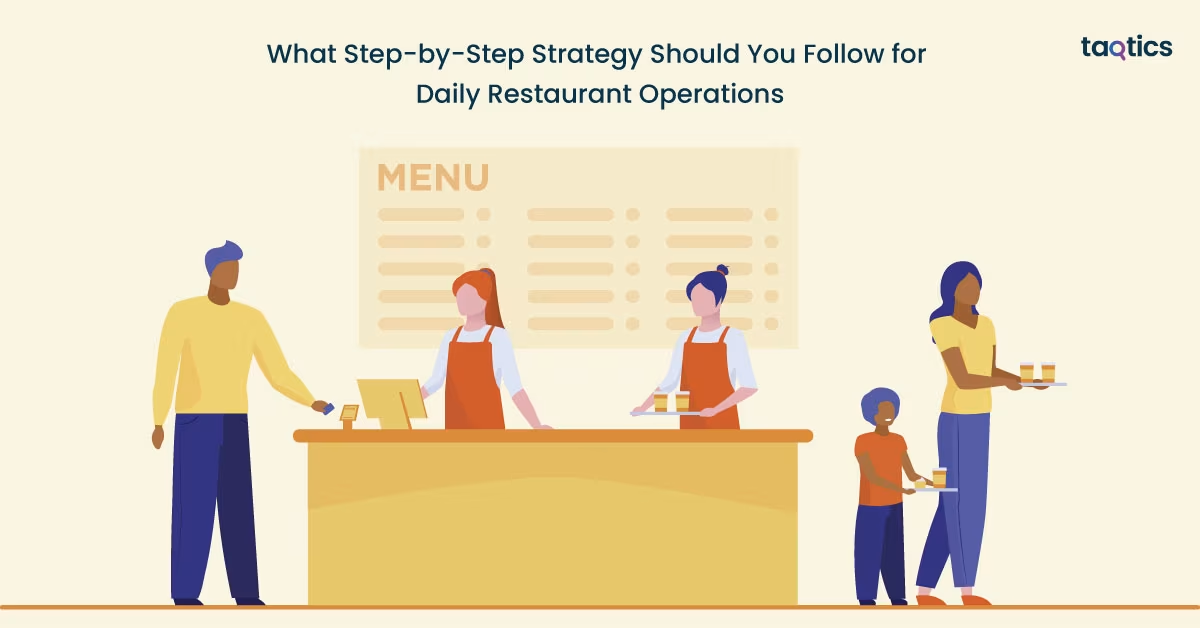
Daily restaurant operations can be organized into three operating stages:
pre-shift preparation, live service, and post-shift closing. Separating these
stages makes responsibilities easier to assign and helps managers build focused
checklists instead of one oversized operating form.
Pre-Shift Preparation
Brief the team, assign roles, review menu changes, prepare stations, check
equipment, verify food and stock readiness, complete opening cleaning, and
confirm that FOH and BOH areas are ready before service begins.
Service Execution
Maintain food preparation standards, order accuracy, service timing,
table conditions, guest communication, stock availability, food-safety
controls, and rapid issue escalation while the restaurant is operating.
Post-Shift Closing
Clean and sanitize, store food correctly, reconcile cash, record wastage
or stock exceptions, complete equipment shutdown checks, hand over unresolved
issues, review the shift, and prepare the outlet for the next operating period.
A structured opening and closing process reduces dependence on memory and makes
shift handovers more reliable. For a focused template, see the
Restaurant Opening & Closing Checklist.
What Role Do SOPs Play in Restaurant Operations?
Standard Operating Procedures (SOPs) document how routine restaurant activities
should be performed. They translate broad expectations such as “keep the kitchen
clean” or “deliver consistent service” into specific instructions that employees
can follow and managers can review.
Restaurant SOPs commonly cover food preparation, recipe adherence, hygiene,
cleaning, opening and closing, receiving, storage, customer service, cash handling,
equipment use, emergency procedures, and shift handover.
An SOP should explain the standard, but it also needs an execution mechanism.
Checklists, recurring tasks, training, audits, and manager reviews help confirm
whether teams actually followed the procedure.
Restaurant teams can use the
Restaurant Checklist Library
to build focused routines for different parts of the operation instead of
combining every control into a single checklist.
How Do Food Safety and Food Quality Fit Into Restaurant Operations?
Food safety and food quality are separate but connected operating responsibilities.
Food safety focuses on controlling hazards and maintaining safe handling, storage,
sanitation, temperature, allergen, and hygiene practices. Food quality focuses on
whether the product consistently meets the expected standards for taste, portion,
recipe adherence, presentation, packaging, ingredients, and delivery.
Both need to be embedded into daily operations rather than treated only as periodic
inspection activities. Restaurants can use routine checks for daily control and
structured audits for deeper verification, evidence, scoring, findings, and
corrective actions.
use the
Food Safety Audit Software
page for multi-location food-safety auditing,
Food Quality Management Software
for wider product-quality workflows, and the
restaurant food-safety audit guide
for the audit process itself.
What Are the Common Challenges in Restaurant Operations?
Most restaurant operating problems are not caused by a lack of procedures.
They usually appear when standards are unclear, ownership is fragmented, teams
use different processes, or management cannot see whether follow-up actually happened.
- Staffing gaps and turnover: reduced coverage can affect service, training, and completion of operational routines.
- Inconsistent execution: different shifts or locations may interpret the same SOP differently.
- Inventory loss and waste: poor receiving, storage, rotation, or visibility can create avoidable cost and product availability problems.
- Food-safety and quality variation: missed controls can affect safety, guest experience, and brand consistency.
- Equipment downtime: unresolved defects can interrupt production and service.
- Communication gaps: instructions may be lost across calls, messages, email, or shift handovers.
- Manual follow-up: managers spend time chasing updates rather than acting on exceptions.
- Limited multi-location visibility: head office may know what should happen without knowing what actually happened at each outlet.
For operational communication across locations, see
Communication Management Software.
For structured follow-up on operational failures, see
Issue Tracking Software.
What Are the Best Practices for Improving Restaurant Operations?
Improving restaurant operations requires more than adding new procedures.
The operating model should make important work easier to execute, verify, and improve.
- Standardize critical routines. Define how opening, closing, cleaning, prep, storage, service, food safety, and handovers should work.
- Assign clear ownership. Every critical activity should have a responsible role or person.
- Train teams on the expected outcome. Employees need to understand both the task and what compliant execution looks like.
- Capture evidence where necessary. Use readings, photos, comments, counts, or approvals when a tick alone is not enough.
- Escalate failures quickly. Critical food-safety, equipment, service, and compliance issues need defined response rules.
- Track corrective actions to closure. A finding is not resolved until the corrective action is completed and verified.
- Review commercial and operational data together. Sales results are easier to interpret when managers can also see staffing, compliance, task, issue, and operational trends.
- Improve the process when problems repeat. Repeated failures often indicate that the standard, training, ownership, or process itself needs to change.
For a deeper step-by-step improvement framework, read
How to Improve Restaurant Operations Management.
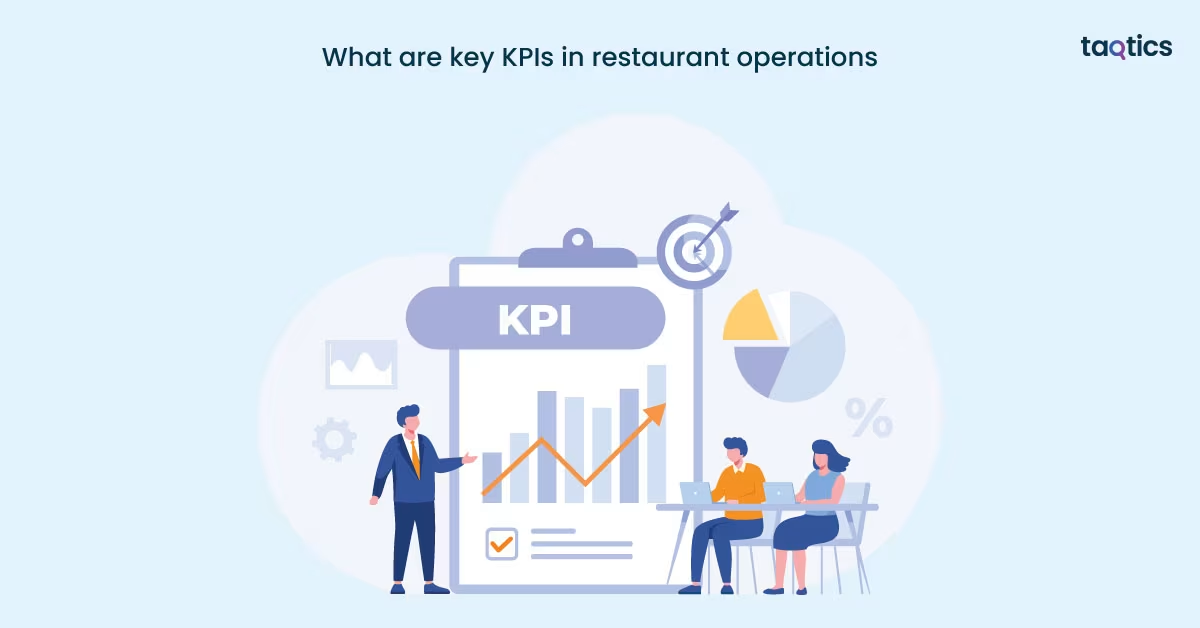
What KPIs Should Restaurant Operations Teams Track?
Restaurant operations should be measured with both commercial and operational KPIs.
Commercial results show the outcome. Operational metrics help explain why the result happened
and where managers may need to intervene.
| KPI area | Examples | What it helps management understand |
|---|---|---|
| Sales & profitability | Sales, gross margin, average check, RevPASH | Commercial performance and revenue productivity. |
| Food cost & inventory | COGS, waste, inventory turnover, stock variance | Product cost control, waste, and inventory discipline. |
| Labor | Labor cost, attendance, turnover, training completion | Workforce coverage, stability, capability, and cost. |
| Service | Table turnover, service time, complaints, guest feedback | How effectively the restaurant delivers the guest experience. |
| Execution | Task completion, overdue work, missed routines | Whether required operating work is actually happening. |
| Compliance | Audit score, critical failures, repeat non-compliance | Whether food-safety, quality, and operating standards are being maintained. |
| Issue closure | Open issues, overdue issues, closure time, repeat defects | How quickly operational failures are resolved and whether they recur. |
The strongest reviews connect these measures rather than looking at one report in isolation.
A weak service result, for example, may be connected to staffing, equipment, stock,
training, or recurring execution gaps.
How Do You Audit and Optimize Restaurant Operations?
Operational improvement works best as a continuous cycle rather than a one-time audit.
Managers need to compare defined standards with what is actually happening, identify
exceptions, assign corrective action, and confirm whether the problem was resolved.
Define the standard
Document the SOP, checklist, quality requirement, service standard, or compliance control.
Observe execution
Use routine checks, manager reviews, operational audits, customer feedback, and performance data.
Identify the gap
Separate isolated failures from repeat problems, systemic weaknesses, or high-risk exceptions.
Assign corrective action
Define the owner, due date, required action, escalation path, and evidence needed for closure.
Verify closure
Confirm that the action addressed the original problem rather than merely closing the task.
Improve the process
Update SOPs, training, checklists, ownership, or controls when the same issue continues to appear.
What Software Is Used in Restaurant Operations?
Restaurants use different categories of software for different parts of the operating model.
A POS is not the same as an inventory platform, and neither is the same as software used
to manage frontline execution across locations.
| Software category | Primary role in restaurant operations |
|---|---|
| POS systems | Orders, transactions, payments, sales records, and related front-of-house workflows. |
| Inventory systems | Ingredient and stock quantities, purchasing, receiving, costing, and inventory records. |
| Labor / workforce systems | Scheduling, time and attendance, payroll-related workflows, and workforce planning. |
| CRM / loyalty systems | Guest data, loyalty, promotions, communication, and repeat-customer engagement. |
| Restaurant operations execution platforms | Daily tasks, SOPs, checklists, audits, issues, training, assets, corrective actions, and multi-location operational visibility. |
Taqtics focuses on the restaurant operations execution layer.
It helps multi-location teams coordinate recurring work, verify standards,
manage audits and findings, route issues, distribute operational knowledge,
manage assets, and track corrective actions. It can work alongside the POS,
inventory, ERP, HR, and other systems already used by the business.
Learn more about the commercial platform on
Restaurant Management Software.
For workforce attendance, see
Attendance Management Software;
for operational training, see
Training Management System;
and for equipment records and maintenance visibility, see
Asset Management Software.
What Is a Restaurant Operations Plan?
A restaurant operations plan is a practical roadmap for how the restaurant will
run its day-to-day activities. It connects business goals with the people,
processes, schedules, standards, controls, and review routines needed to deliver them.
A useful operations plan typically defines staff responsibilities, operating hours,
opening and closing routines, kitchen and service workflows, receiving and inventory
processes, food-safety controls, cleaning schedules, equipment maintenance,
cash-management responsibilities, escalation rules, reporting requirements, and
the KPIs managers will review.
For multi-location businesses, the plan should also distinguish what is standardized
centrally from what can be adapted locally. The objective is to maintain one operating
standard without making the process unnecessarily difficult for individual restaurants.
Restaurant Operations Management FAQs
How does a restaurant work operationally?
A restaurant combines purchasing, receiving, food storage, preparation, cooking,
guest service, cleaning, payment, staffing, equipment, and management activities.
Front-of-house and back-of-house teams coordinate these processes while managers
oversee standards, resources, performance, and exceptions.
What are the main areas of restaurant operations?
The main areas include kitchen and food preparation, front-of-house service,
staffing and training, inventory and receiving, food safety, cleaning, equipment,
cost control, customer experience, compliance, technology, and management reporting.
What is the difference between restaurant operations and restaurant operations management?
Restaurant operations are the activities required to run the restaurant.
Restaurant operations management is the system used to plan, assign, monitor,
control, measure, and improve those activities.
What makes restaurant operations successful?
Successful operations depend on clear standards, capable teams, consistent food
and service, disciplined cost control, reliable equipment, food-safety compliance,
good communication, clear ownership, relevant technology, and regular performance review.
How can a multi-location restaurant standardize operations?
Define common SOPs and checklists, assign ownership by role, train teams on the
expected standard, verify critical work with evidence, review exceptions across
locations, route failures into corrective actions, and update processes when gaps repeat.
About the Author