
Construction Equipment Inspection Software for Safer, More Reliable Field Operations
Standardize construction equipment inspections across projects, sites, contractors, and field teams. Verify machine condition, operator readiness, safety devices, maintenance status, defects, and return-to-service actions from one connected workflow.
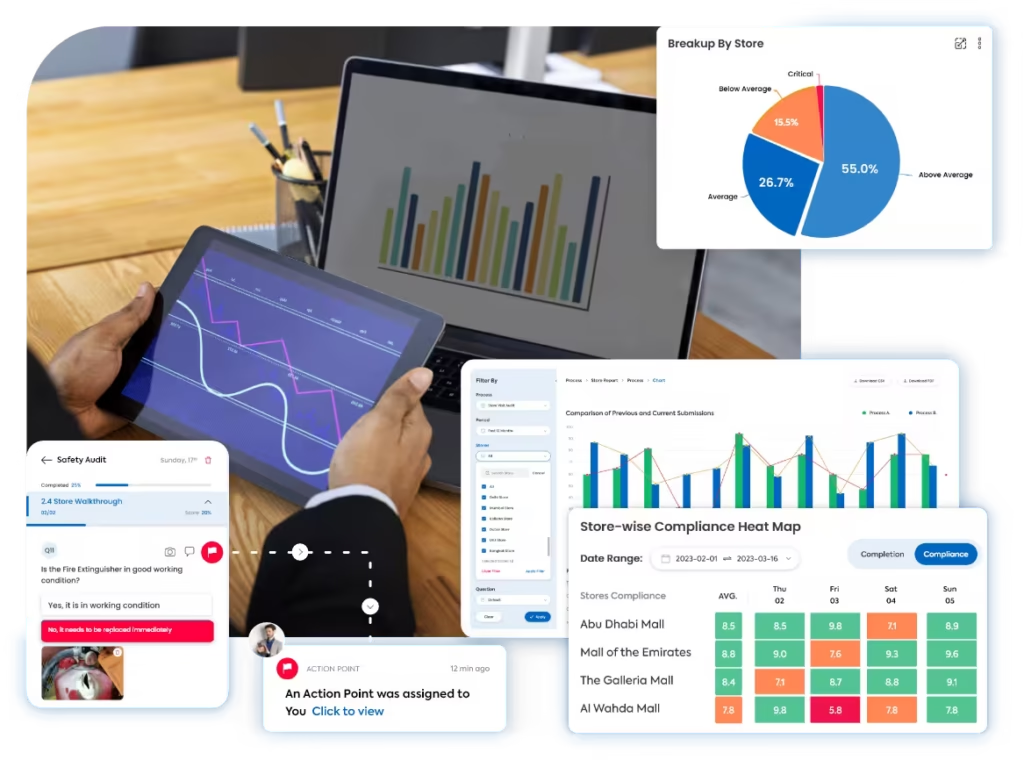
A Clearer Way to Inspect Every Machine Before and During Site Use
Taqtics connects equipment checklists, operator details, photographs, maintenance records, safety-device checks, defect severity, corrective actions, and inspection reports across every project and site.
Where Manual Construction Equipment Inspections Break Down
Select a common gap to see why paper checks and disconnected maintenance records reduce confidence in equipment readiness.
Without standard pre-use criteria, tyres, brakes, guards, fluids, controls, alarms, and attachments may be checked inconsistently.
Paper forms often separate the failed check from the asset ID, location, photograph, meter reading, operator, timestamp, and defect description.
Open defects, service due dates, repair progress, spare-parts delays, and inspection history may not be visible to the same project team.
When isolation, repair evidence, reinspection, and approval sit outside the inspection workflow, unsafe equipment can be released too early.
What a Construction Equipment Inspection Should Cover
Move through five equipment-control areas to verify structural condition, operating systems, safety devices, operator readiness, maintenance status, and return-to-service controls.
Inspect the Physical Condition of Every Equipment Unit
Check the machine body, tyres or tracks, attachments, fluid condition, leaks, and visible damage before operation.
Verify That Operating Controls Respond Correctly
Test the machine functions needed for safe movement, lifting, braking, steering, and controlled operation.
Confirm That Required Safety Devices Are Working
Inspect the devices designed to protect operators, workers, and surrounding site activities.
Verify Operator Readiness and Equipment Records
Confirm that the assigned operator is authorized and that the machine records support safe site use.
Control Defects, Maintenance, Isolation, and Return to Service
Make sure defects are classified, unsafe equipment is isolated, repairs are documented, and reinspection happens before release.
How Taqtics Digitizes Construction Equipment Inspections
Set the inspection standard once, assign equipment checks, capture defects in the field, route repairs, and verify safe return to service.
Make Every Equipment Defect Easier to Verify
Verify the project, equipment, operator, inspection time, condition, readings, evidence, defect severity, owner, and return-to-service status behind every finding.
Are the service brake, parking brake, steering, and emergency stop functioning correctly?
Field is requiredAre hydraulic hoses, cylinders, and fittings free from active leaks or visible damage?
Are warning alarms, beacons, horn, mirrors, and cameras working as required?
Validated observations
Confirm which equipment unit was inspected and preserve the evidence behind every condition or defect finding.
+
Validated observations
Confirm which equipment unit was inspected and preserve the evidence behind every condition or defect finding.
- Project, site, asset ID, equipment type, contractor, and operator context
- Timestamped inspection with meter readings and inspector details
- Photographs, comments, defect descriptions, and supporting documents
- Maintenance, certification, load-test, service-hour, or component references
Standardized scoring
Apply the same equipment-condition rules, defect classifications, and critical-control logic across projects.
+
Standardized scoring
Apply the same equipment-condition rules, defect classifications, and critical-control logic across projects.
- Equipment-specific inspection instructions and objective answer formats
- Critical, major, and minor defect classifications
- Mandatory evidence for safety-device and functional failures
- Weighted scoring with automatic equipment safety calculation
Corrective actions
Turn failed equipment checks into repair, isolation, reinspection, and return-to-service actions.
+
Corrective actions
Turn failed equipment checks into repair, isolation, reinspection, and return-to-service actions.
- Owners, priorities, deadlines, and overdue escalation
- Routing to operator, contractor, plant team, maintenance, EHS, or project supervision
- Repair, replacement, isolation, tagging, or out-of-service requirements
- Repair evidence, technician sign-off, reinspection, reviewer approval, and final release
Equipment Inspection Reports That Show Where Reliability and Safety Risk Is Increasing
Turn inspection data into visibility across equipment condition, critical defects, maintenance readiness, operator compliance, out-of-service units, corrective actions, and repeat failures.
View all report insights +
- Overall equipment safety score
- Score by project and site
- Performance by equipment type
- Asset-level inspection history
- Structural-condition findings
- Tyre and track defects
- Hydraulic leaks and hose damage
- Brake and steering failures
- Safety-device compliance
- Alarm, beacon, and lighting failures
- Operator-document gaps
- Inspection certificate status
- Preventive-maintenance readiness
- Service-due equipment
- Critical, major, and minor defects
- Open versus closed repair actions
- Overdue repairs
- Out-of-service equipment
- Average return-to-service time
- AI-detected recurring equipment-risk patterns
Start With a Ready-to-Use Construction Equipment Inspection Checklist
Define pre-use checks, safety devices, equipment condition, operator requirements, maintenance controls, defect severity, and return-to-service rules inside Taqtics.
Construction Equipment Inspection Software Questions
What is construction equipment inspection software?+
Construction equipment inspection software helps project and field teams standardize pre-use checks, verify equipment condition, record defects, track repairs, and approve return to service through one digital workflow.
What should a construction equipment inspection cover?+
An equipment inspection can cover structural condition, tyres or tracks, fluids, hydraulic systems, controls, brakes, steering, safety devices, operator records, certificates, maintenance status, and defects.
Can inspections be assigned by asset ID and equipment type?+
Yes. Inspections can be assigned by project, site, asset ID, equipment type, contractor, operator, shift, frequency, and deadline.
Can inspectors capture equipment photographs and meter readings?+
Yes. Questions can require live photographs, comments, hour-meter readings, odometer readings where applicable, defect descriptions, and supporting documents.
Can equipment defects be classified by severity?+
Yes. Defects can be classified as critical, major, or minor with different repair priorities, deadlines, escalation rules, and operating restrictions.
Can unsafe equipment be marked out of service?+
Yes. Critical failures can trigger isolation, out-of-service status, repair actions, escalation, and reinspection before release.
Can operator licenses and equipment certificates be checked?+
Yes. Audits can include operator authorization, competency, inspection certificates, load tests, third-party certifications, insurance, and maintenance records.
Can maintenance teams receive repair actions directly?+
Yes. Failed checks can be routed to plant teams, maintenance teams, contractors, EHS, supervisors, or project managers with deadlines and required closure proof.
Can equipment performance be compared across projects?+
Yes. Reports can compare equipment types, sites, contractors, defect categories, maintenance readiness, repair closure, and return-to-service performance.
Can Taqtics identify recurring equipment defects?+
Yes. Historical inspection data can surface repeated hydraulic leaks, brake issues, alarm failures, tyre damage, overdue maintenance, and recurring defects by equipment type or asset.
Make Every Equipment Inspection Reliable and Actionable
Digitize construction equipment inspections, verify defects, assign repairs, control out-of-service equipment, and approve safe return to work across every project.