Biomedical Waste Management Audit Software for Safer Healthcare Waste Control
Standardize biomedical waste audits across hospitals, clinics, laboratories, diagnostic centres, pharmacies, and care facilities. Verify segregation, container condition, sharps handling, internal transport, temporary storage, handover records, and corrective actions through one connected workflow.
A Clearer Way to Audit Biomedical Waste Handling
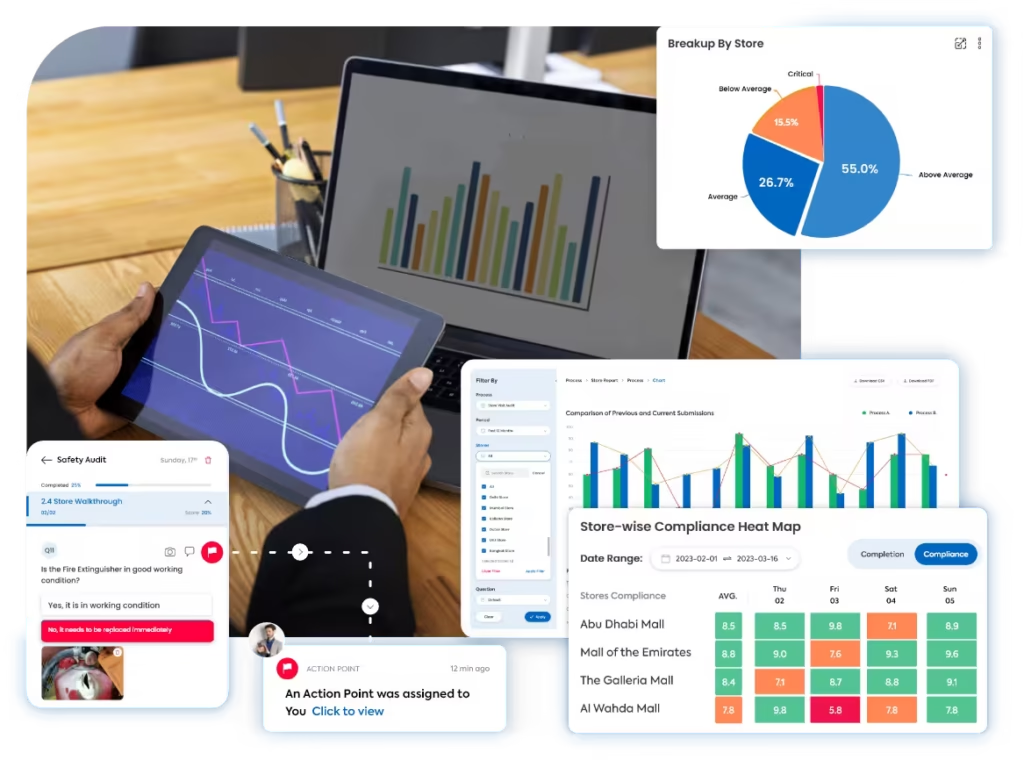
Taqtics connects waste-management checklists, department-level inspections, evidence capture, scoring, issue escalation, corrective actions, and reports across every healthcare facility and waste-handling area.
Where Manual Biomedical Waste Audits Break Down
Select a common gap to see why paper forms, spreadsheets, messages, and disconnected records weaken waste-control visibility.
Without clear instructions and repeatable checks, different departments may interpret container selection, labelling, sharps handling, and segregation requirements differently.
Manual reports often separate the finding from the facility, department, container, waste category, timestamp, photograph, and responsible team.
Disconnected logs make it harder to connect a waste bag or container with its origin, collection time, temporary storage, transport, vendor handover, and supporting documentation.
When follow-up sits outside the audit workflow, ownership, deadlines, escalation, retraining, replacement of containers, cleanup, and closure evidence can be missed.
What a Biomedical Waste Management Audit Should Cover
Move through five control areas to verify segregation, sharps handling, collection, internal transport, temporary storage, handover, records, and response practices.
Verify Correct Segregation Where Waste Is Generated
Confirm that biomedical waste is separated immediately into the appropriate approved containers according to the applicable facility and regulatory rules.
Control Sharps and High-Risk Waste Containers
Inspect sharps boxes and other high-risk containers for safe placement, condition, use, closure, and replacement.
Keep Waste Collection and Internal Transport Controlled
Verify collection frequency, sealed containers, dedicated routes, trolley condition, handling PPE, and spill prevention during movement.
Verify Temporary Storage and Authorized Handover
Inspect the waste-storage area and verify that collections are handed over through controlled, documented processes.
Maintain Traceability and Respond to Waste Incidents
Review training, records, incident response, spill controls, exposure handling, and evidence that waste findings are closed.
How Taqtics Digitizes Biomedical Waste Management Audits
Set the waste-control standard once, guide departments through consistent checks, calculate compliance automatically, and convert failed observations into accountable action.
Make Every Biomedical Waste Finding Easier to Verify
Verify the facility, department, waste point, container, audit time, observation, supporting evidence, risk level, assigned owner, and closure status behind every finding.
Is biomedical waste segregated into the correct approved container at the point of generation?
Photo evidence required for non-complianceAre sharps containers intact, accessible, labelled, and below the fill limit?
Are waste bags and containers securely closed before internal transport?
Validated observations
Confirm where, when, and with what evidence each waste-management observation was submitted.
+
Validated observations
Confirm where, when, and with what evidence each waste-management observation was submitted.
- Healthcare facility, department, waste point, storage area, and collection context
- Timestamped submission with auditor and location details
- Photographs, comments, container details, labels, and supporting records
- Waste category, sharps box, trolley, storage area, or handover reference
Standardized scoring
Apply consistent waste-control standards, severity rules, and scoring logic across facilities.
+
Standardized scoring
Apply consistent waste-control standards, severity rules, and scoring logic across facilities.
- Area-specific waste-management instructions and references
- Compliant, Non-compliant, and N/A answer rules
- Critical, major, and minor risk classifications
- Weighted scoring with automatic waste-compliance calculation
Corrective actions
Route waste-control failures to the right healthcare team and track each action through evidence-backed closure.
+
Corrective actions
Route waste-control failures to the right healthcare team and track each action through evidence-backed closure.
- Owners, priorities, deadlines, and overdue escalation
- Routing to waste-management, nursing, housekeeping, infection control, facility, or vendor teams
- Segregation correction, container replacement, cleanup, retraining, collection, or storage-control requirements
- Closure evidence, reviewer approval, and reopening when required
Connect biomedical waste audits with corrective action tracking software so high-risk findings are not left unresolved.
Biomedical Waste Reports That Show Where Handling Risk Is Increasing
Turn audit data into visibility across segregation, sharps handling, collection, storage, handover records, recurring findings, and corrective-action closure.
View all report insights +
- Overall biomedical waste compliance score
- Score by healthcare facility
- Department and generation-point performance
- Segregation non-compliance
- Container availability and condition
- Sharps-handling findings
- Overfilled or damaged sharps containers
- Waste-label and identification gaps
- Collection-frequency findings
- Internal transport and trolley condition
- Temporary storage compliance
- Restricted-access findings
- Handover and manifest gaps
- Vendor collection exceptions
- Spill and exposure incidents
- Critical, major, and minor findings
- Open versus closed actions
- Overdue actions by department
- Average closure time
- AI-detected recurring waste-control patterns
Start With a Biomedical Waste Management Audit Checklist
Define segregation controls, sharps requirements, collection checks, storage standards, handover records, evidence rules, risk scoring, and corrective-action triggers inside Taqtics.
Biomedical Waste Management Audit Software Questions
What is biomedical waste management audit software?+
Biomedical waste management audit software helps healthcare teams inspect segregation, container condition, sharps handling, collection, internal transport, temporary storage, handover records, incident response, and corrective actions through one digital workflow.
What should a biomedical waste audit cover?+
An audit can cover point-of-generation segregation, approved containers, sharps controls, labels, collection schedules, transport trolleys, temporary storage, vendor handover, manifests, training, spills, exposure response, and corrective actions.
Can audits be assigned by facility, department, and waste area?+
Yes. Audits can be assigned by healthcare facility, department, ward, laboratory, treatment area, waste room, storage area, role, shift, frequency, and deadline.
Can auditors capture photographs and container details?+
Yes. Audit questions can require live photographs, structured comments, waste-category details, container condition, labels, timestamps, supporting records, and immediate-control notes.
Can sharps and segregation controls be scored separately?+
Yes. Teams can apply section weights, critical controls, different answer types, severity rules, and automatic score calculations for segregation, sharps, collection, storage, handover, and records.
Can critical waste-management failures trigger immediate actions?+
Yes. Critical failures can trigger alerts, immediate containment instructions, corrective actions, priority deadlines, escalations, and mandatory closure evidence.
Can handover records and vendor documents be attached?+
Yes. Auditors can attach collection logs, manifests, receipts, vendor documents, training records, photographs, incident reports, and other supporting evidence.
Can findings be routed to different healthcare teams?+
Yes. Findings can be routed to nursing, housekeeping, infection control, facilities, waste-management teams, department managers, procurement, or approved waste-service vendors.
Can waste-compliance scores be compared across facilities?+
Yes. Reports can compare facilities, departments, generation points, audit sections, shifts, finding categories, action closure, and historical waste-compliance trends.
Can Taqtics identify recurring biomedical waste risks?+
Yes. Historical audit data can surface repeated segregation errors, sharps-container issues, labelling gaps, collection delays, storage findings, handover exceptions, and recurring corrective actions by facility or department.
Make Every Biomedical Waste Audit Reliable and Actionable
Digitize waste audits, verify segregation and handling controls, identify high-risk gaps, assign accountable actions, and improve waste-management compliance across every healthcare facility.