
Patient Safety Protocol Audit Software for Safer, Consistent Care
Standardize patient safety audits across hospitals, clinics, diagnostic centres, and care facilities. Verify patient identification, medication safety, fall prevention, procedure controls, communication, incident response, and corrective actions through one connected workflow.
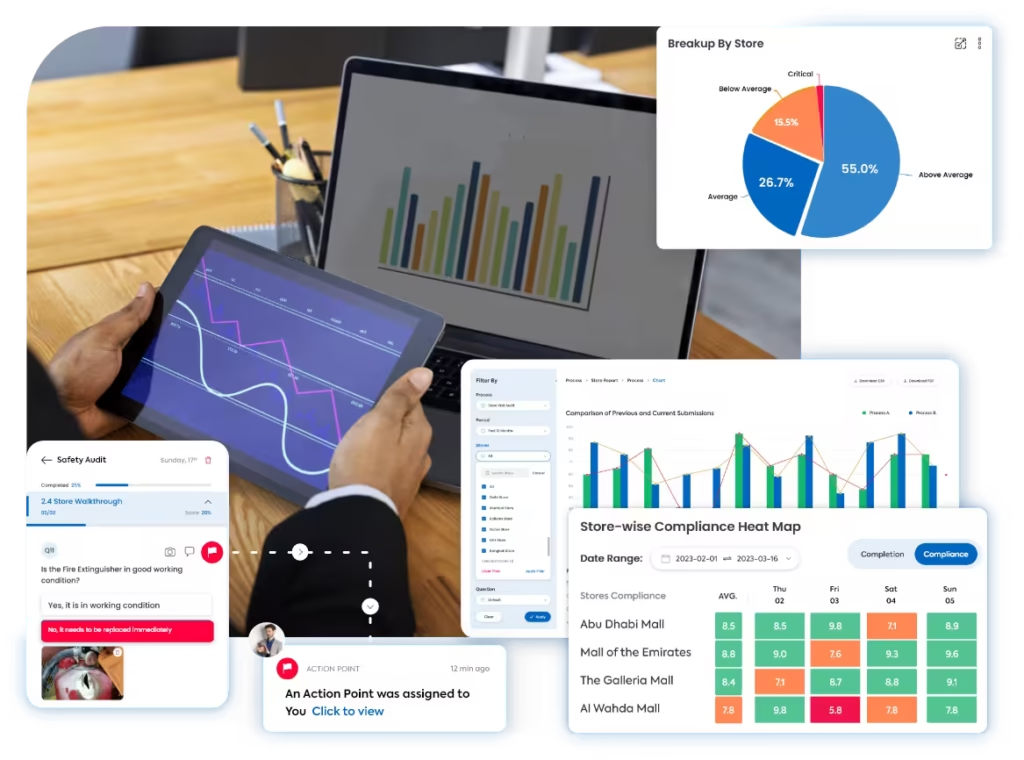
A Clearer Way to Audit Patient Safety Across Every Care Area
Taqtics connects patient-safety templates, department-level observations, evidence capture, scoring, corrective actions, escalation, and reports across every healthcare facility and care team.
Where Manual Patient Safety Audits Break Down
Select a common gap to see why paper forms, spreadsheets, messages, and disconnected incident records weaken patient-safety visibility.
Without clear instructions and scoring rules, identification, medication, fall-prevention, communication, and procedure checks may be assessed differently by each auditor.
Manual reports often separate the finding from the facility, department, room, timestamp, auditor, photograph, protocol record, and supporting evidence.
Medication errors, identification failures, fall risks, procedure deviations, and communication gaps can remain in disconnected channels instead of being escalated immediately.
When follow-up sits outside the audit workflow, ownership, deadlines, escalation, closure evidence, reviewer approval, and repeat-risk tracking can be missed.
What a Patient Safety Protocol Audit Should Cover
Move through five patient-safety areas to verify identification, medication practices, fall prevention, procedures, communication, incident response, and escalation controls.
Verify the Right Patient Before Every Care Activity
Confirm patient identity and communication controls before medication, procedures, diagnostics, transfer, and treatment.
Reduce Medication Errors Through Consistent Safety Controls
Review storage, preparation, administration, documentation, and high-alert medication practices.
Identify and Control Falls and Mobility Risks
Verify patient risk assessment, environmental controls, mobility support, and fall-prevention interventions.
Keep Procedures, Handover, and Care Transitions Consistent
Check pre-procedure verification, consent, time-out practices, clinical handover, and discharge or transfer controls.
Turn Safety Events Into Accountable Improvement
Verify incident reporting, immediate controls, escalation, review, corrective action, and repeat-risk monitoring.
How Taqtics Digitizes Patient Safety Protocol Audits
Set the patient-safety standard once, guide teams through care-area checks, calculate results automatically, and convert failed controls into accountable actions.
Make Every Patient Safety Finding Easier to Verify
Verify the facility, department, care area, audit time, protocol condition, evidence, severity, assigned owner, and closure status behind every safety finding.
Are two patient identifiers verified before medication administration or treatment?
Field is requiredAre high-risk and allergy alerts clearly visible in the patient record and care area?
Is the current fall-risk assessment documented and reflected in bedside precautions?
Validated observations
Confirm where, when, and with what evidence each patient-safety response was submitted.
+
Validated observations
Confirm where, when, and with what evidence each patient-safety response was submitted.
- Facility, department, ward, room, and care-area context
- Timestamped submission with auditor details
- Photographs, comments, and supporting records
- Protocol, incident, medication, or procedure references
Standardized scoring
Apply consistent patient-safety instructions, critical controls, and scoring logic across facilities.
+
Standardized scoring
Apply consistent patient-safety instructions, critical controls, and scoring logic across facilities.
- Protocol-specific inspection instructions
- Compliant, Non-compliant, and N/A answer rules
- Critical, major, and minor risk classifications
- Weighted scoring with automatic safety calculation
Corrective actions
Assign failed safety controls and track every action through evidence-backed closure.
+
Corrective actions
Assign failed safety controls and track every action through evidence-backed closure.
- Owners, priorities, deadlines, and overdue escalation
- Routing to nursing, clinical, quality, pharmacy, facility, or department teams
- Immediate control, retraining, process correction, or equipment-action requirements
- Closure evidence, reviewer approval, and reopening when required
Connect patient-safety audits with corrective action tracking software so critical findings are not left unresolved.
Patient Safety Reports That Show Where Care Risk Is Increasing
Turn audit data into visibility across patient identification, medication safety, fall prevention, procedure controls, incident response, recurring findings, and corrective-action closure.
View all report insights +
- Overall patient-safety score
- Score by facility and department
- Patient-identification compliance
- Medication-safety findings
- High-alert medication controls
- Fall-risk assessment compliance
- Procedure and time-out compliance
- Consent and handover findings
- Incident and near-miss trends
- Critical, major, and minor findings
- Open versus closed actions
- Overdue actions by department
- Average corrective-action closure time
- Repeat findings by care area
- AI-detected recurring patient-safety patterns
Start With a Ready-to-Use Patient Safety Protocol Audit Checklist
Define patient-identification checks, medication controls, fall prevention, procedure safety, handover requirements, incident response, evidence rules, scoring, and corrective-action triggers inside Taqtics.
Patient Safety Protocol Audit Software Questions
What is patient safety protocol audit software?+
Patient safety protocol audit software helps healthcare teams inspect patient-safety practices, capture evidence, score protocol compliance, escalate critical risks, assign corrective actions, and track improvements across facilities and departments.
What should a patient safety audit cover?+
A patient safety audit can cover patient identification, medication safety, fall prevention, procedure controls, consent, clinical handover, incident reporting, escalation, documentation, and corrective-action follow-up.
Can audits be assigned by facility, department, ward, and room?+
Yes. Audits can be assigned by healthcare facility, department, ward, room, care area, role, audit type, frequency, and deadline.
Can auditors capture photographs, comments, and supporting records?+
Yes. Questions can require photographs, structured comments, protocol records, timestamps, supporting documents, incident references, and other evidence needed to verify a finding.
Can patient identification and medication safety be scored separately?+
Yes. Teams can apply separate section weights, critical checks, severity rules, and automatic score calculations for identification, medication safety, falls, procedures, handover, and incident response.
Can critical patient-safety failures trigger immediate actions?+
Yes. Critical failures can trigger alerts, immediate controls, corrective actions, priority deadlines, escalation, and mandatory closure evidence.
Can findings be routed to different healthcare teams?+
Yes. Findings can be routed to nursing, clinical, quality, pharmacy, infection-control, facility, department, or other responsible teams based on the issue.
Can incident and near-miss findings be tracked?+
Yes. Audit findings can be connected with incident details, severity, immediate controls, assigned actions, deadlines, closure evidence, and recurrence monitoring.
Can patient-safety scores be compared across facilities?+
Yes. Reports can compare facilities, departments, wards, protocol areas, critical findings, action closure, and historical patient-safety performance.
Can Taqtics identify recurring patient-safety risks?+
Yes. Historical audit data can surface repeated identification gaps, medication issues, fall-risk failures, procedure deviations, handover problems, and recurring findings by department or facility.
Make Every Patient Safety Audit Reliable and Actionable
Digitize patient-safety audits, verify care protocols, identify critical risks, assign accountable actions, and strengthen patient safety across every healthcare facility.