Staff Grooming & Uniform Compliance: Definition, Importance & Components
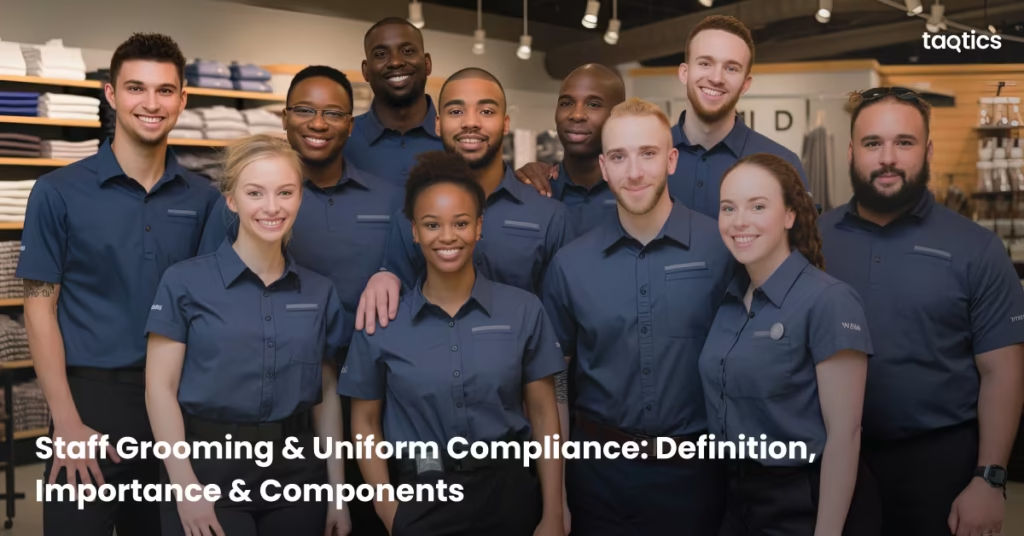
Staff Grooming & Uniform Compliance refers to the set of guidelines that define how employees should present themselves at work, including personal hygiene, grooming standards, and the correct wearing and upkeep of uniforms. Staff Grooming & Uniform Compliance plays a critical role in shaping first impressions, building customer trust, and reinforcing a professional brand image, especially in customer-facing industries where appearance often becomes a proxy for service quality.
Consider a simple daily-life incident: you enter a clinic and are greeted by a receptionist in a clean, well-fitted uniform, with neatly groomed hair and a visible ID badge. You instinctively feel confident about the clinic’s hygiene and professionalism. A 2022 study by Choy and Shih on hotel housekeeping staff found that uniform fit, material, and functionality directly influence both employee job satisfaction and guest perception of service quality.
Earlier research by Tu and colleagues in 2011 also established that employees’ uniforms significantly shape customers’ perceptions of organizational credibility, while a 2023 paper by Moody highlights that involving staff in grooming and uniform standards improves compliance and service consistency.
What Is Staff Grooming & Uniform Compliance in Retail?
Staff grooming and uniform compliance in retail refers to the set of standards that ensure retail employees maintain a neat personal appearance and wear prescribed uniforms correctly and consistently while on duty. It focuses on presenting a professional, hygienic, and brand-aligned image that builds customer trust, improves in-store experience, and supports smooth store operations.
The key elements that play a significant role in staff grooming in the retail sector include the following.
- Personal grooming standards: Covers hygiene, hair, facial hair, nails, makeup, and accessories to ensure employees look clean, approachable, and suitable for customer interaction throughout long retail shifts.
- Uniform adherence: Ensures staff wear approved uniforms, footwear, and name badges correctly, in the right colors and fits, helping customers easily identify employees on the shop floor.
- Brand representation: Aligns staff appearance with the retailer’s brand identity, whether premium, value-driven, or lifestyle-focused, making the brand instantly recognizable in-store.
- Customer trust & comfort: Well-groomed, uniformed staff signal professionalism and reliability, which is especially important in categories like fashion, electronics, groceries, and pharmacy retail.
- Operational consistency: Standardized appearance reduces ambiguity for customers, improves team discipline, and supports smoother day-to-day store management and supervision.
- Safety & hygiene compliance: Includes rules for footwear, hair restraints, and protective clothing where required, helping retail stores meet safety, food-handling, and hygiene norms.
- Employee discipline & morale: Clear grooming and uniform guidelines create fairness and equality among staff, reducing appearance-based bias and encouraging pride in representing the store.
- Audit & policy enforcement: Enables managers to conduct quick visual checks during daily store openings or shifts, ensuring compliance with internal policies and regulatory expectations.
By embedding these standards into everyday operations, retailers ensure uniformity across locations, smoother staff management, and a more welcoming in-store experience. Ultimately, strong grooming and uniform compliance help retail teams not only look the part but also act with greater confidence, accountability, and pride in representing the brand.
What Are Standard Grooming Guidelines for Retail Staff?
The standard grooming guidelines for retail staff are designed to ensure a professional appearance, maintain hygiene, and create a consistent, customer-friendly environment across all retail settings. These guidelines cover uniforms, personal grooming, and hygiene practices.
Uniforms and Dress Code
Uniforms are the most visible representation of a retail brand and play a key role in creating a professional first impression. Following dress code standards ensures staff look neat, approachable, and aligned with the store’s identity.
- Cleanliness: Uniforms should be clean, ironed, and free of stains or wrinkles.
- Fit: Clothing must be well-fitted—neither loose and sloppy nor overly tight.
- Shoes: Footwear should be clean, polished, job-appropriate, and typically closed-toe and slip-resistant.
- Accessories: Jewelry should be minimal; visible tattoos or piercings should be covered as per store policy.
- ID: Name badges or ID cards must be worn and clearly visible during working hours.
Personal Grooming
Personal grooming helps employees present a polished and approachable appearance, which builds customer trust and confidence. Maintaining neat hair, nails, makeup, and minimal fragrance reflects professionalism and care.
- Hair: Hair should be clean, neatly styled, and kept away from the face; hairnets or caps may be required in certain retail formats.
- Facial Hair: Beards and mustaches must be neatly trimmed and well-groomed.
- Nails: Fingernails should be short and clean; nail polish, if used, should be subtle and professional.
- Makeup: Makeup should be light and understated, avoiding bright or flashy colors.
- Fragrance: Perfumes or colognes should be mild and used sparingly to prevent irritation or allergies.
Hygiene
Good hygiene is essential to maintaining a safe, healthy, and pleasant shopping environment for both staff and customers. Regular personal hygiene practices reduce the risk of contamination and create a positive workplace culture.
- Bathing: Staff should bathe daily and maintain overall personal cleanliness.
- Oral Hygiene: Teeth should be brushed regularly to ensure fresh breath during customer interactions.
- Hand Washing: Hands should be washed frequently, especially after restroom use, handling food, or touching dirty items.
Following these grooming and uniform standards ensures retail staff maintain a professional image, reinforce brand identity, and provide a safe and welcoming environment. Consistent compliance supports customer trust, employee confidence, and operational excellence across all retail locations.
What Are the Consequences of Poor Grooming and Uniform Compliance?
The consequences of poor grooming and uniform compliance are loss of brand trust, reduced customer satisfaction, potential regulatory fines, negative employee morale, and inconsistent service quality.
- Loss of Brand Trust: Employees who appear untidy or fail to follow uniform guidelines can damage the perception of professionalism and reliability. Customers may question the quality of service or products, undermining brand credibility.
- Reduced Customer Satisfaction: Poor grooming can make employees seem unapproachable or careless, affecting interactions and reducing the likelihood of repeat business. First impressions are crucial in retail, and appearance directly influences customer confidence and comfort.
- Potential Regulatory Fines: In certain sectors such as food, healthcare, or pharmaceuticals, failure to adhere to hygiene and uniform standards can violate health and safety regulations. This may result in fines, legal action, or even temporary closure.
- Negative Employee Morale: Inconsistent enforcement of grooming and uniform policies can lead to dissatisfaction and tension among staff. Employees may feel unfairly treated if some adhere to standards while others do not, lowering overall motivation and engagement.
- Inconsistent Service Quality: When staff appearance is not standardized, it can reflect a lack of discipline and operational consistency. This inconsistency may confuse customers, reduce efficiency on the floor, and weaken the overall retail experience.
Maintaining strict grooming and uniform compliance is essential to protect brand reputation, ensure customer satisfaction, and uphold workplace discipline. Retailers who ignore these standards risk damaging both their image and operational effectiveness.
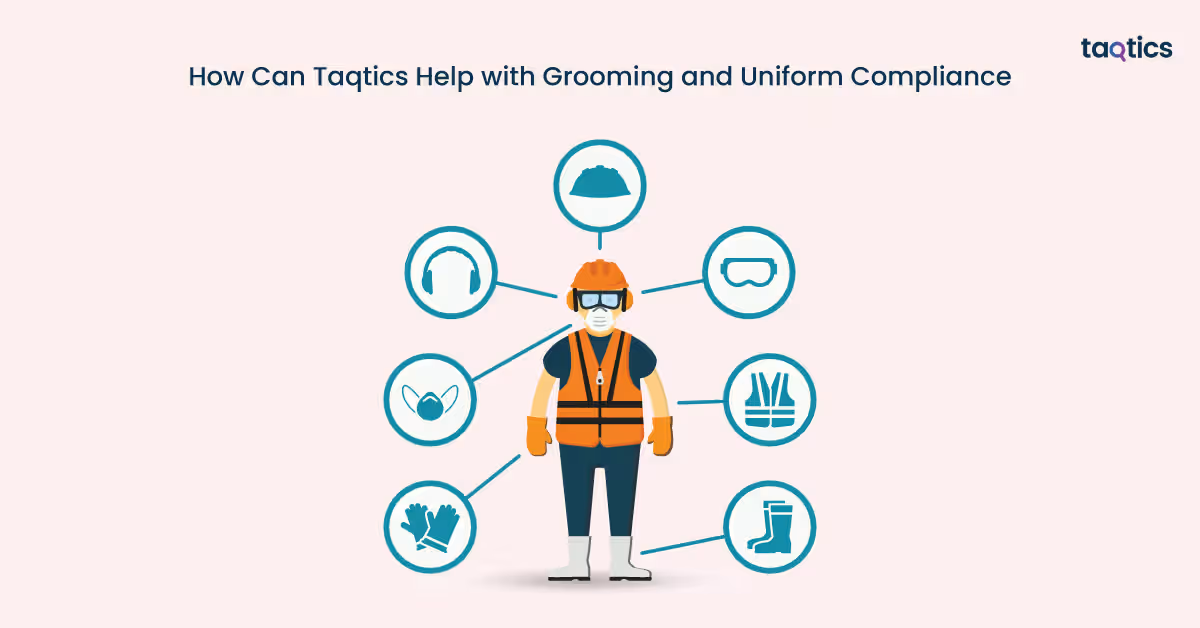
How Can Taqtics Help with Grooming and Uniform Compliance?
Taqtics can help with grooming and uniform compliance by providing retail managers with digital tools to monitor, enforce, and improve staff appearance standards efficiently across multiple stores.
- Real-time Audit Capabilities: Conduct instant grooming and uniform checks on the store floor, allowing managers to identify non-compliance immediately.
- Photo-Based Compliance Verification: Capture and review images of staff appearance to confirm adherence to grooming and uniform standards, reducing subjectivity in inspections.
- Custom Checklists and SOP Deployment: Create role-specific checklists and standard operating procedures, ensuring every employee knows the grooming and uniform expectations.
- Reporting and Dashboard for Non-Compliance Trends: Track recurring issues, identify patterns, and generate reports to inform training, corrective measures, and policy improvements.
- Role in Improving Store-Level Execution: Enables managers to consistently enforce standards, improving customer experience and maintaining brand integrity across multiple locations.
- Case Study/Testimonial: Retailers using Taqtics have reported higher compliance scores and improved employee accountability, resulting in better customer perception and a more professional in-store environment.
By leveraging Taqtics, retailers can streamline grooming and uniform compliance, reduce human error, and ensure that every store consistently projects a professional and brand-aligned image.
How does Taqtics ensure grooming audits are unbiased?
Taqtics ensures grooming audits are unbiased by using technology-driven tools that minimize human subjectivity and create transparent, consistent evaluations across all stores. Its features standardize the assessment process, ensuring fairness and accuracy.
- Photo-Based Verification: Employees’ grooming and uniform compliance can be documented through photos, allowing managers to review objective evidence rather than relying solely on personal judgment.
- Standardized Checklists: Customizable digital checklists ensure that every audit follows the same criteria, reducing variability between different auditors or locations.
- Automated Scoring: Compliance is measured against predefined standards, with automatic scoring to prevent favouritism or personal bias in evaluations.
- Centralized Dashboard: Audit results are recorded and tracked centrally, enabling transparent reporting and comparison across stores without relying on subjective verbal feedback.
- Time-Stamped Records: Each audit entry includes timestamps and details of the auditor, creating accountability and reducing the possibility of manipulation or biased reporting.
Combining objective documentation, standardized procedures, and automated reporting helps Taqtics ensure that grooming audits are fair, consistent, and fully aligned with brand standards.
About the Author