Receiving Checklist: Definition, Importance & Components
A receiving checklist is a structured tool used by restaurant teams to inspect and verify food deliveries at the point of arrival, ensuring that all items meet quality, quantity, and food safety standards before acceptance. A receiving checklist helps standardize how deliveries are checked by capturing details such as temperature, packaging condition, labeling, and supplier compliance, reducing the risk of contaminated or substandard ingredients entering the kitchen. According to a 2023 report by the Food Safety and Standards Authority of India, improper receiving and storage practices are among the leading causes of food contamination in commercial kitchens.
A receiving checklist plays a critical role in protecting food quality, controlling costs, and maintaining compliance with safety regulations. Research published in 2024 by the World Health Organization highlights that systematic food handling and inspection processes can significantly reduce foodborne illness risks across the supply chain. By combining defined inspection criteria, supplier verification, and real-time decision-making at the delivery stage, a receiving checklist ensures only safe and high-quality ingredients enter the kitchen, forming the first line of defense in restaurant operations.
What Is A Receiving Checklist For Food Deliveries In A Restaurant?
A receiving checklist for food deliveries in a restaurant is a step-by-step verification tool used at the time of delivery to assess whether incoming goods match purchase orders and meet predefined acceptance criteria. It guides staff in making accept or reject decisions on the spot, based on measurable checks rather than assumptions.
It typically includes parameters such as quantity verification against invoices, product specifications like size or grade, condition of packaging, signs of damage or contamination, supplier details, and delivery timing compliance. It may also capture exceptions or discrepancies, rejection reasons, and receiver sign-off, ensuring accurate documentation and traceability for every delivery.
Why Is Food Receiving Such A Big Deal For Food Safety And Audits?
Food receiving is a big deal for food safety and audits because it is the first control point where unsafe, contaminated, or non-compliant ingredients can be identified and stopped before entering the kitchen.
- Critical control at entry point: Receiving acts as the gatekeeper for food safety, preventing contaminated or temperature-abused items from entering storage and production areas.
- Supports HACCP prerequisite programs: Proper receiving checks, such as temperature verification, supplier approval, and product inspection, form the foundation of effective HACCP systems.
- Ensures audit and inspection readiness: Consistent receiving practices and documented checks demonstrate compliance during inspections and reduce the risk of penalties.
- Prevents common compliance violations: Inspectors frequently flag issues like incorrect delivery temperatures, missing or improper labeling, poor storage practices, and signs of pests or contamination at receiving.
- Reduces risk of cross-contamination: Early detection of damaged packaging or spoiled items helps prevent contamination from spreading to other food products.
- Improves traceability and accountability: Recording delivery details, discrepancies, and approvals ensures clear documentation for audits and supplier management.
The strong receiving practices set the tone for the entire food safety system, making it easier to maintain compliance, pass audits, and protect both customers and the business.
What Are The Core Components Of a Receiving Checklist?
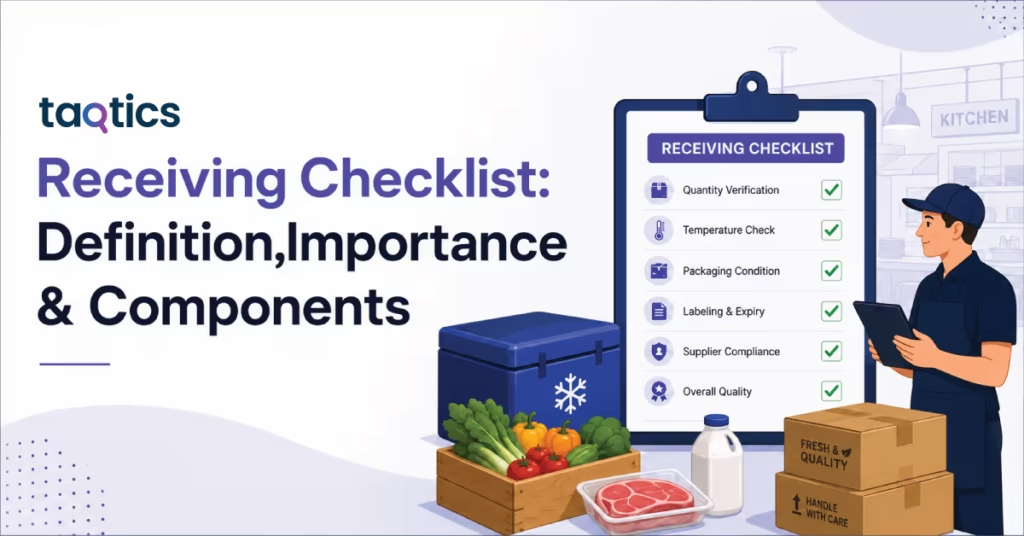
The core components of a receiving checklist are preliminary information, vehicle & driver inspection, temperature verification (critical), product quality & packaging, dates & labeling, and post inspection actions.
Preliminary Information
This is the starting point of the receiving process, where all essential delivery details and documentation are verified to ensure the order is correct before any physical inspection begins.
- Delivery Details: Record the date, time of arrival, supplier name, and driver’s name for accountability
- Documentation: Match the invoice with the purchase order in terms of item names, quantities, and agreed prices
Vehicle & Driver Inspection
Before accepting any goods, it is important to assess the condition in which they were transported, as this directly impacts food safety and quality.
- Sanitation: Check that the vehicle interior is clean, organized, and free from odors or debris
- Pest Check: Look for any signs of rodents or insects in the vehicle or on packaging
- Separation: Ensure food items are stored separately from non-food items like chemicals
Temperature Verification (Critical)
This is the most crucial step in the receiving process, as improper temperatures can make food unsafe even if everything else appears acceptable.
- Refrigerated Food: Must be at or below 5°C or 41°F
- Frozen Food: Should be frozen solid with no signs of thawing, such as ice crystals or water stains
- Hot Food: Must be at or above 57°C or 135°F
- Special Items: Milk, eggs, and shellfish can be received at 7°C or 45°F but must be cooled to 5°C or 41°F within four hours
- Thermometer Use: Always verify using a calibrated thermometer at the time of delivery
Product Quality & Packaging
Even if temperatures are correct, the physical condition and sensory quality of the product must be checked to ensure it is fit for use.
- Packaging Integrity: Reject items with tears, leaks, punctures, or broken seals
- Canned Goods: Reject swollen, rusted, dented, or unlabeled cans
- Sensory Checks: Look for off odors, abnormal color, or slimy textures in perishables
- Produce Quality: Check for mold, wilting, or bruising in fruits and vegetables
Dates & Labeling
This step ensures that all received items are usable within the required time frame and can be properly tracked throughout storage and usage.
- Expiration Dates: Confirm items are within use-by dates and have sufficient shelf life
- Traceability: Verify lot codes and retain required tags, such as shell stock tags for tracking
Post Inspection Actions
The final stage ensures that once items are accepted, they are handled correctly to maintain safety, quality, and proper documentation.
- Immediate Storage: Transfer perishable items to proper storage within 10 to 20 minutes to maintain the cold chain
- FIFO Labels: Apply internal labels for proper stock rotation
- Reject and Record: Reject non-compliant items, inform the driver, and document reasons in receiving logs
These components ensure that receiving is a controlled, thorough process that safeguards food quality, safety, and operational consistency from the moment deliveries arrive.
What Records Should Restaurants Keep For Receiving (And For How Long)?
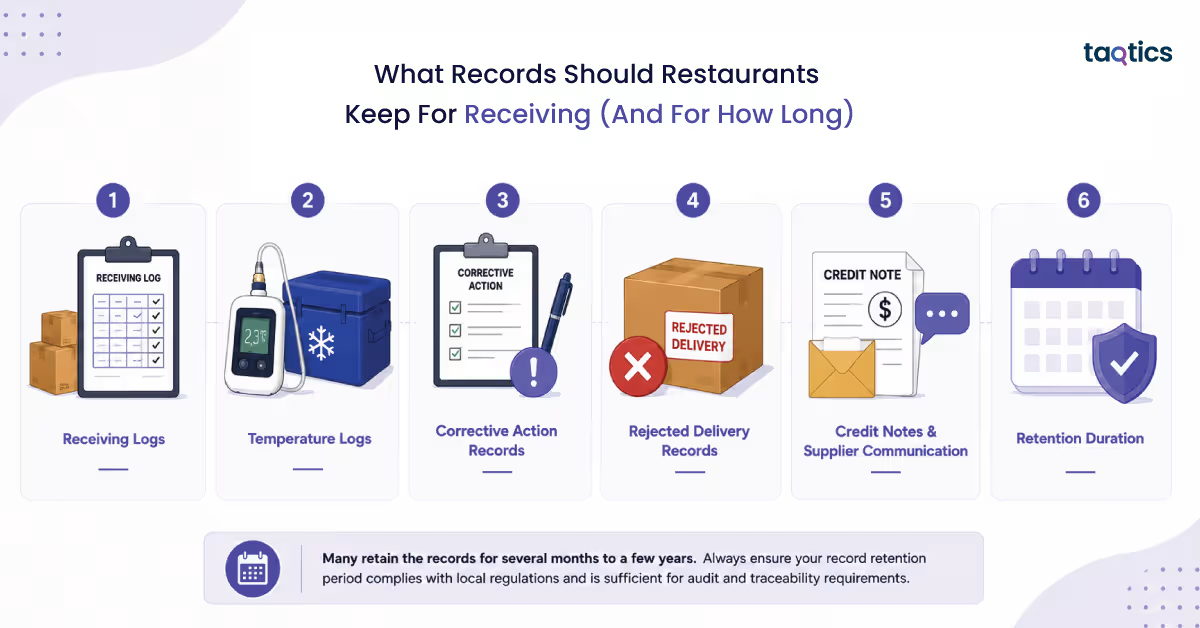
The records that restaurants should keep for receiving include key documentation that supports traceability, food safety compliance, and audit readiness.
- Receiving logs: Capture delivery details such as date, supplier, items received, quantities, and the person who accepted the delivery, creating a clear record of all incoming goods.
- Temperature logs: Document temperatures of chilled, frozen, and hot items at the time of receiving to verify compliance with safety standards.
- Corrective action records: Record any issues identified during receiving, along with the actions taken, ensuring problems are addressed and tracked.
- Rejected delivery records: Maintain details of items that were refused, including reasons such as damage, spoilage, or temperature deviations.
- Credit notes and supplier communication: Keep records of credits issued for rejected or short deliveries, along with any related supplier communication.
The duration for keeping these records depends on local regulations and company policies, but they should always align with audit requirements. Many retain the records for several months to a few years.
How Can Taqtics Help Standardize Receiving And Reduce Delivery Mistakes?
Taqtics can help standardize receiving and reduce delivery mistakes by turning manual checks into structured, trackable, and accountable digital workflows.
- Turn receiving checklists into digital SOPs: Convert paper based processes into mobile-friendly checklists that guide staff step by step, ensuring every delivery is inspected consistently across shifts and locations.
- Require photo proof for verification: Capture images of damaged goods, temperature readings, or packaging issues, creating visual evidence that supports better decision-making and supplier accountability.
- Automatically generate receiving logs: Every completed checklist is stored as a digital record, making it easy to maintain audit-ready logs without additional manual documentation.
- Assign tasks and enforce accountability: Allocate receiving responsibilities to specific team members, track completion by shift or location, and ensure nothing is missed or left unverified.
- Track and analyze vendor performance trends: Identify recurring issues such as late deliveries, temperature failures, or frequent shortages, helping operators take corrective action with suppliers.
- Centralize documents and standards: Store approved vendor lists, product specifications, and SOPs in one place, ensuring teams always follow the latest guidelines during receiving.
By digitizing and standardizing the receiving process, Taqtics helps reduce human error, improve compliance, and create a more reliable and transparent system for managing food deliveries.
How Do You Audit Receiving Compliance Across Multiple Outlets?
You can audit receiving compliance across multiple outlets through a mix of standardization, visibility, and periodic validation to ensure every location follows the same food safety and documentation practices.
- Use a standardized receiving checklist across all outlets: Ensure every location follows the same SOP with identical checkpoints for temperature, quality, documentation, and labeling, reducing variation in how deliveries are handled.
- Conduct scheduled and surprise audits: Perform regular audits along with unannounced checks to validate real-time compliance rather than prepared behavior.
- Review receiving records and logs centrally: Analyze receiving logs, temperature records, and rejection reports from all outlets to identify gaps and inconsistencies.
- Track key compliance metrics: Monitor indicators such as temperature deviations, rejected deliveries, documentation errors, and response times to issues.
- Benchmark outlet performance: Compare locations to identify high-performing outlets and those needing improvement, enabling targeted training and intervention.
- Validate corrective actions: Ensure that issues identified during receiving are not just recorded but also resolved, with proper follow-up and documentation.
- Leverage digital tools for visibility: Use centralized platforms to track completion, capture proof, and generate reports across locations in real time.
- Train and recalibrate teams regularly: Conduct periodic training and refresher sessions to reinforce standards and address recurring audit findings.
Combining consistent processes with data-driven monitoring and regular audits enables businesses to maintain strong receiving compliance and reduce risks across all outlets.
What Should You Do If Food Arrives Without Labels Or Lot Codes?
If food arrives without labels or lot codes, it should be treated as a food safety and traceability risk and handled with strict caution before acceptance.
- Do not accept by default: Unlabeled items lack traceability, making it difficult to verify origin, shelf life, or recall information. The safest approach is to reject the delivery unless clarified.
- Verify immediately with the supplier: Contact the supplier or delivery driver to confirm product details, batch information, and labeling status before making a decision.
- Reject if traceability cannot be confirmed: If proper documentation or lot details are not available, reject the items to avoid compliance and safety risks.
- Document the issue clearly: Record the incident in receiving logs, including supplier name, items affected, and reason for rejection for audit purposes.
- Avoid relabeling without verified information: Never create internal labels based on assumptions, as this can lead to incorrect usage and serious compliance violations.
- Escalate repeated issues: If the same supplier frequently sends unlabeled goods, escalate internally and review supplier approval status.
- Accept only with proper corrective action: In rare cases, if verified documentation is provided immediately, ensure correct labeling is applied before storage and use.
Maintaining strict control at receiving ensures full traceability, protects food safety, and keeps the operation audit-ready.
How Do You Train Staff On Receiving Procedures Quickly?
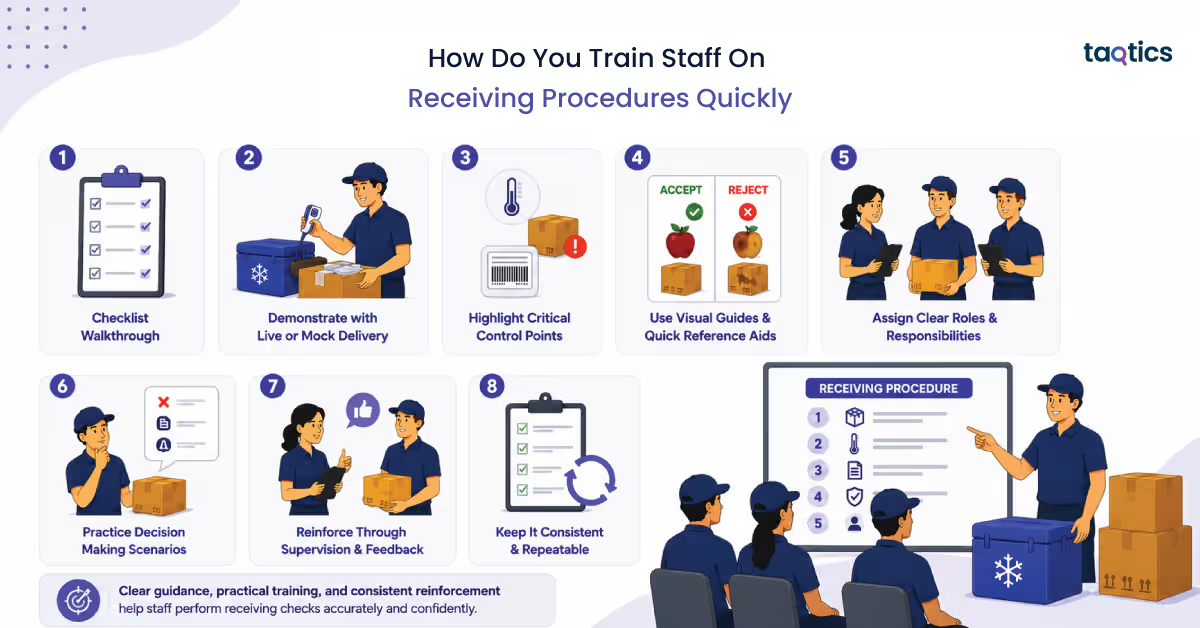
You can train staff on receiving procedures quickly with a focused, hands-on approach that simplifies the process and reinforces what matters most at the point of delivery.
- Start with a simple checklist walkthrough: Introduce the receiving checklist step by step, explaining key checks like temperature, packaging, labeling, and documentation so staff know exactly what to look for.
- Demonstrate with a live or mock delivery: Show how to inspect items in real time, including how to use a thermometer, check invoices, and identify quality issues. Learning by doing speeds up understanding.
- Highlight critical control points first: Emphasize non-negotiables such as temperature checks, damaged packaging, and missing labels so staff prioritize safety over speed.
- Use visual guides and quick reference aids: Provide simple charts or examples of acceptable versus reject conditions to help staff make faster, more confident decisions.
- Assign clear roles and responsibilities: Define who receives, who verifies, and who signs off to avoid confusion and ensure accountability from the start.
- Practice decision making scenarios: Train staff on what to do if items fail checks, such as rejecting, documenting, or escalating issues.
- Reinforce through supervision and feedback: Managers should observe initial receiving tasks, correct mistakes immediately, and reinforce proper practices.
- Keep it consistent and repeatable: Use the same checklist and process every time so staff quickly build habit and confidence.
With clear guidance, practical training, and consistent reinforcement, staff can quickly learn to perform receiving checks accurately and confidently.
About the Author