Date Labeling Checklist: Definition, Importance & Components
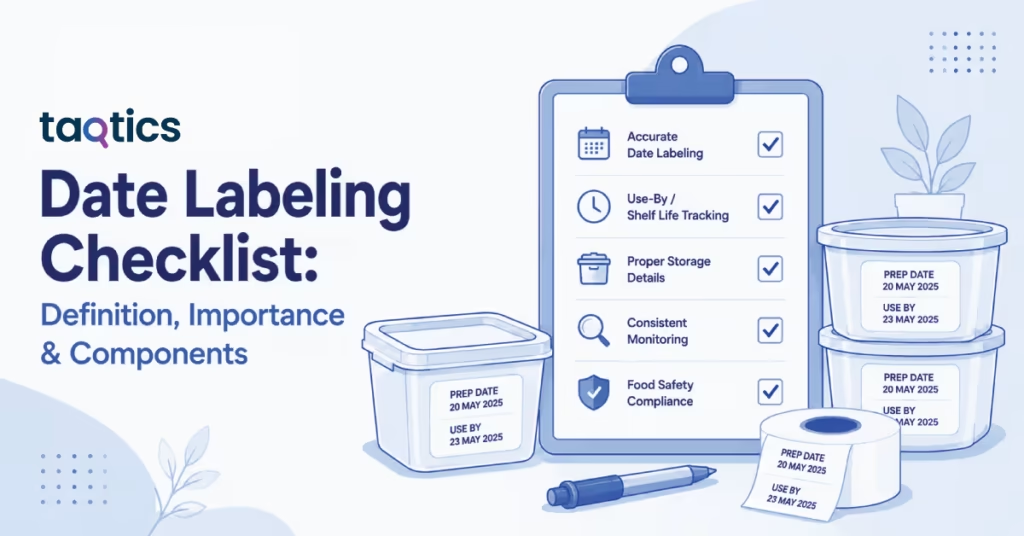
A date labeling checklist is a structured system used in restaurant kitchens to ensure that all prepared and stored food items are accurately labeled with prep dates, use-by dates, and storage details for safe consumption. A date labeling checklist helps standardize how food is tracked over time, reducing confusion around freshness, improving stock rotation, and ensuring compliance with food safety practices. Research published in 2021 highlights that over 65% of respondents consider food label information useful for ensuring food safety and quality, reinforcing the importance of clear and accurate labeling in food handling practices.
A date labeling checklist plays a critical role in minimizing food safety risks, preventing spoilage, and supporting audit readiness in commercial kitchens. Studies and industry insights from 2024 emphasize that incorrect or missing labeling can lead to serious risks such as foodborne illness, product recalls, and financial losses due to waste and compliance failures. By combining clear labeling standards, defined shelf life guidelines, and consistent monitoring, a date labeling checklist becomes an essential component of kitchen operations, ensuring traceability, safety, and efficient inventory management.
What is Date Labeling Checklist?
A date labeling checklist is a control tool used by kitchen teams to systematically verify that all stored and prepped food items are marked with accurate time and date information in line with internal standards. It ensures that labeling is not just applied, but consistently checked, updated, and followed across all storage areas and shifts.
It typically includes checks for prep time and date, discard or use-by timelines, storage conditions, and label visibility and legibility, along with verification of whether items are being used within their defined holding periods. It may also track who labeled the item and whether periodic reviews are being conducted, helping maintain discipline, traceability, and compliance.
Why Is Date Labeling Important in Restaurants?
Date labeling is important in restaurants as it ensures food safety, maintains quality, and brings structure to how ingredients are stored and used across the kitchen.
- Prevents foodborne illness: Clear prep and use by dates help staff avoid using expired or unsafe food, reducing the risk of contamination and illness.
- Ensures freshness and quality: Proper labeling ensures that only food within its optimal shelf life is used, maintaining taste, texture, and presentation standards.
- Supports health inspections and compliance: Accurate labeling is a key requirement during inspections, helping restaurants demonstrate adherence to food safety regulations.
- Reduces food waste: By following clear timelines and FIFO practices, kitchens can minimize spoilage and avoid unnecessary discards.
- Improves kitchen organization: Well labeled items make it easier for teams to identify, locate, and use ingredients efficiently during service.
- Standardizes processes with digital tools: Platforms like Taqtics help standardize labeling procedures by digitizing checklists, enforcing compliance, and ensuring consistency across shifts and locations.
Effective date labeling creates a safer, more organized, and cost-efficient kitchen environment while supporting both daily operations and audit readiness.
What Are Core Components Of Date Labeling Checklist?
The core components of a date labeling checklist are core labeling requirements, receiving and inventory management, storage and handling best practices, and internal auditing and documentation.
Core Labeling Requirements
This component establishes the foundational rules that define what must be labeled, how it should be labeled, and how long items can be safely used.
- Identify TCS Foods: Ensure all time and temperature control for safety foods held beyond 24 hours are date marked
- Establish Key Dates: Clearly mention preparation or opening date and discard date on every label
- The 7 Day Rule: Ready-to-eat TCS foods must be used or discarded within 7 days if stored at or below 5°C or 41°F, with day 1 counted as the prep or opening day
- Use Clear Formats: Follow a standard format such as MM DD YY or day dots to ensure labels are easy to read and interpret
Receiving and Inventory Management
This component ensures that labeling starts right from the point of receiving and continues through proper stock rotation practices.
- Validate External Labels: Check incoming products for correct use by or expiration dates at the time of delivery
- FIFO Compliance: Follow first-in-first-out by placing newer stock behind older stock to prioritize earlier expiry items
- Traceability: Record lot codes and batch numbers to enable quick action in case of recalls
Storage and Handling Best Practices
This component focuses on maintaining labeling accuracy after items are stored, opened, or processed within the kitchen.
- Opened Commercial Containers: Re-label items with a new discard date based on internal shelf life once opened
- Frozen Items: Mark both the freeze date and the intended use-by date after thawing
- Ingredient Integrity: For mixed items, use the earliest ingredient date to determine discard timelines
- Immediate Disposal: Regularly check and discard expired items to prevent accidental use
Internal Auditing and Documentation
This component ensures that labeling practices are consistently followed, monitored, and improved over time.
- Policy Verification: Maintain a written internal date marking policy to guide staff and support compliance
- Daily Inspections: Conduct routine checks to ensure all items are labeled correctly and within valid dates
- Staff Training: Train teams on HACCP-based labelling practices and how to interpret different date labels
These components ensure that date labeling is not just applied but actively managed, helping maintain food safety, reduce waste, and ensure compliance across kitchen operations.
What Foods Require Date Labeling in Restaurants?
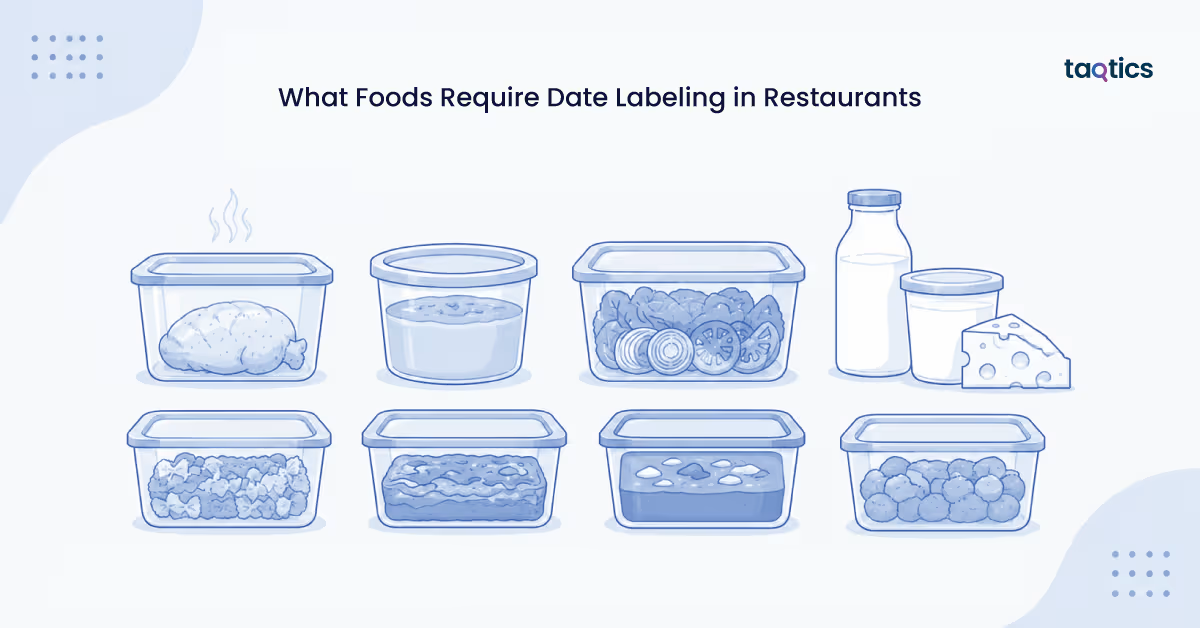
Foods that require date labeling in restaurants are primarily ready-to-eat and time-temperature control for safety items that are stored for more than 24 hours, as they pose higher food safety risks if not tracked properly.
- Cooked meats: Items like grilled chicken, roast meats, or cooked seafood must be labeled once prepared and stored.
- Prepared sauces: Sauces such as marinara, gravies, and dressings need date labels to track freshness and safe usage time.
- Cut vegetables: Chopped or sliced vegetables like onions, tomatoes, and leafy greens require labeling after prep.
- Opened dairy products: Milk, cream, cheese, and yogurt must be labeled once opened to track shelf life.
- Prepared salads: Items like coleslaw, pasta salad, or chicken salad require strict date marking due to mixed ingredients.
- Soups and stews: Batch-prepared items stored for later use must be labeled with prep and discard dates.
- Ready-to-eat foods: Any food that does not require further cooking before serving must be date-marked if stored.
Any food that is prepared, opened, or stored beyond a short period should be date-labelled, while whole, sealed, or immediately used items typically do not require it.
How Can Restaurants Train Staff on Food Labeling?
Restaurants can train staff on food labeling by combining clear standards, visual guidance, and consistent monitoring so that labeling becomes a routine habit rather than a one-time instruction.
- Establish clear SOPs: Define exactly what needs to be labeled, how to label it, and the correct formats for dates and discard timelines so there is no ambiguity for staff.
- Use visual labeling charts: Display easy-to-read charts or examples in prep and storage areas to help staff quickly understand correct labeling practices during daily work.
- Conduct structured training sessions: Train staff on labeling rules, food safety importance, and real-life scenarios such as handling opened or mixed ingredients.
- Reinforce through daily monitoring: Supervisors should check labels during routine line checks or inspections and correct mistakes immediately to build consistency.
- Leverage digital SOP tools: Platforms, like Taqtics, help standardize labeling procedures by providing checklists, reminders, and real-time tracking, ensuring teams follow the same process across shifts and locations.
With clear guidance, practical tools, and regular reinforcement, restaurants can ensure staff follow food labeling practices accurately and consistently.
What Are Common Date Labeling Mistakes in Restaurants?
The most common date labeling mistakes in restaurants include missing labels, incorrect discard dates, illegible writing, using expired food, and not following FIFO practices, all of which can compromise food safety and operational efficiency.
- Missing labels: Food items are stored without any date or identification, making it impossible to track freshness or safe usage timelines.
- Wrong discard dates: Incorrect calculations or misunderstandings of shelf life lead to food being used beyond safe limits or discarded too early.
- Illegible handwriting: Poorly written labels create confusion, increasing the risk of misuse or unnecessary waste.
- Using expired food: Lack of proper checks or unclear labeling results in expired items being used, posing serious food safety risks.
- Not following FIFO: Ignoring first-in-first-out leads to older stock being left unused while newer items are consumed first, increasing spoilage.
Restaurant operations software, like Taqtics helps reduce these human errors by digitizing labeling processes, standardizing formats, and enforcing compliance through checklists and real time tracking.
How Can Digital Tools Improve Date Labeling Compliance?
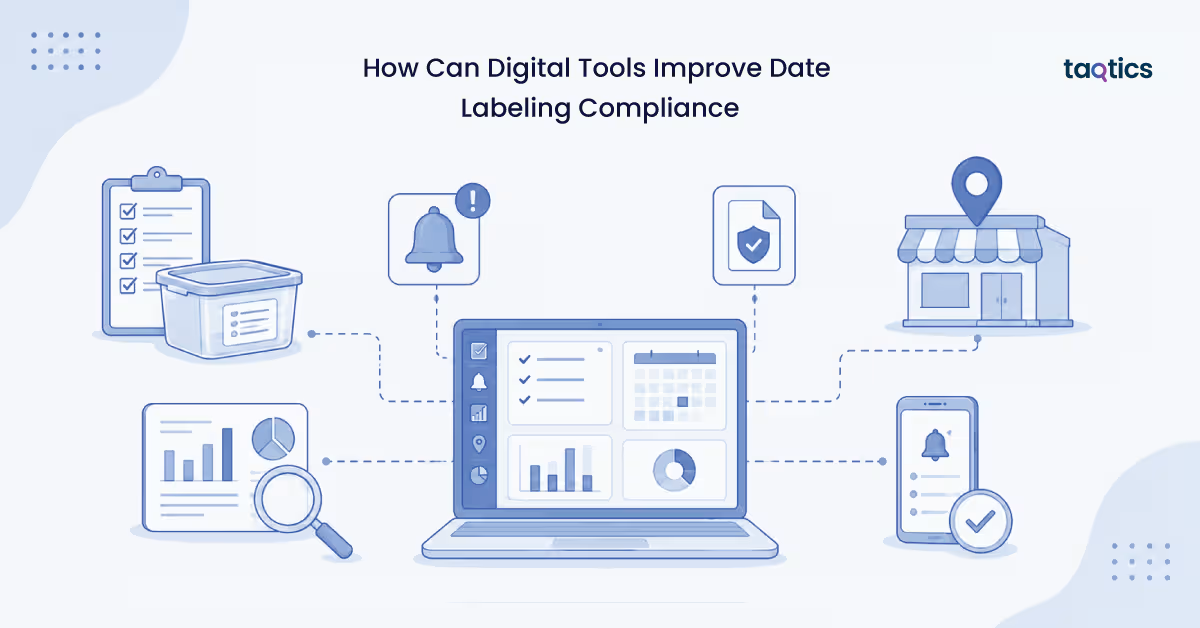
Digital tools can improve date labelling compliance by bringing structure, visibility, and consistency to what is often a manual and error-prone process.
- Digital food safety checklists: Standardize labeling steps across shifts and stations, ensuring every item is checked, labeled, and verified using the same criteria.
- Automated reminders: Notify staff when items are nearing expiry or when labeling checks are due, reducing the risk of missed updates or expired food usage.
- Compliance tracking: Record who labeled items, when checks were done, and whether standards were followed, creating clear accountability and audit trails.
- Multi-location monitoring: Enable managers to track labeling practices across outlets, ensuring consistent compliance and quickly identifying gaps.
- Real-time reports and insights: Provide instant visibility into issues like missed labels, expired items, or recurring errors, allowing faster corrective action.
By digitizing and centralizing labeling processes, tools like Taqtics help reduce human error, improve consistency, and ensure stronger food safety compliance across operations.
What Are the Best Practices for Food Labeling in Restaurants?
The best practices for food labeling in restaurants focus on consistency, clarity, and discipline to ensure food safety and smooth operations.
- Always label immediately after preparation: Labels should be applied the moment food is prepped or a package is opened, not later. Delays often lead to missed or incorrect labeling, increasing the risk of using unsafe or unidentified items. Immediate labeling ensures accuracy and builds a consistent habit across the team.
- Use waterproof and durable labels: Kitchen environments involve moisture, refrigeration, and frequent handling, which can cause labels to peel or ink to smudge. Using waterproof, oil-resistant labels ensures information remains legible throughout the product’s lifecycle.
- Standardize color-coded systems: Color-coded labels or day dots make it easy for staff to quickly identify when an item was prepared and when it should be discarded. This visual system reduces reliance on reading detailed text, speeds up decision-making, and minimizes errors during busy service periods.
- Train staff regularly: Ongoing training ensures that all team members understand labeling rules, including date formats, shelf life guidelines, and FIFO practices. Regular refreshers help address gaps, onboard new staff faster, and maintain consistency across shifts.
- Conduct daily audits: Routine checks of refrigerators, prep areas, and storage help identify missing labels, expired items, or incorrect dates before they become serious issues. Daily audits reinforce discipline and ensure continuous compliance.
- Keep formats simple and consistent: Using a single, standardized date format across the kitchen prevents confusion and misinterpretation, especially in teams with varying experience levels. Simple formats improve readability and reduce errors.
- Align labeling with FIFO practices: Labeling should directly support first-in-first-out usage by clearly indicating which items should be used first. Proper alignment ensures older stock is prioritized, reducing waste and maintaining freshness.
Embedding these practices into daily routines enable restaurants to maintain accurate labeling, strengthen food safety compliance, and create a more organized and efficient kitchen environment.
About the Author